Introduction
You open the freezer at 5 PM to prep dinner service, only to find the chicken still frozen solid. The temptation to blast it with hot water or leave it on the counter is real—but both shortcuts can turn your kitchen into a breeding ground for dangerous bacteria.
Improper defrosting is a leading cause of foodborne illness from chicken. Research shows that approximately 24% of raw chicken parts are contaminated with Salmonella, and bacteria can double every 20 minutes when exposed to the "Danger Zone" of 40–140°F.
Understanding safe defrosting methods isn't just about avoiding a stomachache—it's about protecting your customers and your business from serious health risks.
For commercial kitchen managers and foodservice operators coordinating high-volume prep, mastering proper thawing techniques ensures even cooking, prevents pathogen multiplication, and maintains food quality. This guide covers the science and methods that keep chicken safe from freezer to plate.
TLDR
- Safe defrosting keeps chicken out of the bacterial Danger Zone (40–140°F)
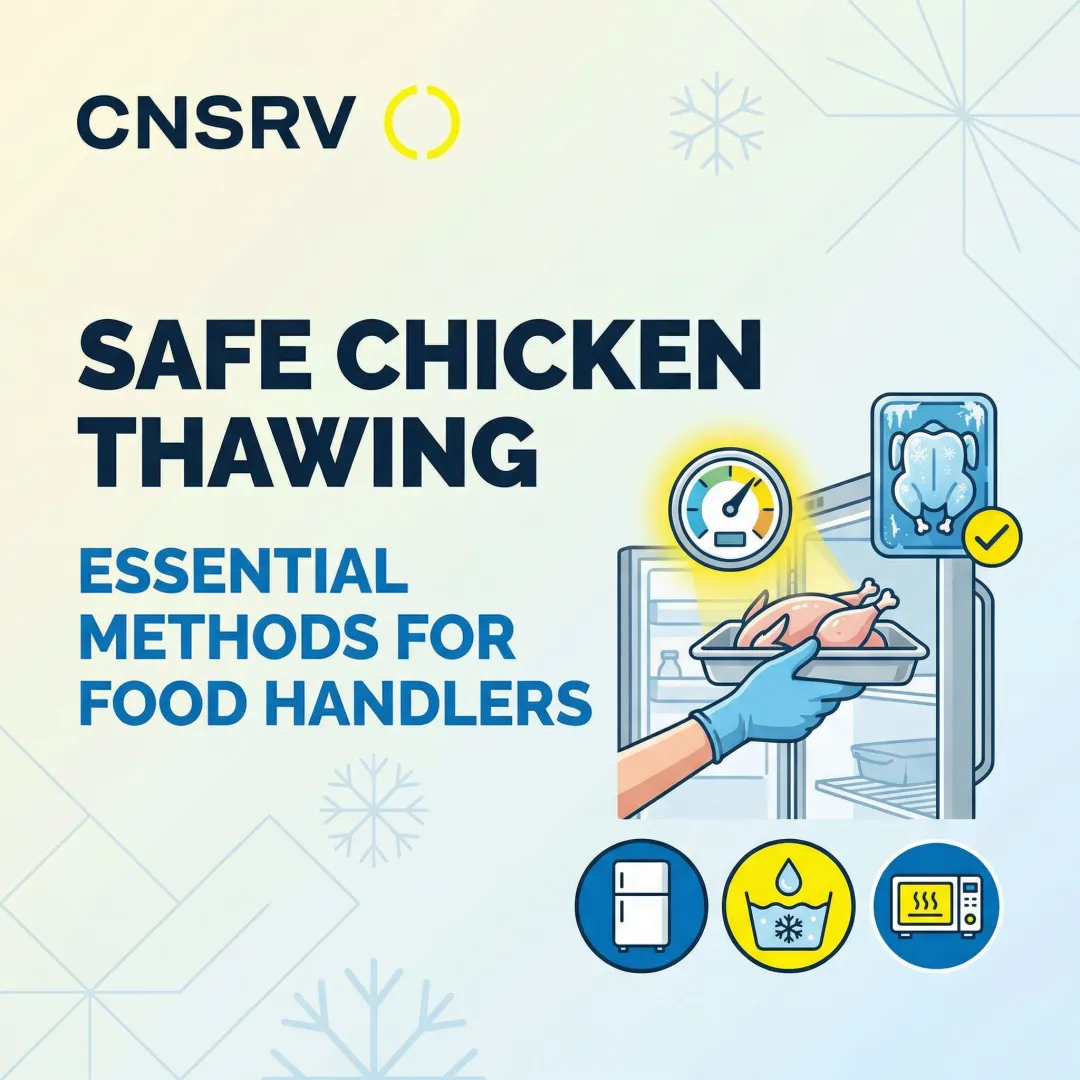
- USDA approves three methods: refrigerator, cold water, and microwave
- Counter thawing causes rapid bacterial growth on outer layers
- Correct methods prevent Salmonella, Campylobacter, and E. coli growth
What Is Chicken Defrosting?
Chicken defrosting is the controlled process of bringing frozen poultry from 0°F or below to a thawed state ready for cooking, while maintaining strict food safety standards throughout the transition.
The primary goal is to thaw chicken evenly without allowing any portion to remain in the temperature danger zone (40–140°F) for more than two hours.
According to the USDA Food Safety and Inspection Service, this window is critical because bacteria that survive freezing can multiply rapidly when given the right temperature conditions.
Defrosting differs from related processes:
- Tempering - Partial thawing (typically -10°F to 25°F) that commercial operations use for easier slicing before further processing
- Cooking from frozen - A safe alternative that requires approximately 50% longer cooking time and works best for oven or pressure cooking methods
- Slacking - A commercial term for moderating frozen food temperature under controlled conditions before frying
Proper defrosting maintains food safety while preparing chicken for any cooking method. Alternatives like cooking from frozen require specific techniques and equipment.
Why Safe Defrosting Matters in Food Preparation
Approximately 24% of raw chicken parts test positive for Salmonella contamination, and 22% carry Campylobacter, according to USDA baseline data. These pathogens don't disappear when chicken freezes—they simply become dormant.
The Danger Zone Problem
When chicken thaws improperly, the outer layers warm up while the center remains frozen. This creates a dangerous scenario where surface bacteria enter the 40–140°F danger zone and begin multiplying rapidly.
Bacteria can double every 20 minutes in this temperature range, transforming a manageable bacterial load into a health hazard before the center even begins to thaw.
What goes wrong:
- Outer layers reach 50–70°F while center stays at 32°F or below
- Bacteria multiply on the surface for hours before cooking begins
- Uneven thawing leads to uneven cooking, leaving cold spots that don't reach safe internal temperatures
- Some bacteria like Staphylococcus aureus produce heat-resistant toxins that survive cooking

Regulatory Requirements
These health hazards explain why regulatory agencies enforce strict defrosting protocols. The USDA and FDA mandate specific procedures for commercial food service, making this both a safety and compliance issue.
The FDA Food Code requires commercial operations to thaw at ≤41°F or use running water at ≤70°F with sufficient velocity to flush particles. Beyond safety concerns, improper defrosting wastes significant water resources—traditional running-faucet methods can consume up to 1,000,000 gallons per kitchen annually.
CNSRV's closed-loop defrosting systems address both requirements, meeting health codes while using 98% less water than traditional methods.
How the Chicken Defrosting Process Works
Safe defrosting requires understanding the science behind ice crystal melting and temperature control. Frozen chicken contains ice crystals that must melt while the meat temperature stays below 40°F—or is cooked immediately if it rises above that threshold. The three USDA-approved methods each balance speed, safety, and convenience differently, depending on your available time, kitchen setup, and whether you're defrosting a whole bird or individual pieces.
Time factors that affect all methods:
- Thickness - A whole turkey requires 24 hours per 5 pounds; thin cutlets thaw in hours
- Cut type - Bone-in pieces take longer than boneless; whole birds need significantly more time than parts
- Starting temperature - Chicken stored at 0°F thaws faster than chicken at -10°F

Method 1: Refrigerator Thawing
How it works: Place frozen chicken in a leak-proof container on the lowest refrigerator shelf.
Allow 24 hours for every 5 pounds of chicken, or a full 24 hours for smaller cuts like breasts or thighs.
Advantages:
- Safest method—chicken stays at consistent 40°F or below throughout
- You can refreeze if plans change without cooking first
- Thawed chicken stays safe for 1-2 days in the fridge before cooking
- Requires no monitoring once placed in refrigerator
Best for: Planned meals, batch cooking prep, whole birds, anyone with advance notice.
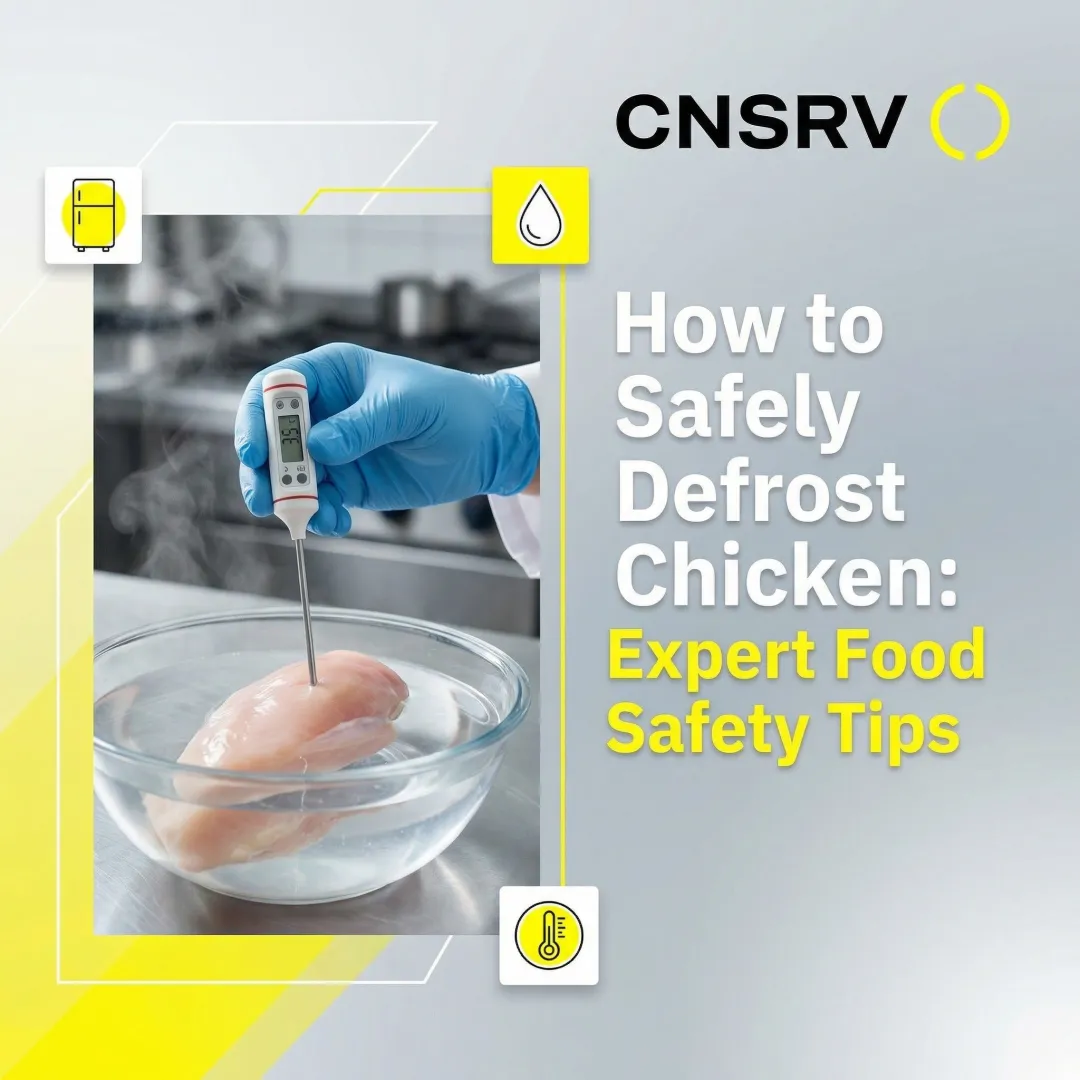
Method 2: Cold Water Thawing
How it works: Submerge leak-proof packaged chicken in cold tap water, changing the water every 30 minutes until fully thawed. Small packages (1 lb) thaw in about an hour; larger items take 2-3 hours.
Critical requirements:
- Packaging must be completely sealed to prevent bacterial contamination and waterlogging
- Water temperature must stay cold (below 70°F)
- Water changes every 30 minutes are essential for safety
- Chicken must be cooked immediately after thawing
Advantages:
- Faster than refrigeration while maintaining food safety if done correctly
- Predictable timing for same-day meal planning
Disadvantages:
- Requires active attention every 30 minutes
- Cannot refreeze without cooking first
Best for: Same-day cooking when you forgot to thaw overnight, medium-sized cuts.
Method 3: Microwave Thawing
How it works: Remove all packaging (foam trays and plastic wrap aren't heat-stable). Use the microwave's defrost setting based on weight, rotating and checking frequently to prevent cooking the edges.
Critical requirements:
- Cook chicken immediately after microwave thawing
- Check frequently and rotate to avoid hot spots
- Some areas may begin cooking during the thaw cycle
Advantages:
- Fastest method—takes minutes instead of hours
- No advance planning required
Disadvantages:
- Creates uneven heating with hot spots
- Can partially cook meat, leading to texture issues
- Cannot refreeze without cooking first
Best for: Emergency situations, thin cuts, immediate cooking scenarios.
Where Chicken Defrosting Is Applied
Commercial Kitchen Applications
Professional food service operations deal with higher stakes and larger volumes:
- Coordinating defrosting schedules with service times and menu forecasting in restaurant prep
- Managing large-quantity thawing for events with fixed timelines in catering operations
- Serving hundreds or thousands daily through hospital, school, and corporate cafeterias
Commercial Water Conservation Challenge
Commercial operations face a critical resource problem with traditional defrosting. The running-water method required by many health codes can waste up to 1,000,000 gallons per kitchen annually, costing establishments up to $20,000 yearly in water bills.
This waste has driven innovation in closed-loop defrosting systems that circulate water at high velocity while maintaining health code temperatures. These systems can reduce water usage by up to 98% while cutting defrosting time in half—addressing both sustainability and operational efficiency challenges facing modern commercial kitchens.
Key Factors That Affect Defrosting Safety and Efficiency
Understanding what affects defrosting speed and safety helps you avoid the danger zone (40°F-140°F) where bacteria multiply rapidly. These factors determine whether your chicken thaws safely or becomes a health risk.
Temperature Control
Your thawing environment determines both speed and safety. Starting temperature matters—chicken at 0°F thaws faster than chicken at -10°F. The ambient temperature creates the biggest impact: refrigerators at 40°F provide safe but slow thawing, while room temperature at 70°F accelerates bacterial growth.
For cold-water thawing, water temperature must stay below 70°F throughout the process.
Physical Characteristics
The chicken itself affects thawing time:
- Thickness and cut type (whole birds need 4-5 times longer than cutlets)
- Bone-in versus boneless (bones slow thawing by blocking heat transfer)
- Packaging integrity (leaks introduce bacteria and waterlog the meat)
Operational Factors
Practical considerations in your kitchen include time management and monitoring, especially for cold water methods requiring 30-minute water changes. You'll also need adequate refrigerator space for advance planning and proper staff training for consistent compliance.
Commercial Compliance Requirements
Health department regulations (FDA Food Code § 3-501.13) set clear standards. Commercial operations must maintain HACCP documentation, temperature logs, and active managerial control to ensure staff follow SOPs consistently.
Common Defrosting Mistakes and Misconceptions
Myth: Hot Water Speeds Up Safe Defrosting
Hot water thawing is explicitly prohibited by USDA guidance. Here's why this method fails:
- Forces outer chicken layers directly into the danger zone (40-140°F)
- Creates ideal conditions for bacterial multiplication on the surface
- Leaves the center frozen, resulting in uneven thawing
- Produces dangerous temperature gradients across the meat
Myth: Counter Thawing Is Fine "If It's Only a Few Hours"
Room temperature allows outer layers to enter the danger zone long before the center thaws. Even if the chicken feels cold to the touch, surface temperatures can reach 50-70°F—prime bacterial growth territory.
The two-hour rule applies strictly: perishable foods should never sit at room temperature for more than two hours, or one hour if ambient temperature exceeds 90°F.
Myth: Cooking Will "Kill Everything Anyway"
Proper cooking kills bacteria but may not destroy heat-stable toxins produced during improper thawing.
The danger: Staphylococcus aureus produces enterotoxins that remain active even after heat kills the bacteria. High bacterial loads from temperature abuse create toxin levels that survive cooking and cause illness.

Confusion About Refreezing
Refreezing rules depend entirely on the thawing method used:
- Refrigerator-thawed chicken - Can be refrozen within 1-2 days without cooking (though quality may decrease)
- Cold water or microwave-thawed chicken - Must be cooked before refreezing
This distinction exists because refrigerator thawing maintains safe temperatures throughout, while other methods may allow brief periods in the danger zone.
Frequently Asked Questions
What are the food-safe options to defrost chicken?
The USDA approves three methods: refrigerator thawing (safest, 24 hours per 5 lbs on lowest shelf), cold water thawing (submerge sealed package, change water every 30 minutes), and microwave thawing (use defrost setting, cook immediately).
Can you cook chicken directly from frozen?
Yes, cooking from frozen is safe but requires approximately 50% longer cooking time. This works best for oven roasting and pressure cooking. Never use slow cookers for frozen chicken, as the extended time in low temperatures promotes dangerous bacterial growth.
How long can thawed chicken stay in the refrigerator?
Refrigerator-thawed chicken stays safe for 1-2 days before cooking. Cold water or microwave-thawed chicken must be cooked immediately and cannot be stored.
Why can't you defrost chicken on the counter?
Room temperature allows the outer layers to enter the danger zone (40-140°F) where bacteria double every 20 minutes, even while the center stays frozen. This creates dangerous bacterial loads before cooking.
Can you refreeze chicken after thawing?
Refrigerator-thawed chicken can be refrozen within 1-2 days without cooking, though quality may decrease. Cold water or microwave-thawed chicken must be cooked before refreezing, as these methods may allow brief warming.
What's the fastest safe way to defrost chicken?
Microwave thawing is quickest (minutes rather than hours), but requires immediate cooking afterward and careful monitoring to prevent partial cooking during the thaw. For best results, use the defrost setting, rotate frequently, and cook as soon as thawing completes.