Introduction
Each year in the United States, known foodborne pathogens cause approximately 9 million illnesses, 56,000 hospitalizations, and 1,300 deaths. Improper food handling—including unsafe thawing practices—drives many of these cases.
Thawing seems simple. Yet using the wrong method transforms frozen food into a breeding ground for dangerous bacteria like Salmonella, E. coli, and Listeria.
Analysis of restaurant-associated outbreaks from 1998 to 2013 found that inadequate or insufficient thawing contributed to 32% of outbreaks where contributing factors were identified. The consequences extend beyond illness: operational shutdowns, health department violations, legal liability, and irreparable reputational damage.
This article examines the dangerous thawing methods you must avoid, the science behind why they're unsafe, and the proven safe alternatives that protect your customers, your business, and your bottom line.
TL;DR
- Never thaw at room temperature, in hot water, or with non-approved appliances
- Bacteria double every 20 minutes in the Danger Zone (40°F-140°F)
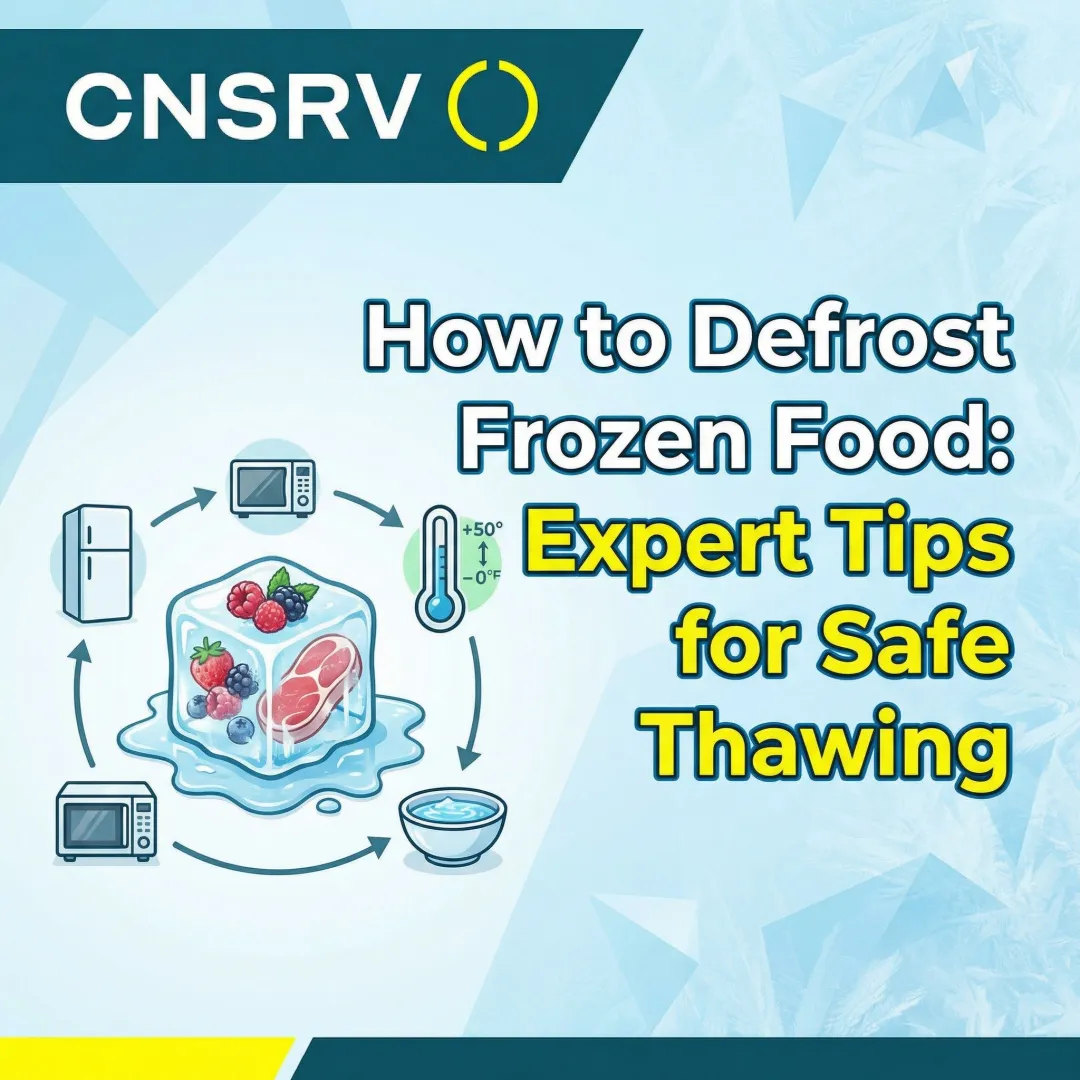
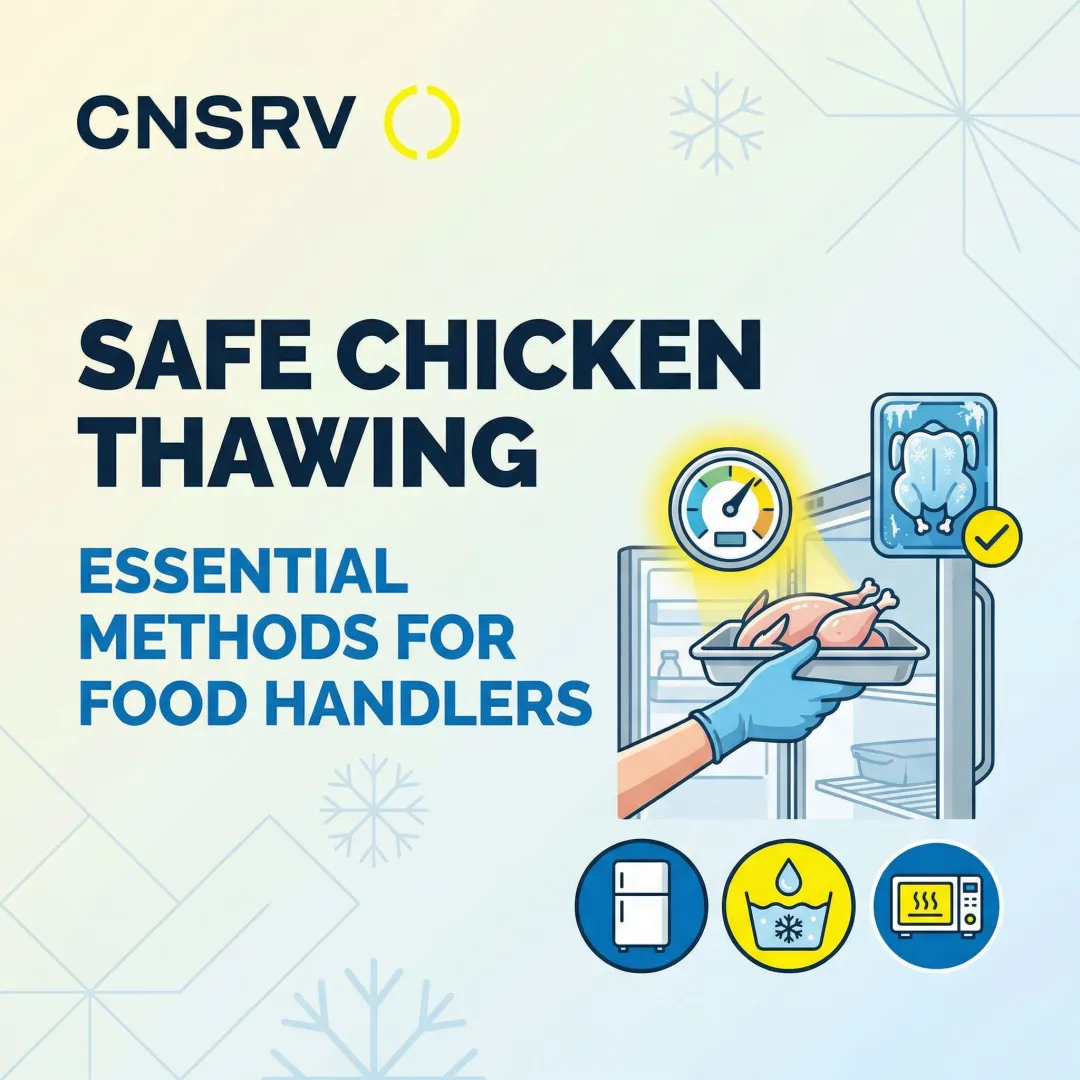
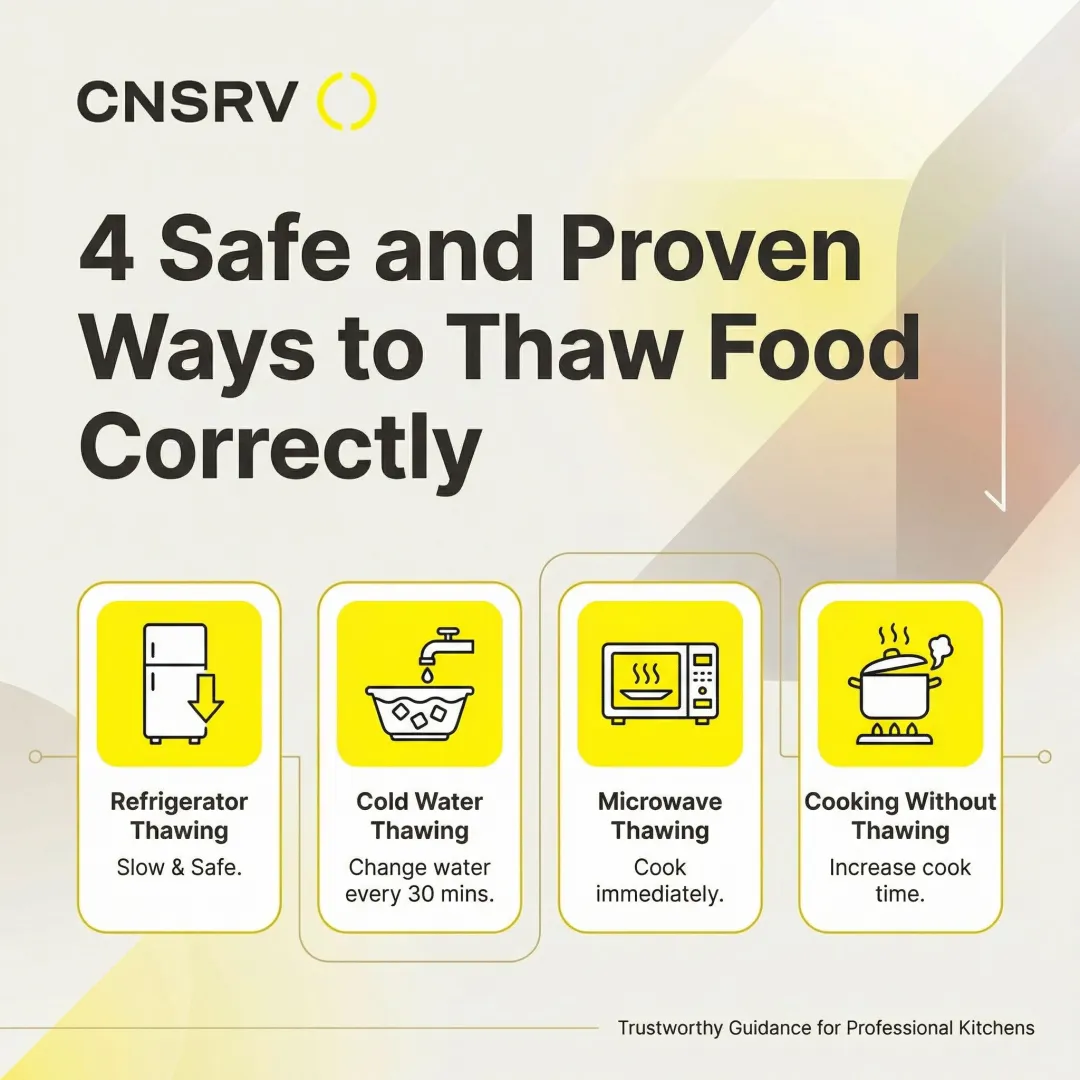
- Safe methods: refrigerator thawing, cold water thawing, microwave thawing, or cooking from frozen
- Proper thawing prevents foodborne illness and protects your operation
- Follow health code protocols to maintain compliance and food safety
Why Dangerous Thawing Methods Matter
The Science of the Danger Zone
Bacteria multiply fastest between 40°F and 140°F—what the USDA calls the "Danger Zone." Within this range, bacterial populations double every 20 minutes, creating rapid contamination risks.
Critical misconception: Freezing does not kill bacteria. Freezing to 0°F inactivates microbes but does not destroy them. Once thawed, these dormant microbes become active again and multiply rapidly if food enters the Danger Zone.
The Thawing Temperature Problem
When frozen food thaws, the outer layers reach unsafe temperatures long before the center defrosts. This creates a dangerous scenario:
- The surface enters the Danger Zone within 2 hours at room temperature
- Bacteria multiply rapidly on the surface while the core remains frozen
- By the time the center thaws, the outer layers may harbor illness-causing bacterial levels

Real-World Consequences
Understanding these temperature dynamics matters because the operational risks are severe. In commercial kitchens, improper thawing leads to:
- Health department citations and violations
- Temporary or permanent closure orders
- Legal liability for foodborne illness outbreaks
- Loss of customer trust and business reputation
- Significant financial losses from fines and lost revenue
Restaurant-associated outbreaks consistently identify improper time and temperature procedures as persistent contributing factors, with thawing practices representing a controllable yet frequently violated standard.
The Most Dangerous Thawing Methods You Must Avoid
Room Temperature Thawing (Counter, Countertop)
This is the most common and most dangerous mistake.
The USDA explicitly states: "Perishable foods should never be thawed on the counter".
Even while the center remains frozen, the outer surface reaches the Danger Zone quickly—typically within 2 hours.
Why it's dangerous:
- Surface temperatures rise to unsafe levels long before the center thaws
- Bacteria multiply rapidly on the outer layers
- No temperature control means no way to prevent bacterial growth
- Violates health codes in all jurisdictions
The 2-hour rule: Perishable foods must not be left at room temperature for more than 2 hours (1 hour if ambient temperature exceeds 90°F).
Hot Water Thawing
Another common shortcut—using hot water to speed up thawing—is extremely unsafe.
The risks:
- Immediately brings food into the Danger Zone
- Creates extreme temperature differentials between surface and core
- Can begin cooking outer layers while inside remains frozen
- Causes uneven cooking and food safety risks
- Provides ideal conditions for bacterial proliferation
The USDA warns that hot water thawing causes rapid surface warming, bringing the outer layer into the Danger Zone while the interior stays frozen.
This creates the worst possible scenario for food safety.

Other Dangerous Methods
Never use these for thawing:
- Slow cookers – Maintain temperatures in the Danger Zone
- Dishwashers – Inconsistent temperatures and contamination risks
- Warm enclosed spaces (garage, car, warm room) – No temperature control
- Standing water – Categorized by the CDC as "improper thawing" because it allows pathogens to multiply
The "it worked before" fallacy: Just because no one got sick doesn't mean the method is safe.
Bacteria may already exist but not yet at illness-causing levels. Repeated unsafe practices increase risk exponentially—eventually, someone will get sick.
Safe Thawing Methods That Actually Work
The USDA and FDA recognize only four safe thawing methods. Each keeps food out of the Danger Zone through specific protocols.
Refrigerator Thawing
Food stays at 40°F or below throughout the process, making this the safest option.
Timing guidelines:
- Large items (turkey): 24 hours per 5 pounds
- Ground meat: 24 hours
- Poultry pieces: 24 hours
- Red meat cuts: 24 hours minimum
Benefits:
- Can be refrozen without cooking
- Remains safe for 1-2 days (ground meat, poultry, seafood) or 3-5 days (red meat cuts) after thawing
- No monitoring required once placed in refrigerator
- Eliminates Danger Zone exposure entirely
Drawback: Requires advance planning—not ideal for fast-paced operations.
Cold Water Thawing
This method works faster than refrigeration but demands strict protocol.
Requirements:
- Food must be in leak-proof packaging
- Water temperature must be 70°F or below
- Water must be changed every 30 minutes
- Food must be cooked immediately after thawing
Timing:
- Small packages (1 lb): 1 hour or less
- 3-4 lb packages: 2-3 hours
- Approximately 30 minutes per pound
Critical: Food thawed by this method cannot be refrozen without cooking first.

Microwave and Cooking From Frozen
Microwave thawing works quickly but requires immediate cooking. Some areas may enter the Danger Zone during the process.
Cooking from frozen eliminates thawing altogether:
- Completely safe method
- Requires approximately 50% longer cooking time
- Always verify internal temperature with a food thermometer
Minimum safe internal temperatures:
- Poultry: 165°F
- Ground meats: 160°F
- Whole cuts (beef, pork, lamb): 145°F + 3-minute rest
- Fish and shellfish: 145°F
Commercial-Grade Solutions
Commercial kitchens handling high volumes need efficient solutions that meet health codes without sacrificing time or resources. NSF-listed defrosting systems provide a faster, more sustainable alternative.
CNSRV's DC:02 uses controlled water agitation and temperature regulation to thaw food safely while using 98% less water than traditional running faucet methods. The system maintains water below 70°F and circulates at rates 10-30 times faster than commercial faucets.
Key advantages for commercial operations:
- Completes thawing in half the time
- Ensures full FDA and California Retail Food Code compliance
- Reduces labor time and water costs
- Improves food quality through consistent temperature control
- Maintains compliance automatically
Common Thawing Mistakes Even Experienced Cooks Make
The "Speed Up" Mistake
Many busy kitchen staff start thawing in the refrigerator, then pull items out to "finish faster" when service time approaches. This seemingly small shortcut eliminates the entire safety benefit of refrigerator thawing.
Once food enters the Danger Zone (40°F-140°F), bacterial growth accelerates exponentially. The hours spent thawing safely become meaningless.
Cross-Contamination Risks
Thawing creates cross-contamination risks that even experienced cooks overlook:
- Dripping juices onto ready-to-eat foods below
- Reusing surfaces without sanitizing between raw proteins
- Placing thawing items on upper shelves where juices can drip
- Using packaging that isn't fully leak-proof
Prevent contamination by always thawing on the bottom shelf in leak-proof containers. In commercial kitchens, closed-loop defrosting systems eliminate drip risks entirely while maintaining consistent temperatures. Sanitize all contact surfaces immediately after handling raw proteins.

Refreezing Confusion
When refreezing is SAFE:
- Food thawed in refrigerator can be refrozen without cooking (though quality may decrease)
- Cooked food that was properly thawed can be refrozen
When refreezing is UNSAFE:
- Food thawed by cold water or microwave must be cooked before refreezing (per USDA FSIS guidelines)
- Any food left at room temperature for more than 2 hours should be discarded, not refrozen
Special Considerations for Commercial Kitchens
Amplified Risks in Commercial Settings
Commercial kitchens operate under stricter scrutiny than home kitchens:
- Higher food volumes increase the risk of temperature control failures
- Health inspections enforce zero-tolerance policies for thawing violations
- Foodborne illness incidents create legal liability and financial exposure
- Negative reviews and social media amplify reputational damage quickly
FDA Food Code Requirements
The FDA Food Code (2022) section 3-501.13 specifies exact thawing standards:
Refrigeration thawing requirements:
- Maintain 41°F or less throughout the process
Running water thawing requirements:
- Water temperature: 70°F or below
- Water velocity: Sufficient to agitate and float off loose particles
- Ready-to-eat food: Must not exceed 41°F
- Raw animal food: Cannot stay above 41°F for more than 4 hours total (including thawing, preparation, and cooling)
Violations result in citations, fines, closure orders, and increased regulatory scrutiny.

Efficiency Challenges
Meeting FDA requirements while maintaining kitchen efficiency creates operational tensions:
- Refrigerator thawing takes 12-36 hours
- Running faucet thawing wastes thousands of gallons of water monthly
- Manual monitoring of cold water thawing diverts staff from other tasks
Modern defrosting equipment addresses these challenges. NSF-listed commercial defrosters maintain FDA temperature requirements while reducing thawing time by up to 50% and cutting water usage by 98% compared to running faucet methods.
Conclusion
Dangerous thawing methods are never worth the time saved. The risks—foodborne illness, health violations, legal liability, and reputational damage—far outweigh any perceived convenience.
Food thawing requires the same rigor as any critical food safety step. Your operation needs protocols that ensure compliance and safety every time:
- Train all staff on approved thawing methods
- Eliminate room temperature and hot water thawing completely
- Plan ahead for refrigerator thawing when possible
- Use cold water thawing with strict protocol adherence
- Adopt controlled water defrosting systems designed for commercial kitchens
The 32% of restaurant outbreaks linked to improper thawing are preventable. Make safe thawing non-negotiable in your operation.
Frequently Asked Questions
What method should never be used to thaw food?
Never thaw food at room temperature, in hot water, in slow cookers, or in dishwashers. These methods push food into the Danger Zone (40°F-140°F), where bacteria multiply rapidly and reach illness-causing levels.
When should you never thaw food?
Never thaw food when you cannot control temperature below 40°F or monitor it throughout the process. This includes any unrefrigerated environment or situations without proper planning.
How long can thawed meat stay in the refrigerator before cooking?
Ground meat, poultry, and seafood remain safe for 1-2 days after thawing in the refrigerator. Red meat cuts (beef, pork, lamb roasts, chops, and steaks) stay safe for 3-5 days. These timeframes apply only to food thawed in the refrigerator at 40°F or below.
Can you refreeze meat after thawing it?
Yes, but only if thawed in the refrigerator. Meat thawed by cold water or microwave must be cooked before refreezing. Quality may decrease due to moisture loss, but refrigerator-thawed meat can be safely refrozen without cooking. Never refreeze food left at room temperature for more than 2 hours.
What is the fastest safe way to thaw food?
Cold water thawing takes about 30 minutes per pound—food must be in leak-proof packaging, submerged in cold water (70°F or below), with water changed every 30 minutes. For commercial kitchens, dedicated defrosting systems like those from CNSRV offer faster, more controlled thawing while conserving water. Both methods require immediate cooking.
Why is thawing at room temperature dangerous even if I've done it before without getting sick?
Bacterial growth is unpredictable—previous safety doesn't guarantee future safety. Each unsafe thaw increases your risk, as bacteria may reach dangerous levels without visible signs. You've been lucky, not safe.