Introduction
Picture this: It's 3 PM, and you've just realized the chicken breast needed for tonight's dinner service is still frozen solid. This scenario plays out daily in kitchens across America, forcing cooks to make quick decisions that can impact both food safety and quality.
Improper defrosting methods create serious risks. Bacteria multiply rapidly between 40°F and 140°F, doubling in as little as 20 minutes.
Foodborne diseases cause an estimated 9 million illnesses and 1,300 deaths annually in the U.S., with improper thawing being a critical control point.
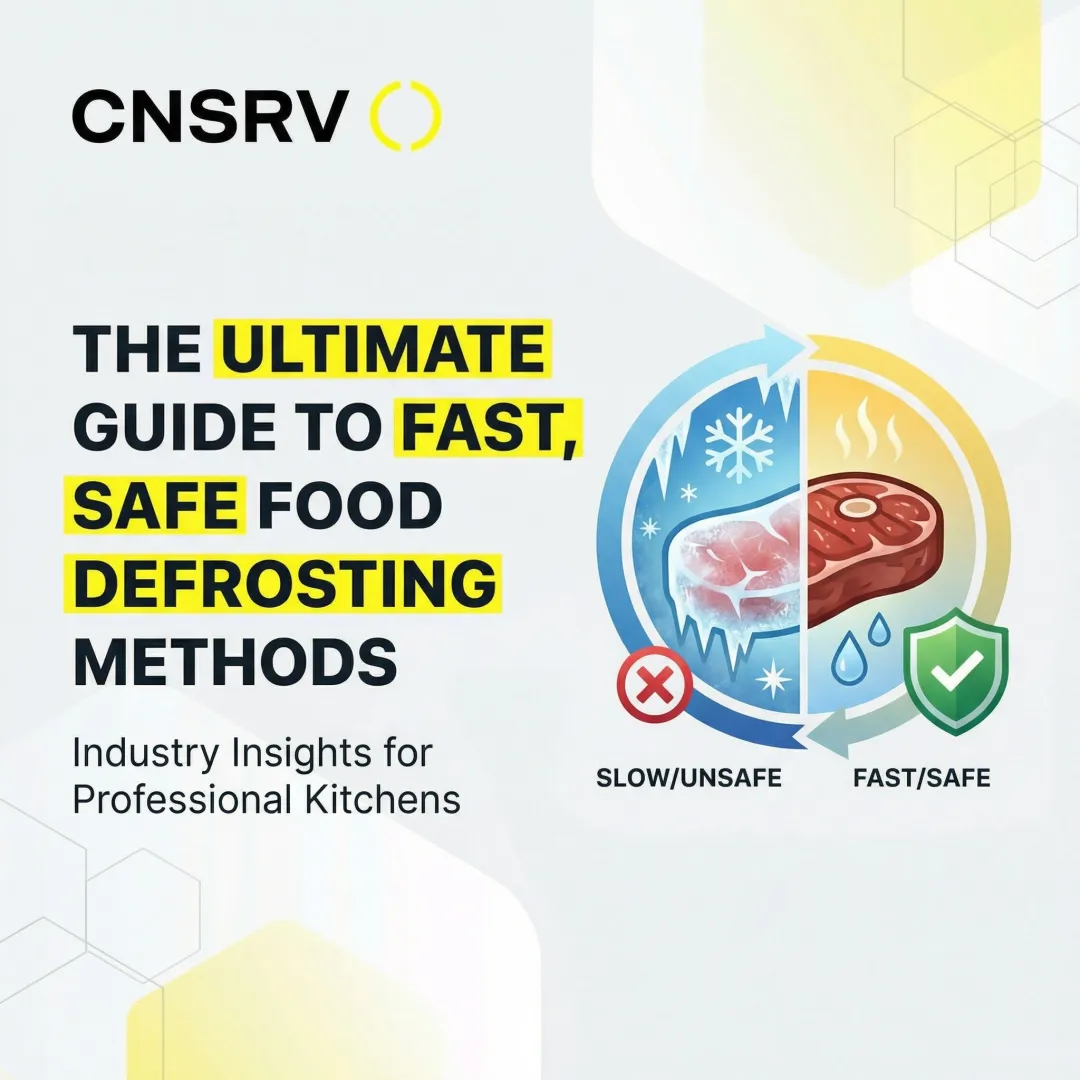
This guide covers USDA-approved safe defrosting methods, timing guidelines, and common pitfalls specific to commercial kitchen operations. You'll learn exactly when to use each method and how to avoid mistakes that compromise food safety.
TLDR
- Choose from four safe methods: refrigerator (safest), cold water (faster), microwave (cook immediately), or frozen (50% longer cook time)
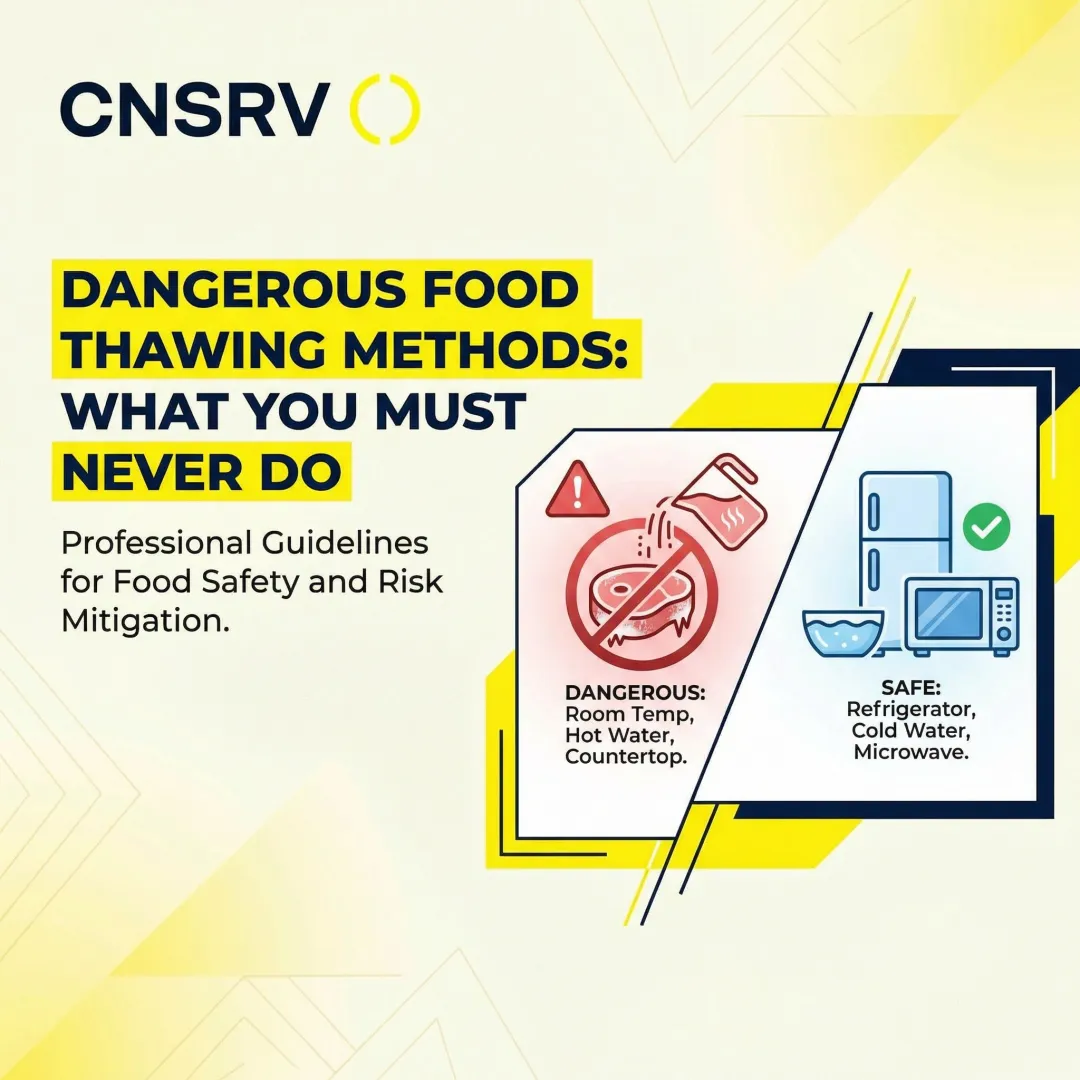
- Never thaw at room temperature—outer layers enter the danger zone while centers stay frozen
- Refrigerator thawing requires 24 hours per 5 pounds for large items like turkeys
- Safe thawing prevents bacterial growth and maintains food quality
Safe Methods for Defrosting Frozen Food
Refrigerator Thawing
Refrigerator thawing at 40°F or below keeps food safely out of the danger zone throughout the entire process. This method requires significant planning but delivers the safest results.
Timing guidelines for refrigerator thawing:
- 24 hours per 5 pounds for large items like turkeys
- Overnight for items under 1 pound
- 1 day for ground meat, stew meat, and boneless chicken
- 3-5 days for a 20-pound turkey

Place food on the bottom shelf with a plate or pan underneath to catch drips. This prevents cross-contamination with ready-to-eat foods stored below.
Your refrigerator must maintain 40°F or below. Verify temperature with an appliance thermometer.
Refrigerator-thawed food remains safe for:
- 1-2 days: Ground meat, stew meat, poultry, seafood
- 3-5 days: Whole cuts of beef, pork, lamb
You can safely refreeze refrigerator-thawed food without cooking, though quality may decrease slightly due to moisture loss.
Cold Running Water Thawing
Cold water thawing cuts defrosting time significantly but requires active monitoring and immediate cooking afterward.
Timing estimates:
- 1 hour or less: 1-pound packages
- 2-3 hours: 3-4 pound packages
- 30 minutes per pound: Whole turkeys
Submerge food in a leak-proof package or plastic bag under cold tap water. Change the water every 30 minutes to maintain cold temperatures and continue effective thawing.
Water must stay at 70°F or below.
Critical requirements:
- Food must be in leak-proof packaging to prevent bacterial contamination
- Cook immediately after thawing (no exceptions)
- Never refreeze without cooking first
Traditional running water thawing is resource-intensive. Commercial kitchens can consume between 315 and 661 gallons per cycle when adhering to FDA continuous-flow guidelines, with average cycles lasting nearly 70 minutes.
Commercial defrosting systems like those from CNSRV use 98% less water than traditional running faucet methods while maintaining food safety standards. These closed-loop systems cut defrosting time in half while adhering to health code requirements.
Microwave Thawing
Microwave thawing offers speed but comes with significant limitations and safety requirements.
Use your microwave's defrost setting, which cycles power to thaw food gradually. Microwaves create "hot spots" where portions become warm and potentially reach danger zone temperatures during thawing.
Key limitations:
- Uneven thawing is common
- Not suitable for large items like whole turkeys or large roasts
- Food must be cooked immediately after thawing
- Follow manufacturer-specific instructions for different food types
The immediate cooking requirement exists because portions of the food may have warmed to temperatures where bacteria multiply rapidly.
Cooking from Frozen
Cooking from frozen is completely safe and USDA-approved, though it requires longer cooking times.
Key guidelines:
- Add approximately 50% longer cooking time than thawed food
- Internal temperature verification becomes critical
- Best for individual portions, thin cuts, and pre-formed patties
- Ideal when texture isn't the primary concern
This method works well for individually quick-frozen items and emergency situations where you don't have time to thaw properly.
When to Use Each Defrosting Method
Choosing the right defrosting method depends on your timeline, the type of food, and your kitchen environment. Each approach offers distinct advantages for different scenarios.
Refrigerator thawing works best for:
- Advance planning situations with 1-4 days lead time
- Large items like whole turkeys or roasts
- Maintaining optimal texture and quality
- Commercial operations with predictable menus
Cold water thawing is ideal when:
- Same-day needs with 1-3 hours available
- Medium-sized items (1-4 pounds)
- Limited refrigerator space situations
For commercial kitchens managing high-volume defrosting, specialized equipment like the CNSRV DC:02 system uses controlled water circulation to thaw food in half the time of traditional faucet methods while using 98% less water.
Choose Microwave Thawing For:
- Immediate needs (within the hour)
- Small portions only
- Home cooking scenarios where you can cook immediately
Choose Cooking from Frozen For:
- Emergency situations with no thawing time
- Individually quick-frozen items
- Situations where texture is less critical

What You Need Before Defrosting Frozen Food
Equipment and Space Requirements
For Refrigerator Thawing:
- Adequate shelf space on a lower shelf to prevent cross-contamination (large items like turkeys need dedicated space for 3-4 days)
- Appliance thermometer showing 40°F or below
- Plates, pans, or trays to catch drips
For Water Thawing:
- Clean sink with cold running water capability
- Leak-proof bags or packaging
- Functional overflow drain and timer (water should be changed every 30 minutes)
For Microwave Thawing:
- Defrost-capable microwave
- Microwave-safe containers
- Plan to cook food immediately after defrosting
Beyond equipment, proper preparation ensures safe defrosting. Check that original packaging is intact and leak-proof, especially for water thawing methods—damaged packaging introduces bacteria and compromises safety. Keep a food thermometer ready to verify safe internal temperatures after cooking, since visual cues can be misleading when cooking from frozen.
Planning and Timing
Thawing time varies significantly by method and food weight:
- Large items (like a 15-pound turkey): Require 3-4 days in the refrigerator
- Small cuts (chicken breasts, steaks): Defrost in 24 hours or less
- Water thawing: Reduces time to 1-2 hours for most items, but demands constant attention
In commercial kitchens, build thawing schedules into production planning and food safety procedures. The 2022 FDA Food Code elevated thawing violations from "Core" to "Priority Foundation", reflecting increased regulatory focus on proper thawing practices.
Key Factors That Affect Defrosting Results
Temperature Control
Maintaining food below 40°F during thawing prevents bacterial multiplication. Bacteria can double in number in as little as 20 minutes within the danger zone.
Temperature fluctuations during thawing create two problems:
- Unsafe bacterial growth when food enters the danger zone (40-140°F)
- Compromised texture from repeated ice crystal formation and melting
- Inconsistent thawing that leaves cold spots while other areas become unsafe
Always verify refrigerator and water temperatures with calibrated thermometers. For commercial operations, water temperature compliance is critical—municipal tap water during warmer months regularly measures 75-85°F, creating direct violations of the ≤70°F code limit.
Food Size and Thickness
Thicker items take exponentially longer to thaw. Surface areas may reach unsafe temperatures while centers remain frozen.
This creates operational challenges:
- Large items require 3-4 days in the refrigerator
- Menu planning and inventory rotation become complex
- Compliance windows shrink rapidly
FDA rules specify that thawed portions above 41°F must not exceed 4 hours, including thawing, preparation, and cooling time combined.
Water Flow Rate (for Running Water Method)
Adequate water flow serves two purposes: maintaining consistent cold temperature and washing away food particles into the overflow.
Insufficient flow creates problems. Water warms up around the food, creating danger zone conditions that violate health codes.
Commercial hand sinks typically use 2.2 gallons per minute aerators, though field studies found average tap flow rates of 4.5 gpm in commercial kitchens. That higher flow rate translates to significant water waste—and higher utility bills.
Initial Freezing Quality
Freezing speed determines ice crystal size. Slow freezing promotes large ice crystals that damage cell structures.
The impact shows up during thawing:
- Poorly frozen food releases excessive moisture (drip loss)
- Texture becomes mushy or compromised
- Potential food safety concerns from cellular damage
- Color deterioration
Rapid freezing methods better maintain water-holding capacity and visual quality compared to slower methods.

Common Mistakes When Defrosting Food
Even experienced kitchen staff make critical errors that compromise food safety. Avoid these common mistakes:
- Room temperature thawing or hot water use creates ideal conditions for bacterial growth in outer layers while centers remain frozen—a violation health departments actively cite
- Rushing the process leads to unsafe shortcuts or compromised food quality (a 20-pound turkey needs 4 days—there's no safe way around it)
- Refreezing improperly thawed food is unsafe—only refrigerator-thawed food can be safely refrozen; cold water or microwave-thawed items must be cooked first
- Skipping documentation in commercial kitchens risks HACCP violations and fines (thawing times and temperatures must be logged)
Troubleshooting Defrosting Issues
Even with proper planning, defrosting challenges can arise during busy service periods. Here's how to address the most common issues and get back on track.
Problem: Food Still Frozen When Needed for Service
Likely Cause: Underestimated thawing time or refrigerator temperature too cold.
What to Do:
- Switch to cold water thawing (water-efficient systems like CNSRV defrosters provide faster, controlled thawing without water waste)
- Change water every 30 minutes if using traditional method
- Alternatively, cook from frozen with 50% longer cooking time
Problem: Food Surface Feels Warm During Thawing
Likely Cause: Thawing at room temperature, water too warm, or refrigerator malfunction.
What to Do:
- Immediately move to proper cold environment (below 40°F)
- Check food safety carefully—discard if food has been in the danger zone for 2+ hours
- Verify refrigerator temperature with thermometer
Problem: Excessive Liquid/Drip Loss During Thawing
Likely Cause: Food was frozen too slowly or thawed too quickly, causing cell damage and moisture release.
What to Do:
- Pat dry before cooking to remove excess moisture
- Adjust cooking method to account for moisture loss (reduce added liquids, use higher heat)
- Use this feedback to improve future freezing procedures (freeze faster, thaw slower)
Problem: Uneven Thawing (Edges Thawed, Center Frozen)
Likely Cause: Item too large for method chosen, inadequate water circulation, or microwave hot spots.
What to Do:
- Allow more thawing time for large items
- Rotate item regularly to ensure even temperature distribution
- Separate into smaller portions if possible before freezing
- For microwave thawing, pause and rearrange food every 2-3 minutes
Modern Defrosting Solutions for Commercial Kitchens
Commercial operations face unique challenges: high volume, strict health code compliance, labor costs, and resource efficiency concerns that home kitchens never encounter.
Traditional running water thawing, while safe, creates significant operational burdens. Kitchens can waste 1,000+ gallons of water annually, with some operations consuming up to 717,600 gallons per year just for defrosting. At combined water and sewer rates, this can cost up to $20,000 annually.
Modern defrosting systems solve these challenges through controlled water agitation and temperature regulation in closed-loop systems.
For example, CNSRV's DC:02 system circulates water at approximately 130 gallons per minute—10-30 times faster than typical commercial faucets—while reducing water usage by 98% and cutting thawing time in half compared to traditional methods.
NSF-listed commercial defrosting systems ensure health code compliance while delivering measurable operational benefits:
- Lower water bills through closed-loop circulation
- Reduced labor costs from minimal monitoring requirements
- Consistent results across all thawing cycles
- Improved food quality through precise temperature control
These systems maintain water below 70°F and complete cycles well within the 2-hour California limit and 4-hour FDA threshold, eliminating the temperature abuse risks of traditional methods.
Conclusion
Safe defrosting requires choosing the right method for your situation: refrigerator thawing for advance planning, cold water for same-day needs, microwave for immediate use, or cooking from frozen when time is critical.
Most defrosting failures stem from poor planning, inadequate temperature control, or taking unsafe shortcuts under time pressure. A 20-pound turkey needs 4 days in the refrigerator—no amount of wishful thinking changes that reality.
Understanding these timelines helps you plan accordingly. The right defrosting approach balances food safety, quality preservation, and operational efficiency—whether you're thawing a single chicken breast or managing high-volume commercial operations.
With proper planning and the right methods, you can safely defrost food while maintaining quality and avoiding the costly mistakes that compromise safety.
Frequently Asked Questions
Can I refreeze meat after thawing it in the refrigerator?
Yes, refrigerator-thawed meat can be safely refrozen without cooking, though quality may decrease slightly. Meat thawed by cold water or microwave methods must be cooked before refreezing.
How long does it take to thaw a frozen turkey in the refrigerator?
Allow 24 hours per 5 pounds. A 15-pound turkey requires 3-4 days of refrigerator thawing.
Is it safe to thaw frozen chicken on the kitchen counter?
Never thaw on the counter. Outer layers reach the danger zone (40°F-140°F) while the center stays frozen, promoting bacterial growth. Always use refrigerator, cold water, or microwave methods.
What's the fastest safe way to defrost ground beef?
Cold running water thaws a 1-pound package in under 1 hour, or cook directly from frozen with 50% longer cooking time. For commercial kitchens handling high volumes, water-efficient defrosting systems can reduce thaw time while saving thousands of gallons annually.
Why does my thawed meat release so much liquid?
Slow freezing creates large ice crystals that damage cells, causing excessive moisture loss during thawing. This affects both texture and indicates suboptimal freezing conditions.
Do commercial kitchens have to follow different defrosting rules than home cooks?
Commercial operations must follow the same USDA safe methods but with added requirements for documentation, HACCP compliance, and health department oversight. The 2022 FDA Food Code elevated thawing to a Priority Foundation violation, reflecting its critical importance to public health.