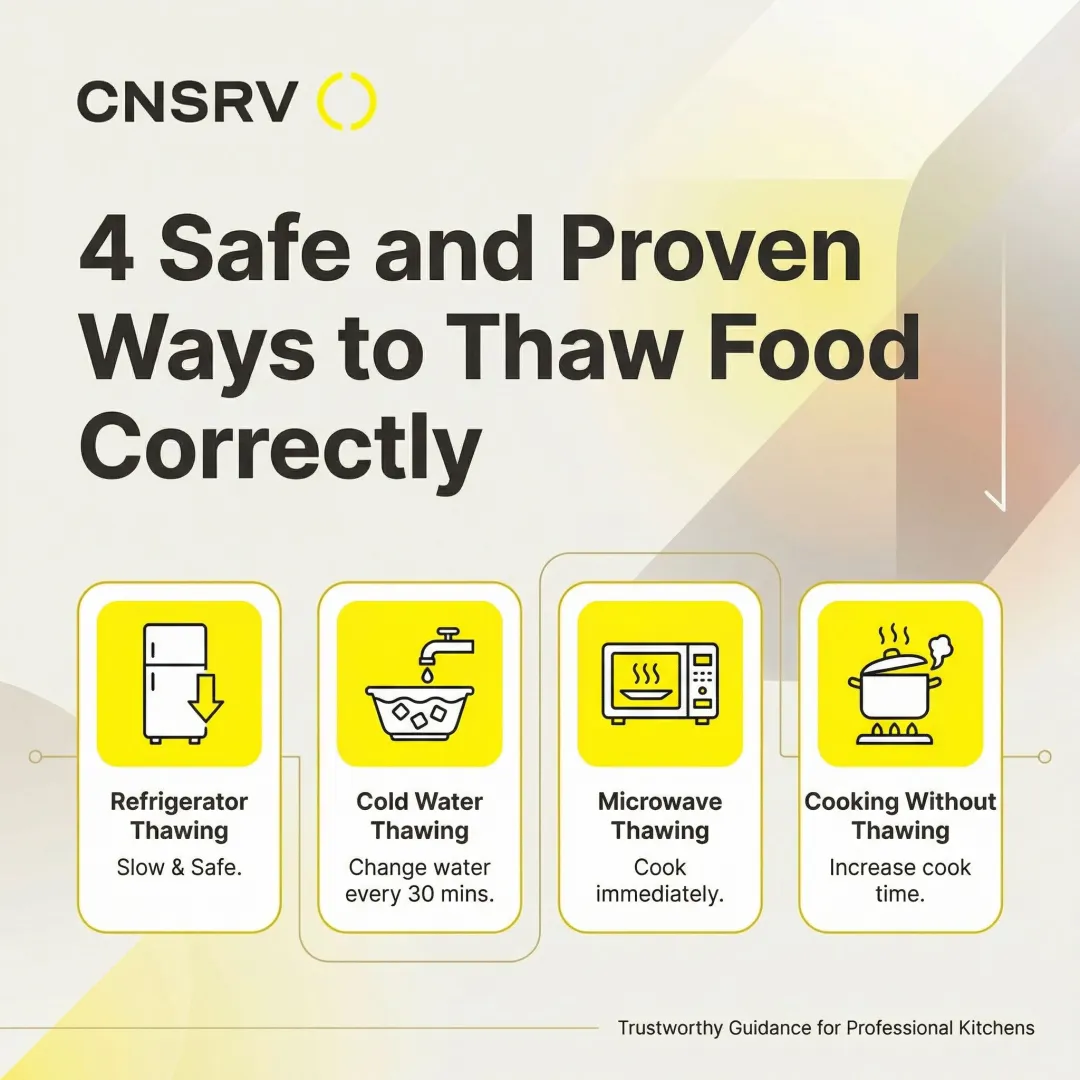
Improper thawing is one of the most common mistakes home cooks and commercial kitchens make. Leaving fish on the counter, blasting it in the microwave, or running hot water over it might seem convenient, but these shortcuts lead to ruined texture, potential bacterial growth, and wasted food. The stakes are even higher for restaurants and food service operations, where improper thawing can trigger health code violations, spoiled inventory, and dissatisfied customers.
This guide covers the safest thawing methods—both slow and fast—along with critical mistakes to avoid, when each method works best, and solutions for high-volume commercial kitchens that need efficient, code-compliant defrosting.
TL;DR
- Refrigerator thawing (8-24 hours) delivers best quality and safety
- Need speed? Cold water thawing takes just 20-60 minutes
- Avoid room temperature, hot water, and microwave methods—they breed bacteria and ruin texture
- Check smell, texture, and color post-thaw to ensure quality
- Commercial kitchens can save up to 1,000,000 gallons of water annually with efficient defrosting systems
Refrigerator Method: The Gold Standard for Thawing Fish
The refrigerator method is the safest way to thaw frozen fish. It keeps the product at a constant temperature of 40°F or below, preventing bacterial growth.
The Process:
- Remove fish from original packaging (especially vacuum-sealed packaging—more on this below)
- Place fish on a wire rack set over a rimmed pan, or in a sealed container
- Position on the lowest refrigerator shelf to prevent cross-contamination
- Refrigerate for 8-24 hours depending on thickness
- Cover loosely to prevent drying

Timing Guidance
- Thin fillets (4-6 oz): 8-12 hours
- Thick steaks (8-12 oz): 12-18 hours
- Whole fish or large portions: 18-24 hours
Why This Method Works Best
The refrigerator keeps fish below the 40°F "danger zone" where bacteria multiply rapidly. This slow, even thawing preserves moisture and texture better than any other method.
The fish remains safe for 1-2 days after thawing, giving you flexibility in meal planning.
Critical Warning: Vacuum-Sealed Packaging
If your fish is vacuum-sealed, open the package before refrigerator thawing. This is not optional—it's a food safety requirement.
Clostridium botulinum type E, a dangerous pathogen associated with fish, thrives in oxygen-free environments. Vacuum packaging creates an anaerobic environment where this bacteria can grow at temperatures as low as 38°F.
Refrigerators can fluctuate slightly above this temperature, creating conditions where toxin formation can occur. Opening the package introduces oxygen and eliminates this risk. Or, keep the fish frozen until you're ready to use it immediately.
Cold Water Method: Quick and Safe Thawing
When you need fish ready in under an hour, the cold water method is your best option—provided you follow strict protocols.
- Place fish in a sealed plastic bag (or keep in vacuum-sealed packaging)
- Submerge in a large bowl of cold tap water
- Change water every 20-30 minutes to maintain cold temperature
- Alternatively, use slow-running cold water for continuous freshness

Timing Estimates
- Small fillets (4-6 oz): 20-30 minutes
- Medium pieces (6-10 oz): 30-45 minutes
- Larger cuts: 45-60 minutes
Temperature Control Is Critical
Water temperature directly impacts both safety and quality. Keep these guidelines in mind:
- Keep water below 70°F at all times
- Never use warm or hot water (creates bacterial growth and uneven cooking)
- Maintain sealed packaging to prevent waterlogged texture
- Check for bag leaks (bacteria can contaminate exposed food)
- Cook fish immediately after thawing—no refrigerating or refreezing
For commercial kitchens processing high volumes, CNSRV's defrosting systems maintain optimal water temperature and circulation while using 98% less water than traditional running faucet methods.
What NOT to Do When Thawing Fish
Room Temperature Thawing: A Dangerous Gamble
Leaving fish on the counter is unsafe, period. Bacteria multiply rapidly between 40°F and 140°F, doubling in number in as little as 20 minutes.
Even if the center remains frozen, the outer layers enter the danger zone quickly.
Perishable foods should never sit at room temperature for more than 2 hours—or 1 hour if the ambient temperature exceeds 90°F.
Hot Water: A Recipe for Disaster
Hot water creates multiple problems:
- Uneven thawing with a cooked exterior and frozen interior
- Waterlogged, mushy texture
- Destroyed delicate fish proteins
- Loss of fresh, natural flavor

Microwave Problems
Microwave defrosting creates hot spots where thin areas start cooking while thick parts remain frozen. The uneven heating brings some portions into the danger zone while others stay too cold, and the result is rubbery, unappetizing fish.
If you must use a microwave, cook the fish immediately after thawing—do not hold for later use.
When to Use Each Thawing Method
Choosing the right method depends on your timeline, the type of fish, and how you plan to cook it.
Use the refrigerator method when:
- You have 24+ hours of planning time
- Quality and texture are top priorities
- Working with delicate fish like sole or flounder
- Preparing fish for raw applications like sushi or ceviche
Use the cold water method when:
- You need fish ready in under an hour
- Fish is in sealed or vacuum packaging
- You're cooking fish immediately after thawing
- Your cooking method can handle slight moisture increase
For high-volume operations, speed matters. Frozen fish can go straight into certain preparations.
Cook from frozen when:
- Using gentle cooking methods like baking, poaching, or braising
- Fish is individually portioned and relatively thin
- You can account for 50% longer cooking time
Trade-Offs at a Glance
| Method | Quality | Speed | Best For |
|---|---|---|---|
| Refrigerator | Excellent | Slow (8-24 hours) | Delicate fish, raw preparations, advance planning |
| Cold Water | Good | Fast (20-60 minutes) | Quick meals, sealed packaging, immediate cooking |
| Cook from Frozen | Acceptable | Medium (adds 50% to cook time) | Soups, stews, baking, braising |
Decision rule: If fish is for searing or grilling, it must be fully thawed. If for soup or stew, you can cook from frozen. In commercial settings, water-efficient defrosting systems like CNSRV's closed-loop technology offer NSF-listed solutions that meet health code standards while cutting defrost time in half compared to traditional running water methods.
How to Tell If Fish Is Properly Thawed and Safe
Before cooking, inspect your fish using these three checks:
Visual Inspection
- Consistent color throughout with no ice crystals or frozen centers
- Flesh looks moist but not waterlogged
- No discoloration or dark spots
Texture Test
Press gently on the thickest part. The fish should:
- Feel uniformly soft with no hard frozen centers
- Spring back when pressed
- Not feel mushy or slimy
Smell Check
Fresh fish should smell oceanic and mild—not "fishy." A strong fishy or ammonia-like odor indicates spoilage, while chemical smells signal bacterial growth.
What If Fish Isn't Fully Thawed?
Cooking partially frozen fish leads to uneven results:
- Exterior overcooks while center remains raw
- Texture turns rubbery or mushy
- Increased food safety risks in commercial settings
If you discover ice in the center, return the fish to your thawing method for another 15-30 minutes depending on thickness.

Safe Handling After Thawing
Once thawed, fish is highly perishable. Use it within 1-2 days if refrigerated, and never refreeze raw fish that's been thawed. In commercial kitchens, controlled defrosting systems with temperature regulation help maintain consistent quality and reduce the risk of bacterial growth during the thawing process.
Trust your senses throughout the process. When in doubt, discard the fish rather than risk foodborne illness.
Advanced Considerations and Commercial Kitchen Solutions
High-volume operations face unique challenges. Commercial kitchens thawing 50-100+ pounds daily deal with water waste, time constraints, and strict health code compliance requirements that home cooks never encounter.
Running-faucet thawing consumes enormous amounts of water—up to 717,600 gallons annually for a typical commercial kitchen operating 6 days per week.
This creates both environmental and financial burdens, with some kitchens spending over $20,000 per year just on water for defrosting.
Commercial Defrosting Technology
For kitchens facing these challenges, controlled water circulation systems provide a practical alternative. The CNSRV DC:02 defrosting system uses NSF-listed technology that circulates water at approximately 130 gallons per minute—10-30 times faster than a typical commercial faucet—while using 98% less water overall.
How the system works:
- Digital sensors maintain water below 70°F, complying with FDA Food Code § 3-501.13 and California Retail Food Code § 114020
- Software-limited heating prevents temperature spikes
- Controlled agitation speeds defrosting by 50% compared to running faucet methods
- Closed-loop design saves up to 1,000,000 gallons of water per year per kitchen
Benefits for restaurants and food service:
- Saves up to $21,000 annually on water and sewage costs
- Reduces defrosting time by 50% compared to running faucet methods
- Maintains strict food safety compliance with controlled temperature and agitation
- Requires zero installation—ships directly and works in standard prep sinks
Commercial operations like Nobu Malibu have reported saving over $2,000 on water bills within the first month of use while defrosting in less than half the time. Children's Hospital Los Angeles implemented the system to meet their strict food safety requirements while significantly reducing water use and thaw time.
Frequently Asked Questions
Can you cook fish directly from frozen?
Yes, but only with gentle methods like baking, poaching, or braising—avoid searing or grilling frozen fish. Add 50% more cooking time and verify internal temperature reaches 145°F.
How long can thawed fish stay in the refrigerator?
The USDA recommends cooking thawed fish within 1-2 days maximum. The sooner you cook it, the better the quality and safety.
Is it safe to refreeze fish after thawing?
Only if thawed in the refrigerator—not by cold water or microwave. Quality will decrease due to moisture loss, so while technically safe if handled properly, it's not recommended.
Why can't I thaw fish in hot water if I'm cooking it right away?
Bacteria multiply rapidly in the "danger zone" (40°F-140°F), even briefly. Hot water also causes uneven thawing and partially cooks the exterior while the interior stays frozen, destroying texture.
Do I need to remove vacuum-sealed packaging before thawing?
Yes, if refrigerator thawing. Vacuum packaging creates an anaerobic environment where Clostridium botulinum can grow above 38°F. Open the package to introduce oxygen, or keep frozen until use.
How do I thaw fish for sushi or raw preparations?
Use the refrigerator method only. You must use sushi-grade fish that was previously frozen to kill parasites (at -4°F for 7 days or equivalent). Maintain strict temperature control throughout the entire thawing and preparation process.