Introduction
Cold water defrosting is one of the fastest safe methods for thawing chicken, but getting it wrong can push the meat into the bacterial danger zone (40°F–140°F), risking foodborne illness and compromising food quality. According to the CDC, Salmonella causes approximately 1.35 million infections annually in the U.S., while Campylobacter accounts for another 1.5 million cases each year. A single drop of juice from raw chicken can contain enough bacteria to cause infection.
This guide covers the exact steps, critical safety parameters, common errors to avoid, and when to consider alternative methods—whether you're managing a busy restaurant kitchen, a high-volume foodservice operation, or anywhere protein thawing is part of the daily prep routine.
TL;DR
- Safe cold water defrosting requires cold (not warm) water, refreshed every 30 minutes without exception
- Keep chicken in a sealed, leak-proof bag throughout — direct water contact causes bacterial contamination and texture loss
- Thawing times: roughly 1 hour per pound for smaller cuts; 2–3 hours for packages in the 3–4 lb range
- Cook immediately after thawing — thawed chicken cannot be safely refrigerated or refrozen raw
- Traditional running-faucet defrosting can waste hundreds of gallons per shift; high-volume kitchens should consider purpose-built defrosting systems
How to Safely Defrost Chicken in Cold Water
Step 1: Prepare and Seal the Chicken
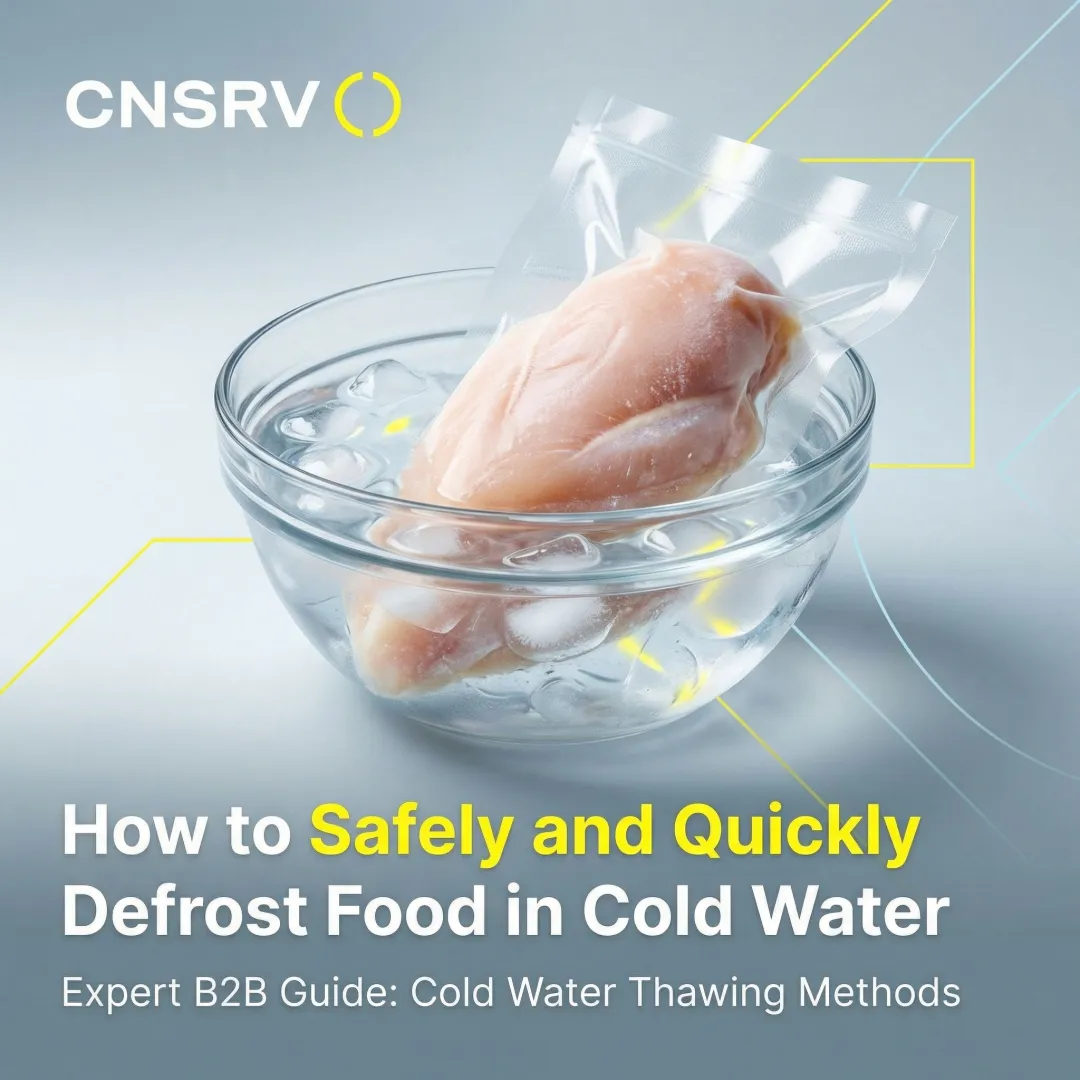
Confirm the chicken is in its original airtight packaging or transfer it to a heavy-duty, leak-proof zip-lock bag. Double-bagging is recommended for extra protection against leaks.
Why sealing matters:
- Bag leaks let bacteria from the surrounding water contaminate the meat — and allow chicken juices to escape into the thawing water and nearby surfaces
- Direct water contact causes meat tissues to absorb water, degrading texture and flavor
- A secure seal protects both the meat and the workspace throughout the thaw
Step 2: Set Up a Safe Thawing Station
Choose a large bowl, basin, or food-safe container deep enough to fully submerge the chicken. Fill it with cold tap water—not warm, not room temperature.
Key setup requirements:
- If the package floats, use a plate or weight to keep it fully submerged
- Partial submersion means uneven thawing and potential hot spots
- Commercial kitchens should account for health code requirements around container sanitation and temperature monitoring
Step 3: Monitor Water Temperature and Change Every 30 Minutes
Change the water every 30 minutes. Stagnant water warms quickly from contact with the frozen chicken's surface, pulling the outer meat layers into the bacterial danger zone before the center is even close to thawed.
Temperature control essentials:
- Water temperature should stay at or below 40°F per USDA guidance
- Use cold tap water for each water change
- In commercial kitchens processing large volumes, consistent water changes are often where compliance breaks down — making temperature monitoring critical
Step 4: Cook Immediately Once Thawed
Cook the chicken immediately once fully thawed. Per USDA guidance, chicken defrosted using this method cannot be safely refrigerated or refrozen raw — cooking must follow without delay.
How to tell when chicken is fully thawed:
- Flexible texture throughout with no hard frozen center
- Uniform cold temperature when gently pressed
- No frozen sections remain in thicker portions
Key Parameters That Affect Thawing Safety and Speed
The outcome of cold water defrosting depends heavily on controlling the right variables—getting even one wrong can mean undercooked centers, bacterial growth, or degraded meat quality.
Water Temperature
Water above 40°F pushes the outer layer of chicken into the bacterial danger zone, where pathogens like Salmonella and Campylobacter multiply rapidly. Even a few degrees too warm accelerates surface bacterial growth long before the center thaws. The USDA Food Safety and Inspection Service establishes 40°F as the critical threshold — bacteria can double in number in as little as 20 minutes once inside the danger zone.
Water Change Frequency
Stagnant water absorbs cold from the chicken and warms steadily. Skipping water changes is one of the most common reasons cold water defrosting fails safety standards — the outer layers can reach unsafe temperatures while the center stays frozen. Changing the water every 30 minutes maintains cold contact throughout the entire thaw.
Chicken Cut Size and Density
Thicker cuts hold cold at the core far longer than thin boneless breasts, meaning the outer layer can warm while the center stays frozen. Estimated thaw times by cut:
| Chicken Cut | Approximate Thawing Time |
|---|---|
| Small packages (~1 lb) | 1 hour or less |
| 3-4 lb package | 2-3 hours |
| Whole bird | ~30 minutes per pound |

Larger cuts require closer monitoring. A 12–16 lb whole bird takes 6–8 hours and needs 12–16 water changes to stay safe throughout.
Packaging Integrity
Any breach in the packaging allows bacteria-laden water to contact raw meat — and meat juices to contaminate the surrounding water and surfaces. Beyond safety, a leaking bag lets water absorb into muscle tissue, leaving a waterlogged, bland texture after cooking. Neither problem can be reversed once it occurs.
Common Mistakes When Defrosting Chicken in Water
Most cold water defrosting problems come down to a few repeatable errors — and each one either creates a food safety risk or defeats the method entirely.
- Warm or hot water: Speeds up surface thawing but immediately pushes outer meat into the bacterial danger zone. The USDA explicitly classifies this as unsafe — outer layers can start growing bacteria while the center remains frozen.
- Stagnant water left unchanged: Still water reaches room temperature within 45–60 minutes, creating the same danger zone conditions as counter thawing. Change the water every 30 minutes.
- Damaged or single-layer bags: Thin grocery bags and packaging with small tears allow cross-contamination between the water and meat. Water-logged chicken also loses flavor and develops a spongy texture.
- Continuously running water: Compliant only under very specific health code conditions. Traditional running-faucet methods consume 709–1,466 liters (187–387 gallons) per thawing session, compared to just 9 liters with recirculating systems — a 99% reduction.

Alternatives to Cold Water Defrosting
Cold water defrosting works well in many situations, but it's not always the right fit. The USDA approves three thawing methods total — and the best one depends on how much time you have, how much chicken you're handling, and how your kitchen runs.
Refrigerator Thawing
Refrigerator thawing is the safest method available — chicken stays below 40°F the entire time with zero monitoring required. The trade-off is time: plan on roughly one full day per pound.
The upside is flexibility. Chicken thawed in the refrigerator can be held safely for an additional 1-2 days before cooking, and it's the only method that allows raw refreezing without cooking first.
Microwave Defrost
The microwave is the fastest option — practical for single portions or thin cuts when you need to cook immediately.
A few hard limits apply:
- Remove foam trays and plastic wrap before starting
- Use the defrost or 30% power setting to minimize hot spots
- Cook immediately after — no holding, refrigerating, or raw refreezing
Uneven thawing is the main drawback. Hot spots can partially cook the chicken before it ever hits the pan.
Commercial Defrosting Systems (e.g., CNSRV DC:02)
For high-volume food service operations, purpose-built defrosting systems address the two biggest pain points with manual cold water defrosting: compliance monitoring and water waste.
The CNSRV DC:02 uses controlled water agitation and temperature regulation to defrost chicken in half the time of traditional methods, while using 98% less water than a running faucet. It's NSF-listed for food contact and meets FDA Food Code § 3-501.13 and California Retail Food Code standards — no continuous temperature checks required.
This approach is built for commercial scale, not home kitchens. For restaurants managing high defrost volumes, it removes the guesswork of manual cold water management and can save up to 1,000,000 gallons of water per kitchen per year.
Conclusion
Defrosting chicken in cold water is a safe, effective method when executed correctly—sealed packaging, cold water temperature, 30-minute water changes, and immediate cooking after thawing are non-negotiables.
For home cooks, the manual cold water method works well when followed carefully. For commercial kitchens managing volume and compliance daily, a controlled defrosting system removes the guesswork—cutting water use, reducing labor, and keeping every thaw health-code compliant.
Frequently Asked Questions
Can you thaw chicken in cold water, and is it faster or safer than other methods?
Yes, cold water thawing is USDA-approved and significantly faster than refrigerator thawing, running about 1 hour per pound versus 24 hours in the fridge. It still requires active management (sealed bag, fresh cold water every 30 minutes) to remain safe.
How long does it take to thaw out a chicken in cold water?
Roughly 1 hour per pound for smaller cuts; a 3-4 lb package takes 2-3 hours; a whole bird takes approximately 30 minutes per pound.
What temperature should the water be when defrosting chicken?
Use cold tap water at or below 40°F to keep the outer meat out of the bacterial danger zone. Avoid warm or room temperature water, which accelerates surface bacterial growth.
Is it safe to defrost chicken in warm or hot water?
No. The USDA does not recommend it. Warm or hot water quickly pushes the outer layer into the danger zone (40°F–140°F), where harmful bacteria multiply rapidly even while the center stays frozen.
Can you refreeze chicken after thawing it in cold water?
Chicken thawed in cold water must be cooked before refreezing. Once cooked, it can be safely refrozen. Refrigerator-thawed chicken can be refrozen raw with some quality loss.
Do you need to cook chicken right away after defrosting it in cold water?
Yes. The USDA requires cold-water-thawed chicken to be cooked immediately. Unlike refrigerator-thawed chicken, it cannot be held raw for an extra day or two.