Introduction
According to the CDC, Salmonella causes approximately 1 million illnesses from contaminated poultry each year in the United States alone. Improper chicken handling creates serious public health risks across commercial kitchens.
These infections lead to severe food poisoning symptoms and hospitalizations, disproportionately affecting vulnerable populations including young children, elderly adults, and immunocompromised individuals.
Chicken remains a staple protein in commercial food service operations, but the defrosting process creates a critical food safety window. The moment frozen chicken begins to thaw, bacteria like Salmonella and Campylobacter can multiply rapidly in the "danger zone" between 40°F and 140°F.
These pathogens double every 20 minutes under ideal conditions. Proper defrosting methods are essential for protecting staff and customers from foodborne illness.
TLDR
- Three USDA-approved methods: refrigerator, cold water, or microwave thawing
- Never thaw at room temperature—bacteria multiply rapidly in the 40°F-140°F danger zone
- Only refrigerator-thawed chicken can be refrozen safely
- Cook all chicken to 165°F internal temperature, measured with a food thermometer
- Refrigerator thawing takes 24 hours but offers the safest, highest-quality results
Why Safe Defrosting Matters
Understanding the Danger Zone
The "Danger Zone" spans 40°F to 140°F—the temperature range where bacteria multiply fastest. Pathogens double every 20 minutes here, turning minor contamination into a serious health threat within hours.
Frozen chicken remains safe indefinitely at 0°F. However, the moment outer layers begin thawing above 40°F, bacterial growth accelerates—even while the center stays frozen.
Thermal analysis research shows that during room temperature thawing, outer surfaces can stay above 41°F for 5 to 10 hours while the interior defrosts. This creates extended periods of dangerous bacterial multiplication.

Beyond Safety: Quality Matters Too
Safe defrosting protects more than your health—it also preserves food quality.
Poor defrosting methods damage chicken in multiple ways:
- Rapid thawing causes significant moisture loss
- Uneven defrosting creates mushy textures
- Room temperature methods compromise eating quality
- Unsafe practices waste product and money
The safest defrosting methods consistently produce the best-quality results.
Safe Defrosting Methods for Chicken
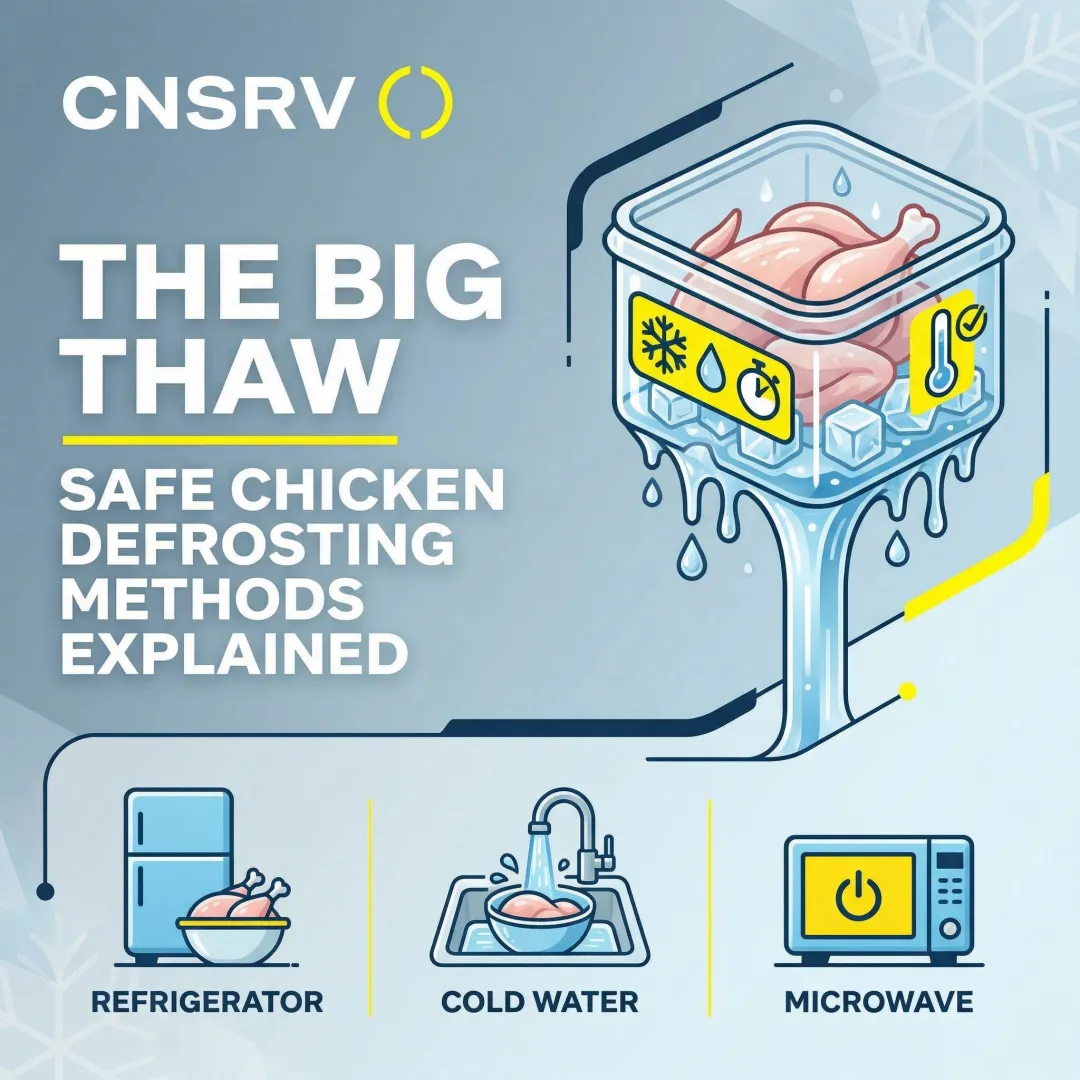
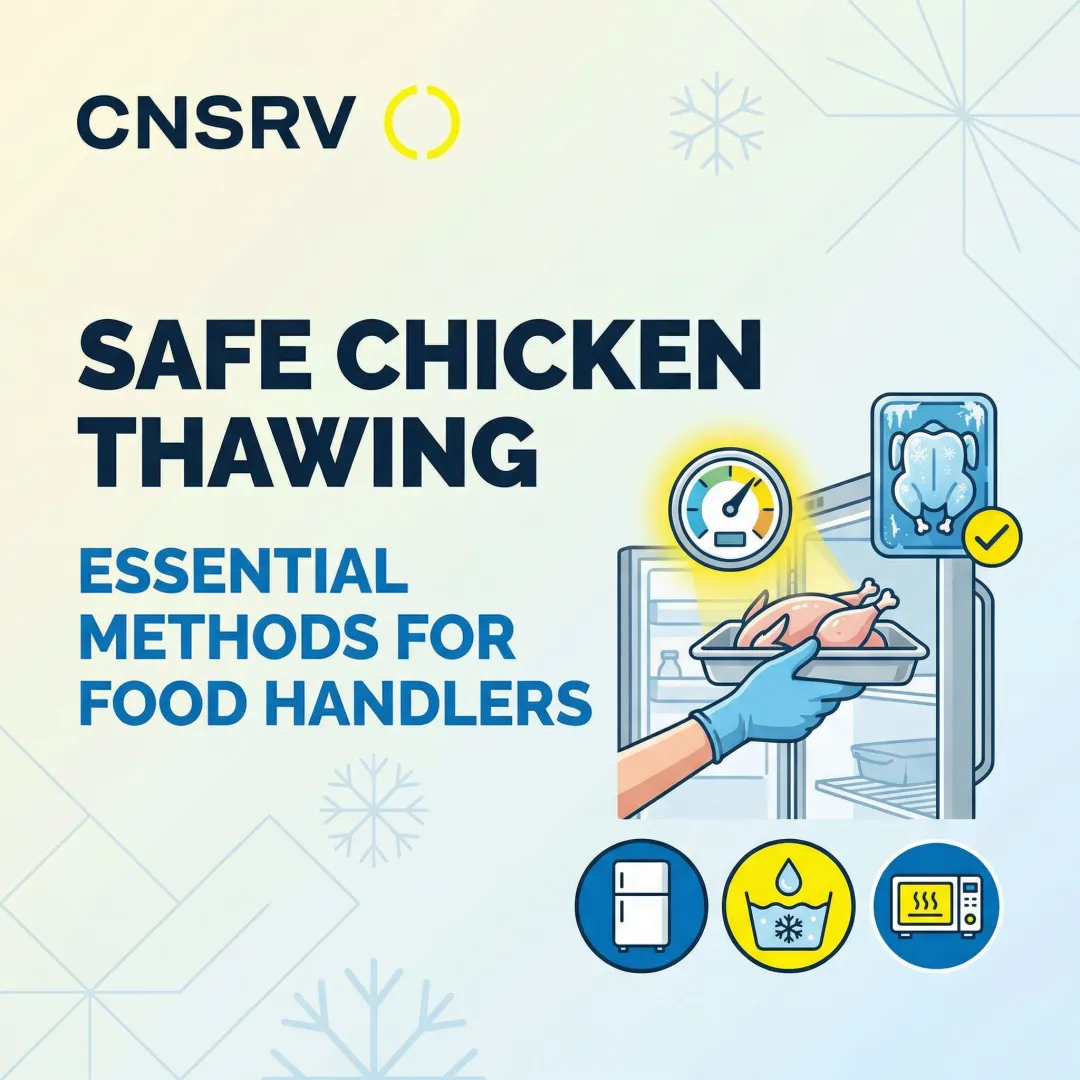
The USDA recognizes three safe thawing methods, each with specific requirements and time considerations. Choose based on your schedule and immediate cooking plans.
Refrigerator Thawing (Safest Method)
This gold-standard method keeps chicken at a constant safe temperature (40°F or below) throughout the entire thawing process. The consistent cold temperature prevents any bacterial growth, making it the most reliable option.
Timing guidelines:
- Boneless chicken breasts: 12-24 hours
- Bone-in chicken pieces: 24 hours
- Whole chickens: 24 hours per 5 pounds of weight
- Ground chicken: 24 hours
Key advantages:
- Thawed chicken stays safe in the refrigerator for 1-2 additional days before cooking
- Only method that allows refreezing without cooking (though quality may decrease)
- Requires minimal attention once placed in refrigerator
Best practices:
- Place chicken on the bottom shelf in a leak-proof container or pan
- This prevents dripping juices from cross-contaminating other foods
- Keep away from ready-to-eat items like produce or leftovers

Cold Water Thawing (Faster Method)
When you need chicken thawed within hours rather than days, cold water thawing offers a safe middle ground between refrigerator and microwave methods.
Requirements:
- Chicken must be in leak-proof packaging or sealed plastic bag
- Submerge completely in cold tap water
- Change water every 30 minutes to maintain cold temperature
Timing guidelines:
- Small packages (1 pound): 1 hour or less
- Larger packages (3-4 pounds): 2-3 hours
- Whole chickens: 30 minutes per pound
Critical rules:
- Cook chicken immediately after thawing—no holding period
- Cannot refreeze unless fully cooked first
- If packaging leaks, bacteria can contaminate the chicken and water absorption can compromise texture
Commercial kitchens handling high volumes face additional challenges with traditional water-thawing methods. Closed-loop defrosting systems like CNSRV's DC:02 offer an NSF-listed alternative that uses 98% less water while maintaining food safety standards through controlled temperature and circulation.
Microwave Thawing (Quickest Method)
Microwave thawing is the fastest option but requires immediate cooking due to uneven heating that can create warm spots entering the danger zone.
How it works:
- Use your microwave's defrost setting or 30-50% power level
- Some areas may begin cooking while others remain frozen
- Uneven temperatures create food safety risks if chicken isn't cooked immediately
Non-negotiable rules:
- Cook chicken immediately after microwave thawing—no exceptions
- Cannot refreeze unless fully cooked first
- Check for warm or partially cooked spots before proceeding to cooking
Cooking from Frozen
Running short on time? Skip thawing entirely—it's completely safe to cook chicken directly from its frozen state.
What you need to know:
- Requires approximately 50% longer cooking time
- Works well in ovens and on stovetops
- Not recommended for slow cookers or microwaves
- Use a meat thermometer to verify 165°F internal temperature throughout
This method eliminates thawing risks entirely while delivering safe, fully cooked chicken.

Common Defrosting Mistakes to Avoid
The Countertop Danger
Never thaw chicken on the counter, in the sink without cold water, or anywhere at room temperature. This is the most dangerous mistake home cooks make. While the center remains frozen, outer layers quickly enter the danger zone where bacteria multiply rapidly.
Hot Water Thawing
Another common mistake involves hot water, which creates dangerous temperature imbalances:
- Outer surfaces quickly reach the danger zone (40°F-140°F)
- Interior remains frozen, preventing even thawing
- Creates ideal conditions for bacterial growth on outer layers
The Refreezing Myth
Many people believe refreezing thawed chicken is always unsafe. The truth is more nuanced:
Safe to refreeze without cooking:
- Chicken thawed in the refrigerator (within 1-2 days)
- Quality may decrease due to moisture loss
Must cook before refreezing:
- Chicken thawed by cold water method
- Chicken thawed in microwave
Unconventional Methods
Beyond these common errors, some home cooks attempt creative but dangerous shortcuts:
- Thawing in cars or garages (temperature fluctuations)
- Using dishwashers (uncontrolled heat exposure)
- Leaving on heating vents (uneven thawing)
These methods create uncontrolled temperature conditions that compromise food safety.

Frequently Asked Questions
What is the safest method to thaw frozen chicken?
Refrigerator thawing is the safest method because it maintains chicken at a constant 40°F or below throughout the entire process, completely preventing bacterial growth while preserving quality.
What are the food-safety rules for thawing chicken?
Use only approved methods: refrigerator (safest), cold water with 30-minute water changes, or microwave with immediate cooking. Commercial kitchens can use NSF-listed defrosting systems that maintain safe temperatures while conserving water. Never thaw at room temperature—keep chicken below 40°F or cook immediately.
Can I refreeze chicken after thawing it?
Yes, if thawed in the refrigerator within 1-2 days. Chicken thawed by cold water or microwave must be cooked before refreezing. Expect some quality loss from moisture reduction.
How long does it take to safely thaw chicken in the refrigerator?
Boneless breasts require 12-24 hours, bone-in pieces need 24 hours, and whole chickens need 24 hours per 5 pounds. Always plan ahead for this safest method.
Is it safe to cook chicken directly from frozen?
Yes, cooking frozen chicken is completely safe. Expect 50% longer cooking time and use a meat thermometer to verify 165°F internal temperature throughout all parts.
How can I tell if my chicken was thawed unsafely?
Warning signs include slimy texture, off or sour odor, gray or yellow discoloration, or room temperature exposure over 2 hours. When in doubt, discard it—food poisoning isn't worth the risk.