Introduction
Foodborne illness from poultry remains a persistent threat in commercial kitchens. According to the CDC's Interagency Food Safety Analytics Collaboration, approximately 23% of foodborne Salmonella illnesses are attributed to chicken and turkey, with USDA sampling data showing 6.5% of chicken parts testing positive for Salmonella and 15% for Campylobacter.
These statistics translate directly into operational consequences. A single restaurant-associated outbreak can cost between $4,000 and $1.9 million in legal fees, lost revenue, and fines, with lawsuits and legal fees being the primary cost drivers.
Many of these outbreaks trace back to a single critical step: chicken thawing. Temperature abuse during thawing creates the perfect environment for bacterial multiplication, and unlike other food safety risks, thawing errors compound over time.
Proper procedures, training, and the right equipment make chicken thawing entirely manageable and safe.
TL;DR
- Bacteria doubles every 20 minutes in the danger zone (41°F-135°F)—plan ahead to avoid it
- Refrigerator thawing is safest; cold water works when you're short on time
- Microwave thawing requires immediate cooking; frozen-to-cooked works for high-volume kitchens
- Never thaw on counters or in hot water
- Prevent cross-contamination and refreeze only if thawed below 40°F
Understanding the Risks: Why Safe Thawing Matters for Food Handlers
The Temperature Danger Zone
The FDA Food Code defines the Temperature Danger Zone as 41°F to 135°F, the range where bacteria multiply most rapidly. Within this zone, pathogens like Salmonella and Campylobacter can double in number every 20 minutes.

The hidden danger: Frozen chicken appears safe on the outside while the surface layer enters the danger zone during improper thawing.
This creates a false sense of security—the exterior may feel frozen while bacterial growth accelerates in the thawed outer layers.
Why Cooking Doesn't Fix Everything
Thawing errors compound over time and cannot be fully corrected by cooking alone. While reaching 165°F kills bacteria like Salmonella and Campylobacter, certain pathogens produce heat-resistant toxins.
The critical problem with heat-resistant toxins:
- Staphylococcus aureus produces an enterotoxin that remains active even after thorough cooking
- Temperature abuse during thawing allows toxin formation
- Cooking to 165°F eliminates the bacteria but leaves the dangerous toxin intact
- The result: food that meets temperature standards but remains unsafe to consume
Safe Thawing Methods for Food Handlers
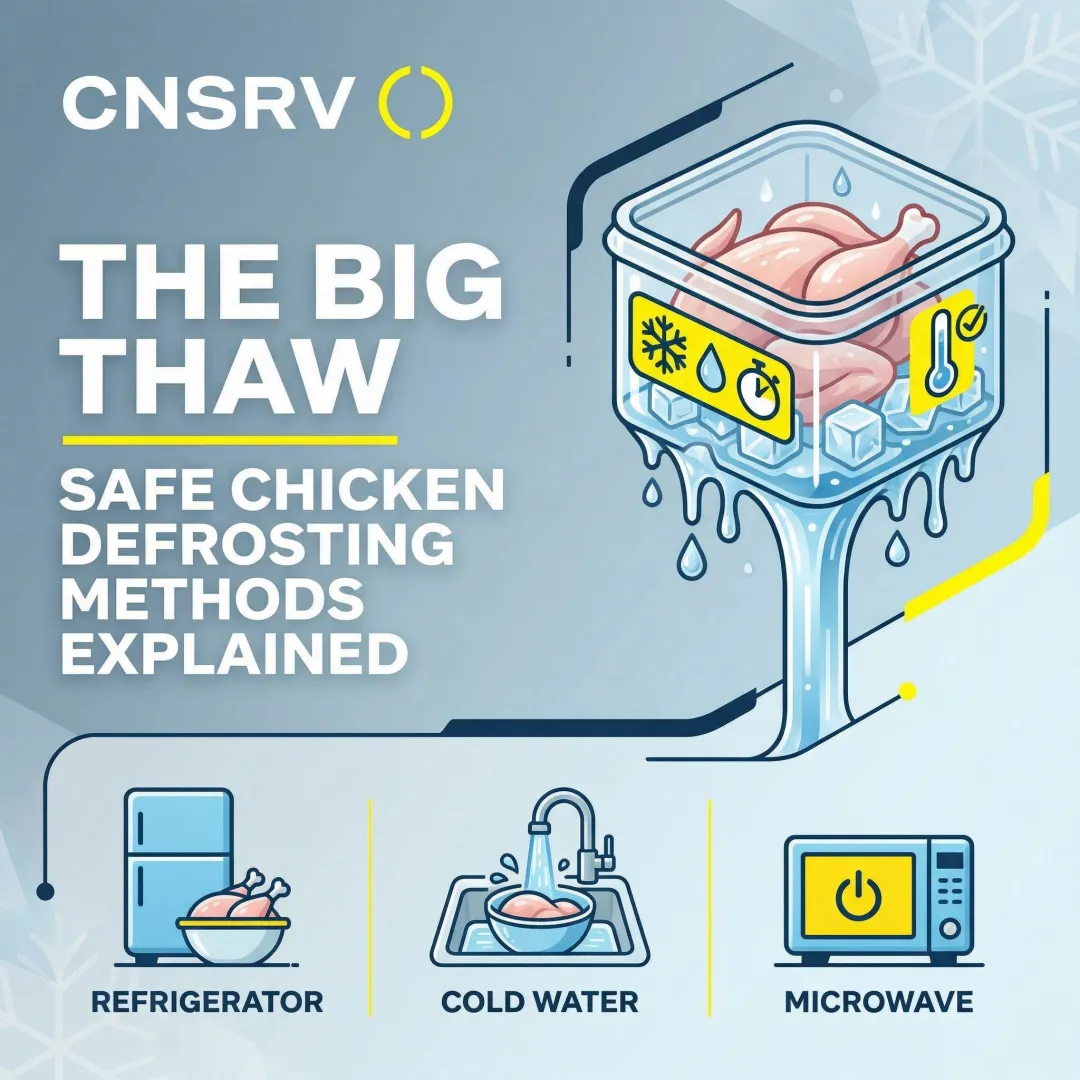
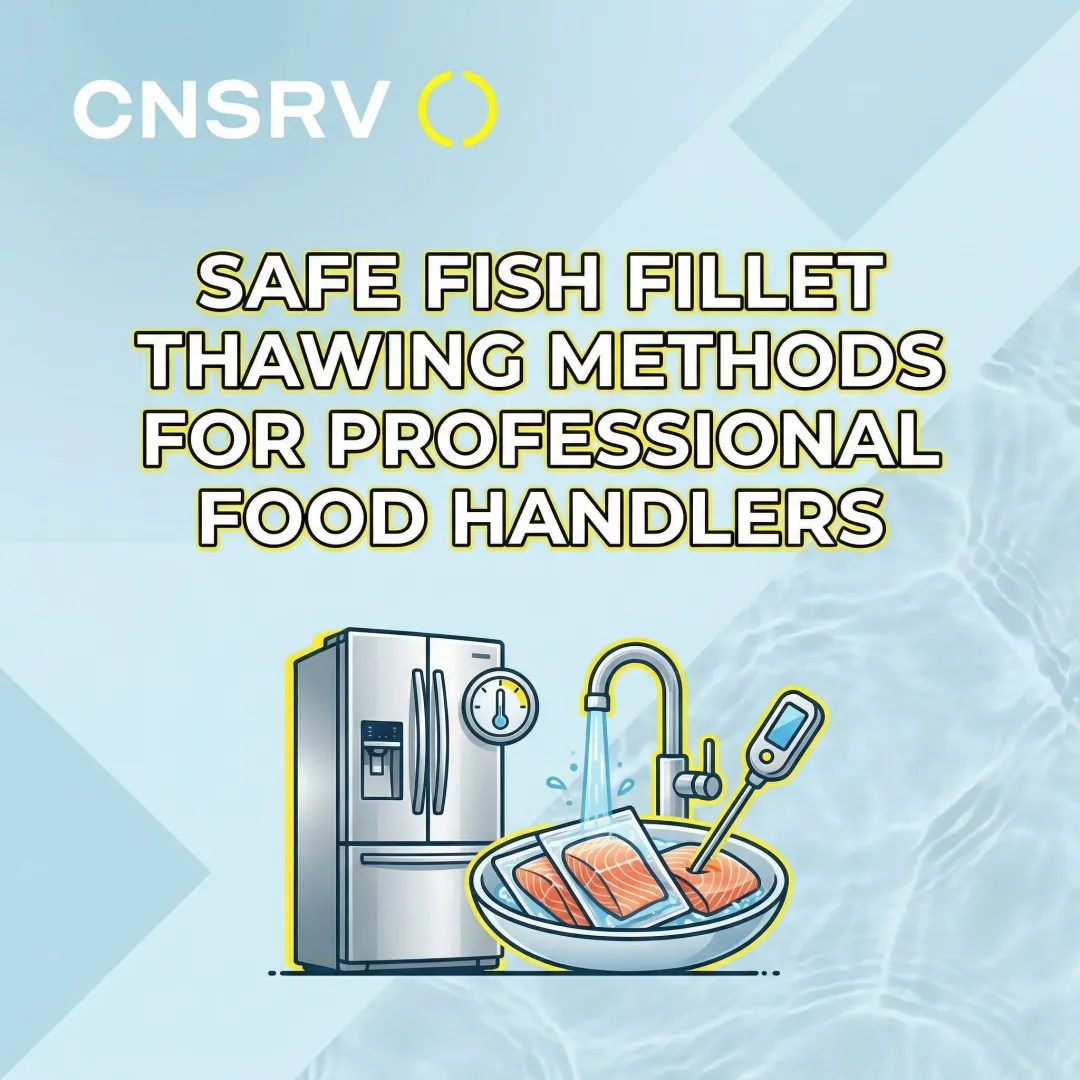
Four USDA-approved methods exist for thawing chicken safely. Choosing the right method depends on three factors: time available, product type (whole chicken vs. parts vs. ground), and kitchen capacity. No method is "set and forget"—all require active monitoring or planning.
Refrigerator Thawing Method
This is the safest method for commercial operations with adequate planning time.
Time requirements:
| Product Type | Thawing Time |
|---|---|
| Whole birds | 24 hours per 5 pounds |
| Chicken breasts and parts | 12-24 hours |
| Ground chicken | 12-24 hours |
Proper procedure:
- Place chicken on the lowest shelf in a leak-proof container or tray
- Maintain refrigerator temperature at 40°F or below
- Store below ready-to-eat foods to prevent cross-contamination
- Use FIFO (first in, first out) rotation for batch planning
Key advantages:
- Refrigerator-thawed chicken remains safe for 1-2 additional days before cooking
- Can be refrozen without cooking if plans change (though quality may diminish)
- Eliminates water waste entirely

Commercial kitchen considerations: Plan thawing schedules around menu cycles, designate dedicated thawing space, and integrate into prep schedules at least 24-48 hours before cooking.
Cold Water Thawing Method
This method offers faster thawing when refrigerator time isn't available.
Procedure:
- Submerge chicken in its original packaging or a leak-proof bag
- Use cold tap water at 70°F or below (FDA requirement)
- Change water every 30 minutes to maintain safe temperature
- Never use hot or warm water
Timing guidelines:
- 30 minutes per pound as a general rule
- 1-pound package: 30-60 minutes
- 3-4 pound chicken: 2-3 hours
- Must complete within 2 hours (California requirement)
Critical rules:
- Chicken must be cooked immediately after thawing
- Cannot be refrozen unless cooked first
- Requires constant monitoring and water changes

Traditional cold water thawing wastes significant water—a concern for high-volume operations managing both costs and sustainability goals.
Commercial water circulation systems address this challenge. NSF-listed systems like CNSRV maintain safe temperatures below 70°F while using 98% less water than running faucets. Controlled circulation completes thawing in half the time, helping kitchens save up to 1 million gallons annually while meeting health code requirements.
Microwave Thawing Method
Best for small portions and last-minute menu changes.
Procedure:
- Use defrost setting or low power
- Rotate and flip chicken frequently to ensure even thawing
- Cook immediately using any method (not just microwave)
Why immediate cooking is required: Microwaves create uneven heating with hot spots where food begins cooking and cold spots where bacteria survive. Some portions may reach the danger zone while others remain frozen.
Best applications:
- Chicken breasts and tenders
- Small portions for individual orders
- Emergency menu changes
Not recommended for: Whole birds or large cuts that thaw unevenly.
Cooking from Frozen
The safest method for time-crunched operations.
Key advantages:
- Chicken never enters the danger zone during thawing
- Eliminates thawing-related food safety risks entirely
- No planning or monitoring required
Important considerations:
- Cooking time increases about 50% compared to thawed chicken
- Requires adjustment to prep schedules and cooking procedures
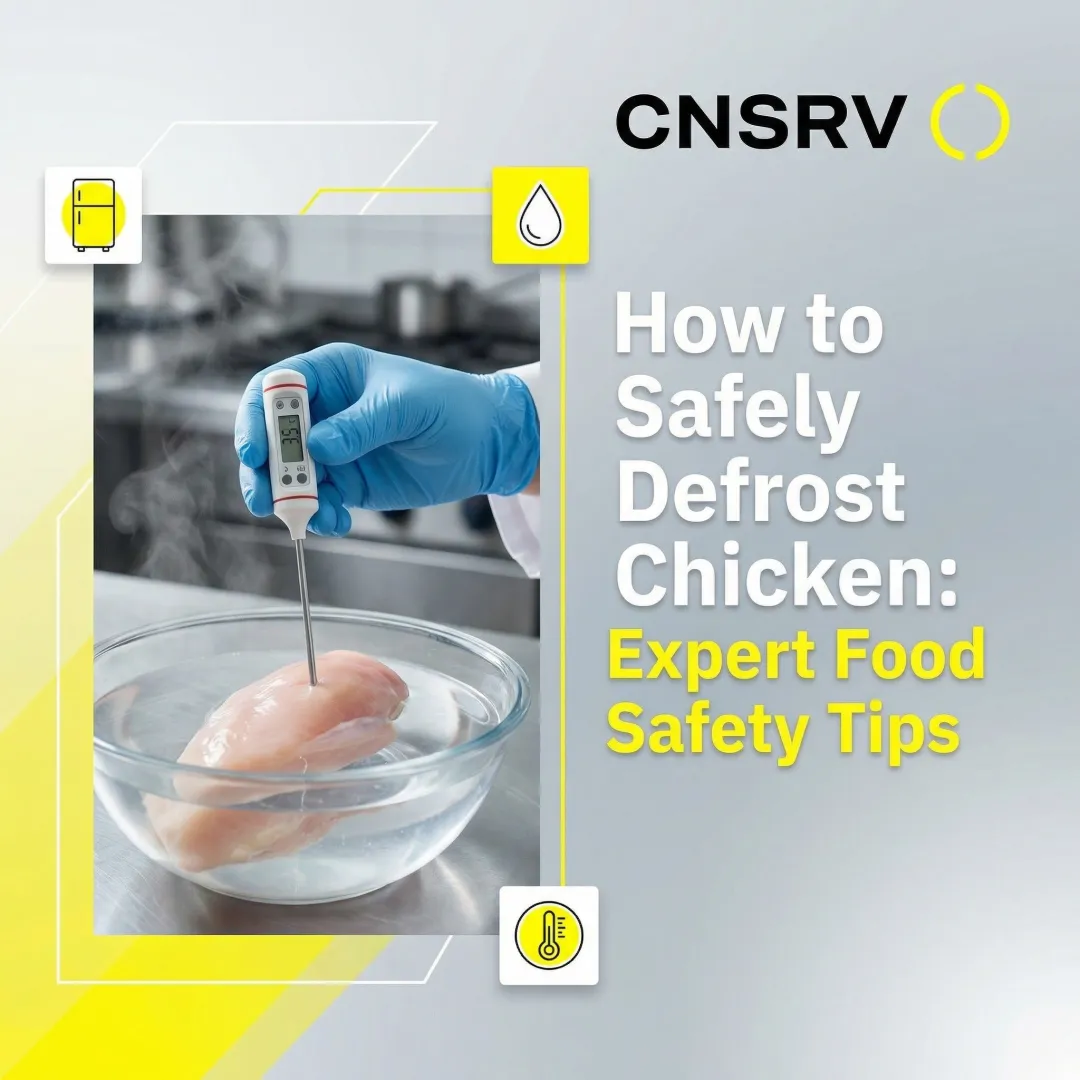
- Use a calibrated food thermometer to verify 165°F internal temperature
- Frozen chicken cooks unevenly, making temperature verification critical
Works well for:
- Grilled chicken breasts
- Baked chicken pieces
- Roasted chicken parts
Not suitable for:
- Whole roasted chicken (exterior overcooks before interior reaches 165°F)
- Stuffed chicken preparations
- Slow cooker recipes
Environmental and System Safety Considerations
Workspace setup requirements:
- Designate thawing areas separate from food prep zones
- Ensure proper drainage for cold water methods
- Install temperature monitoring equipment
- Provide adequate refrigeration space for planned thawing
High-volume operations: Plan thawing schedules around menu needs to prevent last-minute unsafe shortcuts. Batch planning for 48-72 hours ahead eliminates the temptation to use risky methods.
Sustainability meets safety: Commercial thawing systems help operations meet both food safety requirements and sustainability goals. Water-efficient systems help kitchens reduce consumption by up to 1 million gallons per year while maintaining health code compliance through controlled temperature and circulation.
Documentation for HACCP compliance:
- Log thawing start times and methods used
- Record staff responsible for monitoring
- Document temperature checks during cold water thawing
- Maintain records for health inspections
Common Safety Mistakes to Avoid
Thawing on Countertops or in Hot Water
Room temperature (68-72°F) and hot water accelerate bacterial growth rapidly. According to USDA food safety guidelines, the outer layer reaches the danger zone while the center remains frozen, creating uneven thawing that masks danger.
Bacteria multiply rapidly on the surface while the interior appears safely frozen.
Refreezing Improperly
Follow these refreezing rules:
- Refrigerator-thawed chicken: Can be refrozen without cooking within 1-2 days
- Cold water or microwave-thawed chicken: Must be cooked before refreezing
- Quality diminishes with each freeze-thaw cycle, but safety is maintained when rules are followed
Ignoring Cross-Contamination Risks
Beyond thawing method, cross-contamination creates serious risks. Thawing juices can contaminate surfaces, other foods, and hands.
Critical prevention steps:
- Use dedicated leak-proof containers
- Place chicken on the lowest refrigerator shelf (never above ready-to-eat foods)
- Clean and sanitize all surfaces immediately after handling
- Wash hands thoroughly before and after contact
- Store raw poultry below other raw meats (which require lower cooking temperatures)

Skipping Time and Temperature Documentation
Health inspectors specifically look for thawing logs. Missing documentation can result in violations even when actual practices are safe.
Your logs must include:
- Method used (refrigerator, cold water, microwave, or cooking from frozen)
- Start and completion times
- Water temperature checks (for cold water method)
- Staff member responsible
- Any corrective actions taken
Conclusion
Safe chicken thawing depends on three essential factors:
- Choose the right method for your timeline (refrigerator, cold water, or commercial defrosting system)
- Maintain temperature control throughout the process (never above 41°F)
- Prevent cross-contamination with proper handling and separate storage
Treat thawing as a critical control point in your HACCP plan, not an afterthought. Schedule thawing time at least 24-48 hours in advance, train staff on proper procedures, and document every step.
Modern commercial defrosting systems can streamline this process by cutting thaw times in half while maintaining NSF food safety standards. The small investment in planning—whether through better scheduling or equipment upgrades—prevents the catastrophic costs of foodborne illness outbreaks and keeps your operation running smoothly.
Frequently Asked Questions
How can a food handler safely thaw frozen chicken patties?
Three safe methods work well: refrigerator thawing (12-24 hours on lowest shelf), cold water thawing (30-60 minutes with 30-minute water changes), or cooking from frozen (best for thin patties, adds 50% cooking time).
Where should a food handler thaw frozen chicken patties?
Use the refrigerator's lowest shelf in a covered container, or a dedicated prep sink for cold water thawing. Never thaw on countertops or near ready-to-eat foods. Commercial kitchens may also use NSF-listed defrosting systems designed for food safety compliance.
Can you refreeze chicken after thawing it?
Yes, if thawed in the refrigerator—refreeze within 1-2 days without cooking. Chicken thawed by cold water or microwave must be cooked first before refreezing.
How long does chicken take to thaw in the refrigerator?
Chicken parts and ground chicken need 12-24 hours, while whole chickens require 24 hours per 5 pounds of weight.
What temperature should water be for cold water thawing?
Keep water at 70°F or below (FDA requirement), ideally 50-60°F using cold tap water. Change water every 30 minutes to prevent bacterial growth.
Is it safe to cook chicken directly from frozen?
Yes, it's very safe since chicken never enters the danger zone. Add 50% cooking time and verify 165°F internal temperature with a calibrated thermometer. Best for chicken parts, not whole birds or stuffed items.