Introduction
Improper thawing of Time/Temperature Control for Safety (TCS) foods remains a critical risk factor in commercial foodservice. According to the CDC's National Outbreak Reporting System, time-temperature abuse contributes to approximately 13% of foodborne illness outbreaks—a significant portion of which begins during the thawing process. These outbreaks translate directly into serious operational consequences:
- Food recalls and health code violations
- Temporary closures and legal liability
- Lasting damage to business reputation
TCS foods—including meat, poultry, seafood, dairy, cooked vegetables, and eggs—are inherently high-risk when thawed improperly. Bacteria multiply rapidly once food surfaces enter the "danger zone" between 41°F and 135°F, creating unsafe conditions even when the center remains frozen.
Health inspections in major jurisdictions like New York City consistently flag improper thawing as a critical violation, affecting sanitary grades and reputation.
TLDR
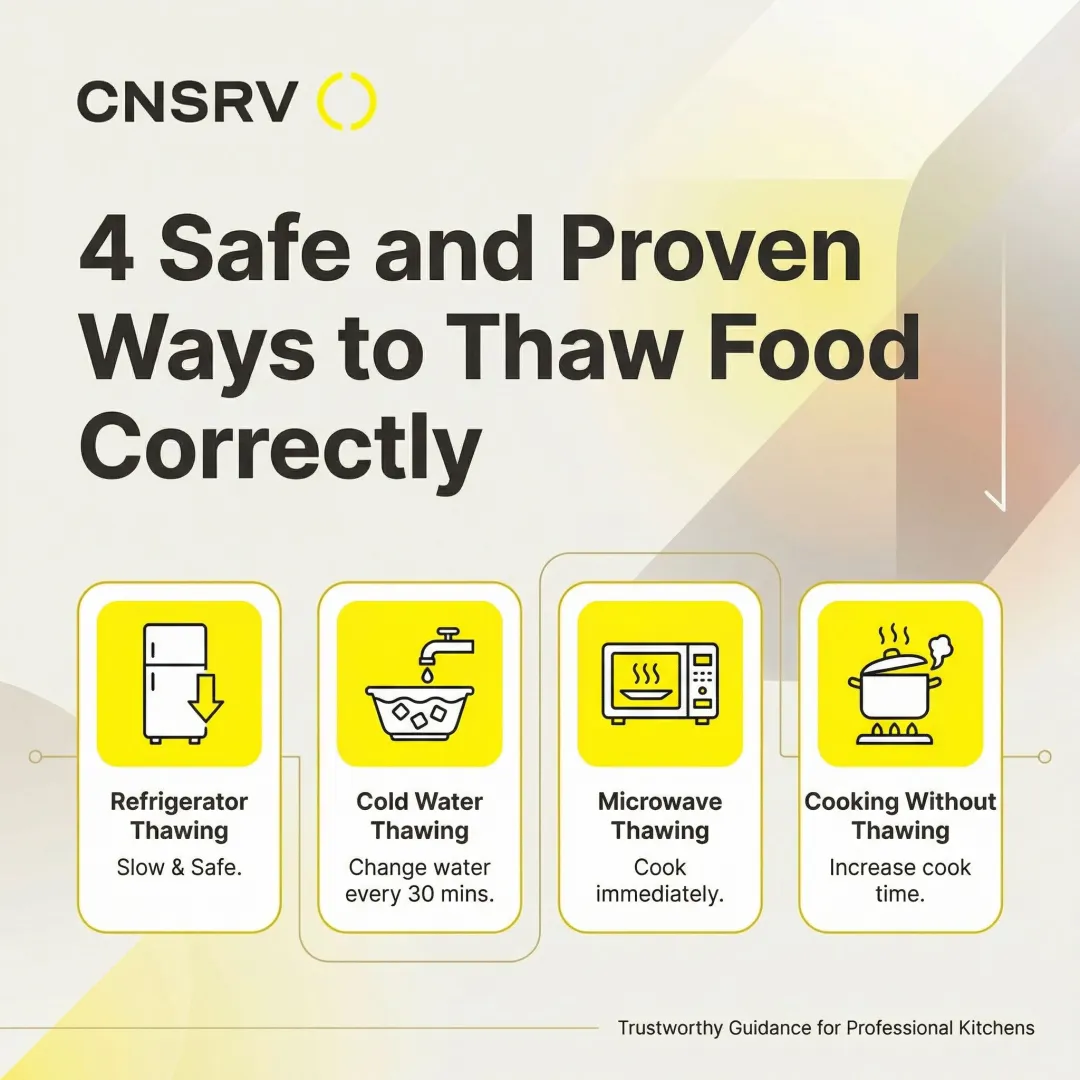
- Four FDA-approved methods: refrigeration, cold running water, microwave + immediate cooking, or direct cooking from frozen
- Never thaw at room temperature, with hot water, or in standing water above 70°F
- Keep food below 41°F during thawing or cook immediately afterward
- Document thawing times and temperatures to pass health inspections
- Modern closed-loop systems can maintain safety standards while reducing water waste by up to 98%
Understanding TCS Foods and Thawing Safety
What Are TCS Foods?
The FDA Food Code defines TCS foods as those requiring strict time and temperature control to limit pathogenic microorganism growth or toxin formation. This category includes:
- Animal products: Raw or cooked meat, poultry, fish, shellfish, and eggs
- Plant products: Cooked rice, beans, pasta, potatoes; raw seed sprouts; cut melons, tomatoes, and leafy greens
- Other items: Tofu, soy protein foods, and garlic-in-oil mixtures
The Temperature Danger Zone Explained
The danger zone—41°F to 135°F—is the temperature range where pathogens grow most rapidly. Research shows how severe this risk is: in studies simulating ambient thawing conditions, populations of E. coli O157:H7 and Salmonella increased by approximately 3.12 and 2.43 log CFU (colony-forming units) respectively over a 10-hour period.
Even Listeria monocytogenes, which can grow slowly at refrigeration temperatures, showed 3.42 log CFU increases under similar conditions.

The Outside-In Thawing Problem
Frozen food thaws from the outside toward the center, creating a critical safety challenge. While the core remains frozen, outer layers warm into the danger zone for hours.
This extended time in unsafe temperatures provides ideal conditions for bacterial multiplication. Surface contamination can produce toxins that cooking may not eliminate, particularly on high-risk items like:
- Ground meats: Increased surface area from grinding spreads bacteria throughout
- Poultry: Elevated Salmonella risk
- Seafood: Rapid spoilage characteristics
- Mechanically tenderized meats: Internal contamination from blade penetration
Regulatory Framework
Commercial operations must comply with multiple regulatory standards:
- FDA Food Code 2022 §3-501.13: Explicitly mandates four approved thawing methods
- Local health department standards: Often enforce stricter interpretations
- USDA FSIS guidelines: Provide additional requirements for meat and poultry establishments
Approved Safe Thawing Methods for TCS Foods
Refrigeration Thawing (Safest Method)
Procedure:Place frozen TCS food in a leak-proof container on the bottom shelf of a refrigerator maintained at 41°F or below. Food never enters the danger zone, making this the safest option.
Timing Guidelines:
| Item Weight | Thaw Time at 40°F |
|---|---|
| 1-2 lbs (ground meat, boneless breast) | 12-24 hours |
| 5 lbs (roast, small turkey) | 24 hours |
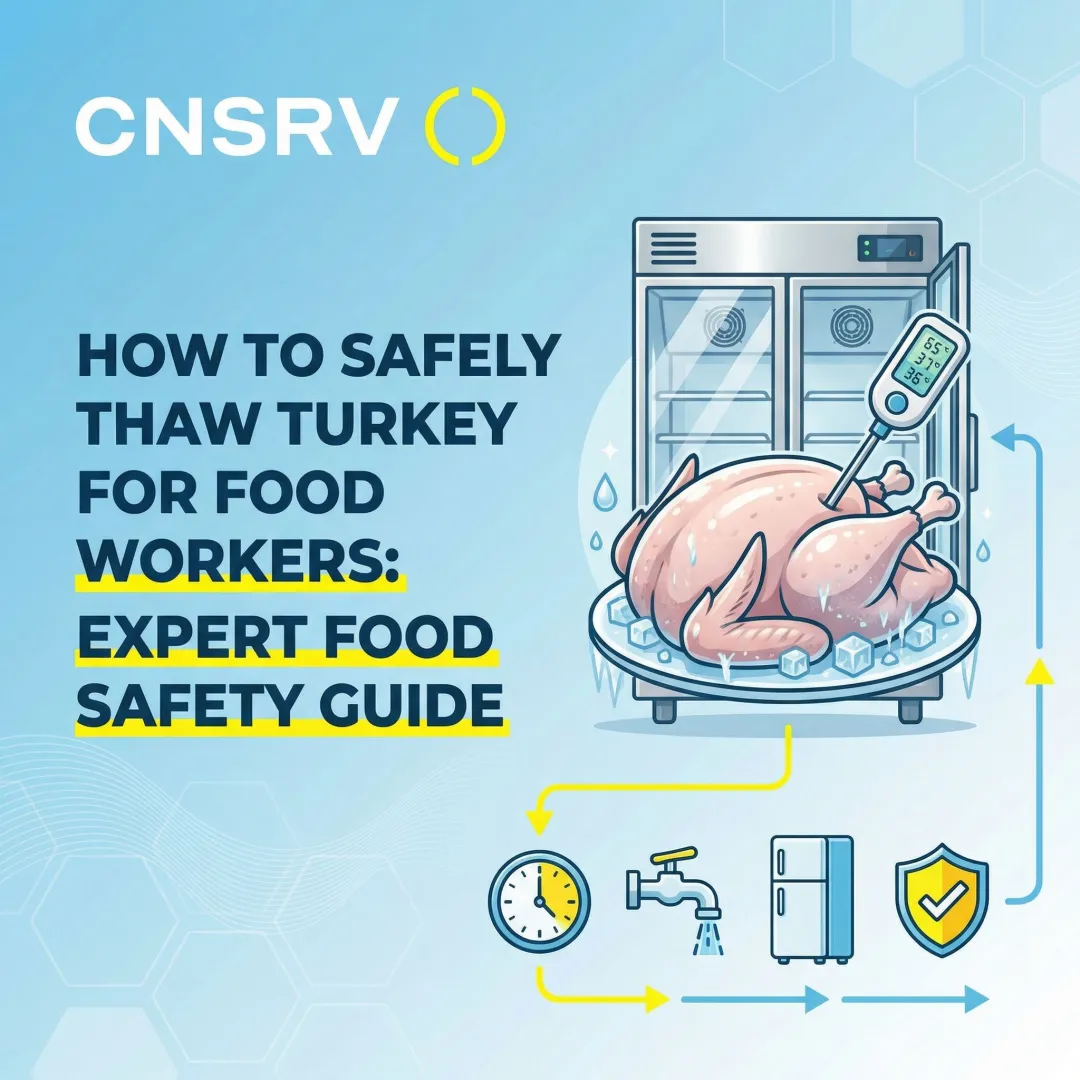
| 20 lb turkey | 4-5 days |
Shelf-Life After Thawing:
- Ground meat and poultry: 1-2 days
- Whole cuts (roasts, chops, steaks): 3-5 days
- Refreezing option: Food thawed in the refrigerator can be refrozen without cooking, though quality may decrease
Planning Tip: Plan production schedules 24-48 hours ahead for small items and up to a week for large roasts or turkeys.

When time is limited, cold running water thawing offers a faster FDA-approved alternative.
Cold Running Water Thawing (Faster Alternative)
Procedure:Submerge food in leak-proof packaging under cold running water at 70°F or below. The FDA requires sufficient water velocity to agitate and float off loose particles.
Timing:
- Approximately 30 minutes per pound
- Small packages (1 lb): Under 1 hour
- 3-4 lb packages: 2-3 hours
Critical Requirements:
- Water temperature: 70°F or below at all times
- Keep food in leak-proof packaging throughout process
- Raw animal foods: Total time above 41°F cannot exceed 4 hours (including thawing, prep, and cooling)
- Cook immediately after thawing—do not refreeze without cooking
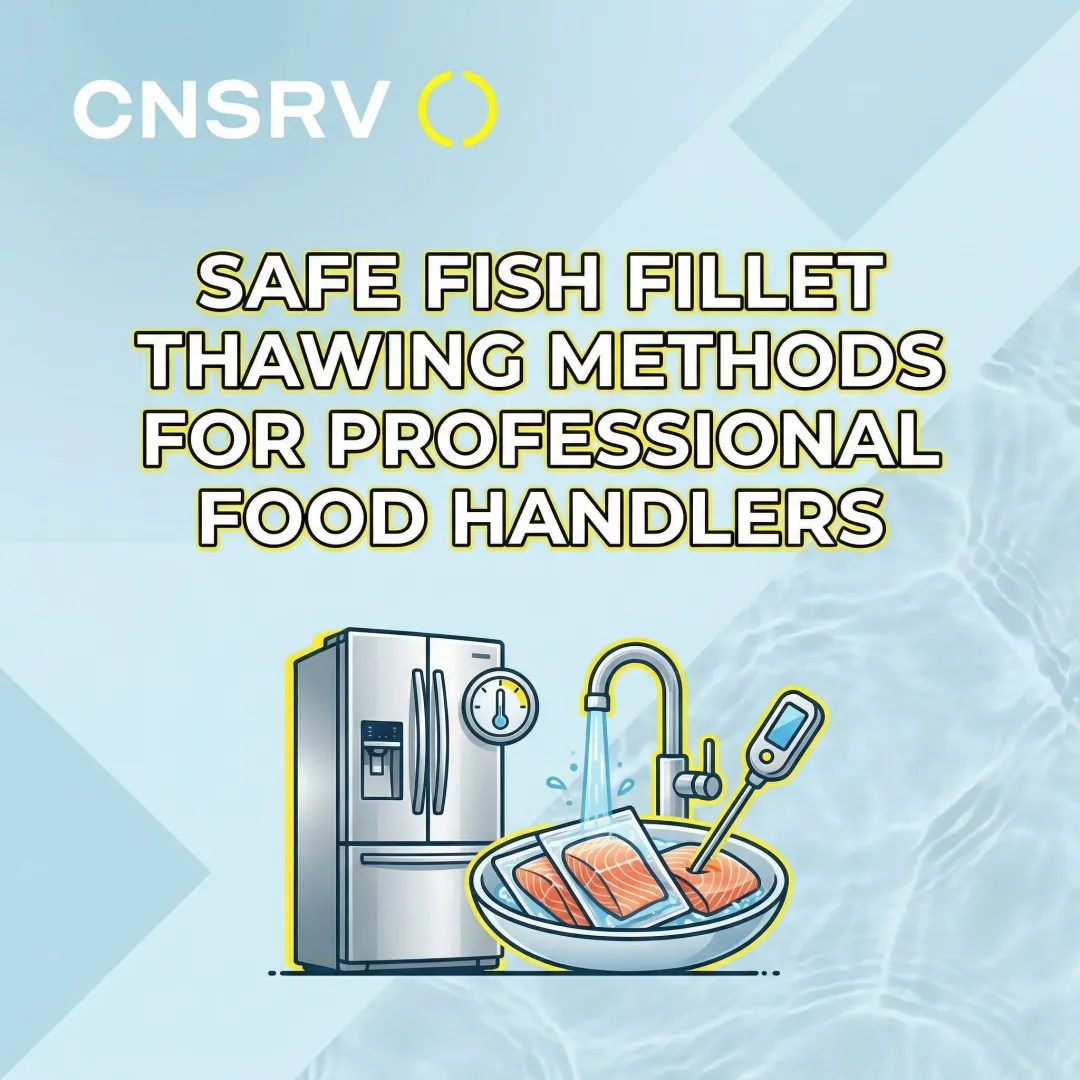
Special Consideration for ROP Fish:Vacuum-packed fish must be removed from reduced oxygen packaging before refrigeration thawing OR immediately upon completion of running water thawing to prevent Clostridium botulinum growth.
Microwave Thawing (Immediate Cooking Required)
Risks:Microwaves create uneven heating with "hot spots" where portions begin cooking while other areas remain frozen. These warm zones can reach danger zone temperatures.
Safe Practices:
- Use defrost setting only
- Rotate food frequently
- Separate pieces as they thaw
- Monitor closely to prevent edge cooking
Critical Rule:Food must transfer immediately to conventional cooking equipment with no interruption. It cannot be refrigerated or held for later cooking.
Cooking from Frozen (No Thawing Required)
When It Works Best:
- Ground meats
- Thin cuts
- Individually quick-frozen items
- Soups and stews
Cooking Time Adjustments:Expect approximately 50% longer cooking time than recommended for thawed products. Always verify safe internal temperatures with a calibrated thermometer.
Limitations:Not suitable for large whole items (turkeys, roasts) that may cook unevenly, stuffed items, or breaded products that may burn before centers cook through.

Safety During Commercial Thawing Operations
Proper Placement and Storage
Critical Requirements:
- Thaw on bottom shelves to prevent cross-contamination from drips
- Use dedicated thawing areas separate from prep zones
- Maintain physical separation between raw and ready-to-eat foods
- Never use the same sink simultaneously for thawing and warewashing
Monitoring Requirements
Daily Protocols:
- Check and log refrigerator temperatures at least twice daily
- Document start times and expected completion times for all thawing items
- Inspect food condition before and after thawing for signs of temperature abuse (off odors, slime, discoloration)
- Verify water temperature stays at or below 70°F during running water thawing
Employee Training Needs
Staff must demonstrate competency in:
- Recognizing all four approved thawing methods
- Identifying signs of temperature abuse
- Knowing when to discard compromised food
- Understanding the 4-hour cumulative time limit for food above 41°F
The FDA requires that the Person in Charge ensure employees properly maintain TCS food temperatures during thawing, making training a regulatory mandate rather than a suggestion.
HACCP Documentation
Required Log Elements:
- Date and time
- Item description and weight
- Thawing method used
- Start and end times
- Temperature monitoring results
- Employee initials
These records demonstrate compliance during health inspections and provide critical documentation if foodborne illness occurs.
Modern Equipment Solutions
Meeting these documentation and monitoring requirements becomes easier with modern technology. Closed-loop thawing systems represent a significant advancement in commercial thawing operations.
These NSF-listed systems maintain water temperature control and high-velocity circulation while conserving water. Systems like the CNSRV DC:02 automate temperature monitoring and can save up to 1,000,000 gallons annually per kitchen while maintaining compliance with FDA Food Code requirements.
Environmental and System Safety Considerations
Ambient Temperature Effects
Kitchen environment directly impacts thawing safety:
- Warmer ambient temperatures speed up outer layer warming
- Compromised refrigeration systems may fail to maintain safe temperatures
- Seasonal variations require procedure adjustments
- Summer months pose elevated risk when municipal water temperatures rise to 75-85°F
Water System Considerations
Beyond ambient conditions, water system characteristics determine both safety compliance and resource efficiency.
Traditional Running Water Method:
- Typical commercial faucets flow at 2.2 gallons per minute
- Thawing a single batch for one hour consumes approximately 132 gallons
- EPA research on commercial food thawing documents continuous running water methods using 187-387 gallons per trial
- Water temperature must be verified to stay at or below 70°F
Water Conservation Alternatives:Recirculating systems can reduce water use by over 90% while maintaining required velocity and temperature. Systems like CNSRV's NSF-listed defrosting equipment use closed-loop water circulation to achieve 98% water reduction compared to traditional faucet methods, while maintaining the temperature and agitation velocity required for food safety compliance.

Equipment Maintenance
Proper equipment maintenance ensures consistent safety performance.
Regular Requirements:
- Calibrate thermometers monthly
- Inspect refrigeration units for consistent temperature distribution
- Clean and sanitize thawing containers and equipment between uses
- Verify sinks meet NSF/ANSI standards for food contact
Common Thawing Safety Mistakes to Avoid
Never Thaw at Room Temperature
This is the most common violation found during health inspections. Even if the center remains frozen, outer layers quickly enter the danger zone where bacteria multiply rapidly.
Leaving frozen meat on counters, in garages, basements, or outdoors is strictly prohibited under food safety regulations.
Don't Use Hot Water or Warm Standing Water
Hot water creates serious food safety risks:
- Accelerates bacterial growth on outer layers
- Creates uneven thawing with dangerous temperature gradients
- Violates health codes in all jurisdictions
Inspection reports frequently cite violations such as "rotisserie chicken observed thawing in standing water" or "thawing meat in sink" without running water.

Avoid Refreezing Improperly Thawed Food
Food that has been in the danger zone for more than 4 hours cumulative time must be discarded, not refrozen. When in doubt, throw it out.
Only food thawed in the refrigerator can be safely refrozen without cooking, though quality will suffer.
Don't Skip Documentation
Failure to maintain thawing records can result in health code violations even if proper methods were used.
This creates significant liability issues if foodborne illness occurs, as you cannot demonstrate compliance without documentation.
Conclusion
Safe TCS food thawing depends on three non-negotiable factors:
- Maintaining proper temperatures (below 41°F or cooking immediately)
- Following approved methods consistently
- Documenting procedures for accountability
Treat thawing as a critical control point in your food safety system, not an afterthought. Proper planning prevents the rushed decisions that lead to unsafe shortcuts and regulatory violations.
Modern defrosting systems like NSF-listed commercial equipment can streamline safe thawing practices while reducing water waste—combining regulatory compliance with operational efficiency. The right approach protects your customers, your reputation, and your bottom line.
Frequently Asked Questions
What is the correct method for thawing TCS food?
Four FDA-approved methods exist: refrigeration at 41°F or below, cold running water at 70°F or below, microwave with immediate cooking, or cooking directly from frozen. Refrigeration is the safest option as food never enters the danger zone.
Which of the following is not an approved method of thawing TCS food?
Avoid room temperature thawing, hot water thawing, leaving food on counters, or using standing water above 70°F. Any method that allows food to remain in the danger zone (41°F-135°F) without immediate cooking violates safety standards.
How long can TCS food safely thaw in the refrigerator?
Plan approximately 24 hours per 5 pounds of food. Once thawed, ground meat and poultry stay safe for 1-2 additional days, while whole cuts remain safe for 3-5 days.
Can I refreeze TCS food after thawing?
Food thawed in the refrigerator can be refrozen without cooking, though quality may suffer. Food thawed by cold water or microwave methods must be cooked before refreezing.
What temperature should water be for safe cold-water thawing?
Water must be 70°F or below and changed every 30 minutes. Food must be in leak-proof packaging to prevent contamination. Commercial operations can use automated defrosting systems like CNSRV's technology, which maintains proper temperature control while using 98% less water than traditional faucet methods.
How do I document thawing procedures for health inspections?
Maintain logs showing date, item description, thawing method, start/end times, temperatures, and responsible employee. These records demonstrate HACCP compliance during health inspections.