Introduction
The 2017-2019 Salmonella Reading outbreak linked to raw turkey products resulted in 356 illnesses across 42 states. CDC investigations revealed that contamination frequently stemmed from improper handling and temperature abuse in foodservice settings—making turkey thawing procedures a critical compliance and safety issue for commercial kitchens.
Unlike home cooks, food workers operate under high-volume demands, strict time constraints, and regulatory oversight requiring documented compliance with USDA/FSIS guidelines.
A single mistake in your thawing protocol—leaving turkey at room temperature, failing to change water every 30 minutes, or inadequate documentation—can trigger health code violations, significant product loss, and potential illness outbreaks. This guide provides the specific protocols commercial kitchens need to thaw turkey safely while maintaining operational efficiency.
TL;DR
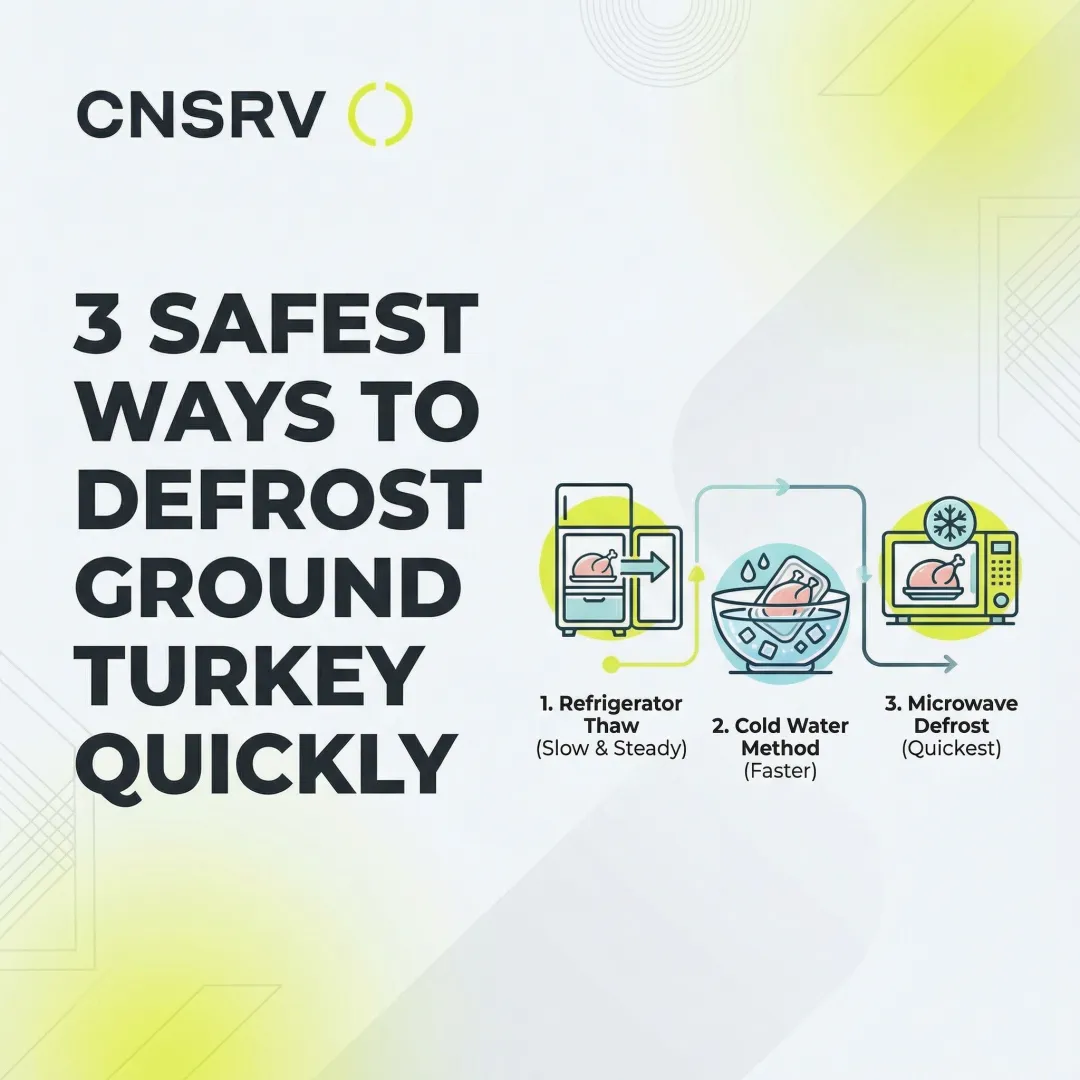
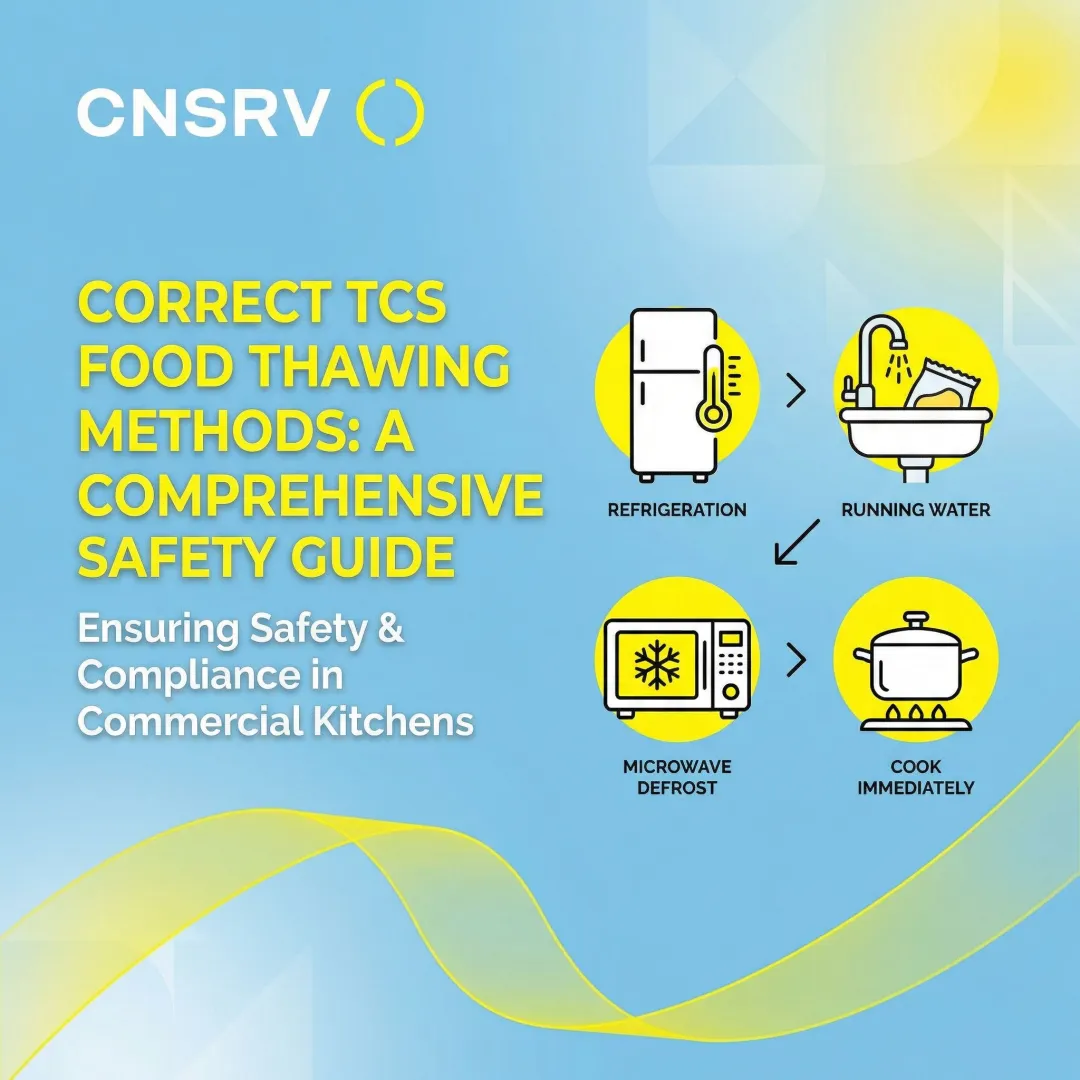
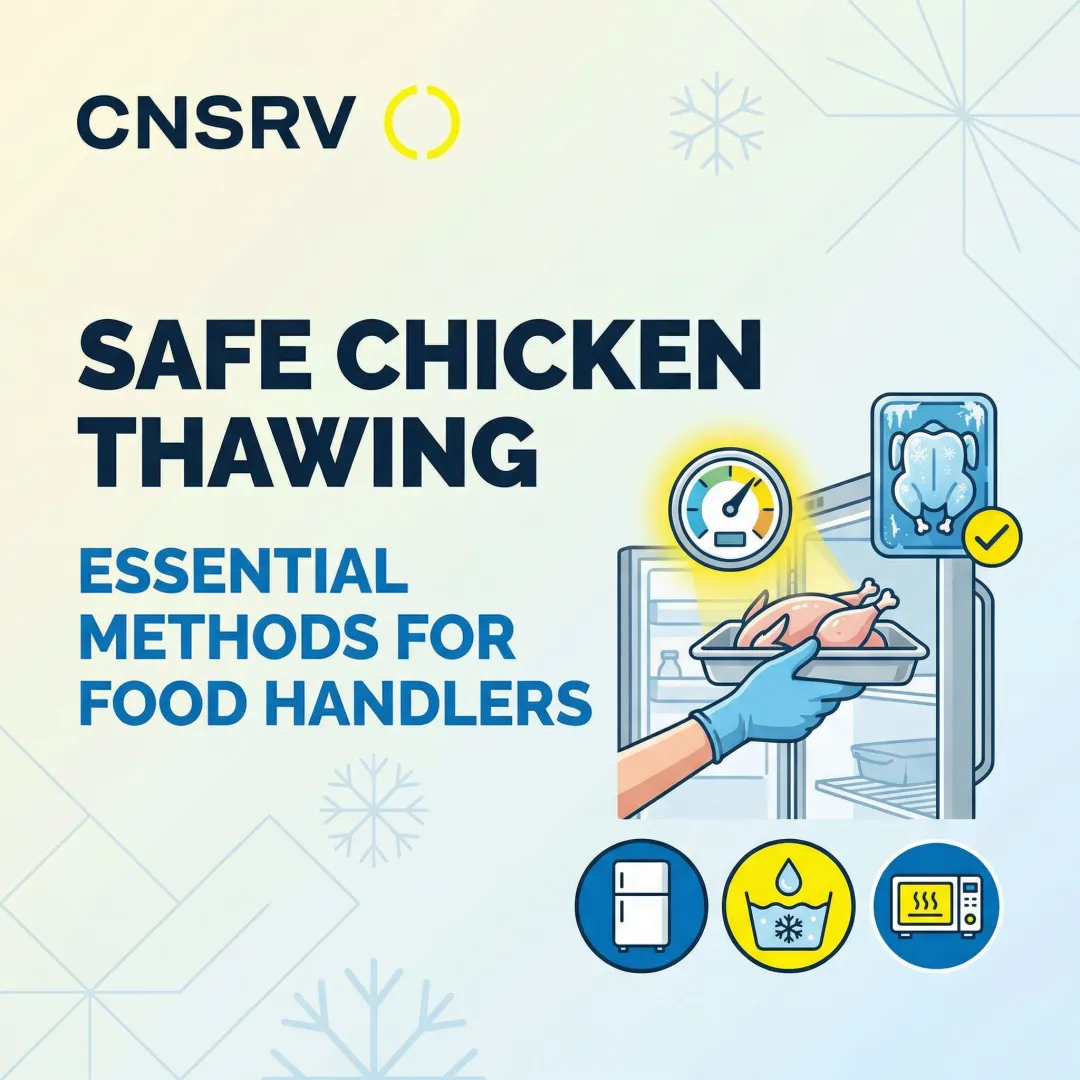
- Three approved methods: refrigerator (24 hrs per 4-5 lbs), cold water (30 min per lb), or microwave
- Never thaw at room temperature (violates health codes and creates bacterial growth)
- Document all thawing with time/temperature logs for health inspection compliance
- Refrigerator-thawed turkey holds 1-2 days before cooking; others require immediate cooking
- Plan thawing schedules 3-5 days ahead for large orders to avoid food safety compromises
How to Safely Thaw Turkey for Food Workers
Refrigerator Thawing Method (Preferred for Commercial Kitchens)
Refrigerator thawing is the safest method because it maintains consistent temperature control and requires minimal active monitoring—ideal for busy commercial operations. The refrigerator keeps turkey at safe temperatures throughout, minimizing bacterial growth risk.
Process requirements:
- Place turkey breast-side up in leak-proof pan on lowest refrigerator shelf to prevent cross-contamination
- Ensure refrigerator maintains 40°F or below
- Allow 24 hours per 4-5 pounds of turkey weight
Documentation requirements:
- Record turkey weight, start date/time, and projected ready date
- Check and log refrigerator temperature minimum twice daily
- Maintain records for health inspection compliance
Scheduling flexibility: Thawed turkey can remain refrigerated 1-2 days before cooking, providing valuable flexibility for kitchen scheduling and unexpected menu changes.

Cold Water Thawing Method (For Time-Sensitive Situations)
Use cold water thawing for unexpected large orders, equipment failures, or schedule changes requiring faster thawing.
This method demands constant staff attention and immediate cooking after completion.
Process requirements:
- Submerge turkey in original leak-proof wrapper in cold water (70°F or below)
- Change water every 30 minutes without exception
- Allow 30 minutes thawing time per pound
- Never use warm or hot water—this creates dangerous temperature conditions
Critical safety requirements:
- Water must completely cover the turkey
- Staff must set timers for 30-minute water changes
- Missing one water change allows outer portions to reach unsafe temperatures while the center remains frozen
- Cook turkey immediately after thawing—it cannot be held or re-refrigerated
Water usage concern: Traditional cold water thawing in commercial settings consumes 315-661 gallons per thawing cycle, with research showing that commercial kitchens using continuous flow thawing can use between 1,192 and 2,503 liters per cycle. This substantial water waste has prompted many facilities to explore water-efficient alternatives.
Microwave Thawing (Limited Commercial Use)
Most commercial kitchens avoid microwave thawing due to size limitations and uneven results. Most commercial microwaves cannot accommodate whole turkeys over 12 pounds, and uneven heating creates food safety risks.
Safety requirements:
- Follow manufacturer instructions precisely
- Rotate turkey frequently during thawing
- Check for hot spots that indicate partial cooking
- Cook immediately after thawing—no delays permitted
Cook immediately after microwave thawing. Bacteria multiply rapidly in warm zones while other areas remain frozen.

When Should Food Workers Use Each Turkey Thawing Method?
Method selection depends on kitchen workflow, available equipment, time constraints, and volume requirements. Choosing the wrong method can compromise food safety or create operational bottlenecks.
Use Refrigerator Thawing When
- 3-5 days advance notice is available before cooking
- Sufficient refrigerator space exists for dedicated raw poultry storage
- Flexibility in cooking schedules is needed (thawed turkey holds safely 1-2 days)
- Managing multiple turkeys with minimal staff oversight
- Minimizing water usage and operational costs is a priority
Use Cold Water Thawing When
- Same-day or next-day cooking is required
- Staff can monitor and change water every 30 minutes without interruption
- Immediate cooking after thawing is guaranteed
- Refrigerator space is limited or unavailable
Avoid These Situations
Understanding what not to do is just as critical as following proper procedures.
Never thaw turkey at room temperature, in hot water, or in standing water without regular changes—these are serious health code violations.
New York City health codes specifically cite "improper thawing procedures" as violation 9B, while Los Angeles County flags thawing in standing water as an unapproved method.
Additional situations to avoid:
- Cold water thawing during peak service hours when staff cannot reliably change water every 30 minutes
- Microwave thawing for whole turkeys over 12 pounds (uneven results create food safety risks)
What Food Workers Need Before Thawing Turkey
Equipment and Space Requirements
For refrigerator thawing:
- Refrigerator that maintains 40°F or below (verify with calibrated thermometer)
- Leak-proof pans large enough to catch juices
- Adequate shelf space on lowest rack to prevent drip contamination
For cold water method:
- Large containers or clean prep sinks
- Reliable timer system for 30-minute intervals
- Immediate access to cold water source
- Sufficient staff coverage to complete the process
For cold water method:
- Large containers or clean prep sinks
- Reliable timer system for 30-minute intervals
- Immediate access to cold water source
- Sufficient staff coverage to complete the process
Commercial defrosting systems designed for foodservice operations offer an alternative to traditional running water methods, using controlled water circulation that reduces water consumption while maintaining food safety standards.
Documentation and Compliance Tools
Commercial kitchens must maintain verifiable records to show compliance during health inspections:
- Time/temperature logs showing start date/time, method used, and completion date
- HACCP monitoring forms documenting HACCP critical control points for meat and poultry
- Staff training records demonstrating proper thawing procedures
- Calibrated thermometers with documentation of regular calibration
Staff Training and Scheduling
Verify all staff handling turkey understand approved thawing methods, cross-contamination prevention, and documentation requirements.
For cold water thawing, plan staffing to ensure someone is always available to monitor the process at required 30-minute intervals. The FDA Food Code designates the Person in Charge with ensuring employees routinely monitor thawing temperatures.

Key Parameters That Affect Turkey Thawing Safety and Quality
Temperature Control
Temperature is the critical control point—turkey must never enter the danger zone (40°F-140°F) during thawing, where bacteria multiply rapidly.
In this temperature range, bacterial counts can double in as little as 20 minutes.
Monitoring requirements:
- Refrigerator temperature checks twice daily minimum
- Cold water temperature verification every 30 minutes
- Documentation of all temperature readings
- Immediate corrective action if temperatures exceed safe limits
Inconsistent temperature control is the #1 cause of health code violations related to thawing.
The FDA Food Code requires TCS (Time/Temperature Control for Safety) foods to be held at 41°F or below to prevent bacterial growth.
Time Management and Planning
Proper time calculation prevents rushed decisions that compromise safety. Plan ahead using these thawing timelines:
- Refrigerator method: 24 hours per 4-5 lbs
- Cold water method: 30 minutes per pound
A 20-pound turkey requires 4-5 days in the refrigerator or 10 hours with cold water changes.
Improper time planning leads to room temperature thawing—a critical violation—when kitchens run out of time. Starting too late forces dangerous shortcuts.
Cross-Contamination Prevention
Turkey juices can contaminate other foods, prep surfaces, and equipment if you don't use proper barriers. Research shows that 80-86% of unsafe food-handling behaviors are associated with cross-contamination, with unwashed hands contributing to 85% of these events.
Prevention requirements:
- Always use leak-proof containers during thawing
- Place turkey on lowest refrigerator shelf
- Never thaw near ready-to-eat foods
- Sanitize all contact surfaces with hot, soapy water after handling raw poultry
- Wash hands thoroughly before and after handling turkey

Common Mistakes Food Workers Make When Thawing Turkey
Food workers often face time pressure during busy kitchen operations, leading to shortcuts that compromise food safety. Understanding these common mistakes helps prevent health code violations and foodborne illness outbreaks.
- Thawing at room temperature or in warm water creates rapid bacterial growth in the danger zone (40°F-140°F)
- Not changing water every 30 minutes during cold water thawing, allowing outer portions to reach unsafe temperatures
- Inadequate documentation of thawing times and temperatures—health inspectors can cite violations even with proper methods if records are missing
- Storing thawing turkey above other foods in the refrigerator, where raw juices drip onto ready-to-eat items
- Starting cold water thawing without staff availability to monitor the process, resulting in half-thawed turkeys left at unsafe temperatures
Troubleshooting Turkey Thawing Issues in Commercial Kitchens
Turkey Not Thawing Fast Enough in Refrigerator
Likely cause: Refrigerator temperature too cold (below 35°F) or turkey placed in coldest zone.
Solution: Verify refrigerator temperature is 38-40°F using an appliance thermometer, and relocate turkey to a middle shelf away from back wall vents while maintaining safe temperature range. Large turkeys (20+ lbs) may require 5-6 days even under optimal conditions.
Cold Water Temperature Rising Above 70°F
Likely cause: Water not changed frequently enough, ambient temperature too warm, or insufficient cold water flow.
Solution: Increase water change frequency to every 20 minutes, use ice to supplement cold water, or move to cooler location. Commercial defrosting systems with controlled water circulation can maintain consistent safe temperatures without manual monitoring, eliminating this common issue in high-volume operations.
Outer Portions Thawing While Center Remains Frozen
Likely cause: Turkey too large for chosen method or uneven temperature exposure.
Solution: This is normal—continue process until meat thermometer inserted in thickest part (breast and thigh) shows turkey is fully thawed throughout.
Staff Unable to Complete Cold Water Thawing Process
Likely cause: Inadequate staffing planning or unexpected service demands.
Solution: Immediately move turkey to refrigerator if partially thawed and safe temperature maintained, then continue refrigerator thawing. Never leave at room temperature. For kitchens with frequent high-volume thawing needs, automated defrosting systems can reduce labor demands while maintaining food safety compliance, as they require minimal staff intervention once the cycle begins.
Alternatives to Traditional Turkey Thawing Methods for Commercial Kitchens
Commercial kitchens have options beyond traditional thawing methods that address both food safety and operational efficiency.
Fresh (Never Frozen) Turkey
Fresh turkey removes thawing time and safety concerns—turkey goes directly from delivery to preparation.
However, fresh turkey comes with trade-offs: higher cost per pound (wholesale prices for fresh boneless turkey breasts range from $5.90 to $7.26 per pound compared to $1.62-$1.77 for frozen whole birds), shorter shelf life (use within 1-2 days), and requires precise ordering to match service dates.
Controlled Temperature Thawing Systems
Modern commercial thawing equipment uses controlled water circulation and temperature regulation to thaw safely and efficiently.
Systems like the CNSRV DC:02 are NSF-listed for food contact, maintain consistent safe temperatures, and use 98% less water than traditional running water methods while thawing turkey in half the time.
Benefits for commercial operations:
- Saves up to $21,000+ annually in water costs
- Automated temperature control removes manual monitoring
- Provides compliance documentation support
- Faster thawing (12-16 lb turkey in 2-3 hours vs. 5-7 hours)
- Cuts labor monitoring requirements
These systems circulate water at about 130 gallons per minute—10-30 times faster than typical commercial faucets. This creates uniform temperature distribution while maintaining water below 70°F for food safety compliance.
Smaller Turkey Cuts Instead of Whole Birds
Turkey breasts, thighs, and other cuts thaw faster than whole birds, providing more flexibility in menu planning.
Advantages include:
- Faster thawing (often overnight)
- Easier portion control
- More consistent cooking results
- Reduced food safety risk from uneven thawing
Conclusion
Safe turkey thawing in commercial kitchens requires choosing the right method (refrigerator, cold water, or microwave), strict temperature control, and complete documentation.
Most thawing failures stem from poor planning and time pressure leading to dangerous shortcuts like room temperature thawing.
The right thawing method balances food safety compliance, kitchen workflow efficiency, and quality outcomes while meeting health code requirements. Success depends on three key factors:
- Planning ahead: Allow 3-5 days for refrigerator thawing or schedule cold water thawing sessions
- Complete documentation: Record thawing times, temperatures, and methods for health inspections
- Staff training: Ensure all team members understand approved methods and temperature requirements
For operations using cold water thawing regularly, water-conserving defrosting systems offer a modern alternative to traditional running-faucet methods. These NSF-listed systems maintain food safety compliance while reducing water waste by up to 98%—addressing both regulatory requirements and operational sustainability goals.
By implementing proper thawing protocols and considering water-efficient equipment, commercial kitchens can avoid health code violations while delivering safe, high-quality turkey dishes to customers.
Frequently Asked Questions
What should the food worker do to safely thaw a turkey?
Use one of three approved methods: refrigerator thawing (24 hours per 4-5 lbs), cold water thawing (30 minutes per pound with water changed every 30 minutes), or microwave thawing (requires immediate cooking). Document all thawing with time/temperature logs for health code compliance.
How many hours per pound do you need to thaw a turkey?
Refrigerator thawing takes 24 hours per 4-5 pounds, while cold water thawing takes 30 minutes per pound. A 20-pound turkey needs 4-5 days refrigerated or 10 hours in cold water.
Can a food worker partially thaw a turkey and then refrigerate it?
Yes, if the turkey was thawing in the refrigerator or cold water below 40°F, it can be returned to the refrigerator. Discard any turkey left at room temperature—never refrigerate it.
What documentation do food workers need to keep for turkey thawing?
Maintain time/temperature logs showing start date/time, thawing method, regular temperature checks (twice daily for refrigerator, every 30 minutes for cold water), and completion date for health inspections.
What is the temperature danger zone for thawing turkey?
The danger zone is 40°F-140°F, where bacteria multiply rapidly. Keep turkey below 40°F during thawing (except microwave method, which requires immediate cooking). FDA Food Code requires TCS foods at 41°F or below.
Can food workers refreeze turkey after thawing?
Turkey thawed in the refrigerator can be safely refrozen, though quality may decrease. Turkey thawed by cold water or microwave must be cooked before refreezing to prevent bacterial growth.