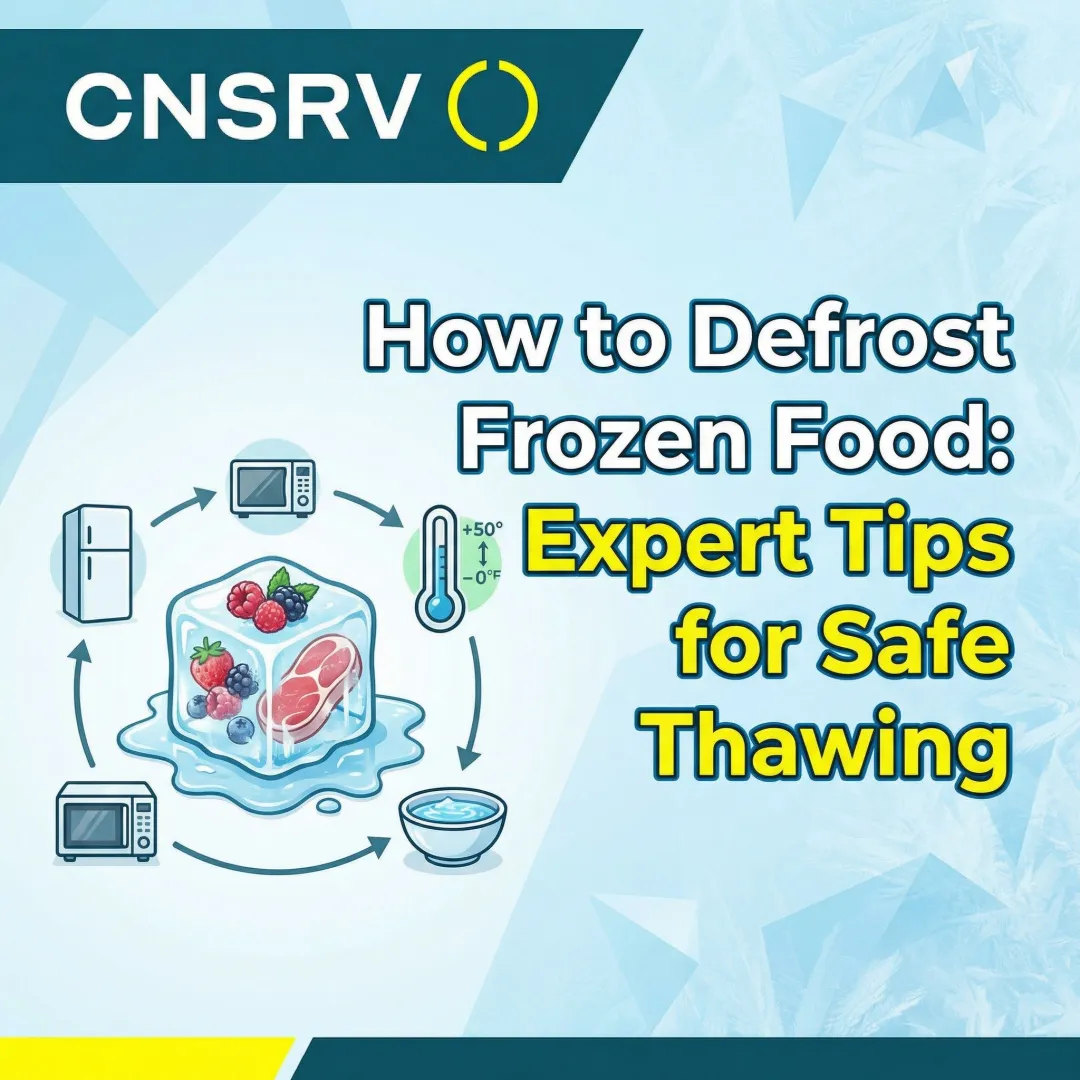
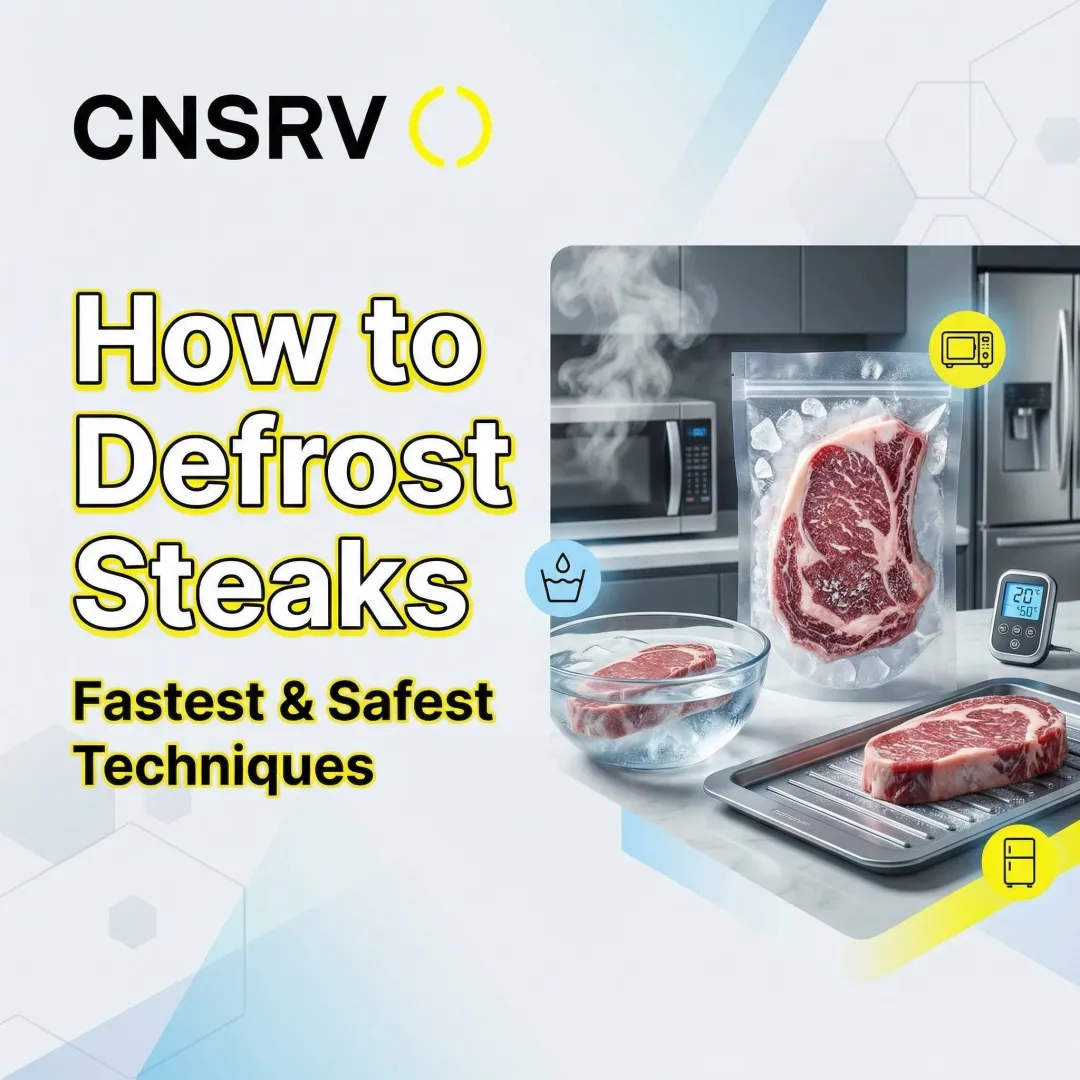
While defrosting seems straightforward, the method you choose dramatically impacts food safety, quality, texture, and even environmental impact. Running water defrosting can consume over 300 gallons per cycle, creating massive water waste in commercial operations. Meanwhile, improper counter thawing creates ideal conditions for pathogens like Salmonella and E. coli to multiply rapidly while your food's center remains frozen.
This guide covers the four main defrosting methods approved by the FDA and USDA, when each is appropriate, step-by-step instructions, critical safety parameters, common mistakes, and alternatives for both home and commercial kitchens.
TL;DR
- Refrigerator defrosting is safest but requires 24+ hours of planning
- Cold water method defrosts in 1-3 hours but requires 30-minute water changes and immediate cooking
- Microwave defrosting works in minutes with constant monitoring—food must be cooked immediately
- Cooking from frozen adds 50% to cooking time for compatible products
How to Defrost Food Using Different Methods
Method 1: Refrigerator Defrosting (Safest)
Refrigerator thawing is the gold standard for food safety. It maintains consistent temperatures at or below 40°F, keeping food well outside the Danger Zone where bacteria multiply rapidly. This method requires advance planning but offers the most control.
Setup and placement: Place wrapped food in a leak-proof container or on a plate, then position it on the lowest shelf of your refrigerator. This prevents cross-contamination if juices drip onto ready-to-eat foods below.
Timing requirements:
- Large items (whole turkeys, roasts): Allow 24 hours per 5 pounds of weight
- Small items (ground meat, chicken breasts): Minimum 12-24 hours
- Whole turkeys: May require 3-5 days depending on size
Temperature verification: Your refrigerator must maintain temperatures below 40°F. Use an appliance thermometer to verify—don't rely on the dial setting alone.
Post-thaw storage windows:
- Ground meat and poultry: Safe for 1-2 additional days
- Red meat cuts (steaks, roasts, chops): Safe for 3-5 days
- Seafood: Safe for 1-2 days
Refreezing advantage: Food thawed via refrigerator method can be safely refrozen without cooking, though some quality loss may occur due to moisture loss.

Method 2: Cold Water Defrosting (Faster)
When refrigerator thawing takes too long, cold water defrosting bridges the gap between safety and speed. You'll get results in hours instead of days, but this method requires more active monitoring to maintain safe temperatures throughout the process.
Setup requirements:
- Food must be in completely sealed, leak-proof packaging
- Submerge fully in cold tap water (never warm or hot)
- Use a clean bowl, container, or sanitized sink
Critical 30-minute water change rule: Change the water every 30 minutes to keep temperatures below 40°F. This isn't optional—stagnant water warms up, moving food into the Danger Zone.
Timing estimates:
- 1 pound of meat: About 1 hour
- 3-4 pounds: 2-3 hours
- Whole turkeys: 30 minutes per pound
Immediate cooking required: Cook food immediately after thawing with this method. You cannot refrigerate it for later or refreeze it unless you cook it completely first.
Water temperature warning: Never use warm or hot water to speed the process. The outer layers will reach unsafe temperatures (40°F–140°F) while the center remains frozen, creating perfect conditions for bacterial growth.

Method 3: Microwave Defrosting (Quickest)
Need food thawed right now? Microwave defrosting delivers the fastest results but demands your full attention. This method trades convenience for speed, requiring immediate cooking once the thaw cycle completes.
Pre-thaw preparation: Remove all non-microwave-safe packaging including polystyrene trays, plastic wrap, and cardboard. Transfer food to a microwave-safe container with a lid.
Operational technique:
- Use the defrost setting (typically 30% power)
- Enter the correct weight for accurate timing
- Rotate and stir food at regular intervals (every 2-3 minutes)
- Check for hot spots throughout
Why you must cook immediately: Microwaves create hot spots where food reaches Danger Zone temperatures while other areas remain frozen. Bacteria multiply rapidly in these warm zones, making it unsafe to hold partially thawed food.
Size limitations: This method works best for items under 2 pounds. Larger cuts defrost too unevenly, with cooked edges and frozen centers.
Refreezing restriction: You cannot refreeze microwave-defrosted food unless you cook it completely first.
Method 4: Cooking From Frozen
Some foods skip the thawing step entirely and go straight from freezer to heat. This works only for specific products designed for direct cooking, saving time when you're in a rush.
Suitable products:
- Frozen vegetables
- Certain meat patties labeled "cook from frozen"
- Frozen pastry and baked goods
- Thin cuts designed for frozen cooking
Time adjustment: Cooking from frozen increases cooking time by about 50% compared to thawed food.
Temperature verification is critical: Always use a food thermometer to verify safe internal temperatures are reached throughout:
- Poultry: 165°F
- Ground meats: 160°F
- Whole cuts: 145°F with 3-minute rest
Not suitable for: Large cuts of meat, whole poultry, or any product not labeled for frozen cooking. These items cook unevenly—surfaces reach unsafe temperatures while centers remain raw.

When Should You Use Each Defrosting Method?
Choosing the right defrosting method depends on your timeline, food type, and kitchen environment. Match your situation to the appropriate technique:
Choose refrigerator method when:
- You have 24+ hours of planning time
- Maintaining maximum quality is priority
- Defrosting large items (whole turkeys, large roasts)
- Food won't be cooked immediately after thawing
- Operating in a commercial kitchen with strict compliance requirements
For faster results while maintaining safety standards, the cold water method works best when you have moderate time constraints:
Choose cold water method when:
- You need food ready same-day (2-4 hours available)
- Defrosting medium-sized items (3-10 pounds)
- You can monitor and change water every 30 minutes
- Food will be cooked immediately after thawing
- You need faster results than refrigerator but safer than microwave
Commercial kitchens increasingly use closed-loop defrosting systems that optimize the cold water method—using 98% less water than traditional running faucets while cutting defrost time in half. These NSF-listed systems maintain health code compliance while reducing operational costs.
When speed is the priority and texture is less critical, consider the microwave approach:
Choose microwave method when:
- Immediate thawing is needed
- Defrosting very small portions (under 2 pounds)
- Food goes directly into cooking with no delay
- Texture is less critical (ground meat for sauces, stews)
- You can monitor constantly and cook immediately
Finally, some situations allow you to skip defrosting entirely:
Cook from frozen when:
- Using products specifically designed for this method
- Preparing frozen vegetables or thin cuts
- Time-pressed situations with appropriate equipment
- You have a reliable food thermometer to verify doneness

What You Need Before Defrosting Food
Proper preparation and tools directly impact both safety and quality outcomes. Here's what you need for each method.
Equipment & Container Requirements
For refrigerator defrosting:
- Leak-proof containers or rimmed plates to catch drips
- Proper shelf space on the lowest refrigerator level
- Enough clearance for air circulation around food
For cold water defrosting:
- Large bowl, container, or clean sink
- Leak-proof plastic bags (if food isn't already sealed)
- Timer for tracking 30-minute water change intervals
- Access to cold running water
For microwave defrosting:
- Microwave-safe containers with lids
- Microwave-safe plates for rotating food
- Food thermometer to check for hot spots
Food Safety & Temperature Tools
Essential monitoring tools include:
- Appliance thermometer — Verify your refrigerator stays at or below 40°F, as temperatures can fluctuate in older units or with frequent door opening
- Instant-read food thermometer — Check safe internal cooking temperatures after thawing; should be accurate within 2°F to 4°F and calibrated regularly
- Timer or clock — Track defrosting duration and 30-minute water change intervals to ensure you don't miss critical changes during cold water thawing
Key Parameters That Affect Defrosting Results
Successful defrosting balances speed with safety. Several variables determine outcomes.
Temperature Control
The Danger Zone (40°F–140°F) is where pathogenic bacteria multiply rapidly—doubling every 20 minutes. Keeping food below 40°F or cooking it immediately after thawing is critical.
Freezing doesn't kill bacteria—it merely inactivates them. Upon thawing, these microbes become active and multiply at the same rate as in fresh food.
Time Duration
Longer defrosting times in the Danger Zone exponentially increase bacterial growth risk. Faster isn't always better, though. Microwave hot spots can create areas of bacterial growth while other portions remain frozen.
Safe time limits:
- Refrigerator method: No time limit (temperature stays safe)
- Cold water method: Total time must keep food below 40°F
- Microwave method: Must cook immediately (no holding time)
- Counter thawing: Never safe (outer portions reach Danger Zone)
Food Size, Thickness & Density
Surface area to volume ratio determines defrosting speed. Flat, thin items thaw faster than thick, compact ones because heat must travel less distance to reach the center.
Defrosting speed hierarchy:
- Fastest: Ground meat, thin fillets, flat packages
- Medium: Steaks, chops, boneless cuts
- Slowest: Whole roasts, bone-in cuts, whole poultry
Bone-in cuts defrost slower than boneless because bone conducts heat differently than muscle tissue.
Packaging & Moisture Barriers
Beyond temperature and size, packaging plays a crucial role. Leak-proof barriers serve two critical functions during cold water thawing:
- Prevents bacterial contamination from water or air exposure
- Prevents water absorption into meat tissue, which causes sogginess and quality loss
Exposed food in the refrigerator can suffer freezer burn (dry, discolored patches) and quality degradation from air exposure.
Water Temperature & Circulation (Cold Water Method)
Cold tap water (not warm) is essential. Water temperature must remain below 70°F for commercial operations per FDA guidelines, though staying closer to 40°F maximizes safety.
Regular water changes maintain safe temperatures and provide circulation. Stagnant water creates cold pockets around food, slowing the process and allowing localized warming that can move portions into the Danger Zone.

Common Mistakes When Defrosting Food
These common mistakes put food safety at risk and can lead to bacterial contamination, foodborne illness, and wasted product:
Defrosting at Room Temperature
The outer layers reach the Danger Zone (40°F–140°F) while the center stays frozen, creating ideal conditions for bacterial growth. Never thaw perishable foods on the counter, in hot water, or in uncontrolled environments like garages.
Using Hot Water to Speed Thawing
Hot water rapidly warms the exterior to unsafe temperatures while the interior remains frozen. This temperature gap promotes rapid bacterial growth on the surface.
Refreezing Improperly Thawed Food
Bacteria that multiplied during improper thawing survive freezing and continue growing after the next thaw. Only food thawed in the refrigerator can be safely refrozen without cooking first.
Skipping Water Changes in Cold Water Method
Water temperature rises above safe levels when not changed every 30 minutes, moving food into the Danger Zone. Regular water changes aren't optional—they're required for food safety.
Relying on Appearance Instead of Temperature
Color and texture don't reliably indicate safety—only verified internal temperature does. Always use a food thermometer after cooking previously frozen items.
Troubleshooting Issues While Defrosting Food
Even with proper technique, problems can arise. Here's how to address them.
Food taking much longer than expected in refrigerator
Check your refrigerator temperature—it should be between 35°F–40°F. If it's set below 32°F, raise it to the proper range. For very large items, expect longer times or finish with the cold water method.
Outer portions feel warm while center is still frozen (cold water method)
This signals you're not changing the water often enough. Immediately switch to fresh cold water and change it every 20 minutes. Add ice to maintain colder temperatures.
For commercial kitchens handling high volumes, controlled water systems like CNSRV's DC:02 maintain consistent cold temperatures through regulated circulation, eliminating this guesswork while using 98% less water than traditional methods.
Dry, discolored patches after defrosting (freezer burn)
The food wasn't properly sealed before freezing. Trim affected areas before cooking—they're safe but have poor texture and flavor. Prevent future freezer burn by:
- Using vacuum-sealed bags
- Removing all air from packaging before freezing
- Double-wrapping with plastic wrap and foil
Microwave-defrosted meat has cooked edges while center is frozen
Your microwave power is too high or the piece is too thick for even heating. Use the defrost setting (30% power) and pause every 2 minutes to rotate. For thick cuts over 2 pounds, skip the microwave entirely and use the cold water method instead.
Alternatives to Standard Home Defrosting Methods
While the four main methods work for most situations, alternatives exist for specific contexts.
Freezing Food Flat for Faster Thawing
This technique requires planning at the freezing stage but pays off significantly during defrosting.
Freeze ground meat, stews, soups, and liquids in thin, flat layers in freezer bags. Press contents flat before sealing to maximize surface area.
This approach dramatically reduces defrosting time:
- Cold water method: 30-60 minutes (vs. 2-3 hours for thick packages)
- Heat reaches the center faster through increased surface area
- More even defrosting throughout the food
Application: Portion ground beef into 1-inch thick flat packages, freeze sauces in quart bags laid flat, or freeze marinated meats in thin layers for quick weeknight meals.
Aluminum Defrosting Trays for Counter Thawing
Aluminum's heat-conducting properties speed up defrosting by transferring warmth from room air to frozen food faster than plastic or ceramic surfaces.
How it works: The aluminum draws heat from room air and transfers it efficiently to the frozen food surface, accelerating the thawing process without external energy.
Suitable for: Thin cuts like steaks, chops, and fish fillets that can defrost in 30-60 minutes while staying within safe temperature ranges.
Important limitation: This is not suitable for thick items or extended defrosting periods. Food can still reach Danger Zone temperatures with prolonged counter exposure, and as the surface thaws, the water layer acts as an insulator, slowing the process.
Commercial Defrosting Systems for Food Service Operations
Restaurants and commercial kitchens face unique challenges: larger volumes, time pressures, strict health code requirements, and significant resource consumption. Traditional running-water defrosting can consume over 1,192 liters (approximately 315 gallons) per cycle, creating massive operational costs and environmental impact. Commercial defrosting systems like the CNSRV DC:02 address these challenges through controlled water agitation and temperature regulation.
How commercial systems work: These NSF-listed devices use closed-loop water circulation at approximately 130 gallons per minute—10-30 times faster than typical faucets.
The system maintains water temperature below 70°F through digital sensors and software-limited heating, meeting FDA Food Code § 3-501.13 and California Retail Food Code § 114020 requirements.
Performance advantages:
- Defrost food in half the time of running faucet methods
- Use 98% less water (approximately 3,120 gallons annually versus 717,600 gallons with traditional methods)
- Maintain consistent temperatures throughout the thawing cycle
- Complete cycles well within health code time limits (under 2 hours)
Operational benefits: These systems are particularly valuable for operations defrosting multiple items daily or dealing with large cuts impractical for standard methods. Commercial kitchens report annual water savings exceeding $21,000 along with 780 hours of labor time saved per year.
Sous Vide for Controlled Defrosting
Temperature-controlled water baths offer precise defrosting for vacuum-sealed foods.
Use a sous vide circulator set to 100°F–104°F to defrost vacuum-sealed food in a circulating water bath. The precise temperature control keeps food just below the Danger Zone while defrosting quickly.
Benefits: Eliminates the guesswork of water temperature monitoring. The circulation ensures even heat distribution without hot spots. Food can transition directly from defrosting to sous vide cooking.
Limitations: Requires vacuum-sealed food and sous vide equipment. Primarily useful for planned cooking sessions rather than emergency situations. Not suitable for commercial operations requiring high-volume throughput.
Conclusion
Safe, effective defrosting comes down to three core principles:
- Keep food out of the Danger Zone (40°F–140°F) throughout the thawing process
- Choose the method that matches your timeline and food type
- Cook food immediately after thawing (except refrigerator method)
Most defrosting failures stem from impatience—taking room temperature shortcuts—or lack of monitoring, such as not changing water every 30 minutes or ignoring uneven microwave heating. Plan ahead when possible for refrigerator thawing, but when speed is necessary, cold water and microwave methods are safe when done correctly with immediate cooking.
For commercial operations, the stakes are higher. Health code compliance, operational efficiency, and resource management all depend on proper defrosting protocols.
Modern defrosting systems like CNSRV's closed-loop technology address these challenges by maintaining food safety standards while reducing water waste by 98% compared to traditional running faucet methods. The right equipment and training improve food safety, product quality, and operational costs.
Frequently Asked Questions
Can you defrost food and then refreeze it without cooking?
Food thawed in the refrigerator can be safely refrozen without cooking, though quality may decline. Food thawed by cold water or microwave must be cooked before refreezing to destroy bacteria.
How long can thawed food stay in the refrigerator before cooking?
Ground meat and poultry stay safe for 1-2 days after thawing, red meat cuts for 3-5 days, and seafood for 1-2 days. These timeframes apply only to refrigerator thawing at 40°F or below.
Is it safe to defrost food on the kitchen counter?
No, counter thawing is unsafe because outer portions reach Danger Zone temperatures (40°F–140°F) where bacteria multiply rapidly while the center remains frozen. This creates ideal conditions for pathogen growth. Always use refrigerator, cold water, or microwave methods instead.
Why does my microwave cook some parts while others stay frozen during defrosting?
Microwaves create hot spots due to uneven energy distribution that varies by food density and shape. The defrost setting reduces this but doesn't eliminate it. Use rotation and rest periods, then cook immediately to prevent bacterial growth in warmed areas.
What's the fastest safe way to defrost a large turkey?
The cold water method is fastest for large turkeys: allow 30 minutes per pound with mandatory 30-minute water changes. A 10-pound turkey takes approximately 5 hours. The turkey must be in leak-proof packaging, completely submerged in cold water, and cooked immediately after thawing.
Does defrosting in water make food soggy or affect quality?
No, when food is properly sealed in leak-proof, airtight bags, quality is maintained. If packaging leaks, water absorbs into meat tissue, causing sogginess and allowing bacterial contamination.