Ice Bath Chilling
Structured ice bath protocols that rapidly reduce sauce and gravy temperatures from 135°F to 70°F within two hours, meeting FDA Food Code requirements and preserving texture and flavor.
Hot sauces and gravies must move through the temperature danger zone fast to stay safe and delicious. CNSRV brings the same food-safety engineering that revolutionized commercial defrosting to rapid chilling—helping kitchens meet FDA cooling mandates, protect flavor integrity, and cut the operational costs that slow cooling methods quietly rack up every service.
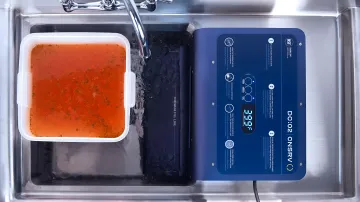
Comprehensive cooling solutions that keep sauces and gravies safe, flavorful, and fully code-compliant.
Structured ice bath protocols that rapidly reduce sauce and gravy temperatures from 135°F to 70°F within two hours, meeting FDA Food Code requirements and preserving texture and flavor.
Forced cold-air blast chilling techniques that drive sauce temperatures down to 41°F quickly, minimizing bacterial growth windows and locking in the fresh-cooked quality your guests expect.
End-to-end HACCP-aligned cooling documentation and process design, ensuring every batch of sauce or gravy is cooled on a validated schedule that satisfies health inspectors and protects your operation.
Expert guidance on selecting the right chilling equipment for your kitchen's volume and layout, from shallow-pan portioning to dedicated blast chillers, matched to your menu and throughput needs.
Digital probe and logging solutions that record cooling curves in real time, giving kitchen managers verifiable proof of compliance for every sauce and gravy batch cooled each service.
Hands-on staff training covering safe cooling techniques, proper portioning for faster heat transfer, and corrective actions when a batch does not hit target temperatures on schedule.
Sauces and gravies hold heat stubbornly, making them one of the highest-risk items in any commercial kitchen cool-down cycle. CNSRV combines food-safety engineering with practical kitchen workflow design to help operations move product through the danger zone—135°F to 41°F—within the six-hour window mandated by the FDA Food Code. The result is safer food, less waste, and a kitchen that passes inspection with confidence every time.
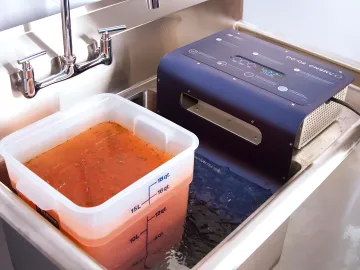
See how commercial kitchens are cooling smarter, staying compliant, and cutting food-safety risk.
We bring proven food-safety engineering and a conservation-first mindset to every commercial kitchen challenge.
Our equipment and processes carry NSF food-contact certification, giving operators verified, third-party proof of safety.
Every protocol is engineered to meet FDA Food Code and state retail food code standards, so inspections stay stress-free.
Our solutions ship ready to use with no technician visit required, so your kitchen stays productive from day one.
Born from a water-saving mission, CNSRV designs solutions that reduce resource waste alongside food-safety risk.
Innovators committed to safer, more sustainable commercial kitchens.
CNSRV Inc. was founded by a team born and raised in Southern California who know water scarcity firsthand. Working in restaurants, they watched safe food-handling and resource conservation suffer under outdated kitchen practices—and they decided to fix it. After years of engineering development, CNSRV launched an NSF-listed food-temperature management solution that has already saved over 60 million gallons of water. That same obsession with food safety, efficiency, and sustainability now drives every product and protocol the company brings to commercial kitchens across the United States.
The three primary FDA-accepted methods for rapidly cooling food are: (1) an ice-water bath, where the container is submerged in a mixture of ice and cold water while stirring; (2) shallow-pan portioning, which spreads food to two inches or less to maximize surface area and heat loss; and (3) a blast chiller, which uses forced cold air to drive temperatures down quickly. Combining methods—such as ice bath followed by refrigeration—is often the fastest approach.
Talk to our food-safety experts for practical, code-compliant cooling guidance.

Third-party certification confirming safe food contact standards.
Solutions engineered to meet federal food-safety cooling mandates.
Recognized partner in California's water efficiency program.
Fill out the form below and a CNSRV food-safety specialist will respond within 24 hours with practical rapid-chilling guidance tailored to your kitchen's volume and workflow.
For immediate assistance, feel free to give us a direct call at You can also send us a quick email at info@cnsrv.com
For immediate assistance, feel free to give us a direct call at You can also send us a quick email at info@cnsrv.com