Introduction
Picture this: it's 4 p.m. in a busy commercial kitchen, and the dinner rush is two hours away. A line cook reaches for a package of frozen ground beef and runs it under hot tap water, hoping to speed up the thaw. At home, a parent does the same thing, racing against the clock to get dinner on the table. This shortcut is so common it feels harmless—but is it actually safe, or a hidden food safety hazard?
According to CDC estimates published in April 2025, seven major foodborne pathogens cause approximately 9.9 million illnesses, 53,300 hospitalizations, and 931 deaths annually in the United States. Meat and poultry alone account for 22% of those illnesses and 29% of deaths.
The risk doesn't stop at the pathogen level. Among the CDC's tracked outbreak factors, "improper thawing"—allowing frozen food to thaw at room temperature or in standing water—is explicitly listed as a Proliferation Contributing Factor.
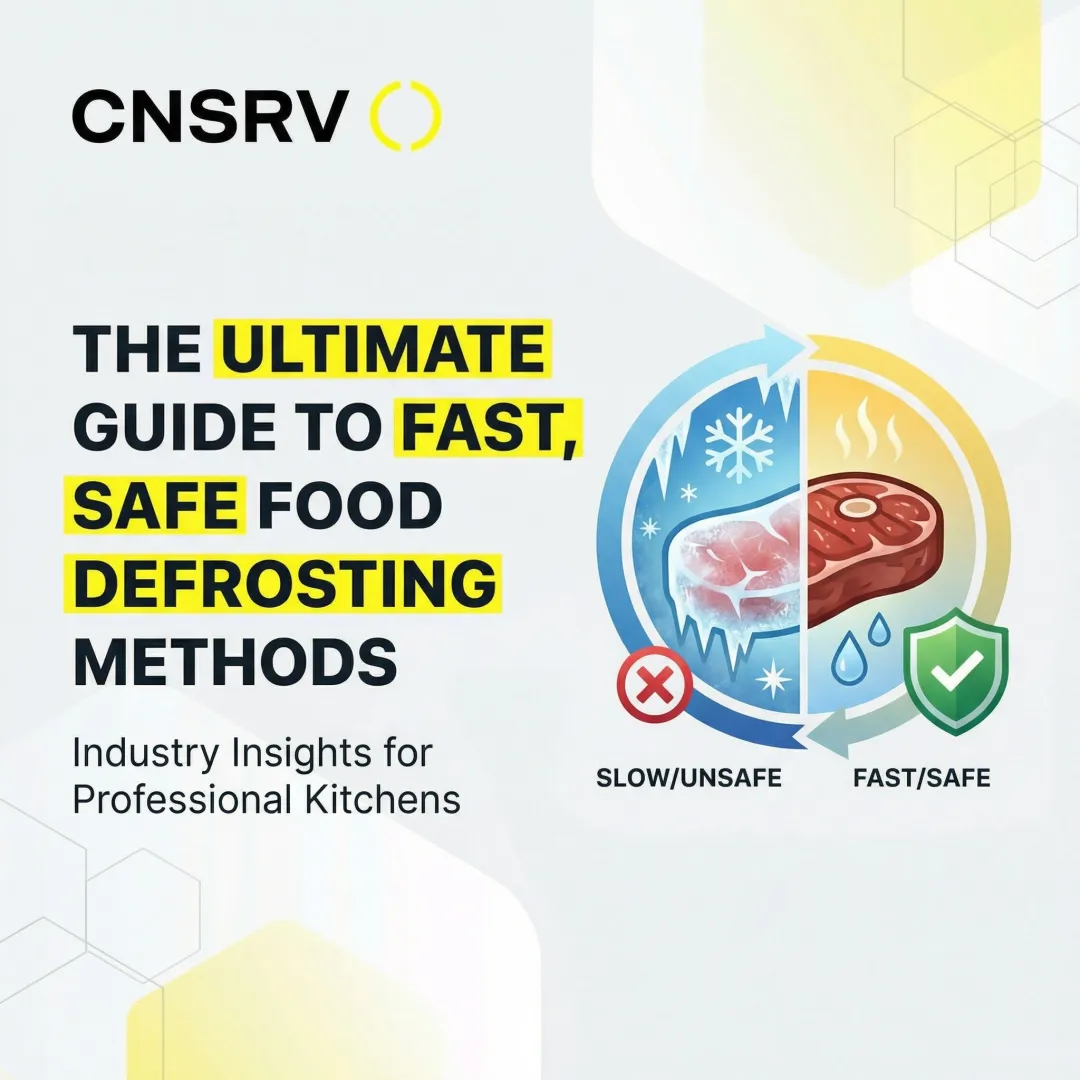
The USDA officially warns against hot water thawing, yet peer-reviewed research published in the Journal of Food Science suggests it can be done safely under tightly controlled conditions. Hot water thawing isn't inherently unsafe, but it's high-risk when done carelessly. The difference between safe and dangerous comes down to temperature control, packaging integrity, and time discipline.
TL;DR
- The USDA recommends against thawing meat in hot water, but scientific research shows it can work safely if strict conditions are met
- The bacterial "Danger Zone" is 40°F–140°F; any thawing method that leaves meat in this range too long increases pathogen risk
- Safe hot water thawing requires airtight packaging, controlled water temperature, and immediate cooking after thawing
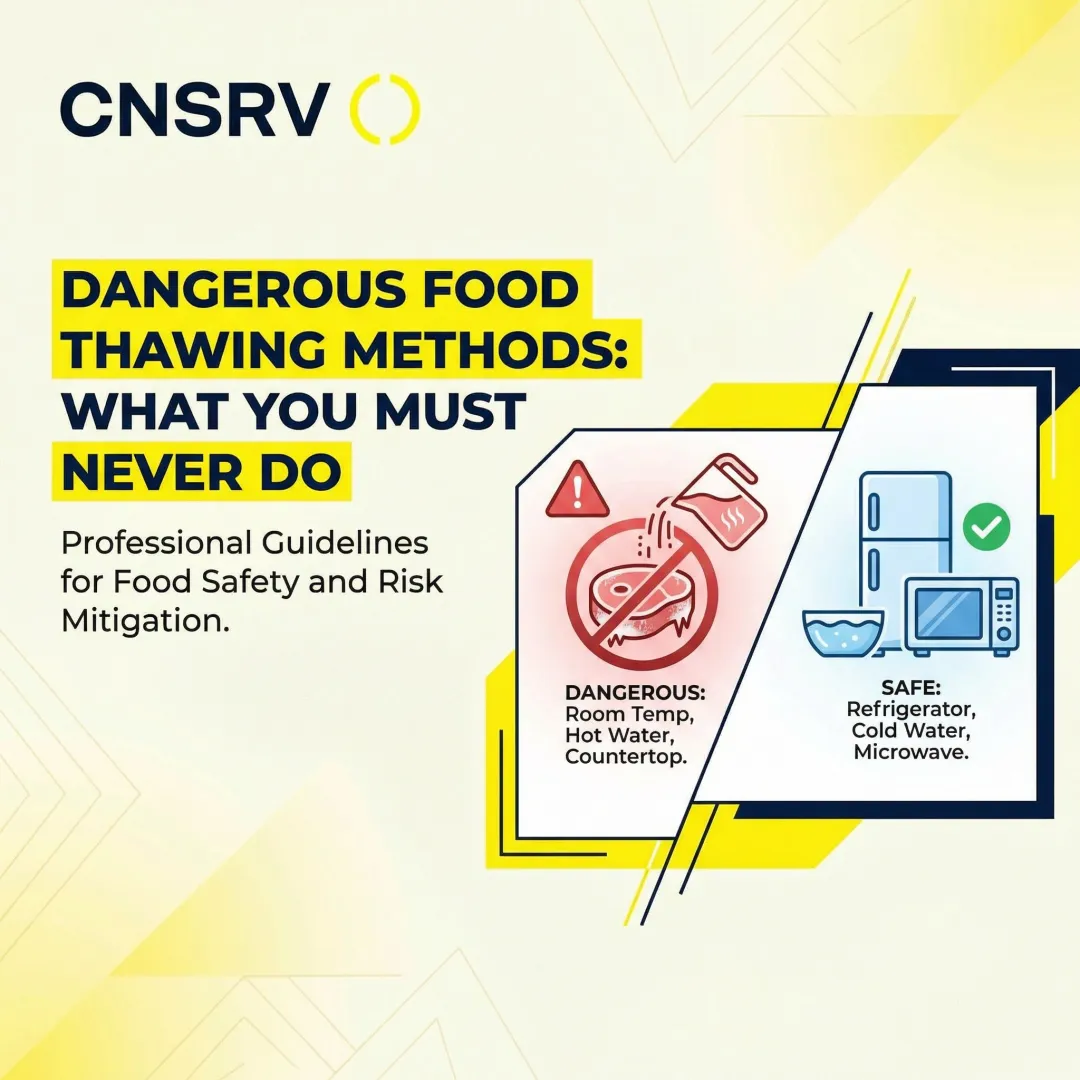
- Unsealed bags, standing hot water, and counter thawing are unsafe no matter how fast they work
- Commercial kitchens face stricter health code obligations and have compliant purpose-built alternatives
Is Thawing Meat in Hot Water Actually Safe?
The USDA's position is clear: perishable foods should never be thawed in hot water or at room temperature. The reason? While the center of the meat remains frozen, the outer layer can enter the Danger Zone (40°F–140°F), creating ideal conditions for rapid bacterial multiplication. Pathogens like Salmonella, E. coli, and Listeria thrive in this temperature range, doubling in number every 20 minutes.
Yet in 2011, researchers Eastridge and Bowker published findings in the Journal of Food Science that challenged the blanket prohibition. Their study evaluated "very fast" thawing of USDA Select beef strip loin steaks in a circulating water bath at 39°C (102.2°F) for approximately 11 minutes. Rapidly thawed steaks showed lower drip loss and higher redness values compared to refrigerator-thawed steaks, with the process completed "following food safety guidelines" within that controlled timeframe.
That said, the study focused on meat quality attributes, not microbiological safety equivalence for general kitchen environments.
Two Types of Hot Water Thawing
There's a critical distinction between:
- Uncontrolled hot water thawing — running hot tap water over meat in an open container, unsupervised, with no temperature monitoring
- Controlled hot water thawing — regulated temperature (around 100°F–102°F), sealed packaging, timed process, and immediate cooking

Only the latter has any scientific support for safety. The problem is that most people attempting hot water thawing fall into the first category.
Why Ground Beef Is Especially High-Risk
Ground beef presents a unique hazard compared to whole cuts. The USDA FSIS explains that grinding "exposes more of the meat surface to harmful bacteria" and "allows any bacteria present on the surface to be mixed throughout the meat." With a steak, surface bacteria die when you sear the exterior. With ground beef, any bacterial growth on the outer layers during improper thawing is distributed throughout the entire product.
E. coli O157:H7 can multiply at temperatures as low as 44°F, making even modest temperature abuse dangerous.
Hot water thawing can work under tightly controlled conditions, but reliable control requires precise temperature monitoring, sealed packaging, and strict time limits every single time. In a commercial kitchen, that consistency is the non-negotiable standard.
Safety Guidelines for Hot Water Thawing
Safe execution depends on three non-negotiable controls: airtight packaging, monitored water temperature, and an immediate-cook rule. All three must be treated as ongoing discipline, not one-time setup.
General Safety Precautions
Sealed Packaging Is Mandatory
Meat must be sealed in a leak-proof, airtight bag — vacuum-sealed or heavy-duty zip-lock — before any water contact. If the seal fails, bacteria from the water can enter the meat, surface contamination spreads to the water, and that water can then reach sink surfaces and nearby foods. In commercial kitchens handling multiple proteins simultaneously, this control is non-negotiable.
Sanitation Before and After
Hands, containers, and work surfaces must be cleaned before and after the thawing process. Cross-contamination from meat drippings or residual water is a common but preventable risk.
Size Restrictions
Hot water thawing is not suitable for large cuts or whole poultry. This method is safest for portions under 1–1.5 lbs (such as single-serve ground beef packs). Larger cuts cannot thaw evenly within the safe time window — the outer layer enters the Danger Zone while the interior remains frozen for far too long.
Safe Setup for Hot Water Thawing
Water Temperature: The Critical Variable
Research supports a narrow range of approximately 100°F–102°F (38°C–39°C) — warm enough to accelerate thawing without cooking the outer meat or pushing it into sustained bacterial-growth territory. Most facilities' hot tap water runs well above this range, which creates a direct conflict between available water temperature and safe thawing conditions.
Full Submersion Required
The meat must be fully submerged and kept submerged. Use a heavy plate, bowl, or weight to keep the sealed bag underwater. Partially submerged meat thaws unevenly, creating hot and cold spots where bacteria behave unpredictably.
Use a Dedicated Container
Do not use an open sink without a dedicated container. An open sink exposes thawing meat to environmental contaminants and makes temperature control impossible. Use a clean, food-safe bowl or basin so water temperature can be more easily monitored and controlled.
Safety During the Thawing Process
Once the meat enters the water, three rules apply without exception:
- Start timing immediately. The process must be brief, closely monitored, and completed within a short window. The USDA does not provide a specific minute-count, so err on the side of shorter exposure.
- Monitor water temperature throughout. As frozen meat cools the surrounding water, the temperature drops — potentially shifting the process into the Danger Zone without visible warning. This is where unmonitored hot water thawing most often fails.
- Cook immediately after thawing. Meat thawed in hot water cannot be refrigerated for later use and cannot be refrozen. Any bacterial growth that occurred during heat exposure cannot be reversed by chilling.

For commercial kitchens where consistent monitoring is difficult, the CNSRV DC:02 defrosting system automates both temperature regulation and water agitation. It maintains water below 70°F (typically under 66°F) while circulating at approximately 130 gallons per minute — 10 to 30 times faster than commercial faucets — removing the guesswork and delivering a health code-compliant result.
Environmental and Temperature Considerations
Ambient Kitchen Temperature Matters
In a hot commercial kitchen (above 75°F), the risk of meat warming beyond the Danger Zone during setup or post-thaw handling is higher than in a home kitchen. This is why commercial kitchens require more rigorous controls and faster handoff from thaw to cook.
The Water Source Problem
Federal guidance from the CDC and Department of Energy recommends storing hot water at 140°F to control Legionella and delivering it at approximately 120°F to prevent scalding. Both figures fall squarely in the center of the bacterial Danger Zone — and both far exceed the 100°F–102°F safe thawing range. This gap is why facility tap water cannot be used directly for hot water thawing without active temperature control.
Common Hot Water Thawing Mistakes to Avoid
Even when kitchen staff follow the basic guidelines, a few consistent errors undermine the process. Here are the four most common ones.
Using Water That Is Too Hot (Above 110°F)
The most widespread error. People assume hotter water means faster thawing, but temperatures above the safe range cause the outer meat to partially cook while the interior remains frozen. This creates uneven texture, moisture loss, and a window of bacterial activity at the surface. Always verify water temperature before submerging the meat.
Thawing Without a Sealed Bag or With a Compromised Seal
Even a small leak allows meat juices to enter the water and environmental bacteria to reach the meat. Inspect the bag seal before use and never reuse thin plastic bags that may puncture under water pressure or the weight of the meat.
Leaving Thawed Meat Uncooked
Hot water thawing accelerates bacterial exposure at the surface — the immediate-cook rule is a food safety requirement, not a suggestion. Some kitchen staff treat fast thawing as equivalent to refrigerator thawing. Skipping immediate cooking risks illness from E. coli, Salmonella, or Listeria that multiplied during the thaw window.
Attempting Hot Water Thawing for Oversized Portions
Large cuts, thick roasts, or bone-in items cannot thaw evenly within the safe time window. The outer layer enters the Danger Zone while the interior stays frozen far too long. Restrict hot water thawing to small portions only.

Conclusion
Thawing meat in hot water can be done safely—but only when temperature is controlled, packaging is airtight, portions are small, and the meat is cooked immediately. Any deviation from these conditions reintroduces the risks that prompted the USDA's original warning.
Treat defrosting as a process with the same rigor as cooking itself—especially in commercial kitchens where food safety failures carry regulatory and public health consequences. That rigor is easier to maintain when the process is automated rather than manual.
Purpose-built systems like the CNSRV DC:02 (NSF Standard 169-listed) remove the variability of hand-managed hot water thawing. They maintain water below 70°F, automate temperature regulation and agitation, and complete thawing cycles well within FDA and California code limits. For operations that need consistent, compliant results, that's a meaningful difference.
Frequently Asked Questions
Is it okay to thaw ground beef in hot water?
Technically, it can be done safely under controlled conditions—sealed bag, water around 100°F–102°F, small portions, and immediate cooking. However, the USDA advises against it because most people lack the controls to do it safely every time. The risk of temperature abuse and bacterial growth is too high in typical home or commercial kitchen settings.
How can I defrost ground beef quickly?
The fastest safe methods are microwave thawing (immediate, but requires cooking right away) and cold water thawing, which takes approximately 1 hour or less for a 1 lb package when you change the water every 30 minutes. Hot water thawing can be faster but demands strict temperature and timing controls that most kitchens cannot consistently meet.
What water temperature is safe for thawing meat?
Research supports 100°F–102°F (38°C–39°C) as the safe hot water thawing range. That temperature speeds thawing without triggering excessive bacterial growth or partially cooking the surface. Standard hot tap water typically runs 120°F–140°F, which is too hot for safe thawing.
How long does it take to thaw ground beef in hot water?
Under controlled conditions, a 1 lb portion of ground beef may thaw in around 30 minutes — though the USDA has not formally endorsed this method or its timing. Larger portions should not be thawed this way, as they cannot reach a safe internal temperature within the allowable window.
Can you refreeze meat that was thawed in hot water?
No. Meat thawed in hot water must be cooked immediately and cannot be safely refrozen. Heat exposure during thawing promotes bacterial growth that refrigeration will not reverse — so cooking right away is required, not optional.