Introduction
Improper temperature control during food handling remains one of the most persistent and dangerous failures in commercial kitchens. CDC data from the National Environmental Assessment Reporting System (NEARS) reveals that improper cooling and cold holding contribute to 41.1% of proliferation-related outbreaks in restaurants. Thawing—the reverse process of cooling—carries the same core biological risk: pathogens multiply on warming food surfaces while the center stays frozen.
Left unmanaged, these risks translate directly into failed health inspections, HACCP plan violations, shutdowns, and legal exposure. Thawing is an active food safety risk that must be managed as a Critical Control Point under any proper HACCP plan.
This guide covers the exact procedures, monitoring requirements, and mistakes to avoid.
TLDR
- Thawing is a Critical Control Point (CCP): the 40°F–140°F danger zone lets bacteria multiply on outer layers while the center stays frozen
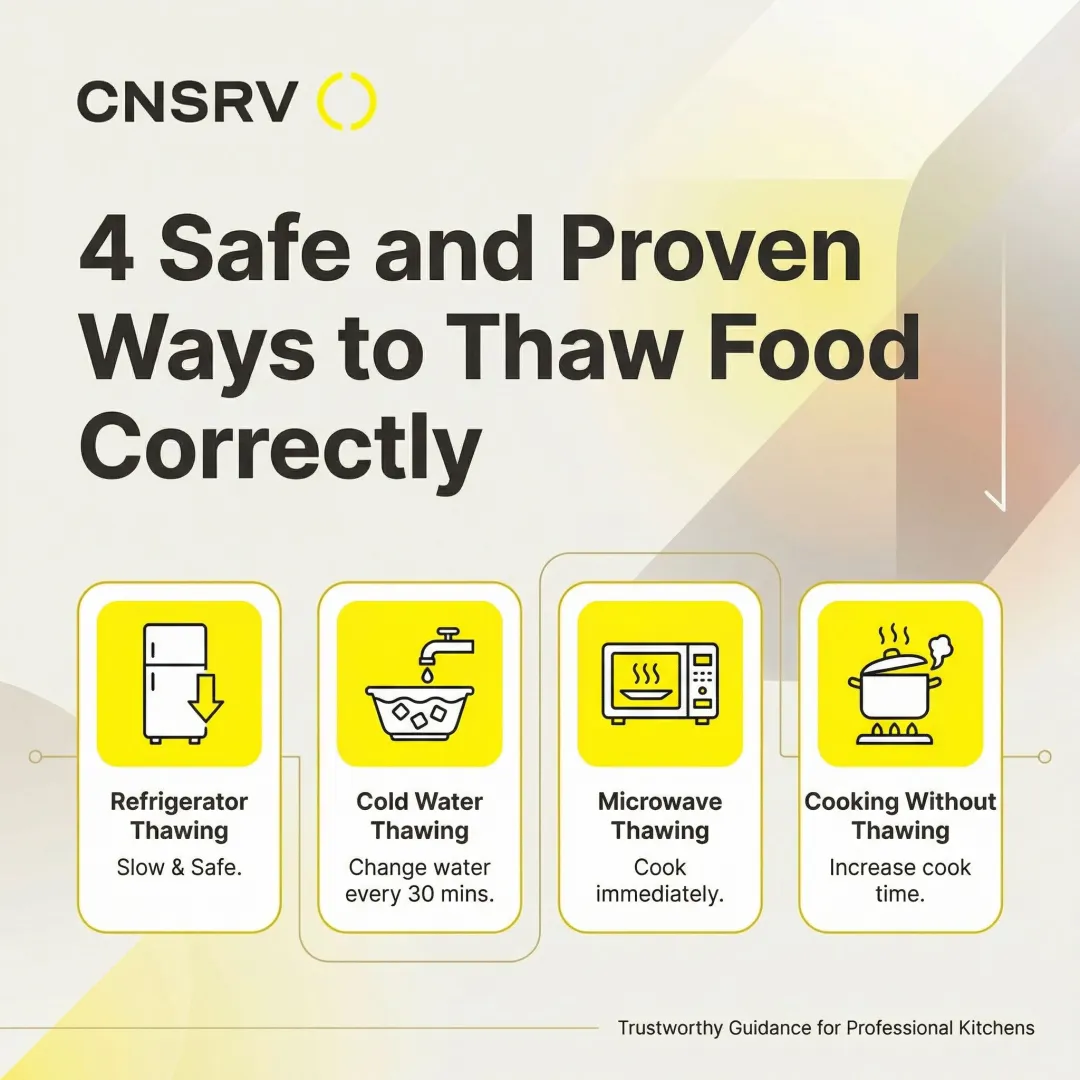
- Four methods meet FDA and USDA compliance: refrigerator thawing, cold running water (≤70°F), microwave with immediate cooking, and cooking directly from frozen
- Each method requires documented critical limits, monitoring procedures, and corrective actions in your HACCP records
- Traditional faucet thawing uses 120–270 gallons per hour; the NSF-listed CNSRV DC:02 cuts that by 98% while staying fully compliant
- Written SOPs and consistent staff training are non-negotiable: compliance is only as strong as your least-trained team member
Why Thawing Is a Critical Control Point in HACCP
Understanding the CCP Framework
A Critical Control Point is defined by Codex Alimentarius and adopted by FDA and USDA as "a step at which control can be applied and is essential to prevent or eliminate a food safety hazard or reduce it to an acceptable level." Thawing qualifies because it creates conditions where bacterial growth can resume if temperature control fails.
Under HACCP principles, thawing must be managed through five structured elements:
- Identify the hazard – Biological contamination through bacterial growth during temperature abuse
- Set critical limits – Temperature and time thresholds for each approved method (e.g., ≤41°F for refrigeration, ≤70°F for running water)
- Establish monitoring procedures – How staff verify temperatures during thawing cycles
- Define corrective actions – What to do if food enters the danger zone or exceeds time limits
- Maintain records – Logs confirming compliance with critical limits

The Danger Zone and Pathogen Behavior
The FDA Food Code mandates Time/Temperature Control for Safety (TCS) food be maintained at 41°F (5°C) or less. USDA FSIS explicitly defines the "Danger Zone" as 40°F–140°F (4.4°C–60°C). Freezing prevents microbial growth, but it does not destroy microorganisms.
Pathogens such as Salmonella, Listeria monocytogenes, E. coli, and Campylobacter survive freezing and begin multiplying as outer layers warm during thawing, even while the center remains frozen.
The FDA Food Code Annex 3 warns that improper thawing allows surviving bacteria to grow to harmful numbers or produce toxins on food surfaces before the interior is fully thawed. This surface-warming risk is why sensory evaluation is never a substitute for temperature verification.
Operational Discipline Over Equipment
Even correct thawing methods can fail without consistent handling discipline. Common breakdowns include:
- Skipping temperature monitoring steps mid-cycle
- Using oversized batches that slow thaw rates unevenly
- Leaving food unattended past approved time limits
HACCP thawing SOPs must be enforced on every shift, for every thaw cycle, and reviewed periodically during internal audits.
The Four HACCP-Approved Thawing Methods
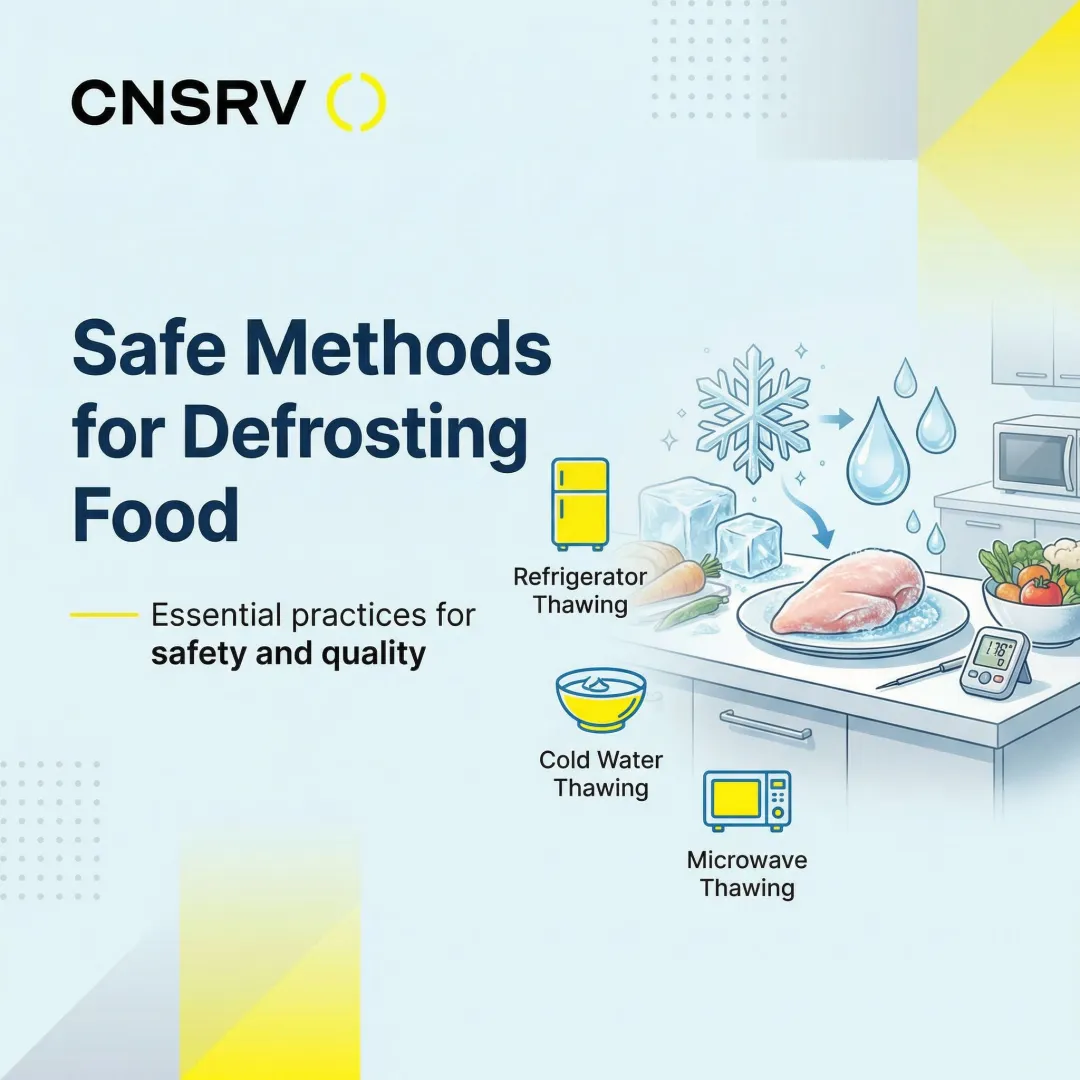
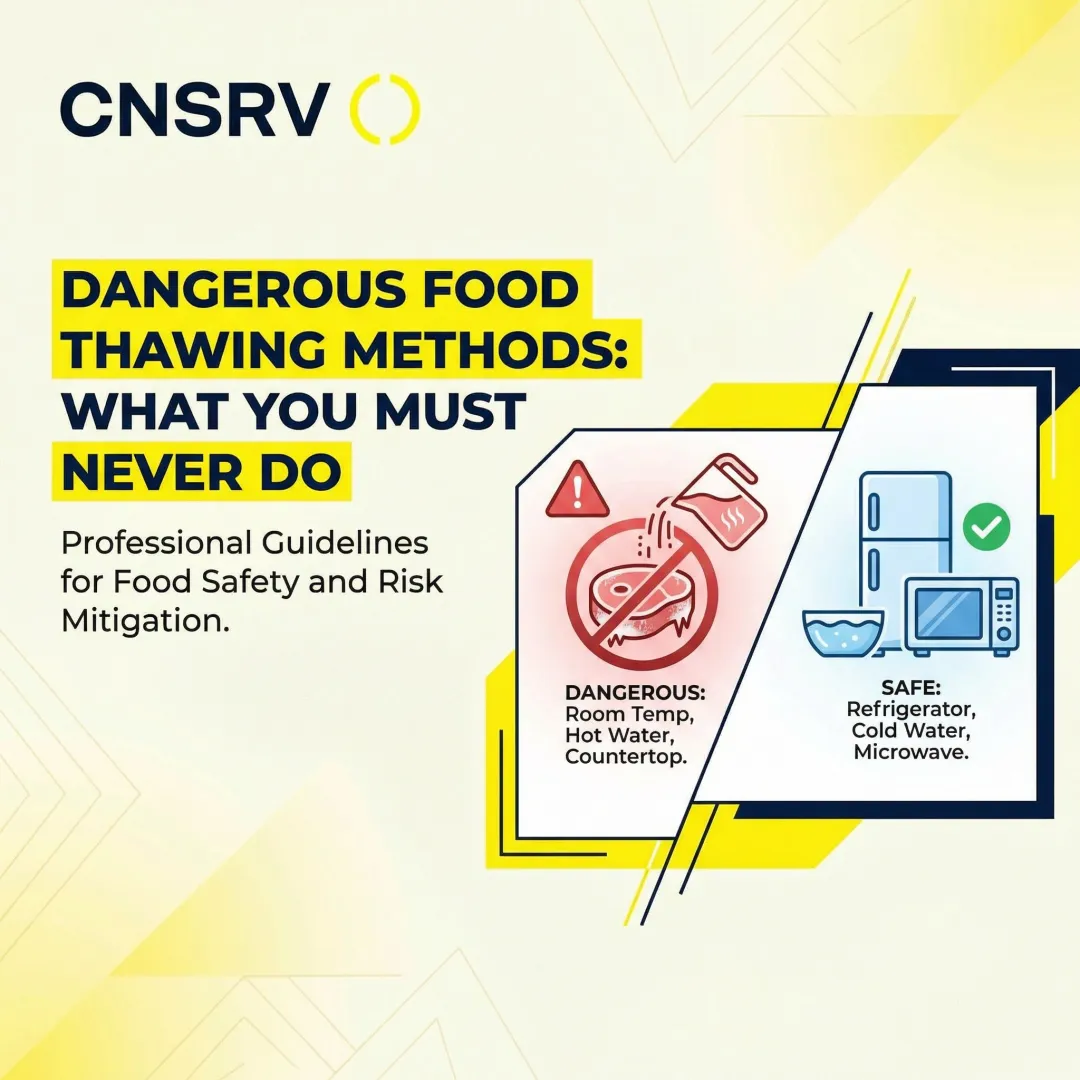
The FDA Food Code §3-501.13 and USDA FSIS guidelines mandate four specific methods for safe thawing. All other methods—countertop, hot water, garage, car, or outdoor thawing—are prohibited under HACCP guidelines and create uncontrollable bacterial growth conditions.
Refrigerator Thawing
This is the safest and most HACCP-consistent method because it keeps food at a constant, controlled temperature of 40°F or below throughout the entire thaw cycle.
Planning requirements:
- Allow approximately 24 hours per 5 pounds of product (a 20lb turkey requires ~4 days)
- Place food on the lowest shelf in a leak-proof container to prevent cross-contamination from drip
- Verify refrigerator unit temperature regularly with a calibrated thermometer
Post-thaw shelf life and corrective actions:
- Ground meat, poultry, and seafood: cook within 1–2 days
- Red meat cuts (beef, pork, lamb): cook within 3–5 days
- You can refreeze food thawed this way without cooking it, though expect some texture and quality loss
Cold Running Water Thawing
This method is faster but water-heavy and carries strict time limits under FDA Food Code §3-501.13(B).
Critical requirements:
- Food must be in a leak-proof, waterproof package
- Water temperature must be ≤70°F (21°C)
- Water flow must be sufficient to agitate and continually displace warmed water around the product
- For raw animal food, the cumulative time thawed portions exceed 41°F must not exceed 4 hours (including thaw, prep, and cook time)
- Once fully thawed, food must be cooked immediately and cannot be held
Water consumption and efficiency:
Traditional running faucet thawing can consume 120–270 gallons per hour at commercial flow rates of 2.2 to 4.5 gallons per minute. NSF-listed closed-loop defrosting systems like the CNSRV DC:02 meet HACCP thawing requirements while using approximately 98% less water.
The DC:02 circulates water at 130 gallons per minute in a closed-loop system (10–30× faster than typical faucets), maintaining temperatures below 70°F through digital sensors and software-limited heating. For high-volume kitchens, that translates to savings of up to 1,000,000 gallons per year.

Microwave Thawing
Microwave thawing creates uneven heating patterns where some portions begin to cook while others remain frozen, bringing sections of food into the danger zone.
Critical HACCP rule:
Food must be cooked immediately after microwave thawing with no interruption. Bacteria present in warmed zones can multiply rapidly if the food is held before cooking. Any delay between microwave thawing and cooking creates a measurable food safety risk.
Cooking from Frozen
Cooking directly from frozen is a HACCP-compliant alternative when time does not permit thawing.
Requirements:
- Cooking times must be extended approximately 50% longer than for fully thawed product
- A calibrated probe thermometer must verify that food reaches the required safe internal temperature throughout (e.g., 165°F for poultry)
- This method is particularly relevant for high-volume, fast-turnaround operations
Setting Up a Compliant Thawing Protocol in Your Kitchen
Written HACCP Thawing SOP Components
Your written thawing SOP must be a formal part of the kitchen's HACCP plan, not a verbal instruction. It must include:
- The approved method(s) your kitchen will use
- Critical limits for each method (temperature thresholds, maximum time in the danger zone)
- Monitoring frequency and procedures
- The staff role responsible for monitoring
- Documentation format (logs, checklists)
Temperature Monitoring Requirements
Refrigerator units: Check and log temperatures at the start of each shift.
Running water thawing: Verify water temperature at the start and periodically during the process. For traditional faucet methods, municipal tap water in many regions measures 75-85°F during warmer months, creating direct violations of the ≤70°F code limit.
Probe thermometers: Must be accurate to ±2°F (±1°C) and calibrated regularly according to manufacturer specifications. Keep calibrated thermometers within easy reach so staff can check temperatures on the spot.
Record all temperature readings in legible, date-stamped thawing logs as part of your HACCP record-keeping.
Corrective Action Procedures
If thawing food is found to have exceeded the critical limit (e.g., surface temperature has risen above 40°F for more than 2 hours), the food must be evaluated immediately.
Options include:
- Cooking immediately if still within safe bounds
- Discarding if contamination risk cannot be ruled out
The corrective action taken must be documented with:
- Date and time
- Product identification
- Staff member responsible
- Action taken and rationale
Staff Training Requirements
Documentation and corrective action procedures only hold up when your team knows how to apply them. All food handlers must be trained on approved methods, critical limits, and monitoring steps before handling frozen product. Training records must include:
- Initial training date and trainer name
- Topics covered (methods, limits, monitoring steps)
- Refresher sessions following HACCP reviews or any observed deviation
Common HACCP Thawing Mistakes to Avoid
Frequent Thawing Violations
These violations appear repeatedly during food safety inspections — and each one represents a direct failure to control biological hazards:
- Thawing on the counter or in a prep sink lets food surface temperatures enter the danger zone, violating HACCP's critical limit principle
- Using warm or hot water speeds bacterial growth; USDA FSIS explicitly prohibits it
- Submerging food in standing water without temperature monitoring creates the same risk as room-temperature thawing and violates monitoring requirements
- Thawing in a refrigerator that hasn't been verified to hold 41°F or below allows undetected CCP failure — temperature drift in overloaded or malfunctioning units is a common culprit
Documentation Gaps
Skipping thawing logs or relying on memory rather than written records leaves the kitchen unable to demonstrate HACCP compliance during inspections. This creates gaps in the corrective action trail and exposes the operation to regulatory action. Documentation is not bureaucratic overhead: it is the only way to verify that critical limits are consistently being met.
Those gaps carry real consequences. FDA warning letters have cited facilities for HACCP violations related to temperature control failures at chilling and thawing steps, and violations documented during inspections can contribute to enforcement actions, including permit suspension when inspectors identify imminent health hazards.
The "It Looks Fine" Fallacy
Food that has been improperly thawed may show no visible signs of spoilage or contamination. Pathogens like Listeria and Salmonella are odorless and colorless. Staff must be trained that sensory evaluation is never a substitute for temperature verification and time tracking under HACCP protocols. Calibrated thermometers are required by the FDA Food Code to verify internal product temperatures.
Conclusion
HACCP thawing compliance depends on three interdependent pillars:
- Written protocols with defined critical limits for each product type
- Consistent temperature monitoring backed by accurate, auditable records
- Trained staff who apply the same discipline on every shift
When an outbreak or inspection failure traces back to improper thawing, it signals a gap in one or more of these pillars — not bad luck.
Treat thawing SOPs as a living part of your HACCP plan: reviewed after any near-miss incident, updated when product types or volumes change, and reinforced in ongoing staff training. The kitchens that avoid violations aren't the ones with the most paperwork — they're the ones where every person on every shift knows exactly what to do and why it matters.
Frequently Asked Questions
What are the only HACCP-approved methods for thawing food in a commercial kitchen?
The four approved methods are refrigerator thawing (≤41°F), cold running water (≤70°F with sufficient velocity), microwave with immediate cooking, and cooking directly from frozen. Countertop thawing and hot water methods are prohibited.
What temperature range is considered the danger zone during thawing?
The danger zone is 40°F–140°F (4.4°C–60°C), where bacteria multiply rapidly. The outer layer of food can reach this range even when the center is still frozen, making temperature monitoring during thawing critical.
How should thawing be documented in a HACCP plan?
Thawing logs should record the product, date, method used, temperature readings taken during the process, the staff member responsible, and any corrective actions taken if critical limits were exceeded. Records must be legible and date-stamped.
Can thawed food be refrozen in a commercial kitchen setting?
Food thawed in the refrigerator can generally be refrozen before cooking with some quality loss. Food thawed using cold water or microwave methods must be cooked before refreezing.
Is it safe to cook food directly from frozen in a restaurant?
Yes, cooking from frozen is HACCP-compliant. Extend cooking times by approximately 50% and confirm with a calibrated thermometer that the food has reached the required safe internal temperature throughout — 165°F for poultry, for example.
How does the running water thawing method affect water usage in commercial kitchens?
Running faucet thawing can consume 120–270 gallons per hour. NSF-listed closed-loop systems like the CNSRV DC:02 meet HACCP requirements while cutting water consumption by approximately 98% — without sacrificing thaw speed or food safety.