Introduction
Your kitchen just got slammed with a last-minute catering order for 200 wings. The freezer's stocked, but service starts in two hours. Or your morning prep cook called in sick, and those cases of frozen wings needed to be thawed three hours ago.
Defrosting chicken wings might seem straightforward, but rushing the process creates serious risks. Approximately 1.5 million annual Campylobacter infections and over 1 million Salmonella infections are linked to poultry in the United States, with improper thawing being a significant contributor.
Beyond food poisoning, incorrect defrosting compromises texture and quality—leaving you with rubbery, waterlogged wings that hurt your reputation and waste food costs.
This guide covers the three fastest safe methods for defrosting chicken wings, when to use each approach, and critical mistakes that put your health at risk. You'll learn exactly how to get perfect wings every time without compromising safety or quality.
TLDR
- 30-60 minutes with cold water method—fastest safe option for busy kitchens
- Plan ahead for refrigerator defrosting: 4-24 hours with zero attention and superior quality
- Need wings defrosted in 5-10 minutes? Microwave works but requires immediate cooking
- Never defrost at room temperature—bacteria multiply rapidly between 40-140°F
How to Defrost Chicken Wings Fast
The Cold Water Method (Fastest Safe Option)
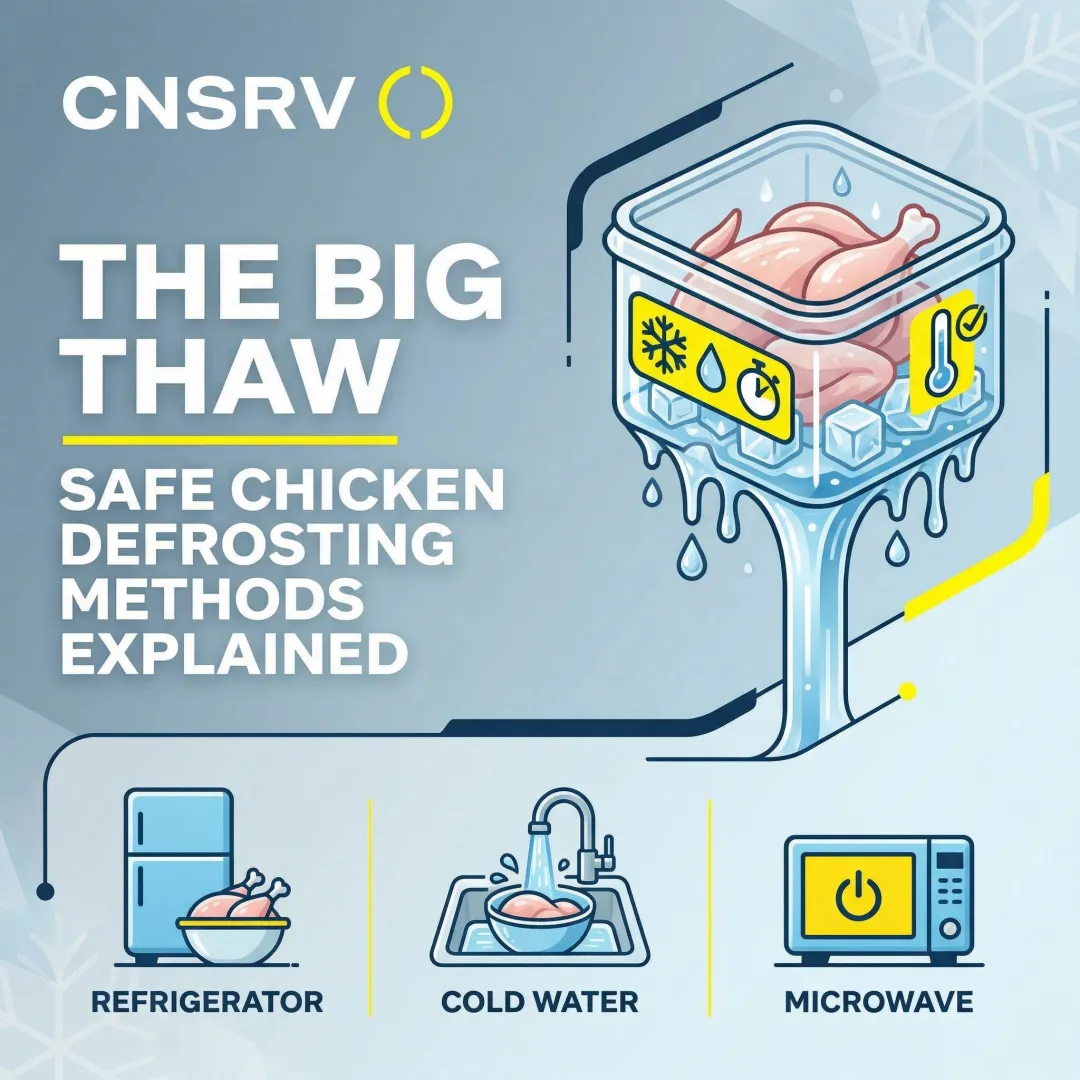
The cold water method is your go-to when you need wings ready in 1-2 hours.
This USDA-approved technique thaws chicken wings in 30-60 minutes for typical packages while keeping them safely below the danger zone temperature.
Here's the exact process:
- Keep wings in their original sealed packaging or transfer to a leak-proof plastic bag
- Submerge the package completely in a large bowl of cold tap water
- Change the water every 30 minutes to maintain temperature below 40°F
- Check for complete thawing—wings should be flexible with no ice crystals

Timing guidelines:
- 1-2 pounds of wings: 30-45 minutes
- 3-4 pounds: 60-90 minutes
Why sealed packaging matters: If water seeps into the bag, the wings absorb moisture and turn soggy.
Bacteria from your sink or bowl can also contaminate the meat through cross-contamination.
Important: Cook wings immediately after thawing. You cannot store cold water-thawed wings for later use or refreeze them raw—unlike refrigerator-thawed wings.
The Refrigerator Method (Safest, Hands-Off)
The refrigerator method is the gold standard for food safety. The USDA recommends this approach because wings stay at a constant safe temperature (40°F or below) throughout the entire thawing process.
Setup steps:
- Place wrapped wings on a plate or tray to catch any drips
- Position on the bottom shelf of your refrigerator
- Allow 4-6 hours for small packages (1-2 pounds)
- Allow 12-24 hours for larger quantities (3-4 pounds)

The beauty of this method is flexibility. Thawed wings stay safe in the refrigerator for an additional 1-2 days before cooking. You can thaw wings Monday night and cook them Wednesday without any safety concerns.
Refrigerator-thawed wings can also be refrozen without cooking first. Quality may suffer slightly from moisture loss, but it's safe.
Pro tip: Your refrigerator's temperature matters. Wings thaw faster at 40°F than 35°F, but verify your fridge maintains 40°F or below for food safety.
The Microwave Method (Emergency Only)
Microwave defrosting is the fastest option—5-10 minutes for most wing packages—but comes with significant drawbacks that make it a last resort.
How to microwave safely:
- Remove all packaging and place wings on a microwave-safe plate
- Use the defrost setting or set power to 30%
- Rotate wings and flip them every 2 minutes
- Check frequently and separate pieces as they thaw
The problem? Microwaves create "hot spots" where parts of the wing start cooking while other sections remain frozen.
These warm areas can reach temperatures where bacteria thrive.
Critical safety rule: Cook microwave-thawed wings immediately. The partial cooking that occurs during defrosting makes it unsafe to hold wings for later use.
Quality suffers too. Expect dried-out spots, partially cooked edges, and uneven texture that affects your final dish.
When Should You Use Each Defrosting Method?
The right defrosting method depends on your timeline, available attention, and quality priorities. Here's how to choose:
Choose cold water when:
- Guests arrive in 1-2 hours and you need wings ready fast
- You forgot to plan ahead but have time to monitor the process
- You want quality results without overnight waiting
Choose refrigerator when:
- You're meal planning 24+ hours ahead
- You want the absolute safest method with zero attention required
- You need flexibility to cook wings anytime within 1-2 days
- You're preparing multiple meals throughout the week
The microwave works for:
- You have a true emergency requiring wings in under 15 minutes
- You're cooking immediately after defrosting
- Speed outweighs texture concerns for your specific meal
What You Need Before Defrosting Chicken Wings
Proper preparation prevents contamination and ensures safe defrosting. Having the right equipment and understanding critical temperature thresholds protects food quality while reducing waste.
Essential equipment:
- Leak-proof plastic bags or original sealed packaging (for cold water method)
- Large bowl or container that fits your wing package
- Plate or tray with raised edges (for refrigerator method)
- Food thermometer to check 165°F internal temperature after cooking
Temperature control determines both food safety and defrosting efficiency. These ranges keep chicken out of the bacterial growth zone:
Temperature requirements:
- Refrigerator: 34-40°F (check with appliance thermometer)
- Cold water: Below 40°F with changes every 30 minutes
- Room temperature: Never use—bacteria multiply rapidly at room temperature
Basic sanitation practices prevent cross-contamination throughout the defrosting process:
Food safety prep:
- Sanitize all work surfaces before and after handling raw chicken
- Wash hands thoroughly with soap for 20 seconds
- Keep raw wings separate from ready-to-eat foods
- Have your thermometer ready—165°F is the only reliable safety indicator
Common Mistakes When Defrosting Chicken Wings
Avoid these four critical errors that compromise food safety and quality:
Room temperature defrosting: Bacteria double every 20 minutes in the danger zone (40-140°F). While the center stays frozen, the outer layer warms rapidly, creating ideal conditions for bacterial growth. Perishable foods left at room temperature for more than two hours are unsafe.
Hot water defrosting: This pushes the surface temperature into the danger zone immediately. The outer layer can partially cook while the center remains frozen—a perfect recipe for foodborne illness.
Refreezing without cooking: Wings thawed via cold water or microwave methods must be cooked before refreezing. Only refrigerator-thawed wings can be safely refrozen raw, though you'll lose moisture and texture quality.
Skipping the thermometer: Color and texture are unreliable. Insert your thermometer into the thickest part of the wing, avoiding bone, to verify 165°F.

Alternatives to Traditional Defrosting Methods
Cooking Wings From Frozen
You can skip defrosting entirely and cook wings straight from frozen. The USDA confirms this is safe if you follow specific guidelines.
Requirements for frozen cooking:
- Add 50% more cooking time to your recipe
- Use oven, air fryer, or pressure cooker (never slow cooker)
- Verify 165°F internal temperature with a thermometer
Trade-offs to expect:
- Skin won't crisp as well as defrosted wings
- Seasoning and marinades won't penetrate or stick properly
- Cooking time becomes less predictable
- Texture may be slightly tougher
Commercial Kitchen Defrosting Systems
Restaurants and food service operations that defrost wings regularly face a different challenge: balancing speed, safety, and water costs.
For commercial kitchens, specialized defrosting systems offer an alternative to both home methods and traditional running water.
The CNSRV DC:02 is a commercial defrosting system built for high-volume kitchens. This NSF-listed system uses controlled water circulation and temperature regulation below 70°F to defrost safely and efficiently.
The system defrosts wings in half the time of traditional running water methods while using 98% less water.
For commercial operations defrosting wings daily, this translates to savings of up to 1,000,000 gallons of water annually per kitchen. Many operations see the device pay for itself within three months through reduced utility bills.
The controlled circulation and temperature regulation ensure compliance with FDA Food Code § 3-501.13 while maintaining food quality.
Commercial systems like the DC:02 are engineered for operations where defrosting happens multiple times daily and water costs significantly impact the bottom line.
Frequently Asked Questions
How long does it take to defrost chicken wings?
Cold water takes 30-60 minutes, refrigerator thawing requires 4-24 hours depending on quantity, and microwave defrosting completes in 5-10 minutes.
Can you cook chicken wings from frozen?
Yes, but add 50% longer cooking time and use oven, air fryer, or pressure cooker—never a slow cooker. Expect less crispy skin and poor seasoning adhesion.
Is it safe to defrost chicken wings in hot water?
No. Hot water pushes the surface temperature into the danger zone (40-140°F) where bacteria multiply rapidly, even while the center stays frozen. This creates serious food poisoning risks.
How do you know when chicken wings are fully defrosted?
Wings should bend easily at all joints with no ice crystals or hard frozen spots. The texture should feel uniformly soft throughout, including thicker sections.
Can you refreeze chicken wings after defrosting?
Refrigerator-thawed wings can be refrozen within 1-2 days (though quality suffers). Cold water or microwave-thawed wings must be cooked before refreezing.
What's the best method for defrosting wings if you want crispy skin?
Refrigerator thawing maintains the best quality for crispy skin. After thawing, pat wings completely dry with paper towels before cooking—moisture is the enemy of crispiness regardless of your cooking method.
How do commercial kitchens defrost chicken wings safely and efficiently?
Commercial operations use NSF-listed water circulation systems that maintain safe temperatures while defrosting in half the time of traditional methods. These closed-loop systems use 98% less water than running faucets, reducing utility costs while meeting health code standards.