Introduction
You reach for bacon to start breakfast service, only to find it frozen solid. Do you wait hours for it to thaw safely, or risk a faster method that might compromise quality? This dilemma plays out in commercial kitchens daily, yet the defrosting method you choose significantly impacts food safety, texture, and cooking results.
The stakes are higher than many realize. According to USDA food safety guidelines, bacteria can double every 20 minutes when bacon enters the temperature "Danger Zone" between 40°F and 140°F.
Improper thawing techniques create serious food safety risks while compromising texture and quality.
This guide covers:
- Three USDA-approved defrosting methods
- When to use each approach based on time constraints
- Common mistakes that compromise safety
- Techniques to preserve bacon quality throughout thawing
TLDR
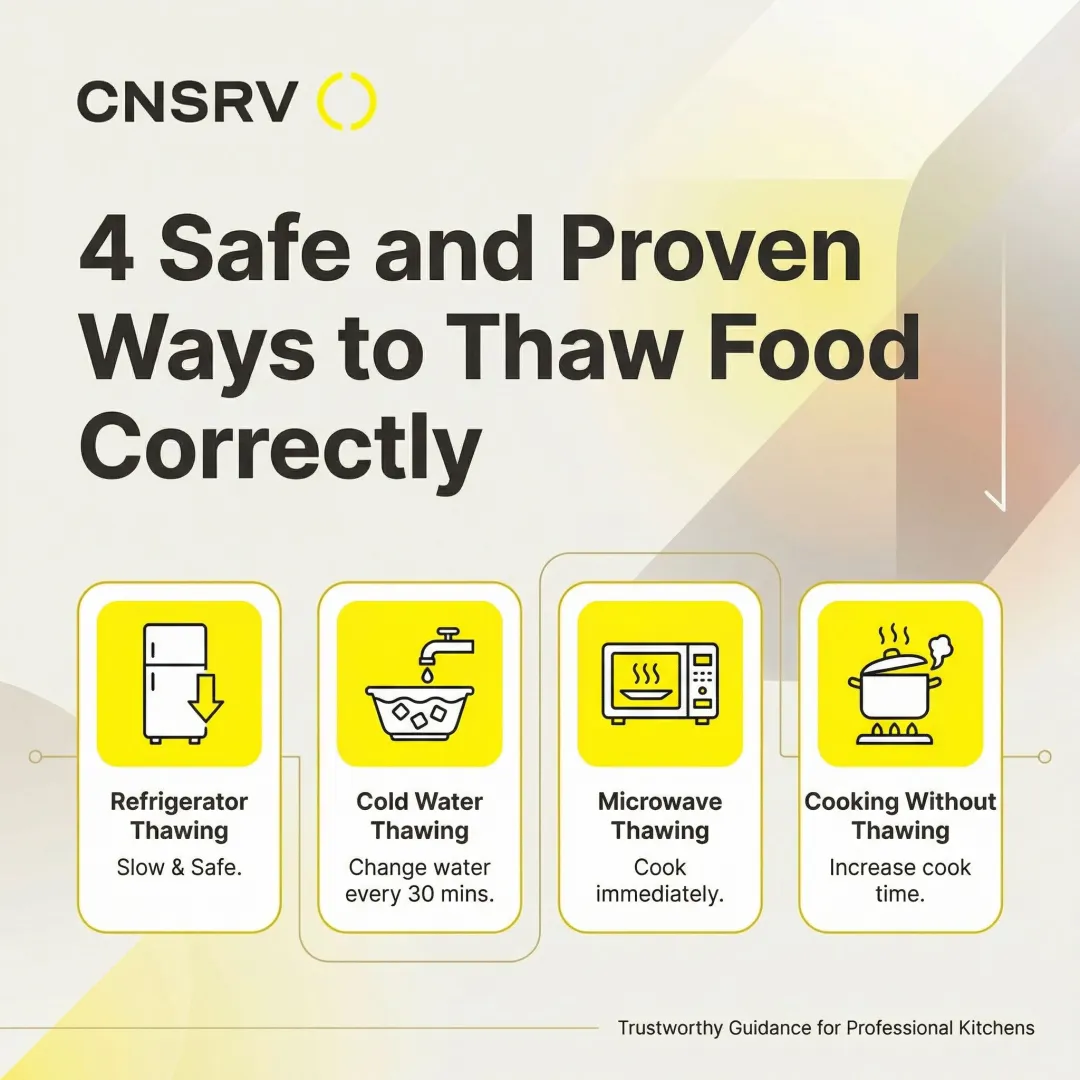
- Three safe methods: refrigerator (12-24 hours), cold water (30-60 minutes), microwave (5-10 minutes)
- Never defrost at room temperature—bacterial growth multiplies quickly above 40°F
- Refrigerator-thawed bacon stays safe 7 days; other methods need immediate cooking
- Frozen bacon cooks safely but needs adjusted technique and extra time
- Water temperature and package integrity directly affect safety and quality
How to Defrost Bacon: Three Safe Methods
Refrigerator Method (Safest, Best for Quality)
The USDA recommends refrigerator thawing as the safest method because it keeps bacon below 40°F throughout the entire process, preventing bacterial growth.
Step-by-step process:
- Remove bacon from freezer in original packaging
- Place on rimmed plate to catch drips
- Position on lower shelf away from ready-to-eat foods
- Allow 12-24 hours depending on package thickness

Timing considerations:
- Standard 1-pound package: 12-18 hours
- Thick-cut or larger packages: 18-24 hours
- Once thawed, bacon stays safe for 7 days before cooking
Key advantages:
- Best texture and quality preservation
- Minimal moisture loss
- Flexible timing—bacon stays safe for days after thawing
- Can be refrozen without cooking (though quality may decline)
Pro tip: Use a container with sides to prevent any liquid from contaminating other refrigerator contents, especially items stored below the bacon.
Cold Water Method (Faster Alternative)
This USDA-approved method significantly reduces thawing time while maintaining safety through controlled temperature management.
Detailed steps:
- Ensure bacon is in leak-proof packaging or sealed bag
- Submerge completely in cold tap water (below 70°F)
- Change water every 30 minutes to maintain cold temperature
- Check progress by gently manipulating the package
Timing expectations:
- 1-pound package: 30-60 minutes
- Thicker packages: up to 90 minutes
- Critical requirement: Cook immediately after thawing
Safety warnings:
- Bag must be sealed—water leaking in causes contamination
- Never use warm or hot water (creates unsafe temperatures)
- If water feels warm to the touch, replace it immediately
Troubleshooting: Gently flex the package to separate slices as they soften.

Microwave Method (Fastest but Requires Care)
The quickest option demands immediate cooking and careful monitoring to prevent partial cooking during thawing.
Step-by-step instructions:
- Remove all packaging, including metal twist ties or clips
- Place bacon on a microwave-safe plate
- Use defrost setting (30% power)
- Defrost in 1-minute intervals
- Check and separate slices between intervals
- Rotate plate and flip bacon halfway through
Timing variables:
- Typical range: 5-10 minutes total for 1 pound
- Varies by microwave wattage and bacon thickness
- Some areas may begin to cook—this is normal but requires immediate action
Food safety concern: Microwaving creates uneven temperatures, and warm spots enter the bacterial Danger Zone. Bacon must go directly from microwave to cooking—no exceptions.
Quality consideration: This method may slightly affect texture compared to refrigerator thawing, but the difference is minimal when bacon is cooked immediately.
When Should You Use Each Defrosting Method?
Choose your defrosting method based on how much time you have and when you plan to cook.
Use refrigerator thawing when:
- Meal planning 1-2 days ahead
- Maximum quality preservation
- Batch defrosting when you need bacon available throughout the week
- You'll use bacon within 7 days
Cold water thawing works best for:
- Same-day needs with 1-2 hours of lead time
- Situations where refrigerator space is limited
- When you need precise timing control
- Forgot to thaw overnight
Choose microwave thawing for:
- Immediate cooking within 15-20 minutes
- Small quantities (a few slices)
- Last-minute cooking needs
For commercial kitchens, these home methods don't scale efficiently. High-volume operations face time and resource pressures that traditional approaches can't solve.
Traditional running-water thawing wastes 500,000 to over 1,000,000 gallons annually per kitchen. Commercial operations now rely on specialized defrosting equipment like CNSRV's DC:02 system, which uses 98% less water than traditional methods while defrosting in half the time.
What You Need Before Defrosting Bacon
Equipment and Materials
For refrigerator method:
- Rimmed plate or shallow container (to catch drips)
- Space on lower refrigerator shelf
For cold water method:
- Large bowl or clean sink
- Sealed zip-top bag (if original packaging isn't leak-proof)
- Timer to track 30-minute water change intervals
For microwave method:
- Microwave-safe plate
- Paper towels (optional, for moisture absorption)
- Timer for interval checking
Universal tool: A food thermometer helps confirm bacon reaches safe cooking temperatures.
Bacon Packaging Considerations
Package type directly affects defrosting success:
- Vacuum-sealed packages are ideal for cold water thawing since they're already watertight
- Metal clips must be removed before microwave defrosting
- Transfer torn or damaged packaging to a zip-top bag before water thawing
Pre-thawing inspection: Check packages for tears or openings. Water exposure compromises texture and introduces bacteria that multiply rapidly in moisture.
Food Safety Knowledge
The Danger Zone (40-140°F) is the temperature range where bacteria multiply rapidly.
Safe defrosting principles:
- Keep bacon below 40°F or move it quickly through the Danger Zone
- Never leave bacon at room temperature during thawing
- Time limits matter: perishable foods shouldn't exceed 2 hours at room temperature
Visual inspection after thawing:
- Look for fresh color and smell with no off-odors
- Check for excessive sliminess beyond normal moisture
- Avoid bacon with discoloration or dry, darkened edges

Key Factors That Affect Defrosting Results
Bacon Thickness and Slice Count
Thick-cut bacon takes 30-50% longer to defrost than regular-cut. Packages with more slices packed tightly create insulation, slowing the thawing process significantly.
Rushing thick-cut bacon with high heat creates uneven results—frozen centers with partially cooked edges. Always allow extra time for thick-cut varieties.
Starting Temperature and Freezer Storage Duration
Bacon frozen at 0°F or below defrosts more slowly than bacon stored at higher freezer temperatures (some home freezers run at 10-20°F).
How long bacon stays frozen also matters:
- Bacon frozen over 4 months may develop freezer burn
- Ice crystals change texture after thawing
- Freezer-burned bacon becomes more prone to dryness when cooked
Package Size and Separation
Individual slices separated with parchment before freezing defrost much faster and more evenly than slices frozen in a solid block.
Before freezing fresh bacon:
- Separate slices with parchment paper, or
- Freeze in portion-sized amounts
This lets you defrost only what you need and cuts thawing time significantly.
Water Temperature and Microwave Power Settings
Cold water must stay below 70°F. Warm water might seem faster but creates food safety risks—surface bacteria multiply while the center remains frozen.
For microwave defrosting, use the defrost setting (30% power) instead of full power. Full power cooks outer portions while the center stays frozen. Lower power allows more even heat distribution, though some warm spots will occur. That's why you must cook bacon immediately after microwave thawing.

Common Mistakes When Defrosting Bacon
These common thawing mistakes compromise food safety and lead to lower-quality bacon.
Never thaw bacon at room temperature. Leaving bacon on the counter allows the outer portions to enter the Danger Zone (40-140°F) while the center stays frozen—creating ideal conditions for bacteria like Staphylococcus aureus or Salmonella to multiply.
Other critical mistakes to avoid:
- Hot or warm water thawing: Creates unsafe temperature gradients that partially cook the surface while leaving the center frozen, promoting rapid bacterial growth
- Skipping water changes: During cold water thawing, change the water every 30 minutes—stagnant water warms up, reducing efficiency and creating safety risks
- Improper refreezing: Bacon thawed by cold water or microwave cannot be refrozen raw and must be cooked first; only refrigerator-thawed bacon can be safely refrozen without cooking (though quality declines)
Frequently Asked Questions
Can you defrost bacon at room temperature?
No, this is unsafe according to USDA guidelines. Bacon's surface reaches the bacterial Danger Zone (40-140°F) while the center remains frozen, allowing harmful bacteria to multiply rapidly.
How long does bacon take to defrost in the fridge?
A standard 1-pound package typically takes 12-24 hours, with thick-cut varieties requiring up to 24 hours. Once thawed, it remains safe for 7 days before cooking.
Can you refreeze bacon after thawing?
Bacon thawed in the refrigerator can be safely refrozen without cooking, though quality may decline. Bacon thawed by cold water or microwave must be cooked before refreezing.
Is it safe to cook bacon directly from frozen?
Yes, frozen bacon can be cooked directly, though it requires lower initial heat to prevent burning the outside while the inside thaws. Cooking time typically increases by 50-75% compared to thawed bacon.
Why is my bacon slimy after defrosting?
Slight moisture is normal, but excessive sliminess with off-odors indicates spoilage—discard such bacon. Water infiltration during cold water thawing can also create abnormal texture.
How do you separate frozen bacon slices?
Let bacon sit at room temperature for 5-10 minutes to soften, then use a butter knife to pry slices apart. Alternatively, defrost just until slices separate and immediately refreeze unused portions.