Introduction
It's the day before Thanksgiving. Your 20-pound turkey is a frozen brick in the freezer, and you've just realized refrigerator thawing would take five days you don't have. Cold water thawing seems like the obvious solution—but the USDA has strict guidelines for this method to keep your food safe, and skipping any step puts your guests at risk.
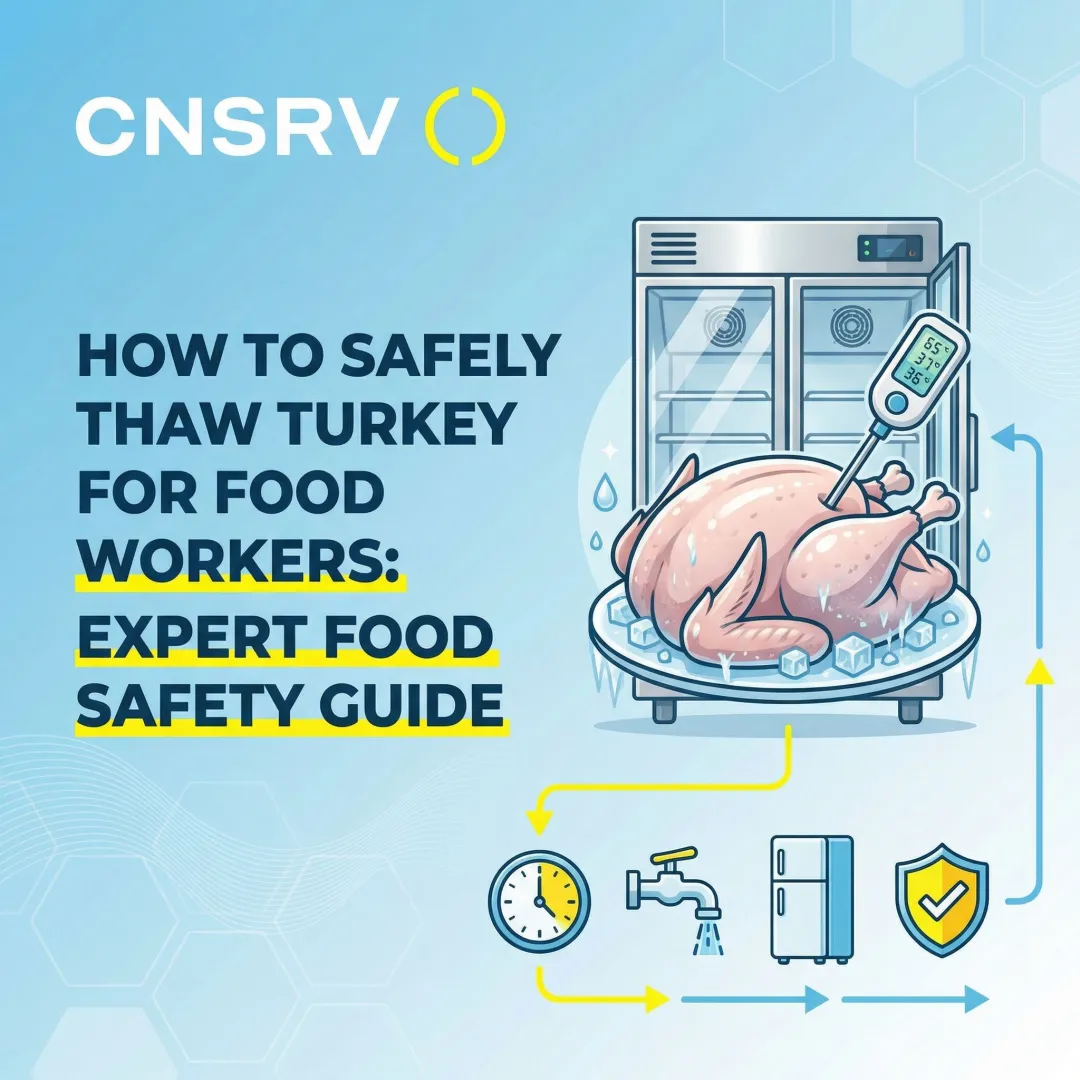
The USDA recognizes three safe thawing methods: refrigerator, cold water, and microwave. This guide focuses on cold water thawing, the fastest option when refrigerator time has run out, covering the exact times and steps the USDA recommends.
For commercial kitchens and foodservice operations, these guidelines carry added weight. Health inspectors enforce them, and non-compliance can shut down service. There's also a less obvious cost: cold water thawing under a running faucet burns through thousands of gallons of water per year, a hidden operational expense that adds up fast.
TLDR
- Cold water thawing requires 30 minutes per pound—a 20-pound turkey takes 10 hours
- Water must be changed every 30 minutes to prevent bacterial growth
- Turkey must be cooked immediately after thawing—no refrigeration allowed
- Freezing doesn't kill bacteria; it only pauses growth until thawing begins
- Running-faucet thawing can waste up to 1,000,000 gallons of water per year in a single commercial kitchen
Why How You Thaw Turkey Matters: The Food Safety Science
Freezing your turkey to 0°F doesn't kill bacteria like Salmonella, Campylobacter, or Clostridium perfringens—it only puts them in a dormant state. As soon as thawing begins, these bacteria resume multiplying, potentially reaching dangerous levels if the turkey enters the wrong temperature range.
The Danger Zone and Why Countertop Thawing Fails
The USDA defines the "Danger Zone" as 40°F to 140°F—the temperature range where bacteria multiply rapidly, potentially doubling every 20 minutes. Countertop thawing is explicitly unsafe because even while the center remains frozen, the outer layers enter the Danger Zone within two hours.
The real-world consequences are well-documented. The CDC estimates Clostridium perfringens causes nearly 1 million illnesses annually in the United States, with outbreaks peaking in November and December. Two outbreaks illustrate the stakes:
- A 2015 Thanksgiving outbreak in North Carolina linked to improperly handled turkey sickened 44 of 80 attendees
- A 2017–2019 multistate Salmonella outbreak tied to raw turkey products affected 356 people across 42 states
Cold water thawing—done correctly—keeps turkey below 40°F throughout the process, cutting off bacterial growth before it starts.
USDA Cold Water Turkey Thawing Times by Weight
Plan on 30 minutes of thawing time per pound of turkey when using the cold water method. Use that formula to calculate your total time based on weight.
Official USDA Thawing Times
| Turkey Weight | Cold Water Time | Refrigerator Time (Comparison) |
|---|---|---|
| 4 to 12 lbs | 2 to 6 hours | 1 to 3 days |
| 12 to 16 lbs | 6 to 8 hours | 3 to 4 days |
| 16 to 20 lbs | 8 to 10 hours | 4 to 5 days |
| 20 to 24 lbs | 10 to 12 hours | 5 to 6 days |

Critical Post-Thaw Rules
Three rules apply once your turkey finishes thawing:
- Cook immediately. Unlike refrigerator-thawed turkey — which can hold 1-2 days before cooking — cold water thawing requires you to go straight to the oven. Surface temperatures may have approached the Danger Zone during the process.
- No raw refreezing. You cannot refreeze a raw cold-water-thawed turkey without cooking it first. Cooked leftovers, however, can safely go back in the freezer.
- Speed advantage. Cold water cuts a 5-day refrigerator project down to 10 hours for a 20-pound bird — the practical choice when time is short.
How to Thaw a Turkey in Cold Water the Right Way
Follow these five steps exactly as outlined to ensure both food safety and quality.
Step 1: Bag It Properly
The turkey must remain in its original wrapping or be placed in a leak-proof plastic bag before going into water. This prevents two critical problems:
- Cross-contamination: Raw turkey juices contain bacteria that can contaminate water, sinks, and any surface the water touches
- Water absorption: Unwrapped turkey absorbs water during thawing, degrading texture and making the cooked meat watery and flavorless
Check the bag seal before submerging. Any tears or openings compromise both safety and quality.
Step 2: Submerge in Cold Tap Water
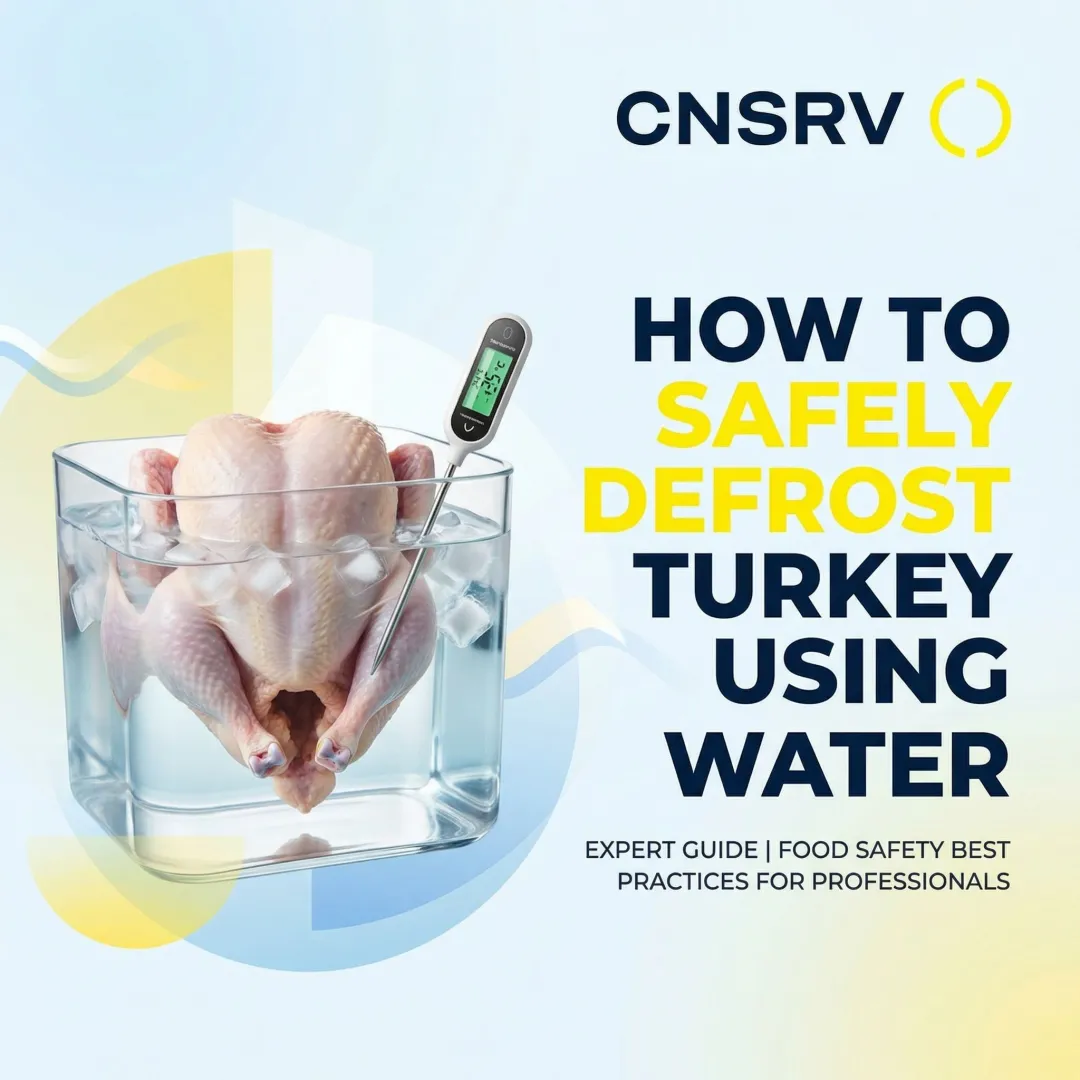
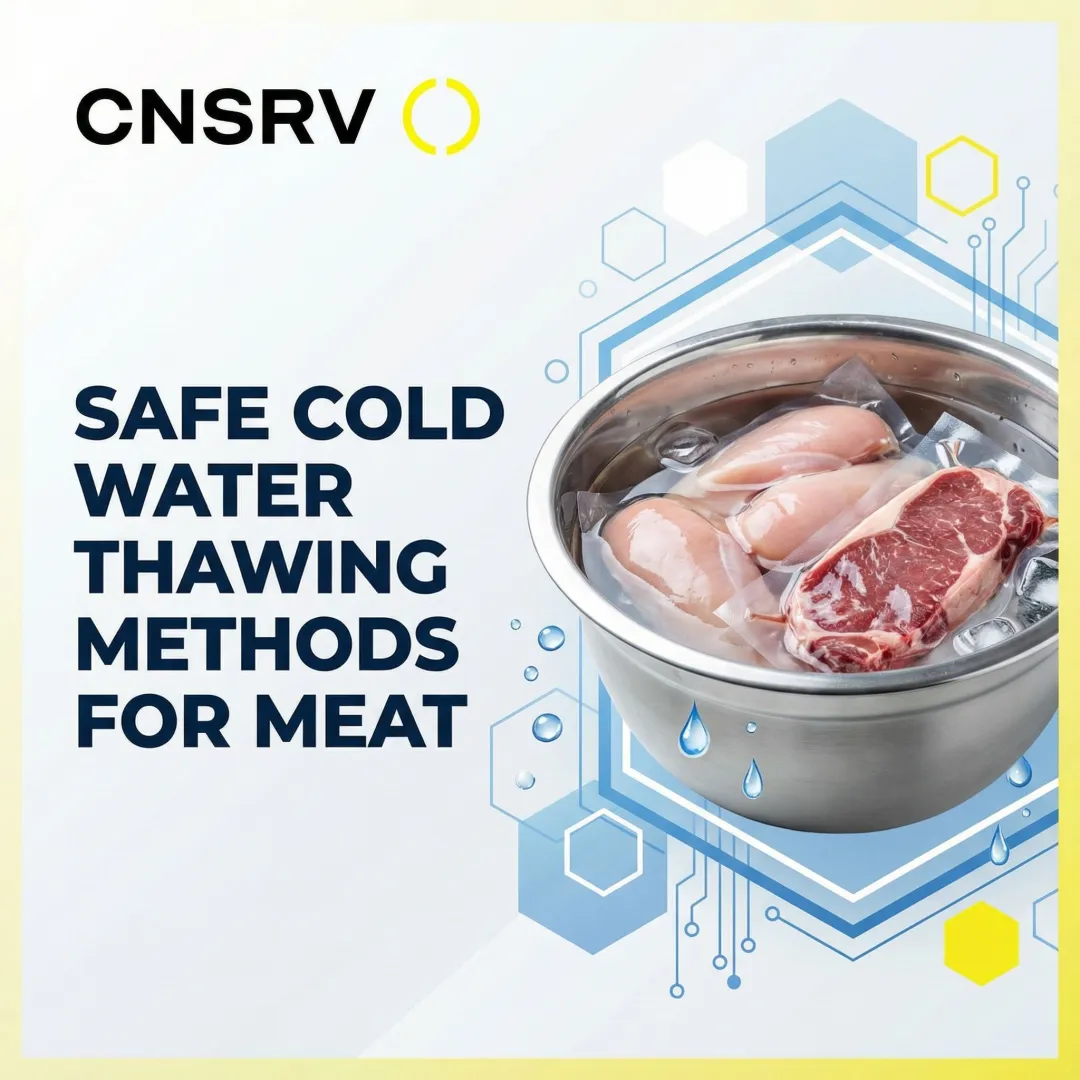
Place the bagged turkey in a clean sink, large container, or cooler filled with cold tap water. The turkey must be fully submerged. Room temperature or warm water is not acceptable: both push surface areas into the Danger Zone before the center thaws.
Step 3: Change the Water Every 30 Minutes
The water temperature rises as it absorbs heat from the frozen turkey. Without refreshing the water, the bath gradually warms toward unsafe temperatures. Changing water every 30 minutes keeps it cold enough to ensure the outer turkey surface stays below 40°F throughout the process.
Set a timer. For a 20-pound turkey requiring 10 hours of thawing, you'll change the water 20 times.
Step 4: Monitor and Cook Immediately
Track total thawing time using the weight-based chart above. Have your oven preheated and ready. Once thawed, the turkey goes directly into cooking with no holding period. Plan your timing so both are ready at the same moment.
Step 5: Clean and Sanitize After Thawing
Any surface, sink, container, or utensil that contacted the raw turkey or thawing water must be thoroughly washed and sanitized immediately. Use hot, soapy water followed by a sanitizing solution (1 tablespoon unscented liquid chlorine bleach per 1 gallon of water) to prevent cross-contamination with other foods.

Cold Water Thawing at Scale: The Water Waste Problem in Commercial Kitchens
For home cooks, cold water thawing means watching a sink for a few hours. For commercial kitchens, that same process can drain tens of thousands of gallons annually—and add thousands of dollars in water and sewage costs.
The Running Faucet Problem
The USDA cold water method calls for a static water bath with changes every 30 minutes—not a continuously running faucet. However, many commercial kitchens default to the running-faucet approach for convenience. Research shows this method can consume between 187 and 387 gallons per thawing cycle, with some commercial kitchen studies documenting usage as high as 315 gallons per cycle at typical tap flow rates.
A single restaurant thawing proteins daily under a running faucet can waste tens of thousands of gallons annually without any additional food safety benefit over the static bath method.
Regulatory Compliance vs. Water Efficiency
The FDA Food Code permits thawing under running water if the water temperature remains at or below 70°F with sufficient velocity to flush particles. While code-compliant, this approach multiplies water waste significantly. The EPA WaterSense program notes that facilities run water to thaw food for an average of about one hour per day, resulting in significant annual consumption.
Water-Efficient Alternatives for Food Service Operations
For commercial kitchens looking to stay USDA and health code compliant while eliminating water waste, purpose-built defrosting systems provide a direct replacement for running-faucet methods. The CNSRV DC:02, for example, is NSF-listed for food contact and uses a closed-loop water circulation system that uses 98% less water than running-faucet methods while defrosting food in roughly half the time.
The system circulates water at approximately 130 gallons per minute (10–30 times faster than typical commercial faucets) while keeping temperatures below 70°F. This closed-loop design meets FDA Food Code requirements for agitation and particle removal without continuous water discharge.
CNSRV reports the DC:02 can save up to 1,000,000 gallons of water per year per kitchen.
Financial Impact for Multi-Unit Operators
High-volume kitchens thawing protein daily face compounding costs that multiply across every location. The financial case is straightforward:
- Running-faucet defrosting can cost a single facility up to $20,000 per year in water and sewage expenses
- Multi-unit operators carry that cost at every location
- Switching to a closed-loop system cuts those expenses while keeping operations fully code-compliant

Common Cold Water Thawing Mistakes to Avoid
Mistake 1: Using Warm or Hot Water
Some people assume warmer water speeds up thawing without consequence. In reality, warm water accelerates bacterial growth on the turkey's surface even while the interior remains frozen. The outer layers enter the Danger Zone while the center is still solid ice — and that temperature imbalance is exactly what causes foodborne illness.
Mistake 2: Skipping the Bag or Using a Leaky Bag
An unsealed or damaged bag allows turkey juice to contaminate the entire water bath and sink, turning your thawing area into a cross-contamination risk. Raw poultry juices can harbor Salmonella, Campylobacter, and other pathogens that spread to countertops, utensils, and other foods. Always check the bag seal before submerging.
Mistake 3: Planning to Refrigerate After Cold Water Thawing
A turkey thawed in cold water must go directly into the oven — no refrigerating it for later. The thawing process can push surface temperatures into ranges where bacteria multiply, so cook it immediately once thawing is complete.
Frequently Asked Questions
How long does it take to thaw a 20-pound turkey in cold water?
A 20-pound turkey takes approximately 10 hours using the USDA cold water method at 30 minutes per pound. The water must be changed every 30 minutes throughout the entire process to maintain safe temperatures.
Do I have to change the water every 30 minutes—what happens if I don't?
Failing to change the water allows it to warm up, pushing the turkey's outer surface into the bacterial Danger Zone (40°F–140°F). Skipping water changes defeats the entire safety protocol the cold water method is built around.
Can I thaw a turkey in cold water without a plastic bag?
No. The USDA requires a leak-proof bag to prevent cross-contamination and to stop the turkey from absorbing water, which would make the cooked meat watery and negatively affect quality.
Can I refreeze a turkey that was thawed in cold water?
Raw turkey should not be refrozen after cold water thawing without cooking first. However, cooked meat from a cold-water-thawed turkey can safely be refrozen.
Is it safe to thaw a turkey in cold water overnight?
No. Overnight thawing in cold water is unsafe because the water will warm beyond safe temperatures without active water changes every 30 minutes. The refrigerator method is the better choice for overnight thawing—it maintains consistent safe temperatures with no monitoring required.
What is the USDA-defined danger zone for thawing turkey?
The USDA Danger Zone is 40°F to 140°F—the temperature range where bacteria multiply rapidly, doubling every 20 minutes. All three approved thawing methods (refrigerator, cold water, microwave) are designed to keep turkey below 40°F during the thaw process.