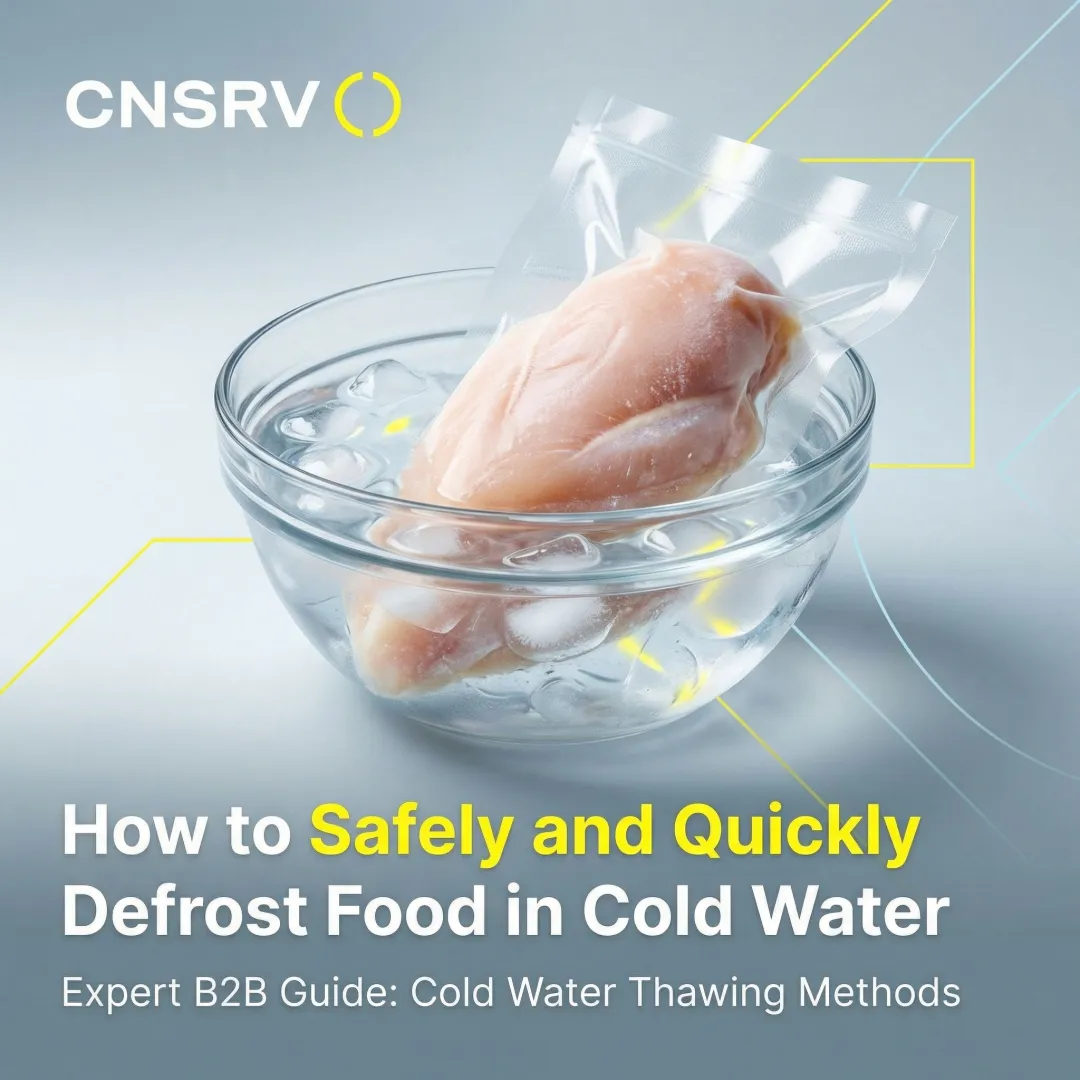
This article covers the exact steps, critical variables to control, common mistakes, and what to watch out for when defrosting turkey using water.
TL;DR
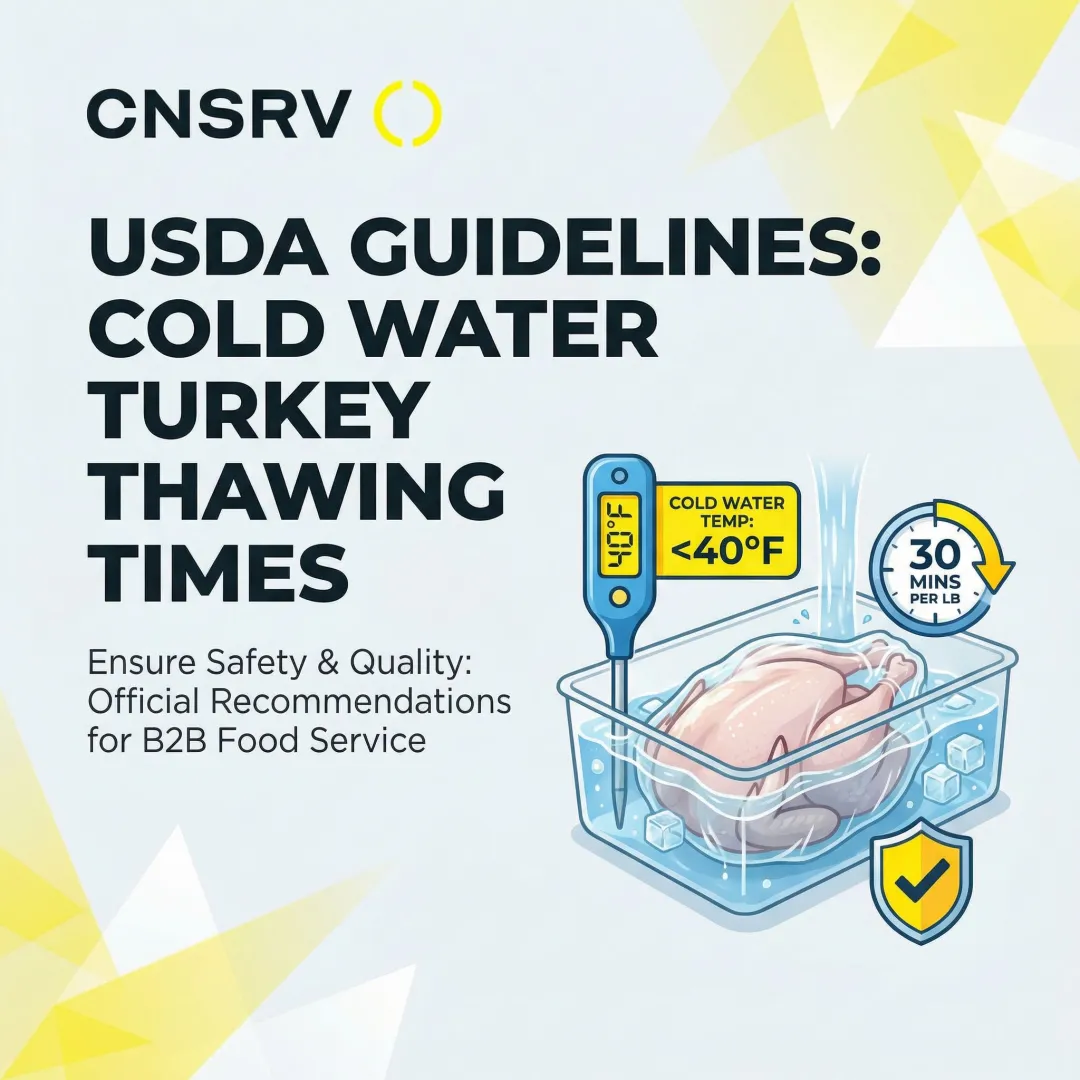
- Cold water thawing takes roughly 30 minutes per pound—plan ahead based on turkey size
- Change the water every 30 minutes to keep it at or below 40°F and out of the bacterial danger zone (40–140°F)
- Turkey must stay in a sealed, leak-proof bag throughout the process to prevent cross-contamination and waterlogging
- Cook the turkey immediately after thawing—cold water-thawed birds cannot be refrozen raw
- Closed containers with periodic water changes are safer and far more water-efficient than leaving the faucet running
How to Thaw a Turkey in Cold Water: Step by Step
Step 1: Prepare the Turkey for the Water Bath
Verify the turkey is still in its original, intact packaging. If the wrapper is torn or compromised, transfer it to a tightly sealed, heavy-duty leak-proof plastic bag.
Skipping this step creates two problems: an unsealed bag allows raw turkey juices to contaminate the thaw water, and direct water contact causes the meat to absorb excess moisture — producing a waterlogged bird that won't brown properly during cooking.
Before placing the turkey in water:
- Remove any loose outer packaging or tags that could trap water or contaminate the bath
- Leave the turkey's inner wrapping intact
- Check for giblet bags inside the cavity — they stay in during thawing but add mass, so account for them in your total thaw time
Step 2: Choose the Right Container and Fill with Cold Water
Select a container large enough to fully submerge the turkey—a clean sink, large stockpot, or food-safe bucket. Incomplete submersion causes uneven thawing and creates hot spots where bacteria can multiply while the core remains frozen.
Fill with cold tap water — not warm, not ice water. Water slightly above freezing transfers heat too slowly and extends thaw time unnecessarily.
Warm water is the bigger risk: it pushes the turkey's surface into the danger zone (above 40°F) where pathogens like Salmonella multiply rapidly, even while the center is still frozen. Cold tap water provides the optimal balance for safe, efficient heat transfer.
If the turkey floats, weigh it down with a plate or heavy food-safe object to keep it fully submerged throughout the process.
Step 3: Monitor Water Temperature and Change Every 30 Minutes
Set a timer and change the water every 30 minutes without exception. Water absorbs heat from the frozen turkey and can quickly warm into the 40–140°F danger zone, where bacteria like Salmonella can double in number in as little as 20 minutes.
Each time you change the water, verify it is cold to the touch. In high-temperature commercial kitchen environments, confirm with a thermometer — target below 40°F. A small addition of cold tap water can help if ambient heat is pulling temperatures up.
Track elapsed time: calculate total expected thaw time by multiplying the bird's weight in pounds by 30 minutes, and note this as the minimum. Larger birds often require more time due to irregular shapes, tightly packed cavities, or denser bone structure.
Step 4: Verify Full Thaw and Transition Directly to Cooking
Confirm the turkey is fully thawed by pressing the thickest part of the breast and the area around the cavity. The bird should be pliable with no icy rigidity in the center. A meat thermometer inserted into the breast should not read below 29–32°F, which indicates residual ice crystals.
Do not allow the turkey to sit in water after it has thawed. Drain immediately, pat dry, and begin cooking without delay. Cold water-thawed turkeys cannot be refrigerated raw for later use — once thawing is complete, the cold water that suppressed bacterial growth is no longer doing so, and pathogens multiply quickly.
Clean and sanitize the sink, container, and any surfaces that came into contact with the raw turkey or thaw water to prevent cross-contamination.

Key Safety Parameters to Control During Cold Water Thawing
Food safety and meat quality both hinge on controlling four variables throughout the process. Miss any one of them and you're either risking bacterial growth or degrading the final product.
Water Temperature
Water above 40°F pushes the turkey's surface into the bacterial danger zone, even while the core stays frozen. The outer layer warms faster than most people expect.
The USDA defines the danger zone as 40–140°F — the range where bacteria can double in number every 20 minutes. The outer layer can hit that threshold while the center is still solid, meaning surface bacteria multiply well before the turkey is ready to cook.
Water Change Frequency
A frozen turkey pulls heat directly from the surrounding water. Without a refresh, water temperature can climb into the danger zone within 30–45 minutes.
Skipping even one change cycle — especially late in the thaw when the outer meat is already soft — can leave the surface at unsafe temperatures for over an hour. That cumulative exposure turns the thaw water into a bacterial incubation environment.
Turkey Weight and Thaw Time Calculation
The 30-minutes-per-pound rule is a baseline average. Turkeys with irregular shapes, tightly packed cavities, or dense bone structure can thaw unevenly and may need extra time. Use this reference chart based on USDA guidelines:
| Turkey Weight | Estimated Thaw Time |
|---|---|
| 4–12 lbs | 2–6 hours |
| 12–16 lbs | 6–8 hours |
| 16–20 lbs | 8–10 hours |
| 20–24 lbs | 10–12 hours |
These are estimates. Actual thaw time depends on the bird's starting temperature and how consistently you maintain the water.
Packaging Integrity
A torn or compromised wrapper lets water contact raw meat directly, creating contamination risk for anything downstream — the sink, counter, and utensils included. It also causes the turkey to absorb excess water, which degrades texture and flavor.
The consequences fall into two categories:
- Food safety: Contaminated thaw water can spread pathogens to surfaces and equipment throughout the kitchen
- Product quality: Waterlogged meat becomes mushy, browns poorly, and loses flavor
When Cold Water Thawing Makes Sense
Cold water thawing isn't always the right call. It demands active monitoring, and without it, the method creates more food safety risk than simple fridge thawing.
Ideal use cases:
- Time is short (less than 24 hours before cooking)
- Refrigerator isn't large enough for the bird
- Commercial kitchens with staff on hand to manage water changes every 30 minutes
When this method becomes inefficient or risky:
- Unsupervised environments where no one can change water every 30 minutes
- Very large birds (over 20 lbs) where water change demands are high
- Kitchens where water temperature is difficult to control
- Situations where refrigerator thawing or an alternative system is more reliable
Common Mistakes When Thawing Turkey in Water
Most water-thawing errors come down to shortcuts — and with poultry, shortcuts create real food safety risk. Watch out for these four:
- Warm or room-temperature water: The USDA explicitly warns that thawing turkey in hot water is not safe — the outer layer hits unsafe temperatures rapidly while the core stays frozen.
- Skipping water changes: After 30–45 minutes, the surrounding water becomes a bacterial incubation environment. Refresh it every 30 minutes without exception.
- Using a leaking or unsealed bag: Raw turkey juices contaminate the thaw water and the sink basin, creating cross-contamination that's hard to detect and easy to spread throughout the kitchen.
- Waiting to cook after thawing: Cold water-thawed turkey must go straight into the oven. Once thawing is complete, bacteria begin multiplying quickly — there's no safe window to hold it raw.

Alternatives to Cold Water Thawing
Cold water thawing works, but it's not the only option—and depending on the environment, other methods may be safer, more efficient, or less resource-intensive.
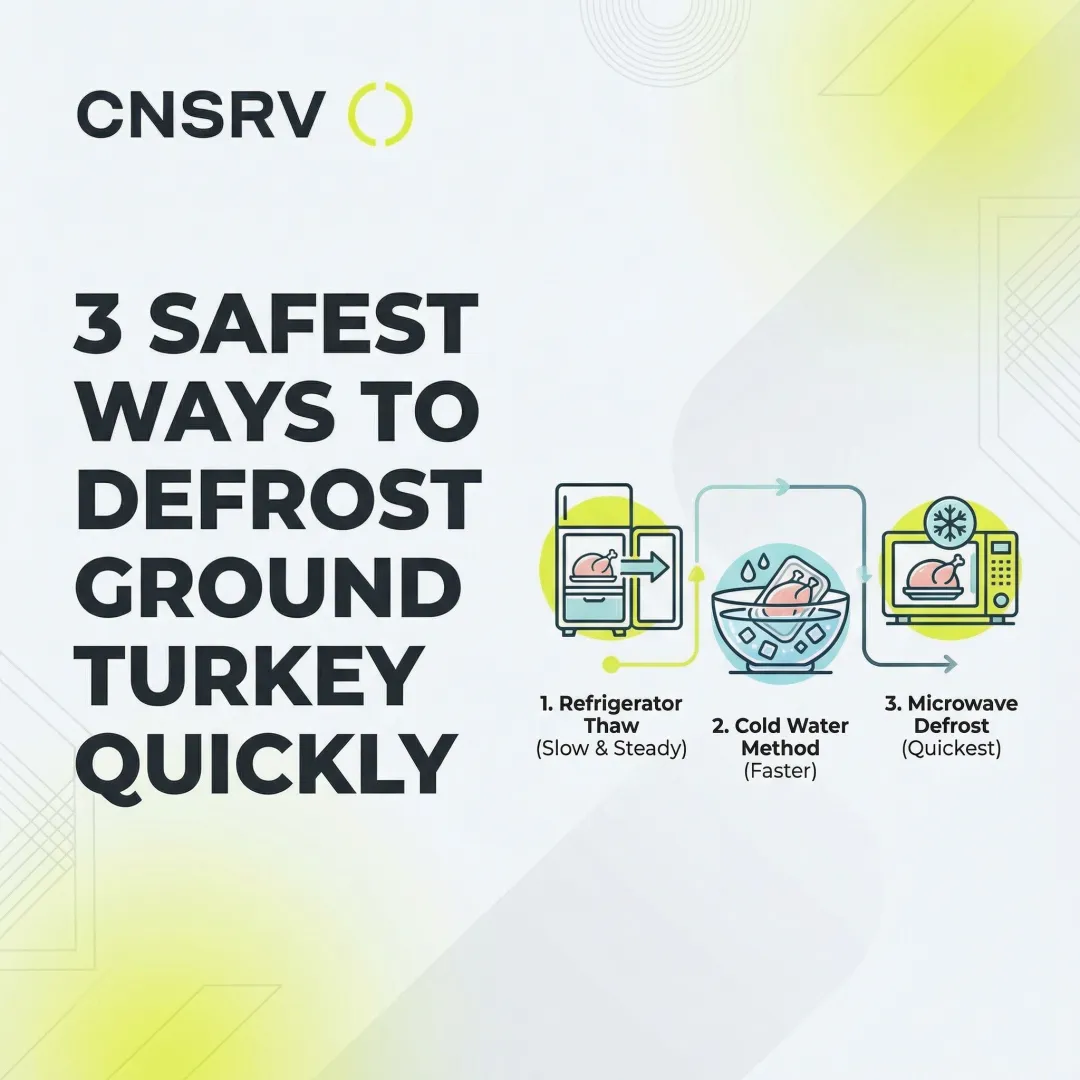
Refrigerator Thawing
When time allows, refrigerator thawing is the USDA's preferred method. It requires no monitoring and holds the turkey at a consistently safe temperature throughout the process. The bird stays safe in the fridge for 1–2 days after thawing—and can even be refrozen without cooking if plans change.
The trade-offs are real though:
- Slow (allow 24 hours per 4–5 lbs, so 3+ days for a large bird)
- Requires significant fridge space you may not have
- Not an option when time is short
Controlled Defrost Systems (Commercial Kitchens)
For commercial kitchens thawing protein at volume, purpose-built defrost systems like the CNSRV DC:02 replace the running-faucet or manual cold-water-bath method with a closed-loop system using controlled water agitation and temperature regulation. The DC:02 is NSF listed for food contact and compliant with health code standards including FDA Food Code § 3-501.13.
These systems aren't designed for home kitchens—but for restaurants and food service operations thawing turkey regularly, the advantages are significant:
- Eliminates the need for continuous water monitoring
- Uses up to 98% less water than running faucet methods
- Defrosts protein in roughly half the time of traditional methods
Microwave Thawing
Microwave thawing is a last resort—suitable only for smaller birds when the microwave has enough capacity and the operator is ready to cook immediately.
The limitations are notable:
- Uneven thawing is common; outer portions may begin cooking before the center is fully thawed
- No resting period allowed — the turkey must go straight into the oven
- Larger birds rarely fit or thaw evenly enough to be safe
Frequently Asked Questions
Is it safe to thaw a turkey in warm water?
No, warm water is not safe. It moves the turkey's surface into the bacterial danger zone (above 40°F), where pathogens like Salmonella can multiply rapidly, even while the center remains frozen. Always use cold tap water.
How long does it take to thaw a turkey in cold water?
The USDA guideline is approximately 30 minutes per pound. A 16 lb turkey requires about 8 hours, while a 20 lb bird needs roughly 10 hours. The turkey must be cooked immediately after thawing.
Do you have to change the water when thawing a turkey?
Yes, changing the water every 30 minutes is required. The water absorbs heat from the frozen turkey and can rise to unsafe temperatures if not refreshed, allowing bacteria to multiply on the turkey's surface.
Can you thaw a turkey in cold water overnight?
This depends on turkey size. Very large birds may need 10–12 hours, but leaving a turkey unmonitored overnight is unsafe — water temperature cannot be controlled without regular changes throughout the process.
Can you refreeze a turkey that has been thawed in cold water?
Turkey thawed in cold water must be cooked before refreezing — it cannot go back in the freezer raw. Only turkey thawed in the refrigerator can be refrozen without cooking first.
How do you know when a turkey is fully thawed in cold water?
The turkey should be fully pliable with no rigid icy spots in the thickest parts of the breast or near the cavity. A meat thermometer inserted into the breast should move freely and register above freezing, confirming no ice remains at the center.