Introduction
Picture this: it's the middle of dinner service, your walk-in is stocked with frozen proteins, and a last-minute party of 20 just walked through the door. You need those chicken breasts thawed—safely—and you need them now. This scenario plays out in commercial kitchens daily, creating tension between operational speed and food safety compliance.
Refrigerator thawing remains the gold standard for food safety, but rapid methods exist that balance speed with safety when executed properly. The key is maintaining food within safe temperature zones while accelerating the process.
Understanding these techniques helps commercial kitchens meet both operational demands and regulatory requirements. This guide covers:
- Proven rapid defrosting methods and their safety parameters
- Step-by-step cold water bath execution
- When commercial-grade systems make sense for high-volume operations
- How to eliminate water waste while maintaining FDA compliance
TLDR
- Fastest safe method: cold water bath under 40°F, changed every 30 minutes
- Three factors control defrosting speed: food thickness, water temperature, and surface contact area
- Never thaw raw proteins in hot water or at room temperature—both breed bacteria
- High-volume kitchens save 98% water with NSF-listed defrosting systems
- Cold water defrosts proteins in 1-3 hours; microwaves work for vegetables only
Understanding Rapid Defrosting Methods
Defrosting is fundamentally about heat transfer—moving thermal energy from the environment into frozen food to convert ice crystals back to liquid water. Different methods vary dramatically in both efficiency and safety.
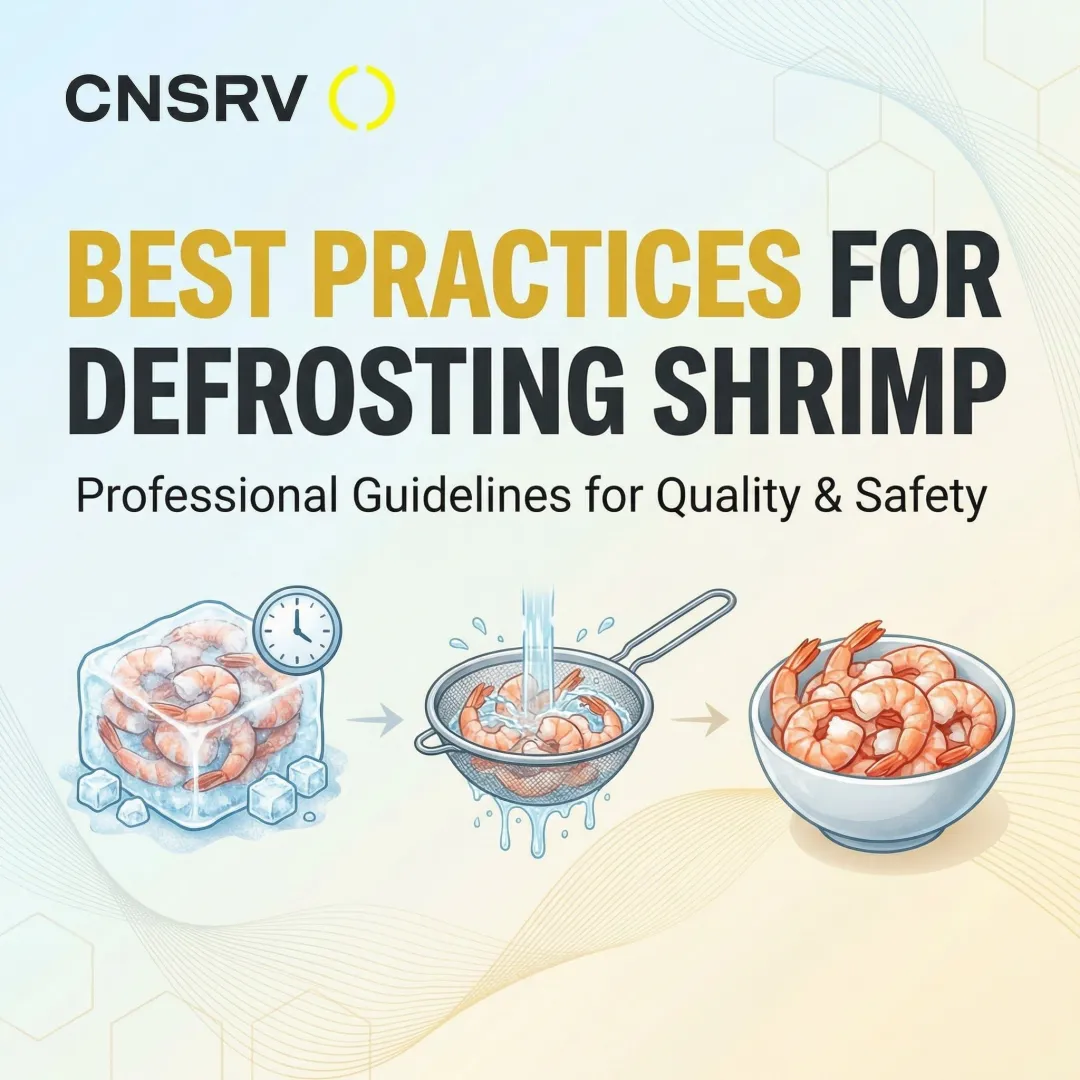
Cold Water Bath Method
Water's thermal conductivity is approximately 23 times better than air, making it the most reliable rapid defrosting method. Water transfers heat into frozen food far more efficiently than refrigerator air, dramatically reducing thaw times.
The method requires three essential requirements:
- Sealed, leak-proof packaging to prevent water contact with food
- Complete submersion in cold water (below 40°F)
- Water changes every 30 minutes to prevent bacterial growth
Microwave Defrosting
Microwave thawing is the fastest option but creates significant quality problems. The electromagnetic waves heat unevenly, creating hot spots that partially cook outer portions while centers remain frozen.
Research shows that microwave thawing increases meat hardness and drip loss compared to cold water immersion.
Best applications include:
- Vegetables and pre-portioned items
- Foods that will be immediately cooked
- Situations where speed outweighs quality concerns
Avoid for large cuts of meat where texture and moisture retention matter.
Running Water Method
Running water thaws food effectively but wastes substantial resources. Commercial prep sinks typically flow between 2.2 and 5 gallons per minute, meaning a single 60-minute thaw session can consume 180-370 gallons of potable water.
A single commercial kitchen can waste over 1 million gallons annually using continuous-flow thawing.
The water must stay cold throughout the process—warm tap water (75-85°F during summer months) creates direct health code violations.
Sheet Pan Acceleration
Beyond water choice, material selection dramatically impacts defrosting speed. Aluminum's thermal conductivity (~205 W/(m·K)) far exceeds plastic (~0.2 W/(m·K)) or ceramic materials.
Placing frozen items on aluminum trays inside a water bath accelerates thawing by improving heat transfer from the highly conductive metal surface directly into the food. The technique works best when combined with proper water circulation—the aluminum speeds heat transfer while water movement prevents cold spots.

Cold Water Bath Method: Step-by-Step Guide
Preparation and Packaging
Start by checking your food packaging. It must be completely leak-proof and food-safe.
The FDA Food Code requires sealed packaging to prevent water from contacting food directly, which creates cross-contamination risks.
If you need to repackage, do it while the food is still frozen. Use food-grade polyethylene bags or vacuum-sealed packaging rated for cold water immersion.
Setting Up the Water Bath
Select a container large enough to fully submerge the food with room for water circulation. Fill with cold tap water aiming for 32-40°F—use a food thermometer to check temperature before submerging food.
Water temperature is critical. Above 40°F allows bacterial growth. Near-freezing water slows the process without adding safety benefits.
Monitoring and Maintenance
Once your food is submerged, set a 30-minute timer. Replace the water completely at each interval to maintain safe temperature and prevent warming as heat transfers from the frozen food.
Time estimates:
- 1-2 lbs of meat: 1-2 hours
- 3-4 lbs of meat: 2-3 hours
- Whole poultry: 6-12 hours (approximately 30 minutes per pound)
Critical safety check: If water rises above 40°F, replace immediately. Consider adding ice to subsequent water changes.
Completion and Next Steps
Press the center of the package to test doneness. It should feel uniformly soft with no frozen core.
Cook the food immediately after thawing.
Critical safety rule: Never refreeze thawed raw protein without cooking first. Foods thawed in cold water must be cooked before refreezing, though foods thawed in the refrigerator may be refrozen without cooking (quality will suffer).

Key Factors That Impact Defrosting Speed
Several key factors determine how quickly you can safely defrost food. Understanding these variables helps commercial kitchens balance speed with food safety.
Food Thickness and Density
Thicker cuts take dramatically longer to defrost. A 1-inch steak might thaw in 30-45 minutes, while a 3-inch roast requires 3-4 hours under identical conditions.
Bone-in cuts create additional challenges. Bone conducts heat differently than muscle tissue, causing uneven thawing in large cuts.
Boneless cuts thaw more uniformly and typically 15-20% faster than comparable bone-in portions.
Water Temperature Control
The danger zone—40-140°F—is where bacteria multiply rapidly. Bacteria can grow to unsafe levels within 2 hours when food sits in this temperature range.
Water temperature directly impacts both safety and speed:
- Below 40°F: Prevents bacterial growth while providing efficient thawing
- Near freezing: Slows the process unnecessarily without safety benefit
- Above 40°F: Creates immediate safety risks on outer surfaces while centers remain frozen
Surface Contact and Water Circulation
Beyond temperature, water circulation plays a critical role in defrosting speed. Trapped air pockets and stacked food items slow the process dramatically.
For fastest, most even thawing:
- Space items so water can circulate freely around all surfaces
- Avoid stacking multiple packages
- Position items to maximize water contact
- Use containers that allow water flow rather than tight-fitting packaging that traps air
Starting Temperature and Freezer Storage
Deep-frozen items stored at -10°F or below take approximately 15-20% longer to thaw than items at standard freezer temperature (0°F). The extra time is needed to bring the food up to the point where ice can begin melting.
Foods frozen for extended periods may also develop larger ice crystals that affect thawing behavior and can increase drip loss during the defrosting process.

Food Safety Guidelines for Rapid Defrosting
Speed cannot compromise safety—commercial kitchens must adhere to health code standards while working efficiently. Understanding the specific time and temperature requirements keeps operations both fast and compliant.
The 2-hour rule: Once thawed food enters the danger zone (40-140°F), it must be cooked within 2 hours to prevent bacterial growth to unsafe levels.
For ready-to-eat foods, the FDA Food Code specifies that thawed portions cannot exceed 41°F. For raw animal foods, total time above 41°F (including thawing and prep) cannot exceed 4 hours.
Cross-contamination prevention:
- Use dedicated containers for thawing—never repurpose for other tasks without sanitization
- Sanitize containers between uses with approved commercial sanitizer
- Store thawing items on lower shelves away from ready-to-eat foods
- Ensure leak-proof packaging prevents water from contacting food directly
Regulatory Compliance Requirements
The FDA Food Code Section 3-501.13 clearly defines approved thawing methods, including running water at 70°F or below with sufficient velocity to agitate and flush particles.
Local health departments enforce these standards—violations carry financial penalties and reputational damage.
Common Defrosting Mistakes to Avoid
Even experienced kitchen staff can fall into defrosting habits that compromise food safety and quality. Here are the critical mistakes to avoid:
Using hot or warm water creates perfect bacterial breeding conditions. Outer surfaces quickly reach temperatures where pathogens multiply rapidly while interiors remain frozen.
Research on rehydration temperatures shows that thawing at 25°C resulted in significantly higher pathogen populations (2.28 to 6.25 log CFU/g) compared to 5°C.
Leaving food at room temperature is never safe for raw proteins. Even short periods allow surface temperatures to enter the danger zone, and standing water without temperature control increases the risk.
Refreezing thawed raw proteins without cooking degrades quality and increases safety risks. Each freeze-thaw cycle damages cell structure, increases drip loss, and reduces protein solubility.
While technically safe if done within proper time limits, the quality loss makes this practice inadvisable for commercial operations focused on consistent product quality.

Advanced Solutions for Commercial Kitchens
High-volume operations face unique challenges. Traditional running water methods waste up to 1 million gallons annually per kitchen, require constant labor for temperature monitoring and water changes, and create compliance complexity across multiple shifts.
Water-recirculating systems solve these problems efficiently. NSF-listed systems like the CNSRV DC:02 use controlled water agitation at approximately 130 gallons per minute—10-30 times faster than typical faucets.
Precise temperature regulation maintains water below 70°F throughout the entire cycle.
These systems deliver three key advantages:
- Speed: Defrost in half the time of traditional methods through optimized water circulation
- Water efficiency: Use 98% less water through closed-loop recirculation
- Compliance: Digital sensors and software controls ensure consistent FDA Food Code compliance
Cost-Benefit Analysis
A typical commercial kitchen running two thaw cycles daily with traditional running water methods uses approximately 200,000-370,000 gallons annually. At commercial water and sewer rates ($0.02-$0.04 per gallon), this represents $4,000-$15,000 in annual utility costs.
Recirculating systems can reduce water usage by 94%, delivering payback within 3-12 months for most operations. Many systems also qualify for utility rebates that further reduce upfront investment.

Frequently Asked Questions
Is quick thawing safe?
Quick thawing is safe when proper methods are used—specifically cold water bath with temperature monitoring below 40°F. Hot water or room temperature thawing are unsafe because outer layers enter the danger zone (40-140°F) while centers remain frozen.
What is the fastest way to defrost meat safely?
Cold water bath is the fastest safe method, thawing 1-2 lb portions in 1-2 hours and 3-4 lb portions in 2-3 hours. Commercial kitchens handling high volumes often use closed-loop defrosting systems that maintain consistent water temperature with significantly less water waste.
Can you defrost food at room temperature?
No, room temperature thawing is unsafe for raw proteins. Outer layers quickly enter the danger zone (40-140°F) while centers remain frozen, creating perfect conditions for bacterial growth that can reach unsafe levels within 2 hours.
How long does it take to defrost chicken in cold water?
Boneless chicken breasts (1-2 lbs) typically defrost in 1-2 hours, while whole chickens require approximately 30 minutes per pound—so a 4-lb chicken needs about 2 hours. Always verify the center is completely thawed before cooking.
Does defrosting in the microwave affect food quality?
Yes, microwave defrosting creates uneven heating that partially cooks outer portions while centers remain frozen. This causes increased meat hardness, irregular texture, and higher drip loss—making it unsuitable for quality-focused preparation.
What temperature should water be for safe defrosting?
Water must stay below 40°F throughout the defrosting process to prevent bacterial multiplication. This threshold keeps food out of unsafe temperatures where pathogens grow rapidly, while still providing adequate heat transfer for efficient thawing.