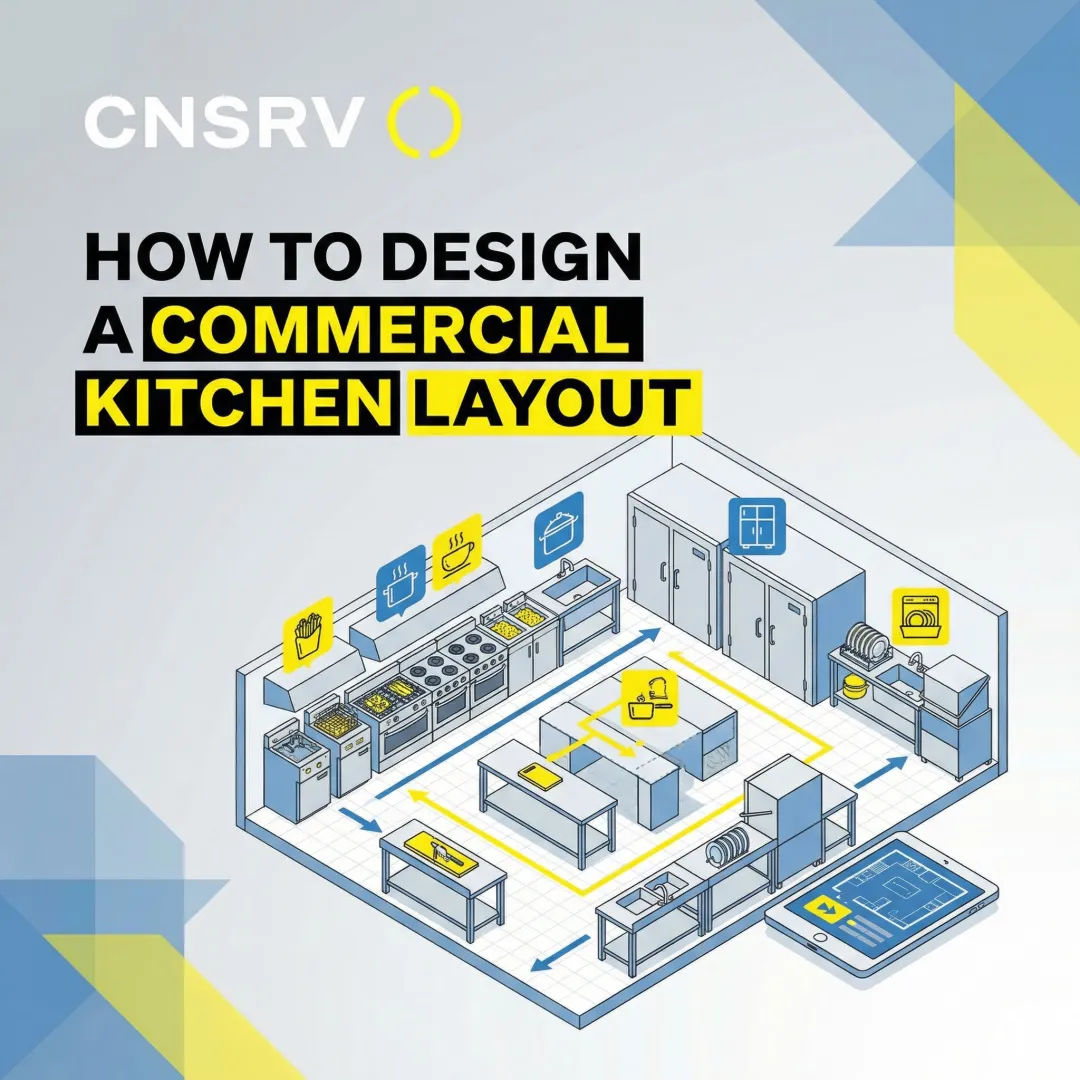
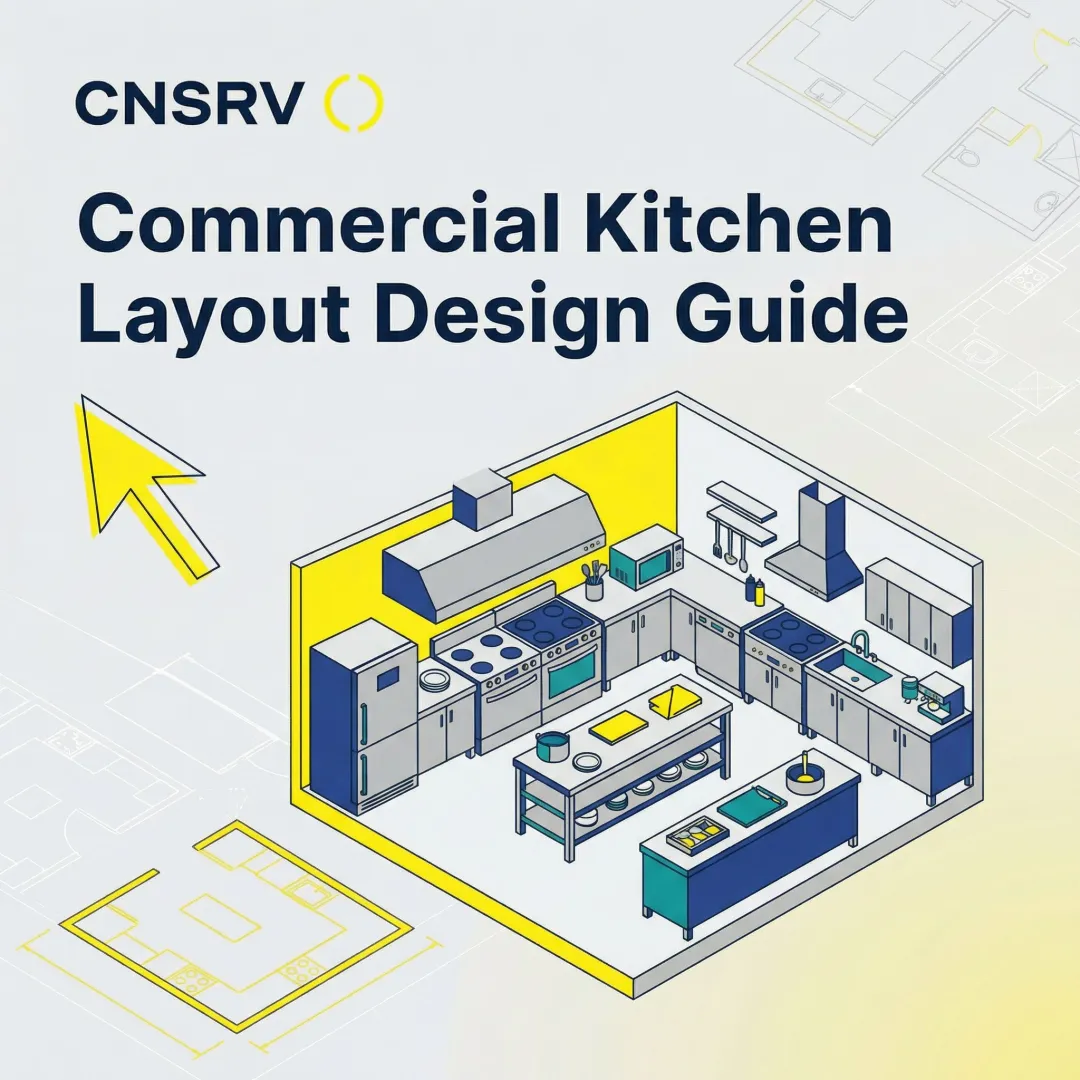
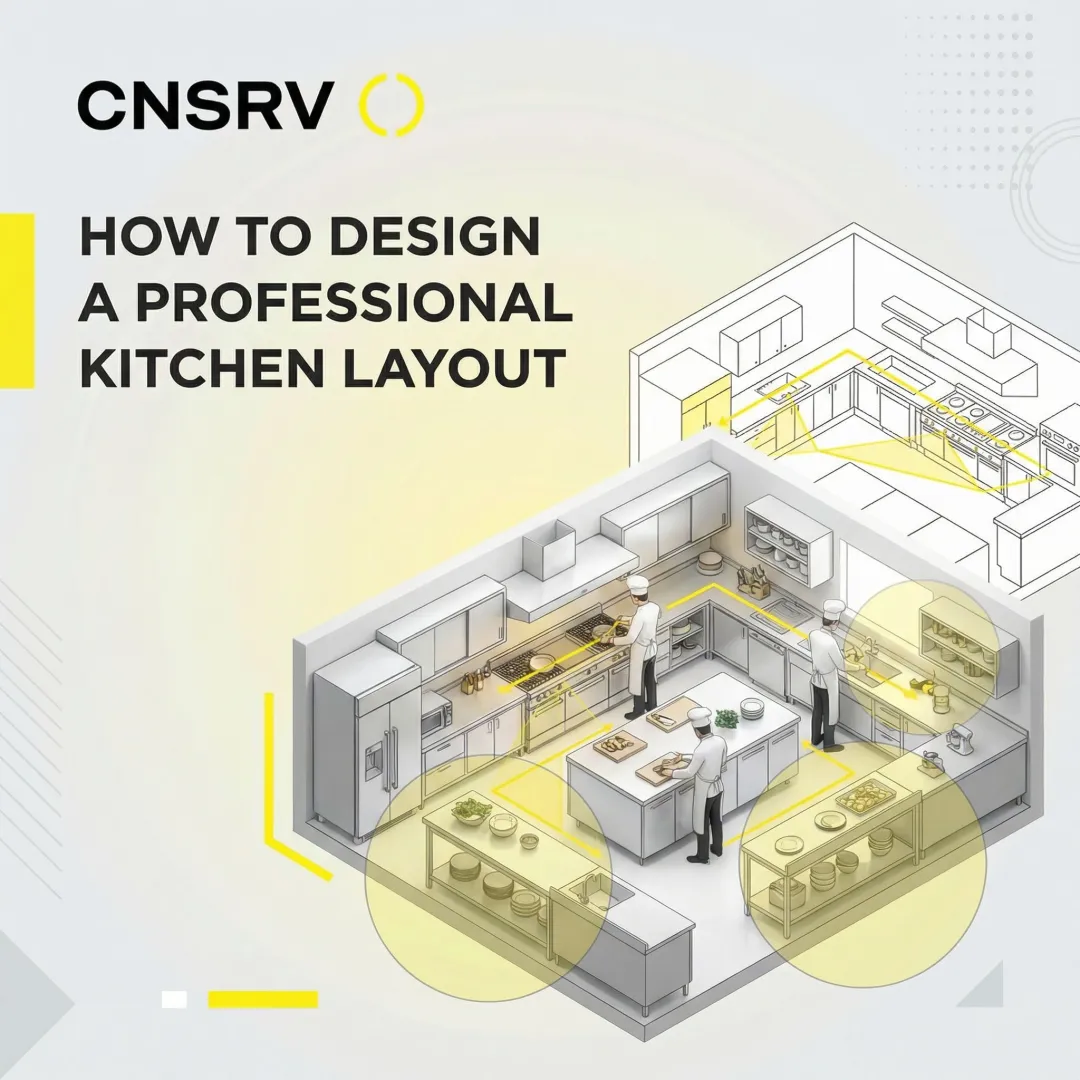
This guide walks through a step-by-step process for setting up a commercial kitchen layout, covering zones, layout types, equipment planning, compliance requirements, and the most common mistakes to avoid. Whether you're opening a ghost kitchen, full-service restaurant, or catering operation, the principles remain the same: design around your food's journey from delivery to plate, verify compliance before construction, and prioritize workflow over equipment placement.
TL;DR
- A functional commercial kitchen is built around five core zones: storage, food prep, cooking, service, and washing
- Common layout types include assembly line (QSR), island (large kitchens), galley (small spaces), and open kitchen (experiential dining)
- Assess square footage, menu complexity, and staff size before committing to a layout
- Health code compliance and proper equipment placement are non-negotiable parts of planning
- Skipping compliance checks and poor workflow design are the two most expensive planning mistakes to avoid
How to Set Up a Commercial Kitchen Layout
Step 1: Assess Your Space and Operational Needs
Measure your total available square footage and note the location of fixed utilities—gas lines, electrical panels, plumbing, and ventilation hookups. These determine where heavy equipment can go and often trigger the biggest budget overruns if ignored. Infrastructure costs frequently surpass equipment costs, and failing to verify electrical or gas capacity early can add $5,000–$20,000 in unplanned upgrades.
Define your operational scope:
- Expected daily covers or order volume
- Number of staff working simultaneously
- Service model (dine-in, delivery, or both)
- Menu complexity and cuisine type
This determines how much space each zone needs. For example, ghost kitchens operate efficiently in 200–600 sq ft, while full-service restaurants typically allocate 30–40% of their total floor plan to the kitchen. The industry rule of thumb is 5 sq ft of kitchen space per dining seat.
Step 2: Map Out Your Five Core Kitchen Zones
Identify and allocate space for the five essential zones in sequence: storage (dry and refrigerated), food preparation, cooking, service/pass, and washing/sanitation. The order of zones should mirror the natural flow of food from receipt to plate.
The five zones:
| Zone | Function |
|---|---|
| Storage | Receiving, dry goods, refrigeration |
| Food Preparation | Washing, chopping, mixing, defrosting |
| Cooking | Ranges, ovens, fryers, grills |
| Service/Pass | Plating, pickup, heat lamps |
| Washing/Sanitation | Dishwashing, three-compartment sinks, waste |

The food prep zone is where frozen ingredient thawing and portioning happen before cooking. Choosing the right defrosting equipment here directly affects water costs, throughput, and health code compliance. CNSRV's DC:02 closed-loop defrosting system, for instance, uses 98% less water than running faucet methods and defrosts frozen food in half the time — NSF-listed for food contact and compliant with FDA Food Code § 3-501.13.
Critical cross-contamination rules:
- Never place chemical storage above food prep areas
- Keep raw meat prep physically separated from produce prep
- Position handwashing sinks within 1 meter of prep surfaces to encourage proper hygiene
Step 3: Choose Your Kitchen Layout Type
Based on space and operational needs identified in Steps 1–2, select the layout type that best fits your operation. Each layout has distinct workflow logic suited to specific kitchen sizes and service styles.
Layout selection guide:
- Assembly line → High-volume, limited-menu operations (QSR, pizza, ghost kitchens)
- Zoning → Full-service restaurants with diverse menus requiring specialized stations
- Galley → Small or narrow kitchens (food trucks, boutique restaurants)
- Island → Large kitchens with experienced staff where cooking is a focal point
- Open → Experiential dining where the kitchen is visible to guests

Confirm that your chosen layout supports unobstructed movement paths of at least 36–48 inches between stations. While OSHA's minimum for exit routes is 28 inches, industry best practice recommends 42–48 inches for main traffic aisles to prevent accidents and bottlenecks.
Step 4: Plan Equipment Placement Within Each Zone
With your layout selected, assign equipment to each zone based on workflow — not just available floor space.
Equipment by zone:
| Zone | Key Equipment |
|---|---|
| Storage | Walk-in coolers, reach-in refrigerators, dry shelving |
| Prep | Prep tables, slicers, mixers, defrosting systems |
| Cooking | Ranges, ovens, fryers, grills, combi ovens |
| Service | Heat lamps, pass-through windows, plating stations |
| Washing | Commercial dishwashers, three-compartment sinks |
Position high-heat cooking equipment near ventilation hoods, and place the washing station close to both the service pass and the storage room to minimize staff travel time. Deep fat fryers require 16 inches of clearance from open flames or a 12-inch vertical steel barrier.
Poor equipment placement creates bottlenecks. For example, positioning the dishwasher far from the service pass forces servers to carry dirty dishes across active cooking zones, increasing collision risk and slowing turnover.
Step 5: Verify Compliance and Health Code Requirements
Research and list the permits and inspections typically required before opening. These vary by state and municipality, but common requirements include:
- Certificate of Occupancy
- Food Service License
- Health Department inspection approval
- Fire code sign-off
- Grease interceptor approval
Your layout must meet NSF equipment standards, OSHA workspace requirements, and local health department guidelines. Those guidelines cover ventilation, handwashing sink placement, and food storage separation. Using NSF/ANSI certified equipment is a practical shortcut — FDA Food Code §4-205.10 automatically accepts ANSI-accredited certification as compliant with design and construction rules.
Types of Commercial Kitchen Layouts
Each layout type has distinct workflow logic. The right choice depends on kitchen size, menu breadth, and service style. Each layout type has distinct workflow logic. The right choice depends on kitchen size, menu breadth, and service style. Here's how each compares:
Assembly Line Layout
Best for: High-volume, limited-menu operations (fast food, catering, ghost kitchens)
Food moves in a straight line from prep to cook to packaging. This layout maximizes speed and consistency for operations serving the same dishes repeatedly.
Limitation: Fast and consistent output, but rigid workflow limits menu flexibility. Hard to adapt if your concept changes.
Zoning Layout
Best for: Full-service restaurants with diverse menus
Each zone is dedicated to a specific cuisine type or prep function (such as salad station, grill station, and fry station). This enables multi-tasking and supports menu variety.
The catch: Maximizes menu range, but requires more space and higher setup costs due to duplicate equipment needs.
Galley Layout
Best for: Small or narrow kitchens (food trucks, ghost kitchens, boutique restaurants)
All stations line the walls along two parallel runs, maximizing usable square footage in tight spaces.
Trade-off: Maximizes limited square footage, but can become cramped with multiple staff, slowing throughput during peak periods.
Island Layout
Best for: Large kitchens with experienced staff where cooking is a focal point
Cooking equipment occupies a central island with prep and service stations at the perimeter. This makes it easier for a head chef to monitor multiple stations at once and keeps communication between stations tight.
Watch out: Requires significant square footage and isn't space-efficient for small footprints.
Open Layout
Best for: Experiential dining concepts where the kitchen is visible to guests
Cooking and prep stations are in plain view, with storage and washing pushed to the back. According to Foyr's commercial kitchen design guide, open kitchens can increase customer satisfaction by 17.3% and speed up service by 13.2%.
Trade-off: Creates an engaging dining atmosphere, but noise, smells, and messiness become customer experience factors that must be carefully managed.
Key Factors That Affect Your Layout Choice
Menu Complexity and Cuisine Type
A single-concept, limited menu works with a linear layout. A diverse menu with multiple cooking methods demands zoning or island layouts. More menu variety means more specialized stations — and more planning required upfront.
- 5 core items or fewer: an assembly line handles volume efficiently
- 40+ items across appetizers, entrees, and desserts: dedicated stations prevent cross-traffic and protect quality
Kitchen Square Footage and Shape
Standard size benchmarks by operation type:
| Operation Type | Typical Size Range |
|---|---|
| Ghost Kitchen | 200–600 sq ft |
| Fast-Casual/QSR | 1,000–2,000 sq ft (total) |
| Full-Service Restaurant | 30–40% of total floor plan |
| Catering Operation | 1,200–2,000 sq ft (mid-sized) |

Service Model and Volume
Your service model shapes how zones are weighted:
- Delivery-only: prioritize prep and packaging efficiency; service area matters less
- Dine-in: balance zone allocation evenly and plan for a smooth service pass
Peak order volume drives aisle width and equipment redundancy decisions. Ghost kitchens targeting 105+ orders daily need efficient assembly line layouts to hit those efficiency targets.
What to Prepare Before Setting Up Your Kitchen Layout
Secure all architectural and utility information before drafting a floor plan:
- Existing plumbing and gas line locations
- Ceiling height (relevant for hood ventilation)
- Load-bearing walls that cannot be moved
- Electrical panel capacity and circuit availability
- Grease interceptor requirements (often 750–1,500 gallons for restaurants)
Equipment and Budget Readiness
Research equipment costs and lead times before finalizing the layout. Large commercial cooking equipment often has 6–12 week delivery windows, and specialty items like custom hoods can take 6 months.
2026 cost benchmarks:
- Total build-out cost: $200 to $500 per sq ft
- Equipment costs: Typically 40–60% of total project cost
- Basic QSR setup: $20,000–$50,000
- Full-service kitchen: $150,000+
Equipment choices should match the layout type selected. Don't buy equipment before locking your menu—changing the menu later can render expensive hoods or electrical setups useless.
Once your equipment list and budget are set, compliance becomes the next checkpoint before any money changes hands.
Permitting and Compliance Readiness
Confirm your design has been reviewed against local health department pre-approval requirements before construction or any equipment purchase begins. Most municipalities require you to submit a floor plan for permit approval. Skipping this step leads to costly redesigns.
Common Mistakes When Setting Up a Commercial Kitchen Layout
Even well-intentioned kitchen designs fall into predictable traps. These three mistakes consistently create operational problems once service begins.
Designing Around Equipment Availability Rather Than Workflow
Many operators place equipment where it fits rather than where it belongs in the food flow. This creates cross-traffic, slows service, and increases the risk of contamination.
Map your food flow first, then select and position equipment to support that path — not the other way around.
Underestimating the Washing and Sanitation Zone
The dish and sanitation area is frequently undersized or awkwardly positioned, creating downstream impacts on service speed and compliance inspections.
Allocate adequate space for a three-compartment sink, dishwasher, and clean/dirty separation. Position it near both the service pass and storage to minimize staff travel time.
Ignoring Future Scalability
A layout optimized only for current volume can become a bottleneck as business grows. Leave buffer space or modular flexibility in the initial design.
- Plan for 20–30% growth capacity from day one
- Use portable or modular equipment to stay flexible
- Avoid built-in configurations that lock you into a fixed footprint
Frequently Asked Questions
How should a commercial kitchen be set up?
A commercial kitchen should be organized around five core zones—storage, prep, cooking, service, and washing—arranged in a logical sequence that mirrors the food's journey from receipt to plate. The layout type should be chosen based on available space, menu style, and service volume.
What is the average cost to build a commercial kitchen?
Building a commercial kitchen costs between $200 and $500 per square foot, including equipment, construction, and permits. A 1,500 sq ft kitchen can cost $300,000 to $675,000. Costs vary significantly by kitchen size, equipment quality, and location.
What are the 5 zones in a commercial kitchen?
Each zone supports a specific stage in food flow:
- Storage — receiving, dry goods, refrigeration
- Food preparation — washing, chopping, mixing, defrosting
- Cooking/production — ranges, ovens, fryers
- Service/pass — plating, pickup
- Washing/sanitation — dishwashing, waste disposal
What is the most efficient commercial kitchen layout?
There is no single most efficient layout. The assembly line excels at high-volume, limited-menu operations, while the zoning layout suits diverse menus. Efficiency comes down to how well the layout matches your operation, menu, and service style.
How much space do you need for a commercial kitchen?
Space requirements vary by operation type. Ghost kitchens can run on 200–600 sq ft, while full-service restaurants typically dedicate 30–40% of their total floor plan to the kitchen — roughly 5 sq ft per dining seat. Local health codes may also set minimum space requirements.
What permits do you need for a commercial kitchen?
Typical permits include a Certificate of Occupancy, Food Service License, Health Department approval, and fire code sign-off. Requirements vary by state and city — consult your local health department before finalizing any layout to avoid costly redesigns.