Introduction
Picture a Friday night dinner rush: your line cooks are seasoned professionals, your equipment is top-tier, and the dining room is packed with eager guests. Yet somehow, tickets are backing up, the expo station is drowning in miscommunication, and the sauté station has become a bottleneck that's delaying every order. The food is excellent. The staff is skilled. So what's going wrong?
In most cases, the culprit isn't the people or the menu—it's poor kitchen workflow. When food, staff, and equipment don't move through a logical sequence, even the best kitchens collapse under pressure. According to the National Restaurant Association's 2025 Operations Data, labor costs hit a median of 36.5% of sales for full-service restaurants in 2024, with pre-tax margins squeezed to just 2.8%. Wasted steps and miscommunication don't just slow service — they erode the margins you can't afford to lose.
This guide covers the seven operational stages of a commercial kitchen, how layout shapes efficiency, and actionable strategies to improve speed and profitability without adding headcount.
TLDR:
- Kitchen workflow is the structured movement of food, staff, and equipment from receiving to service — poor workflow kills speed and margins
- The seven stages (receiving, storage, prep, cooking, plating, service, warewashing) must flow logically to prevent bottlenecks
- Zone-based layouts, standardized procedures, and KDS technology cut service errors by 60-80%
- Modern defrosting systems cut thaw time in half while using 98% less water than traditional faucet methods
- Post-service workflow audits surface real friction points faster than any outside consultant
What Is Workflow in a Restaurant Kitchen?
Kitchen workflow is the structured movement of food, staff, and equipment through a sequence of tasks—from the moment ingredients arrive at the back door to the moment a plated dish reaches the guest. Good workflow means minimal wasted steps, clear communication, and predictable output even during peak service.
Why Workflow Matters Beyond Speed
Efficient workflow isn't just about faster ticket times. It directly shapes three areas that determine whether a kitchen is profitable:
- Food safety compliance: The FDA Food Code Annex 4 requires food to move in one direction from raw to ready-to-eat (Section 3-302.11). Cross-traffic between raw and cooked zones creates contamination risk and compliance violations.
- Labor cost control: With labor running at 36.5% of sales for full-service operators, wasted motion eats into already-thin margins. Thirty seconds per ticket of unnecessary walking compounds into hours of lost productivity each week.
- Customer retention: A study of 94,404 restaurant customers found that eliminating wait times could lift total revenue by nearly 15%. Longer waits drive shorter visits, higher walkout rates, and longer gaps between return visits.

Layout vs. Workflow: Understanding the Difference
Kitchen layout is the physical arrangement of equipment, stations, and space. Kitchen workflow is how people and food move through that space. A beautifully designed kitchen with granite countertops, high-end ranges, and ample square footage will still underperform if workflow wasn't part of the planning conversation.
The most common mistake is designing around equipment first — picking a six-burner range or walk-in cooler placement based on available space, then trying to build workflow around those fixed decisions. That sequencing bakes structural inefficiency into the physical space, and fixing it later means costly remodels.
The 7 Stages of Workflow in a Restaurant Kitchen
Every commercial kitchen—regardless of cuisine type, service model, or size—follows the same operational cycle. Mapping these stages is the first step to identifying where time, money, and quality are being lost.
Receiving and Storage
Stage 1 (Receiving): Deliveries arrive at the back door, are inspected for quality and temperature compliance (all refrigerated items should arrive at 41°F or below), and logged into inventory systems. Accepting a warm delivery creates immediate food safety risk and waste , so this stage determines the quality of everything that follows.
Stage 2 (Storage): Items are routed to dry, refrigerated, or frozen storage, organized using FIFO (first in, first out) rotation. The FDA Food Code Section 3-501.17 requires date-marking for refrigerated, ready-to-eat TCS (Time/Temperature Control for Safety) foods held longer than 24 hours.
Poor storage organization creates chaos in every subsequent stage. If prep cooks can't quickly locate the pork shoulder or the case of tomatoes, they waste minutes per shift searching—and those delays cascade into late ticket times during service.
Preparation
Stage 3 (Preparation): Washing, cutting, portioning, marinating, and mise en place all happen here. This is one of the most time-intensive and commonly bottlenecked stages in any kitchen.
One overlooked prep bottleneck is defrosting. The traditional running-faucet method—where frozen proteins sit under continuous cold running water—wastes significant time and resources. According to EPA WaterSense data, a standard 2.2 gpm faucet running for one hour consumes approximately 132 gallons of water. Multiply that across daily defrosting needs, and a single kitchen can waste up to 1,000,000 gallons annually.
The CNSRV DC:02 defrosting system addresses this bottleneck directly. The NSF-listed, zero-installation device uses a closed-loop recirculating design that defrosts frozen food in half the time while using 98% less water than the running-faucet method. Controlled water agitation and temperature regulation keep the process FDA-compliant (below 70°F), eliminating the prep-stage delays that back up cooking and plating.
Cooking, Plating, and Service
These three stages must work in tight coordination. A bottleneck at any one point backs up the rest:
- Stage 4 (Cooking): Heat application at ranges, fryers, ovens, and grills. A steak pulled 30 seconds too late or a forgotten fryer basket can ruin a dish and delay an entire table's order.
- Stage 5 (Plating/Assembly): Final presentation and quality check at the pass. Bottlenecks here typically trace to unclear plating specs or missing garnishes.
- Stage 6 (Service): Handoff to servers or the pass display. The ticket is complete, but the dish must reach the guest while still hot.

Ticket time — the duration from order entry to plate delivery — is the key metric to track across all three stages. If plating is slow, cooked food sits under heat lamps losing quality. If cooking is delayed, the expo station has nothing to plate.
Warewashing
Stage 7 (Warewashing): Dirty dishes return from the dining room, are scraped, cleaned, sanitized, and re-entered into circulation. Neglect this stage in your workflow planning, and service grinds to a halt when clean plates run out.
The FDA Food Code Section 4-301.13 requires that warewashing areas maintain separation between soiled and cleaned items to prevent contamination. Dishes returning from the dining room should never cross paths with food moving toward service. Best practice: position warewashing near the kitchen entrance, not buried at the back, to prevent cross-traffic.
How Kitchen Layout Shapes Workflow Efficiency
Workflow should drive layout decisions, not the other way around. When operators choose equipment first and build workflow around it, inefficiencies become structural—they're baked into the physical space and require costly remodels to fix.
The Certified Food Service Professionals (CFSP) handbook identifies "Flow of Materials and Personnel" as one of six core design principles, stating: "The flow must be logical, intuitive, and free of obstacles to prevent bottlenecks and enhance operational efficiency."
Zone-Based Design
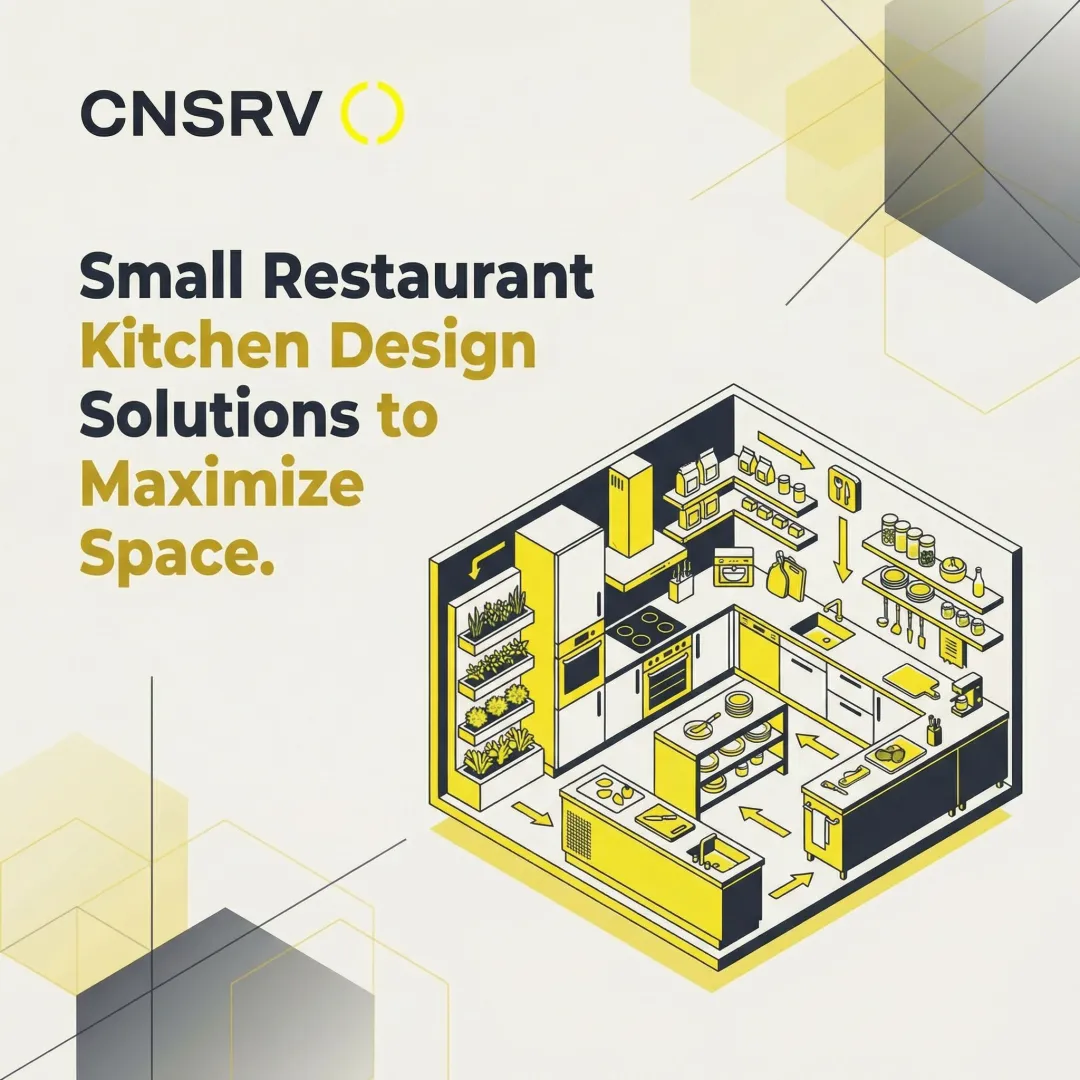
Zone-based kitchen design divides the space into dedicated areas for receiving/storage, prep, cooking, plating/service, and warewashing. This prevents congestion, keeps raw and ready-to-eat food separated per food safety code, and allows staff from multiple stations to work without interfering with each other.
How to audit your zones:
- Draw arrows on your floor plan showing food movement (receiving → storage → prep → cooking → plating → service)
- Draw separate arrows showing dish return flow (dining room → warewashing → storage)
- If arrows cross, backtrack, or loop unnecessarily, you've identified a friction point

When food and dish paths intersect, you create collision points where staff must wait, navigate around each other, or risk cross-contamination. Fixing these crossings often requires rethinking station placement entirely.
Aisle Width, Ergonomics, and Traffic Flow
The physical dimensions of your layout have direct consequences for speed and safety. Industry standards recommend:
- Single-person aisles: Minimum 42 inches
- Two-way aisles: Minimum 48 inches for safe passing
- ADA-compliant routes: 36 inches minimum, 60 inches for turning spaces
Cramped aisles don't just slow service—they cause injuries. In 2019, private industry workers in full-service restaurants incurred 93,800 nonfatal injuries and illnesses, with slips, trips, and falls often linked to cluttered walkways and cramped layouts.
Ergonomic considerations:
- Counter heights should match the task (prep counters at 36 inches, cooking surfaces at 34 inches)
- High-heat equipment should have clearance zones to prevent burns
- Separate pathways for kitchen staff vs. front-of-house staff reduce collisions
Proximity Planning
Getting aisle dimensions right sets the stage—but proximity planning determines whether staff can actually stay at their stations. High-frequency items must be within arm's reach of the station that uses them. Cold storage should be within steps of the prep counter. Kitchen Display System (KDS) screens should be visible from all cooking stations without requiring cooks to leave their posts.
Mental exercise for proximity planning:Walk through a single dish from ticket to plate. Every time a cook has to:
- Wait for another staff member to move
- Detour around an obstacle
- Backtrack to retrieve a forgotten item
- Search for a tool or ingredient
…that's a friction point worth fixing. Relocate high-use items closer to their point of use, even if it means reorganizing storage or adding duplicate tools across stations.
Proven Strategies to Optimize Restaurant Kitchen Workflow
The following strategies address the most common workflow bottlenecks in commercial kitchens — from miscommunication and staffing gaps to equipment failures and inconsistent prep.
Standardize Recipes and Prep Procedures
When every cook knows exactly how a dish is prepared, portioned, and plated, the kitchen becomes predictable. Standardized recipes and prep SOPs (standard operating procedures) make that consistency repeatable across shifts, cooks, and service volumes.
Benefits:
- Faster training for new hires (onboarding time cut by 30-40%)
- Fewer errors during peak service (consistency reduces remakes)
- Ability to cross-train staff across stations (flexibility during call-outs)
Document every recipe with specific measurements, cooking times, and plating instructions. Include photos of finished dishes so presentation expectations are clear.
Use Technology to Reduce Communication Gaps
Kitchen Display Systems (KDS) replace paper tickets, cutting miscommunication between front-of-house and back-of-house. According to Lightspeed's 2024 census, 62% of restaurant staff report that FOH-BOH miscommunication is a regular occurrence, with 55.75% citing last-minute order changes as the top operational challenge.
KDS integration with POS systems delivers:
- 60-80% reduction in order errors
- Real-time visibility into ticket times
- Automatic alerts when orders exceed target cook times
- Data on which menu items slow down the line, enabling smarter menu engineering
Paper tickets get lost, handwriting is illegible, and verbal calls get garbled during a rush. KDS removes each of those gaps before they compound into a backed-up line.
Cross-Train Staff and Plan for Peak-Hour Flexibility
If your only sauté cook calls in sick, the entire line slows down — and there's no backup plan. Cross-trained staff who can move between prep, line, and expo positions let managers shift people where they're needed without scrambling.
Best practices:
- Train every line cook on at least two stations
- Rotate staff through different positions during slow shifts
- Hold pre-service briefings reviewing the night's reservations, special events, or menu 86s
Pre-service briefings are workflow tools that prevent surprises. When the team knows a 20-top is arriving at 7:00 PM or that the halibut is running low, they can adjust prep and pacing accordingly.
Implement a Proactive Equipment Maintenance Schedule
A single malfunctioning fryer or broken reach-in cooler forces the whole team to reorganize mid-service — and the delays compound fast. Unplanned downtime can erode up to 11% of restaurant profitability, with emergency repair costs running $2,000-$5,000 per incident.
Preventive maintenance checklist:
- Daily: Clean equipment surfaces, remove food debris, check temperatures
- Weekly: Calibrate thermometers, inspect door seals, clean filters
- Monthly: Deep-clean condenser coils, check water pressure, test safety features
- Quarterly: Professional servicing for ice machines (descaling, sanitizing), HVAC systems, and refrigeration units

Lock these tasks into a CMMS (Computerized Maintenance Management System) or shared calendar to ensure they don't get skipped during busy periods. OEM (original equipment manufacturer) maintenance schedules are included in equipment manuals: follow them to protect warranties and keep equipment running longer.
Common Kitchen Workflow Mistakes to Avoid
Knowing what breaks workflow is just as valuable as knowing what improves it. These are the top mistakes operators make—and how to avoid them.
Top 5 Workflow Killers
Layout designed around equipment, not flow. Map food and staff movement first, then select equipment that fits — not the other way around.
Dirty dish traffic crossing food paths. Create a dedicated dirty-to-clean corridor near the kitchen entrance. Splash guards and floor drains help prevent contamination.
High-use items stored away from the stations that need them. Oils, seasonings, and common prep tools shouldn't require a cross-kitchen walk. Duplicate them at each station or reorganize by point-of-use.
Undersized warewashing capacity. A backed-up dish pit stalls the entire service cycle — clean plates can't return, and service stops. Right-size dishwashing equipment to peak volume and position it to avoid cross-traffic.
No audit habit. Kitchens evolve as menus change and staff turns over. After every busy service, ask where people had to wait, detour, or improvise. Those answers are your real improvement roadmap.
Simple Ongoing Audit Process
Catching these mistakes early comes down to one habit: a brief team check-in after each service.
Post-service debrief (5–10 minutes):
- Where did you have to wait for another person to move?
- Where did you run out of a tool or ingredient mid-service?
- Where did communication break down?
- What station felt most backed up tonight?
Document these answers weekly. Patterns will emerge—and those patterns are your workflow improvement roadmap.
Frequently Asked Questions
What is workflow in a restaurant kitchen?
Kitchen workflow is the organized sequence of steps—from receiving and storage through prep, cooking, plating, service, and warewashing—that determines how efficiently food, staff, and dishes move through the kitchen during service. Good workflow minimizes wasted steps and keeps raw and ready-to-eat food properly separated.
What are the stages of workflow in a restaurant kitchen?
The seven stages are: receiving, storage, preparation, cooking, plating/assembly, service, and warewashing. Each stage must flow logically into the next without backtracking or cross-traffic to prevent bottlenecks and maintain food safety compliance.
How do you improve efficiency in a restaurant kitchen?
Several levers drive kitchen efficiency: zone-based layout design, standardized prep procedures, cross-trained staff who flex between stations, and KDS technology that cuts miscommunication by 60–80%. Eliminating prep-stage bottlenecks—such as slow defrosting methods—keeps cooking and plating on pace.
What causes bottlenecks in a restaurant kitchen?
Common causes include poor station proximity, equipment failures, cross-traffic between food and dish-return paths, and understaffed stations during peak hours. Prep-stage delays—particularly slow thawing methods—also back up cooking and plating downstream.
How does kitchen layout affect workflow?
Layout determines how far staff must travel between tasks, how easily food moves from raw to ready-to-eat without cross-contamination risk, and whether congestion points form during peak service. Poor layout creates structural inefficiencies that staff training alone cannot fix.
How much water does defrosting under running water waste in a commercial kitchen?
The traditional running-faucet defrost method at 2.2 gpm consumes approximately 132 gallons per hour. A single kitchen can waste up to 1,000,000 gallons annually. Modern closed-loop defrosting systems like the CNSRV DC:02 use 98% less water while cutting thaw time in half, reducing both water costs and prep-stage delays.