Introduction
A single missed prep item, a disorganized station, or a breakdown in communication can cascade through a commercial kitchen like dominoes—turning into missed ticket times, wasted food, and unhappy guests walking out the door. In an industry where labor costs have climbed to 36.5% of sales for full-service restaurants and the foodservice sector generates $157 billion in surplus food annually, kitchen operations have become the backbone of profitability, not just service.
This guide covers the foundational systems every kitchen manager needs: team roles and hierarchy, the 8 stages of kitchen workflow, structured prep systems, inventory management, and food safety essentials.
Whether you run a high-volume restaurant or a multi-unit operation, these frameworks give you the tools to build consistency, control costs, and protect margins.
TLDR
- Kitchen operations manage staffing, prep, equipment, inventory, and food safety—not just cooking
- Clear role definitions and cross-training reduce turnover by ~30% and prevent service breakdowns
- An 8-stage workflow from receiving through reset eliminates the chaos that derails service
- Structured prep systems using par levels cut waste by up to 80% and reduce labor costs
- Tight inventory control and utility management protect razor-thin margins in today's cost environment
What Are Kitchen Operations?
Kitchen operations encompass the end-to-end management of everything that happens inside a commercial kitchen: staffing, food preparation, equipment use, inventory control, food safety protocols, and workflow coordination. It's the complete system that turns raw ingredients into plated dishes—not just the cooking itself.
The Tangible and Intangible Sides
Kitchen operations exist on two levels that must work in sync:
Tangible operations include the physical work you can see and touch:
- Cooking, prepping, and plating food
- Equipment operation and maintenance
- Station setup and cleaning
- Physical inventory counts
Intangible operations include the information systems and management processes:
- Staff scheduling and shift assignments
- Prep lists and par-level tracking
- Supplier communication and ordering
- Recipe standardization and documentation
- Cost reporting and budget monitoring
When both sides are well-organized, the kitchen runs smoothly. If either breaks down, problems compound fast.
The Stakes: Why Kitchen Operations Matter
Poorly managed kitchen operations directly impact four critical business outcomes:
- Food quality declines when stations aren't prepped, ingredients aren't rotated, or recipes aren't standardized
- Ticket times climb when prep happens reactively during service instead of before it
- Labor costs rise when inefficient workflows require extra hands or overtime
- Customer satisfaction erodes when inconsistency becomes the norm
The data backs this up. Commercial kitchens typically waste 4-10% of food purchased before it reaches the customer, representing direct profit loss. Meanwhile, restaurants accounted for 64% of single-location foodborne illness outbreaks in 2017, with improper holding temperatures as a primary risk factor—a preventable operations failure.
Strong operations don't eliminate every problem—they make problems easier to catch and fix before they reach the guest.
Key Roles in a Commercial Kitchen
Commercial kitchen hierarchies follow a clear chain of command, with each role interlocking during service to maintain output and quality.
Core Kitchen Hierarchy
Executive Chef — Sets menu direction, develops recipes, manages food costs, and oversees all culinary operations. Accountable for kitchen performance and profitability.
Sous Chef — Runs daily kitchen operations, manages line cooks during service, and performs quality checks at the expo station. Covers for the executive chef when absent.
Kitchen Manager — Bridges culinary staff and ownership or front-of-house management. Responsibilities span staff scheduling, inventory oversight, cost tracking, quality assurance, training programs, and food safety compliance.
Chef de Partie/Line Cook — Owns a specific station (grill, sauté, fry, garde manger) during service. Responsible for mise en place, cooking to specification, and maintaining station cleanliness.
Prep Cook — Executes daily prep lists, handles ingredient fabrication (chopping, portioning, marinating), maintains FIFO rotation in storage, and ensures stations are stocked before service.
Dishwasher — Manages warewashing, keeps clean dish supply flowing during service, assists with basic prep tasks, and handles end-of-shift sanitation.
The Kitchen Manager's Operational Duties
The Kitchen Manager role deserves special attention because it directly controls operational efficiency:
- Schedule staff around projected volume, not habit or seniority
- Run weekly physical inventory counts and maintain real-time stock tracking
- Track food cost percentage, labor cost percentage, and utility spend
- Enforce recipe adherence and plate presentation standards across all stations
- Build cross-functional capability through ongoing training
- Translate ownership goals into kitchen execution — and surface kitchen needs back to management
Why Role Clarity and Cross-Training Matter
When team members understand their responsibilities clearly, friction decreases and accountability increases. Cross-training adds the flexibility that role clarity alone can't provide.
Approximately 68% of restaurants now use cross-training as a labor cost management strategy, and a case study of Moe's Original BBQ locations showed cross-training contributed to a 30% reduction in employee turnover.

Cross-training allows kitchens to maintain output during absences, cover peak periods without overtime, and give staff development opportunities that improve retention. Done consistently, it pays back in lower turnover costs and fewer scrambles during a short-staffed service.
The Kitchen Workflow: 8 Stages Explained
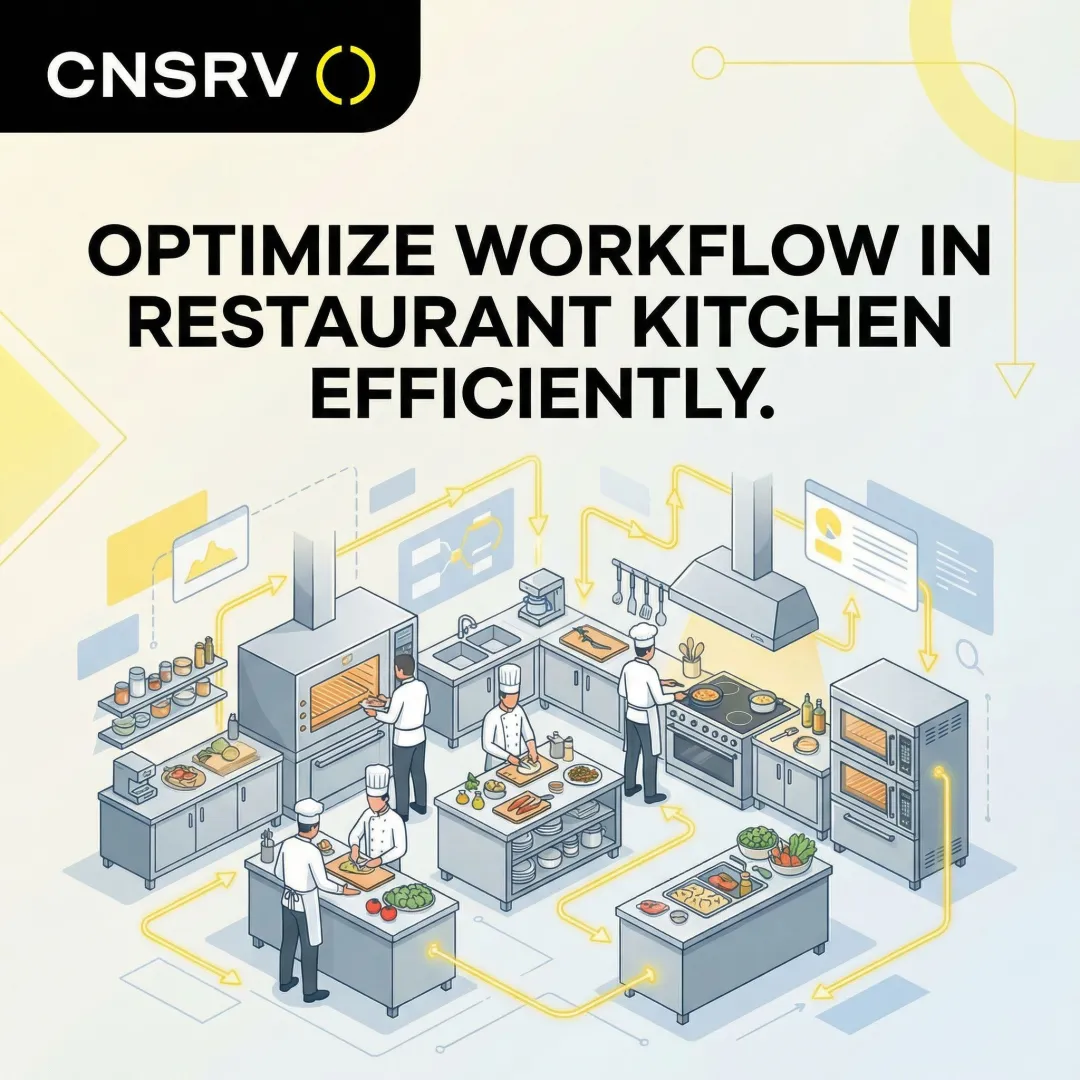
Kitchen workflow is a sequential, repeatable process—not a chaotic scramble. The 8 stages are: Receiving → Storage → Thawing/Defrosting → Mise en Place → Cooking → Plating → Service & Pickup → Cleaning & Reset. A breakdown in any single stage creates downstream problems across the entire operation.
Receiving and Storage
Receiving is your first line of defense against quality and cost problems. Every delivery should be checked against purchase orders for accuracy, inspected for quality standards, and verified for temperature compliance. Reject any items that don't meet specifications—accepting substandard ingredients at receiving means they'll eventually reach the customer or get thrown out, both costly outcomes.
Storage prevents waste and food safety violations when done correctly. Organize storage by temperature zones:
- Frozen storage at 0°F or below
- Refrigerated storage at 41°F or below for Time/Temperature Control for Safety (TCS) foods
- Dry storage in cool, dry areas away from contamination sources
Implement FIFO (first in, first out) rotation without exception. Label everything with dates. Improper holding temperatures are consistently among the top risk factors in FDA studies, and poor storage is one of the leading causes of food waste in commercial kitchens.
Thawing, Prep, and Production
Thawing/Defrosting is one of the most frequently mismanaged stages in kitchen workflow, yet it carries significant food safety risks and quality implications.
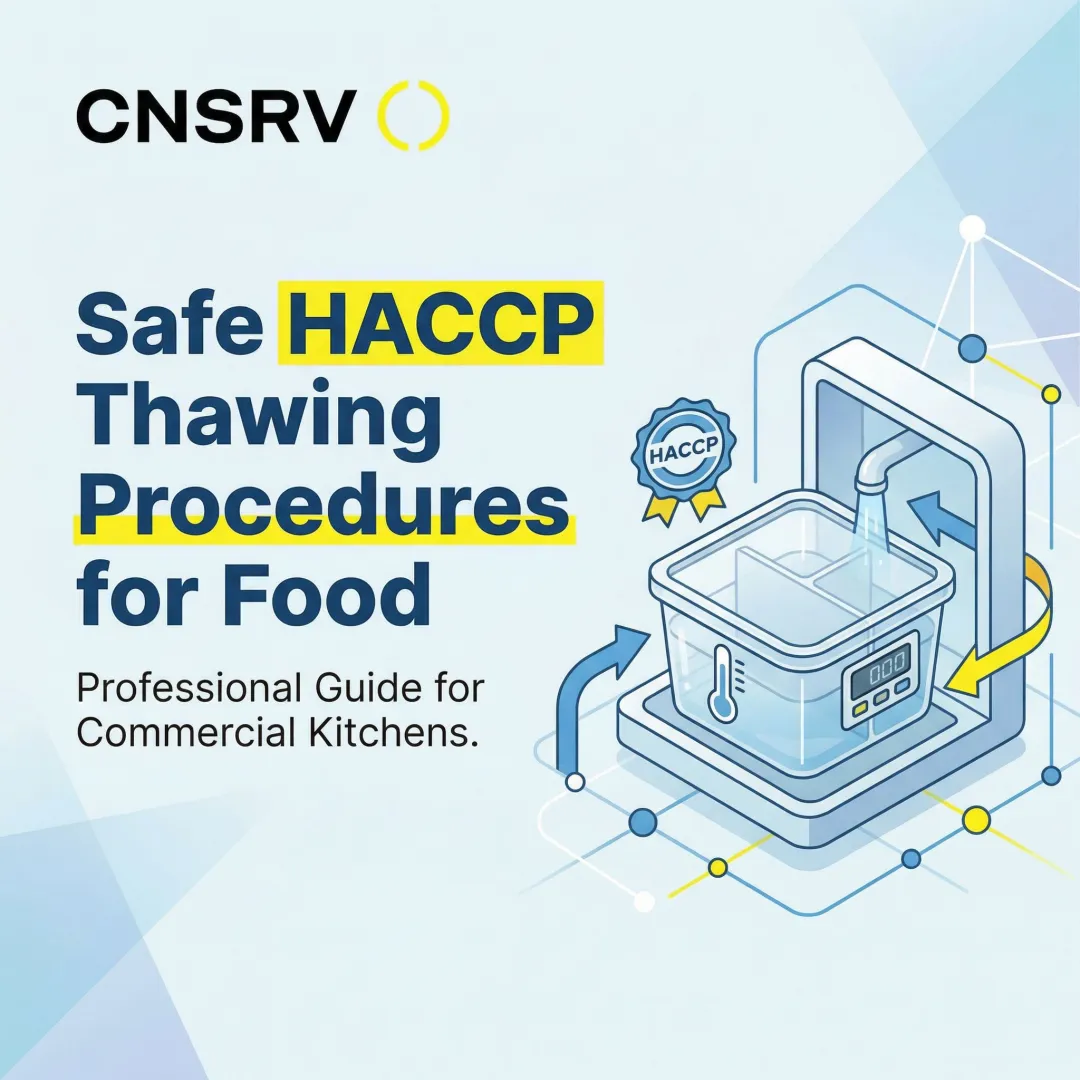
The FDA Food Code Section 3-501.13 mandates specific thawing methods:
- Refrigeration at 41°F or below
- Running water at 70°F or below with sufficient velocity
- Cooking as part of a continuous process
- Microwave thawing immediately followed by cooking
The traditional running-water method—while common—creates massive operational costs. Commercial kitchen faucets flow at approximately 4.5 gallons per minute, consuming 187-387 gallons per thaw cycle, and up to 661 gallons if fully FDA-compliant. This represents both a utility drain and a time bottleneck, with dense proteins often requiring 4+ hours to thaw.
Mise en Place requires every ingredient to be measured, cut, portioned, and organized before the rush begins. A station that isn't fully prepped before service is the most common cause of kitchen breakdown during peak periods.
Cooking during service requires station management discipline: following standardized recipes, monitoring cooking times and temperatures, and coordinating between stations so dishes come up in timing. The expo or expeditor manages ticket flow, calls times, and ensures synchronization across all stations.
Service, Plating, and Reset
Plating and Service standards directly affect customer perception. Consistent portion sizes, garnish placement, and presentation create the expectation of quality. The expo or sous chef should perform a visual quality check before any dish leaves the kitchen—catching errors at the pass is far cheaper than dealing with returns or comps.
Cleaning and Reset closes the loop. End-of-shift procedures include station cleaning, equipment sanitation, restocking for the next shift, and filling out prep inventory counts. Frame the reset stage as the beginning of the next cycle, not an afterthought. A clean, organized handoff between shifts prevents the next team from starting behind.

Building a Reliable Food Prep System
A structured prep system is a management-controlled tracking sheet that lists every prep item by station, its storage container, par level, on-hand inventory count, and daily prep requirement. Individual cooks don't carry this in their heads — it lives on paper (or a screen), owned by management.
How Par Levels Work in Practice
The outgoing cook counts their station inventory at the end of each shift. Management reviews the numbers and builds the next shift's prep list based on par thresholds. Incoming cooks execute against that list from the moment they clock in—eliminating the time wasted "looking around and deciding" what needs to be done.
Four Non-Negotiable Rules
- The cook finishing the shift fills out the inventory count. No exceptions.
- Management builds the prep list before the next shift arrives, based on actual par thresholds and projected volume.
- Each cook's prep list must be 100% complete by the end of their shift. Incomplete prep creates service failures.
- After several weeks of data, managers refine par levels based on actual depletion patterns, not initial guesses.
Measurable Benefits
The Gold Strike Resort and Casino reduced pre-consumer food waste by 80% and food costs by 5-6% monthly by implementing waste tracking and shifting from continuous batch production to structured prep. A Simapro pilot program in Mexico achieved a 32% reduction in food loss and waste, saving participants $36,000.
A disciplined prep system delivers:
- Fewer comps and less waste when tickets stop dying in the window
- Lower labor costs by cutting reactive prep during service
- Fewer cooking errors when ingredients are prepped and portioned ahead of time
- Batch prep options when data confirms a product holds well across multiple days
Pre-Shift Communication
Brief daily line-ups reinforce the prep system. Managers share projected cover counts, flag any 86'd items, confirm station readiness, and address any prep gaps before the first ticket drops. Five minutes of structured communication prevents hours of chaos during service.
Inventory, Cost, and Resource Management
Tight inventory and cost management separate profitable kitchens from those that quietly lose ground on every shift.
Inventory Management Fundamentals
Real-time or daily stock tracking prevents over-ordering, spoilage, and cost overruns. Weekly physical inventory counts—owned by the kitchen manager, not delegated entirely to line cooks—provide the data foundation for cost control.
Poor inventory management creates daily losses from spoilage and wasted labor hours. Count everything, track everything, and hold people accountable for variances.
Food Cost Control
Food costs typically represent 28-35% of sales in restaurants, with prime costs (food + labor) hovering around 60% of revenue. In an environment where average food costs in 2025 were more than 35% above pre-pandemic levels, every percentage point matters.
Practical controls that keep food cost in range:
- Standardize recipes and enforce portion sizes at every station
- Log waste daily — what got thrown out, and why
- Adjust par levels or menu items when the same prep consistently gets discarded
- Review food cost percentage weekly, not monthly

Labor Cost Management
Labor costs hit 36.5% for full-service restaurants and 31.7% for limited-service restaurants in 2024—well above historical averages. Scheduling should be built around projected volume (covers, revenue forecasts) rather than habit or tradition.
Two scheduling practices that directly reduce labor spend:
- Cross-train staff across critical stations to cover callouts without paying overtime
- Build schedules from revenue forecasts, not last week's template
Water and Utility Costs
Many kitchens overlook water consumption as a controllable cost, but hospitality and foodservice establishments account for approximately 15% of total water use in U.S. commercial facilities, with kitchens consuming 46-52% of a restaurant's total water use.
The average U.S. restaurant consumes approximately 5,800 gallons of water per day—roughly 2.1 million gallons annually. Operational decisions like how frozen food is thawed add up to significant utility line items.
Running-faucet defrosting — standard practice in most kitchens — is one of the largest controllable water costs. CNSRV's DC:02 replaces that method with a closed-loop system that uses 98% less water, saving up to 1,000,000 gallons per year per kitchen. The unit also qualifies for rebates through programs like Metropolitan Water District ($800 per unit in Southern California), Tampa Bay Water, and Portland Water Bureau.
The financial case is straightforward: Nobu Malibu reported saving over $2,000 on water bills within the first month of use. Most kitchens pay less monthly for the equipment than they recover in water savings.
Budget Monitoring Rhythm
Review the kitchen's weekly cost report—food cost percentage, labor cost percentage, and utility spend. Waiting until month-end to discover you're 5 points over on food cost means you've already lost thousands of dollars.
Food Safety, Equipment, and Maintenance
Food safety compliance is non-negotiable. Health code violations result in shutdowns, fines, and reputational damage that can destroy a business.
Food Safety Essentials
Core pillars include:
- Temperature danger zone awareness: Keep TCS foods out of the 41°F–135°F range
- Cross-contamination prevention: Separate raw proteins from ready-to-eat foods during storage and preparation
- Allergen management: Track, label, and communicate allergen presence across all menu items
- HACCP principles: Identify critical control points and monitor them consistently
The FDA Food Code 2022 provides the regulatory framework. Cold holding must maintain TCS food at 41°F or below, hot holding at 135°F or higher, and ready-to-eat TCS food held more than 24 hours must be date-marked and discarded within 7 days.
Equipment Maintenance
Equipment-related downtime costs U.S. restaurants an estimated $46 billion annually, and emergency repairs cost 2-3 times more than scheduled preventive maintenance.
Those numbers make a strong case for scheduling maintenance before something breaks — not after.
Weekly maintenance checklist:
- Fryer boil-out and thermostat check
- Walk-in cooler/freezer temperature logs
- Ice machine cleaning and sanitization
- Prep surface deep cleaning
Monthly maintenance checklist:
- Refrigeration coil cleaning and gasket inspection
- Grease trap cleaning (or per local code requirements)
- Vent hood professional cleaning (quarterly/semi-annual)
- Equipment calibration verification
Sanitation Standards and Shift Accountability
Station-level cleaning should happen at every shift change, not just at closing. A clean handoff reduces food safety risk and sets a professional standard that the whole team registers.
Shift sanitation responsibilities should cover:
- Wipe down and sanitize all prep surfaces before handoff
- Restock consumables (gloves, wraps, labels) so the next cook starts ready
- Log any temperature or equipment issues for the incoming team
- Confirm proper food storage and labeling before leaving the station
Frequently Asked Questions
What are kitchen operations?
Kitchen operations encompass the full scope of managing a commercial kitchen—including food prep, staffing, equipment maintenance, inventory control, and food safety protocols—to ensure consistent, efficient, and safe food production from receiving to service.
How to manage kitchen operations?
Effective kitchen management starts with clear staff roles, cross-training, and structured prep systems built around par levels. Layer in weekly inventory counts, FDA Food Code-compliant food safety practices, and regular cost reporting to keep operations tight.
What are the 8 stages of workflow in the kitchen?
The 8 stages are: Receiving, Storage, Thawing/Defrosting, Mise en Place, Cooking, Plating, Service & Pickup, and Cleaning & Reset. A breakdown in any single stage creates downstream inefficiencies that affect quality, speed, and costs throughout the entire service.
What is the role of a kitchen manager in a restaurant?
The kitchen manager oversees daily operations: staff scheduling based on projected volume, weekly inventory counts, food and labor cost control, recipe adherence, and staff training. They serve as the main link between the culinary team and restaurant leadership.
How can commercial kitchens reduce food waste?
Start with FIFO rotation and strict date labeling, then build par-level prep systems to prevent overproduction. Standardized portion control, waste tracking logs, and menu engineering that shares ingredients across dishes all reduce waste further.
What equipment is essential for a commercial kitchen?
Essential equipment falls into three categories: storage (walk-in coolers, freezers, dry storage shelving), production (mixers, slicers, food processors, defrosting systems), and cooking (ovens, ranges, fryers, grills, steamers). Maintaining this equipment on a preventive schedule is just as important as owning it. Emergency repairs cost 2-3× more than scheduled maintenance.