Introduction
In commercial kitchens, operational chaos rarely begins at the stove—it starts in storage. Staff waste precious minutes hunting for ingredients during peak service, cross-contamination risks escalate in disorganized walk-ins, and health code violations stem from improper shelving practices that inspectors flag immediately. These storage failures translate directly into revenue loss, food waste, and regulatory fines that erode margins before the first plate leaves the kitchen.
Professional kitchen storage is a system, not just equipment. The difference between a compliant, efficient operation and a chaotic one comes down to materials, organizational frameworks, and daily protocols.
This guide covers the essential categories—dry storage, cold and frozen zones, and equipment organization. You'll learn the FIFO method, zone-based layouts, cold storage stacking orders, and space-saving strategies that work within existing footprints.
This resource is designed for restaurant owners, kitchen managers, and chefs building or overhauling storage systems for speed, safety, and cost control.
TLDR
- Professional storage divides into dry, cold, and equipment zones with distinct environmental and safety requirements
- Stainless steel and NSF-certified materials meet health code standards and withstand commercial kitchen conditions
- FIFO rotation and zone-based organization are the fastest operational levers for cutting waste and speeding up service
- Cold storage demands strict temperature control and top-to-bottom stacking order to prevent cross-contamination
- Vertical shelving, wall-mounted racks, and labeling systems improve workflow with minimal disruption to your existing setup
Types of Commercial Kitchen Storage
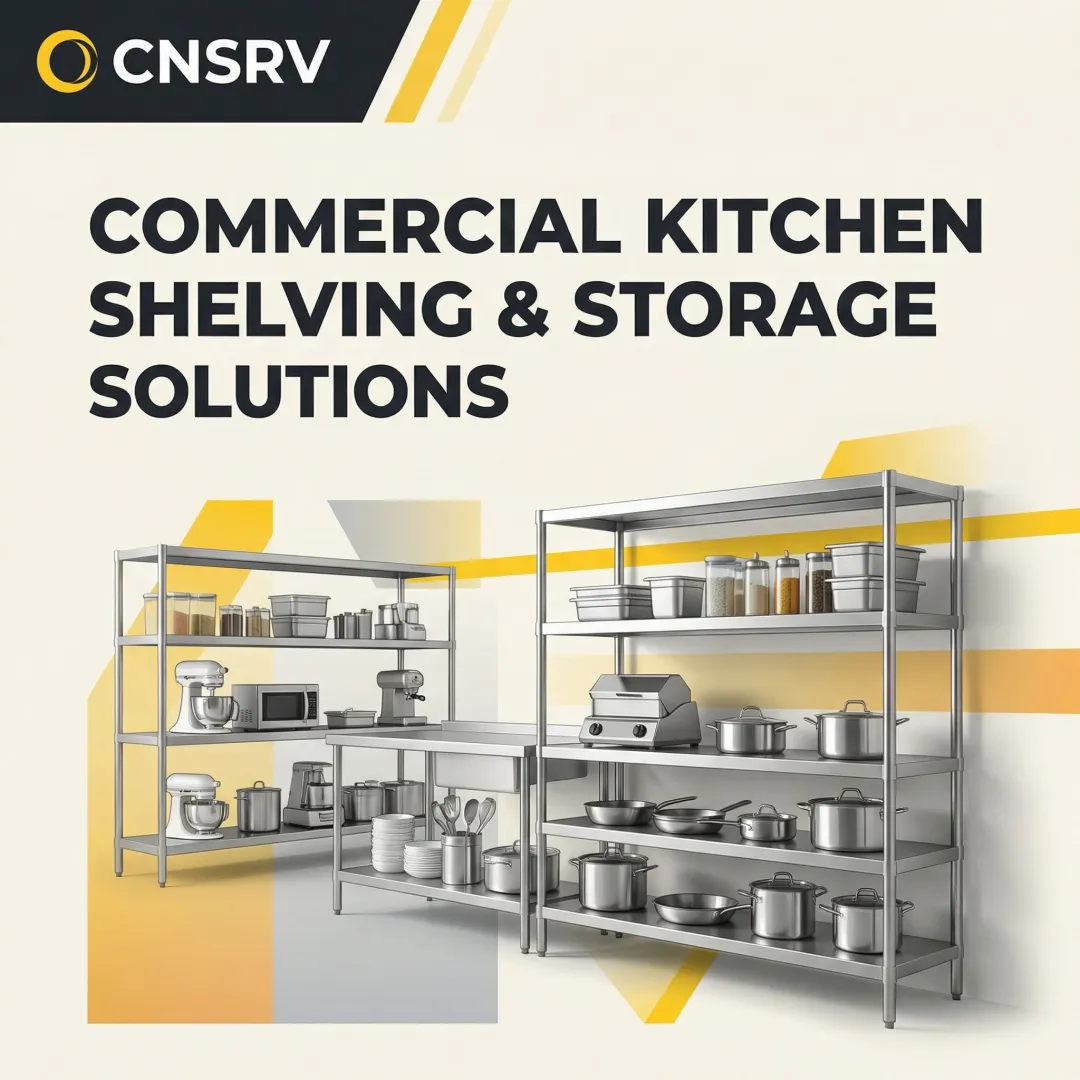
Commercial kitchen storage breaks into three primary categories: dry storage, cold storage (refrigerated and frozen), and equipment/smallwares storage. Each demands different environmental conditions and workflow to maintain food safety and keep service running smoothly.
Dry Storage
Dry storage houses non-perishable goods—grains, canned items, oils, spices—and requires specific environmental controls to prevent spoilage and contamination. Key requirements include:
- Temperature: USDA guidelines recommend 50°F–70°F (10°C–21°C); above 70°F, insects become active in grains and canned goods risk bulging
- Humidity: Keep below 60% to prevent packaging degradation and mold
- Ventilation: Adequate airflow controls mustiness and discourages moisture buildup
Dunnage racks serve a critical compliance function: all food and equipment must be stored at least 6 inches (15 cm) above the floor to allow for cleaning and pest monitoring. Place heavy bulk items like flour sacks and canned goods on lower shelves for safety and accessibility, with lighter items stored higher.
Cold Storage
Refrigerated storage includes walk-in coolers, reach-in units, and undercounter refrigerators, each suited to different operational volumes. FDA Food Code mandates maintaining cold holding at 41°F (5°C) or less for Time/Temperature Control for Safety (TCS) foods—this single threshold reduces listeriosis cases from a median of 656 (at 45°F) to just 28.
Refrigerator organization must follow strict top-to-bottom food safety stacking order:
- Top shelf: Ready-to-eat foods (no cooking required)
- Second shelf: Seafood (145°F minimum cook temp)
- Third shelf: Whole cuts of beef/pork (145°F)
- Fourth shelf: Ground meat and seafood (155°F)
- Bottom shelf: Whole and ground poultry (165°F)

Frozen storage units—upright reach-in freezers, undercounter freezers, walk-in freezers—maintain long-term ingredient management. Frozen inventory requires clear labeling, date tracking, and FIFO rotation as rigorously as refrigerated goods, with storage maintained at 0°F (-18°C) to preserve quality and safety.
Equipment and Smallwares Storage
Cookware, utensils, pots, pans, sheet trays, and smallwares need dedicated storage near cooking stations to minimize movement during service. Options include:
- Wall-mounted pot racks for frequently used cookware
- Under-shelf hooks for hanging utensils and small tools
- Dedicated shelving bays positioned within arm's reach of prep and cooking zones
- Mobile utility carts that move with shifting service needs
Best Materials for Professional Kitchen Storage
Material choice for shelving, containers, and racks directly affects durability, hygiene, and health code compliance. Commercial kitchens face exposure to moisture, heat, and heavy loads that consumer-grade materials cannot handle.
Stainless Steel
Stainless steel—typically Type 304 in 14-gauge to 18-gauge thickness for shelving and prep tables—is the industry standard. Its non-porous surface resists corrosion, sanitizes easily, and supports heavy loads. Health inspectors require or strongly prefer stainless steel for food-contact surfaces, and 14-gauge construction provides "battleship" strength for high-impact areas like meat prep tables.
Epoxy-Coated and Chrome Wire Shelving
Chrome wire shelving offers excellent visibility and airflow, making it ideal for dry storage where operators need to see inventory at a glance. However, chrome shelving fails rapidly in humid environments and is prone to rust in walk-in coolers.
Choosing the right coating comes down to environment:
- Epoxy-coated wire — protective polymer finish (typically green or black) resists moisture and rust; well-suited for walk-in coolers and dish rooms
- Polymer/composite shelving — fully impervious to moisture with no metal substrate; the best choice for the wettest areas like dishwashing stations and produce coolers
NSF-Certified Storage Equipment
FDA Food Code Section 4-205.10 deems equipment certified by an ANSI-accredited program like NSF as automatically compliant with design and material standards. NSF certification means the equipment has been tested for food safety, material integrity, and cleanability, reducing the documentation burden during health inspections.
Key NSF standards for storage:
- NSF/ANSI 2: Food equipment including shelving and worktables
- NSF/ANSI 7: Commercial refrigerators and freezers
- NSF/ANSI 51: Food equipment materials (stainless steel, coatings, gaskets)
How to Organize a Commercial Kitchen for Maximum Efficiency
Having the right equipment means nothing if the organizational system is wrong. Two foundational frameworks—zone-based storage and the FIFO method—work together to create operational efficiency.
Zone-Based Storage Layout
The zone approach positions each storage area physically near its point of use: dry goods near the prep station, refrigerated protein near the grill line, smallwares near plating. Mapping product flow from receiving dock to cooking station to plating should dictate where everything lives.
The mise en place principle—everything in its place before service begins—extends beyond prepped ingredients to storage organization. Labeled containers, pre-portioned stock, and staged equipment reduce cognitive load on staff during peak hours. Studies show inefficient design causes staff to walk up to a full mile extra per shift, a direct hit to labor costs.
FIFO (First In, First Out) Method
New stock goes behind existing stock so older product is always used first. Applied across all three storage zones — dry goods, refrigerated, and frozen — this directly reduces spoilage. With foodservice surplus food valued at $157 billion annually, FIFO is a non-negotiable cost control measure.
Every stored item should have a label with product name, received date, and use-by date. Color-coded day-dot labels are common industry practice that reduces errors and speeds up visual identification during busy service periods.
Dedicated Receiving and Prep Areas
A dedicated receiving zone where incoming deliveries are inspected, dated, and sorted before entering storage prevents FIFO violations and cross-contamination. Deliveries sitting unchecked on shelves bypass the entire food safety system and create immediate compliance risks. A proper receiving workflow covers:
- Inspect each delivery for temperature compliance and damage before accepting
- Date and label all incoming product immediately at the receiving dock
- Sort items into the correct storage zone before they touch a shelf
- Reject any product that fails inspection rather than storing it conditionally

Cold and Frozen Food Storage Best Practices
Cold and frozen storage errors are among the leading causes of health code violations and foodborne illness incidents. Proper cold storage is both a safety requirement and an operational efficiency tool.
Refrigerator Organization and Temperature Zoning
The correct top-to-bottom refrigerator stacking order is mandated by food safety codes and prevents cross-contamination from drips. ServSafe and the National Restaurant Association prescribe stacking based on minimum internal cooking temperature:
Top to Bottom:
- Ready-to-eat foods (top shelf)
- Seafood (145°F cook temp)
- Whole cuts of beef/pork (145°F)
- Ground meats (155°F)
- Raw poultry (bottom shelf, 165°F cook temp)
Walk-in coolers need clear traffic lanes, consistent temperature monitoring at 41°F (5°C) or less, and storage containers that allow airflow while preventing cross-contamination. Raw eggs must be stored in equipment maintaining an ambient air temperature of 45°F (7°C) or less.
Frozen Food Storage and Thawing Protocols
Frozen storage requires regular inventory audits to prevent freezer burn and over-stocking. Proper FIFO labeling is even more critical in freezers because items are less visually distinguishable once frozen and packaged.
The FDA Food Code permits four approved thawing methods:
- Under refrigeration (≤41°F)
- Running water (≤70°F)
- Microwave (if immediately cooked)
- Cooking directly from frozen
The most common commercial method — running cold water — comes at a steep cost. Commercial kitchen faucets flow at 2.2 to 4.5 gallons per minute, with a single thawing session consuming 187 to 387 gallons.
That water waste is an avoidable operational cost. CNSRV's DC:02 defrosting system addresses it directly: NSF-listed under Standard 169 (Company C0392286) for food contact, it uses 98% less water than traditional running faucet methods, defrosts food in half the time, and keeps water below 70°F for full FDA compliance.
The closed-loop system circulates water at approximately 130 gallons per minute (10-30× faster than typical faucets), using only 3,120 gallons annually compared to 717,600 gallons with conventional methods. Operators like Nobu Malibu report saving over $2,000 in the first month on water bills alone — a direct complement to well-organized frozen storage systems.
Smart Storage Ideas to Maximize Space in Professional Kitchens
Most commercial kitchens operate with constrained square footage, leaving vertical space, wall surfaces, and under-equipment areas underutilized.
Vertical and Wall-Mounted Storage
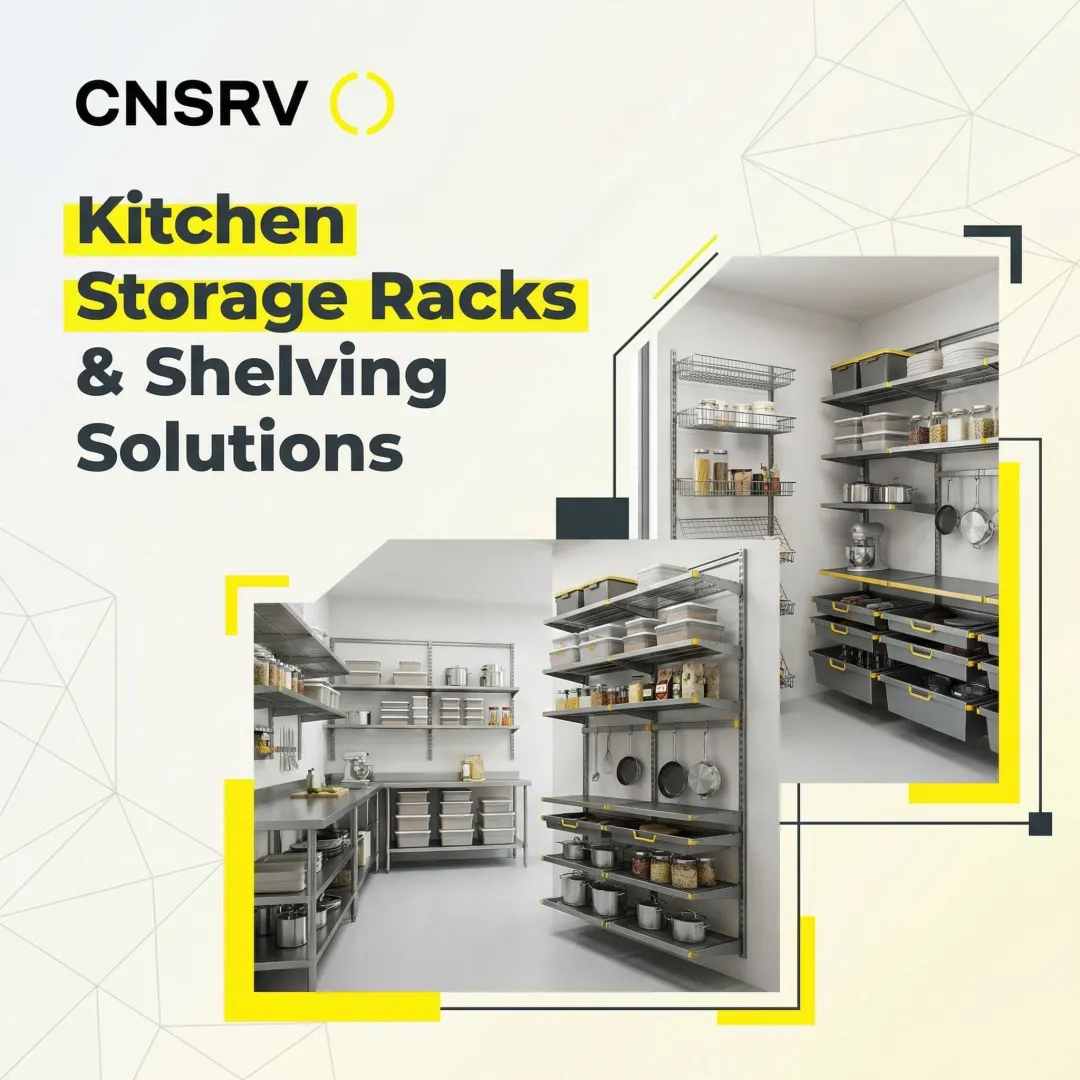
Adding adjustable wire shelving units that reach toward the ceiling multiplies usable storage space without expanding the kitchen footprint. Adjustable shelf heights accommodate varying container sizes, while wall-mounted solutions free up floor space:
- Magnetic knife strips for blade storage
- Pegboards for utensils and hand tools
- Overhead pot racks for frequently used cookware
- Under-shelf hooks for hanging items
- Slide-out shelving systems for deep cabinets
Mobile utility carts provide flexible storage that moves with service needs, useful in kitchens where prep and service zones shift throughout the day.
Physical storage infrastructure only holds its value when staff know how to use and maintain it. That requires a parallel system of labeling and routine upkeep.
Labeling, Visibility, and Maintenance Systems
Even the best storage setup degrades without a maintenance system. Implement:
- Weekly audits to cull expired items and verify FIFO rotation
- Quarterly deep cleans of shelving and walk-ins to prevent buildup
- Staff training that explains where items belong and why the system matters
- Standardized labels showing product name, received date, and use-by date
Consistent labeling prevents the most common storage failures: cross-contamination, misplaced inventory, and waste from expired product. Without it, even a well-organized kitchen reverts to guesswork within weeks.
Frequently Asked Questions
What is kitchen storage called?
Commercial kitchen storage areas are referred to by function: dry storage (for non-perishables), cold storage or walk-in coolers (for refrigerated and frozen items), and smallwares storage. The shelving and racking systems are called commercial shelving, utility shelving, or dunnage racks.
How to store food in a commercial kitchen?
Three rules cover the essentials: use the FIFO method (oldest stock forward), follow top-to-bottom stacking in refrigerators (ready-to-eat on top, raw proteins on bottom), and label all items with received and use-by dates.
Which material is best for kitchen storage?
Stainless steel is the top choice for commercial kitchens — durable, corrosion-resistant, and easy to sanitize. Epoxy-coated wire shelving is preferred for humid environments like walk-in coolers. Always prioritize NSF-certified materials for food-contact surfaces.
How to improve storage in a kitchen?
Implement zone-based organization (store items near their point of use), maximize vertical space with adjustable shelving, and enforce a labeling and FIFO rotation system to reduce waste and speed up service.
What is the FIFO method in commercial kitchen storage?
FIFO stands for First In, First Out — new stock is placed behind older stock so the oldest product is always used first. It applies to dry, refrigerated, and frozen storage, and is the most reliable way to reduce spoilage and control food costs.
What are the health code requirements for commercial kitchen storage?
Core requirements include:
- Store food at least 6 inches off the floor
- Maintain refrigeration at 41°F or below
- Follow correct stacking order to prevent cross-contamination
- Use NSF-certified materials for food-contact surfaces
- Use approved thawing methods only
Requirements vary by jurisdiction, so always verify with your local health authority.