A well-designed prep station is the fix professional kitchens have relied on for decades. By creating dedicated zones stocked with the right tools, surfaces, and storage, commercial operations can save time, reduce waste, and improve food quality. This guide covers actionable kitchen prep station ideas—from layout fundamentals and essential elements to task-specific setups—that any commercial or serious home kitchen can implement immediately.
TLDR
- A prep station is a dedicated zone with proper tools, surfaces, and storage that streamlines every step from raw ingredients to the cook line
- Key elements: countertop space (min. 36" × 24"), proximity to prep sink and cold storage, organized tool access
- Task-specific stations for vegetables, proteins, and dry goods reduce cross-contamination and speed throughput
- Small upgrades like drawer inserts, labeled containers, and waste bins add up to major time savings per shift
- Proper mise en place before service can reduce ticket times by 20%
What Is a Kitchen Prep Station and Why Does It Matter?
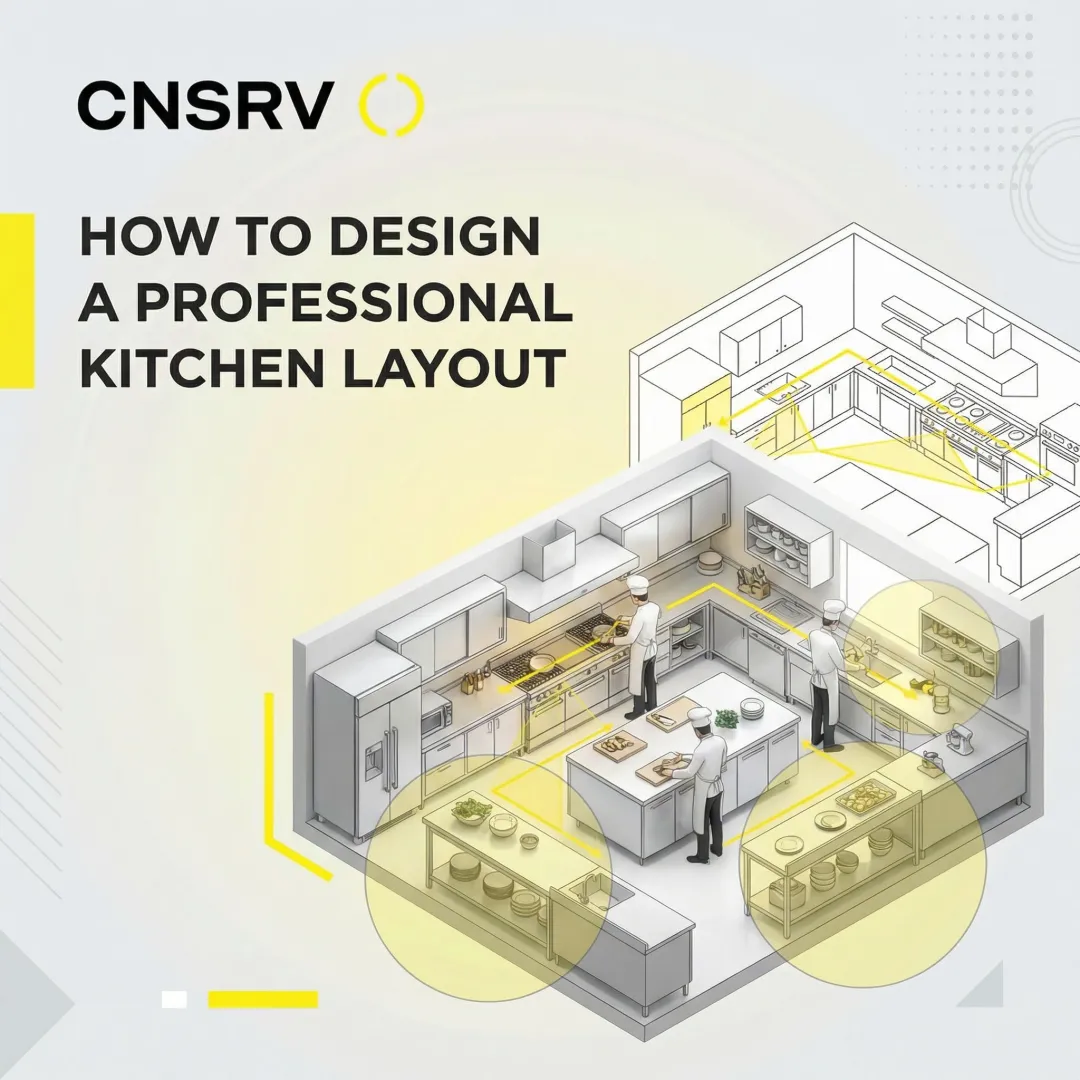
A kitchen prep station is a purposefully designated zone where all ingredient preparation happens before food reaches the cook line. The classic residential "work triangle" (sink, stove, refrigerator) works fine for home cooks, but commercial kitchens need something more structured. Modern foodservice operations rely on dedicated zones that let multiple staff work simultaneously without getting in each other's way:
- Receiving — inspecting and logging incoming deliveries
- Storage — dry, refrigerated, and frozen holding areas
- Prep — washing, cutting, portioning, and thawing
- Cooking — the cook line where food hits heat
- Plating — assembly and garnishing before service
- Dishwashing — sanitation and equipment return
A poorly designed prep station doesn't just slow service — it creates compounding problems across the entire operation. Bottlenecks at prep back up the cook line, cross-contamination risks climb, and labor costs rise as staff work around a broken layout.
Cross-contamination contributed to approximately 21-22% of bacterial outbreaks between 2014 and 2022, which is why prep station design is a food safety priority. The FDA Food Code's "Process Approach" reinforces this — it mandates a linear flow (Receive → Store → Prep → Cook → Serve) specifically to keep hazard control intact at every stage.

The Core Elements Every Efficient Prep Station Needs
Countertop Space
Sufficient, unobstructed work surface is non-negotiable. The National Kitchen and Bath Association recommends a minimum of 36" wide by 24" deep as a baseline for primary prep areas adjacent to a sink. Commercial kitchens handling high volumes typically require significantly more—often 60" to 96" of continuous work surface.
Surface material matters for sanitation and durability. Stainless steel (typically 300-series) is the industry standard, meeting both NSF/ANSI 2 (food equipment) and NSF/ANSI 51 (food-contact materials) standards.
Those standards require surfaces to be smooth, non-absorbent, and corrosion-resistant, with rounded (coved) corners that prevent bacteria harborage.
Sink Access
Position your prep station near a dedicated prep sink with a sprayer—essential for washing produce, rinsing proteins, and maintaining hygiene without cooks crossing the kitchen repeatedly. The FDA Food Code mandates strict sink separation:
- Handwashing sinks: Required in food prep areas, used only for handwashing, with water delivered at minimum 85°F
- Prep sinks: Must be distinct from handwashing and warewashing sinks
- Service sinks: Separate mop sinks required for liquid waste disposal
Where a handwashing sink sits close enough to splash onto the prep surface, install a splash guard to prevent contamination.
Cold Storage Proximity
Place prep stations adjacent to or near refrigeration (walk-in cooler or reach-in units) to reduce the time proteins and produce spend at unsafe temperatures. Keeping cold storage inside the immediate workflow minimizes exposure to the FDA danger zone: 41°F to 135°F, where pathogens grow most rapidly between 70°F and 125°F.
Cooked TCS (Time/Temperature Control for Safety) foods must cool from 135°F to 70°F within 2 hours, then reach 41°F or below within 6 hours total. Tight station layout makes hitting those windows far easier.
Knife and Tool Organization
Sharp, properly stored knives within arm's reach prevent wasted motion and reduce injury risk. Storage options include:
- Slotted knife holders on the counter
- Magnetic strips mounted on walls
- Drawer inserts with designated slots
- Tool pegboards for hanging utensils
Stage prep tools—peelers, mandolins, zesters, mixing bowls—before service begins, not mid-prep. According to All Southern's commercial kitchen ergonomics study, ergonomic workstations can increase productivity by 10–25% simply by keeping frequently used items within optimal reach zones.
Waste and Compost Management
Place a dedicated waste receptacle directly at the prep station—bench scraps bin, full-size trash, or recycling. Prep waste should never be carried across the kitchen, which keeps the work surface clean and prevents slips or cross-contamination from messy walkways. Position bins within arm's reach but not in the primary workflow path.
Kitchen Prep Station Ideas by Task Type
High-performing prep kitchens divide their prep area into task-specific sub-stations—vegetable, protein, and dry goods/assembly—each stocked with specific tools for that task. This allows cooks to work in parallel without crossing paths or sharing contaminated surfaces.
Vegetable Prep Station
A dedicated vegetable station should include:
- Color-coded cutting board (green by food safety convention)
- Sharp chef's knife and paring knife
- Mandolin or box grater
- Colander and bowl for washed produce
- Direct access to prep sink
- Mise en place containers (prepped ingredient holders — hotel pans or prep containers) staged in a line from raw to processed
While not federally mandated, the color-coded system is widely endorsed by ServSafe and HACCP programs. Standard assignments include green for produce, red for raw meat, yellow for poultry, blue for seafood, brown for cooked meats, white for dairy/bakery, and purple for allergen-free prep.

Protein Prep and Defrosting Station
The protein prep station setup requires strict separation from produce areas to prevent cross-contamination:
- Separate cutting board (color-coded red or yellow per food safety protocols)
- Boning knives and meat mallet
- Portioning scale
- Dedicated surfaces that are easy to sanitize
Many commercial kitchens lose significant time and water running proteins under a faucet to thaw. The FDA Food Code permits thawing under running water at 70°F or below with sufficient velocity to agitate and float off loose particles. The problem: this method is highly resource-intensive, consuming between 187 and 387 gallons per batch.
Purpose-built defrosting systems offer a more efficient alternative. The CNSRV DC:02 uses controlled water agitation and temperature regulation to defrost in roughly half the time while using up to 98% less water than the running-faucet method. It circulates water in a closed-loop design, maintaining temperatures below 70°F to comply with FDA Food Code § 3-501.13 and California Retail Food Code § 114020.
No installation or plumbing changes are required — place the portable unit in an 18-inch prep sink or larger, and it integrates directly into existing protein prep workflows.
Dry Goods and Assembly Station
Design this station for measuring, mixing, and plating prep, positioned away from wet prep zones to keep dry goods uncontaminated:
- Dry ingredient storage (labeled bins or pull-out spice racks)
- Dedicated scale and measuring tools
- Mixing bowls
- Sufficient flat surface for assembling composed dishes or portioning sauces
Keeping this station dry also protects measured portions from weight changes — even minor moisture absorption can throw off high-volume sauce or dough yields.
Smart Storage and Organization Ideas for Your Prep Station
Overhead and Wall Storage
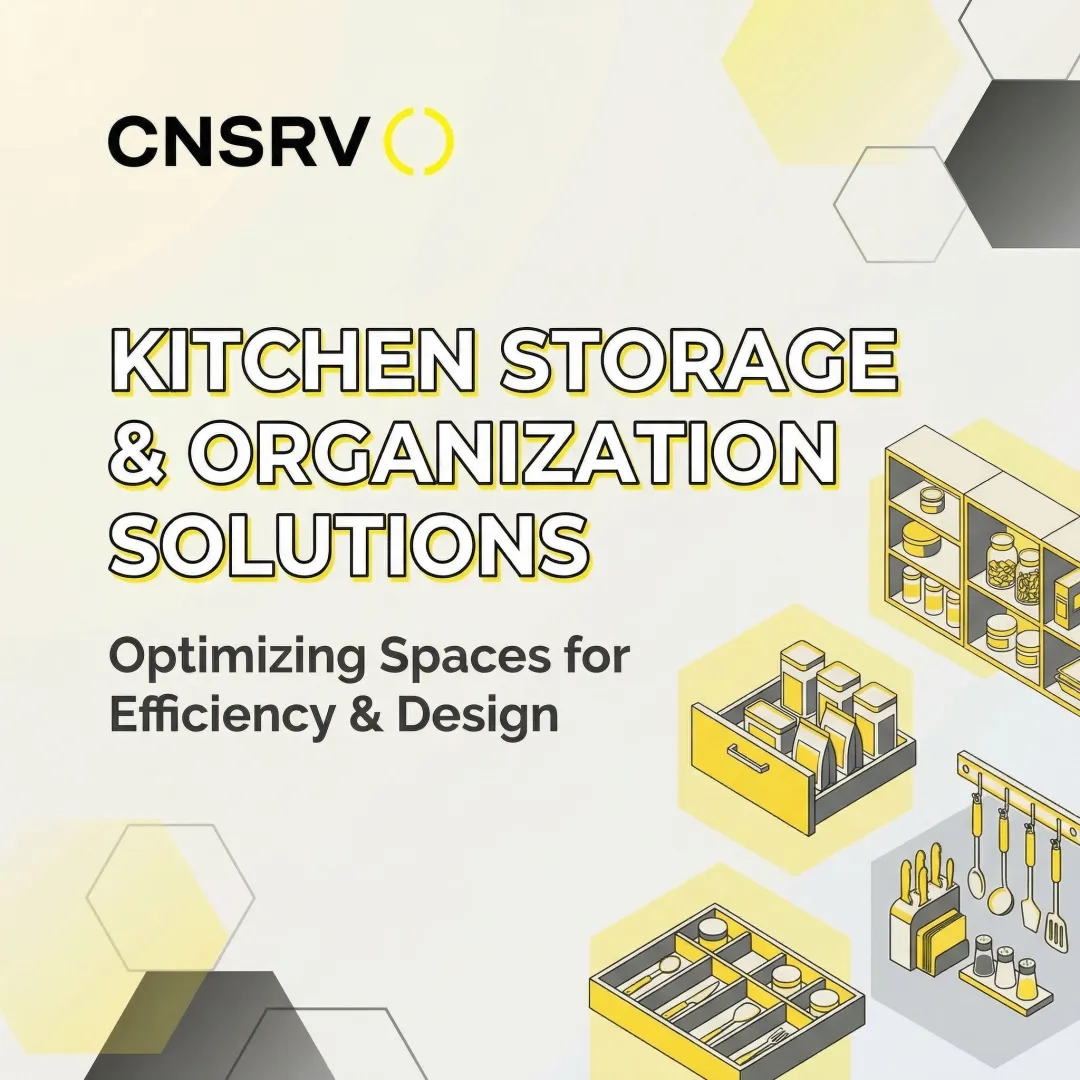
Vertical space above the prep counter keeps work surfaces clear while maintaining easy access. Good options include:
- Magnetic knife strips mounted to the wall for safe, visible storage
- Pegboards for hanging ladles, tongs, whisks, and other frequently grabbed tools
- Open shelving for containers and small equipment used every shift
- Overhead pot racks where ceiling height allows
Keep items within the "ergonomic reach zone"—typically 20-30 inches from the work surface—to minimize stretching and reduce injury risk.
Drawer and Cabinet Inserts
Dead cabinet space adds up fast in a busy kitchen. The right inserts convert it into fast, grab-and-go storage:
- Drawer partitions to separate utensils by type and size
- Knife block inserts that protect blade edges between uses
- Adjustable dividers for flexible configurations as your needs change
- Pull-out shelves for deep-cabinet access without reaching
- Roll-out spice racks for quick ingredient access during prep
These organizers let prep cooks grab what they need without rummaging, saving seconds that add up over a full service shift.
Labeled Mise en Place Containers
Professional kitchens pre-label all prep containers with ingredient name, date, and quantity before service. This system:
- Reduces communication errors between prep and line cooks
- Speeds up line cooking by eliminating guesswork
- Supports FIFO (first in, first out) food safety practices
- Ensures compliance with FDA Food Code Section 3-501.17, which requires ready-to-eat TCS food held more than 24 hours to be clearly marked and discarded within 7 days if held at 41°F or less
Use masking tape and permanent markers, or invest in pre-printed labels with date fields for faster labeling.
Pro Tips for Running an Efficient Prep Station
Set Up Before Service, Not During
Complete all mise en place—measuring, chopping, portioning, defrosting—before service begins. Prioritize prep order by longest-lead-time items first:
- Proteins that need thawing (start 2-3 hours ahead, or as little as half the usual time with closed-loop defrosting systems like the CNSRV DC:02, which uses controlled water agitation rather than running faucets)
- Stocks and sauces (often require simmering time)
- Root vegetables and harder produce (take longer to cut)
- Delicate herbs and garnishes (last-minute to preserve freshness)

According to industry research on kitchen workflow performance, integrating digital kitchen display systems reduces ticket times by 20%—a direct result of pre-service organization rather than in-service scrambling.
Keep the Station Moving, Not Stationary
The "clean as you go" discipline separates fast, safe kitchens from chaotic ones:
- Wipe surfaces between tasks with sanitizer solution
- Immediately discard scraps into the bench bin
- Swap cutting boards between protein and produce prep
- Sanitize knives when switching between raw and cooked foods
- Return tools to designated spots after each use
This habit prevents the end-of-shift scramble, maintains food safety throughout service, and—critically—only works when the station's physical layout makes these habits easy to execute.
Ergonomics and Workflow Direction
Organize the prep station so work flows in one direction—raw ingredients enter from the left, prepped mise en place exits to the right toward the cook line. This reduces wasted movement, prevents backtracking, and mirrors efficiency principles used in high-volume restaurant and food service operations.
That directional flow also informs how you spec the station's physical setup:
- Adjustable table heights (32" to 42") accommodate different worker heights—62% of standard workstations fall short here
- Anti-fatigue mats reduce leg and foot strain during long prep shifts
- Proper lighting (50-75 foot-candles minimum) prevents eye strain and improves knife safety
Workstation design flaws account for 34% of kitchen injuries, costing mid-sized restaurants an estimated $40,000 annually in injury claims and lost productivity. A few hundred dollars in table height adjustments or matting typically offsets that figure within a single quarter.

Frequently Asked Questions
What is the ideal countertop size for a kitchen prep station?
The NKBA recommends a minimum of 36" × 24" for residential primary prep areas adjacent to a sink. Commercial kitchens typically need considerably more—standard commercial prep tables range from 24" to 96" in length and 24" to 30" in depth, depending on volume and menu complexity.
How do I set up a prep station in a small commercial kitchen?
Prioritize vertical storage with wall-mounted magnetic strips and pegboards to free up counter space. Use mobile prep tables on wheels for flexibility, allowing you to reconfigure the layout as needed. Focus the station on the highest-frequency prep tasks—if you prep vegetables more than proteins, dedicate more space to vegetable work.
What tools should every kitchen prep station have?
Core essentials include color-coded cutting boards, a sharp knife set (chef's, paring, boning), measuring tools, mise en place containers, and a waste bin within arm's reach. Round out the station with task-specific equipment like a mandolin, box grater, and portioning scale.
How should I separate prep stations to comply with food safety standards?
Color-code cutting boards and utensils by food type (green for produce, red/yellow for proteins, blue for seafood) and keep raw protein prep physically separated from produce areas by at least 3-4 feet. Sanitize surfaces between tasks, and never use a surface for ready-to-eat foods after raw animal products without a full wash-rinse-sanitize cycle.
What is mise en place and why does it matter for prep station efficiency?
Mise en place means having every ingredient measured, cut, and staged before cooking begins. Borrowed from professional kitchens, it keeps cooks focused on execution rather than scrambling mid-ticket, which directly reduces prep errors and speeds up service.
Is running water the best way to defrost proteins at a prep station?
While running cold water at 70°F or below is a health-code-compliant method, it's highly wasteful and slow, consuming up to 387 gallons per batch. Commercial defrosting systems designed for prep workflows offer a faster, more water-efficient alternative that also improves food quality through controlled temperature and circulation, often reducing defrost time by 50% while using 98% less water.
Ready to improve your prep station workflow? Audit your current setup against these guidelines and identify your biggest bottleneck. For many commercial kitchens, switching away from running-water defrost is the single fastest win—cutting both water costs and prep time from day one.