Introduction
Diners form their first impression of a dish within seconds of seeing it—before the first bite is ever taken. This instant visual assessment has transformed food plating from a basic finishing step into a strategic differentiator for modern restaurants. The social media dimension has amplified this reality: diners photograph and share dishes, turning every plate into a potential marketing moment.
This article covers core plating principles, innovative techniques chefs use today, essential tools, and how commercial kitchens achieve consistency at scale.
Key Takeaways
- Artful plating increases willingness to pay by up to 45% and boosts perceived tastiness by 18%
- Professional plating relies on five core principles: color contrast, texture variety, negative space, height, and focal point
- Freeform, deconstructed, and landscape plating each signal a distinct cuisine style and brand identity
- Consistency at scale requires standardized guides, proper tools, and pass protocols
- Ingredient quality—from proper storage to defrosting—directly shapes what's possible on the plate
Why Food Presentation Matters in Commercial Kitchens
In naturalistic dining settings, artistically plated dishes commanded up to 45% higher willingness to pay for salads and 32% more for centered main courses compared to basic presentations. Visual design also alters the actual eating experience: diners rated artistically plated dishes 18% tastier after consumption than identical ingredients plated without artful composition.
Restaurants that prioritize plating can justify premium pricing while building a distinct brand identity. That dynamic isn't exclusive to fine dining — mid-range and fast-casual operators benefit from elevated presentation too:
- Justifies higher menu prices without increasing food costs
- Strengthens brand perception across all service formats
- Encourages social sharing, extending organic marketing reach
- Reduces perceived wait time when a dish looks intentional
Food plating is no longer limited to fine dining. Fast-casual and mid-range restaurants are increasingly adopting professional presentation standards to compete in a visually driven market. Shake Shack, built on "fine-dining principles," saw their Black Truffle menu — a premium limited-time offer — perform better than almost any other LTO in their history, proving that elevated presentation justifies higher price points even in quick-service contexts.
Foundational Principles of Professional Food Plating
Color Contrast and Balance
Color is often the first thing a diner registers. Chefs combine vibrant and contrasting colors to make plates visually dynamic—think seared salmon beside a bright green pea purée, or grilled chicken accented with golden turmeric cauliflower and ruby-red edible flowers. Dishes with 3-4 distinct colors consistently outperform monochromatic presentations in diner satisfaction.
Texture Variety
Combining contrasting textures—crisp and smooth, creamy and crunchy—adds sensory interest and keeps each bite unpredictable. For example:
- Pair velvety potato purée with crispy pancetta shards
- Top silky panna cotta with candied nuts and fresh berries
- Serve pan-seared scallops over creamy risotto with microgreens for textural contrast
This variety prevents "tasting boredom" and engages multiple senses simultaneously.
Negative Space Strategy
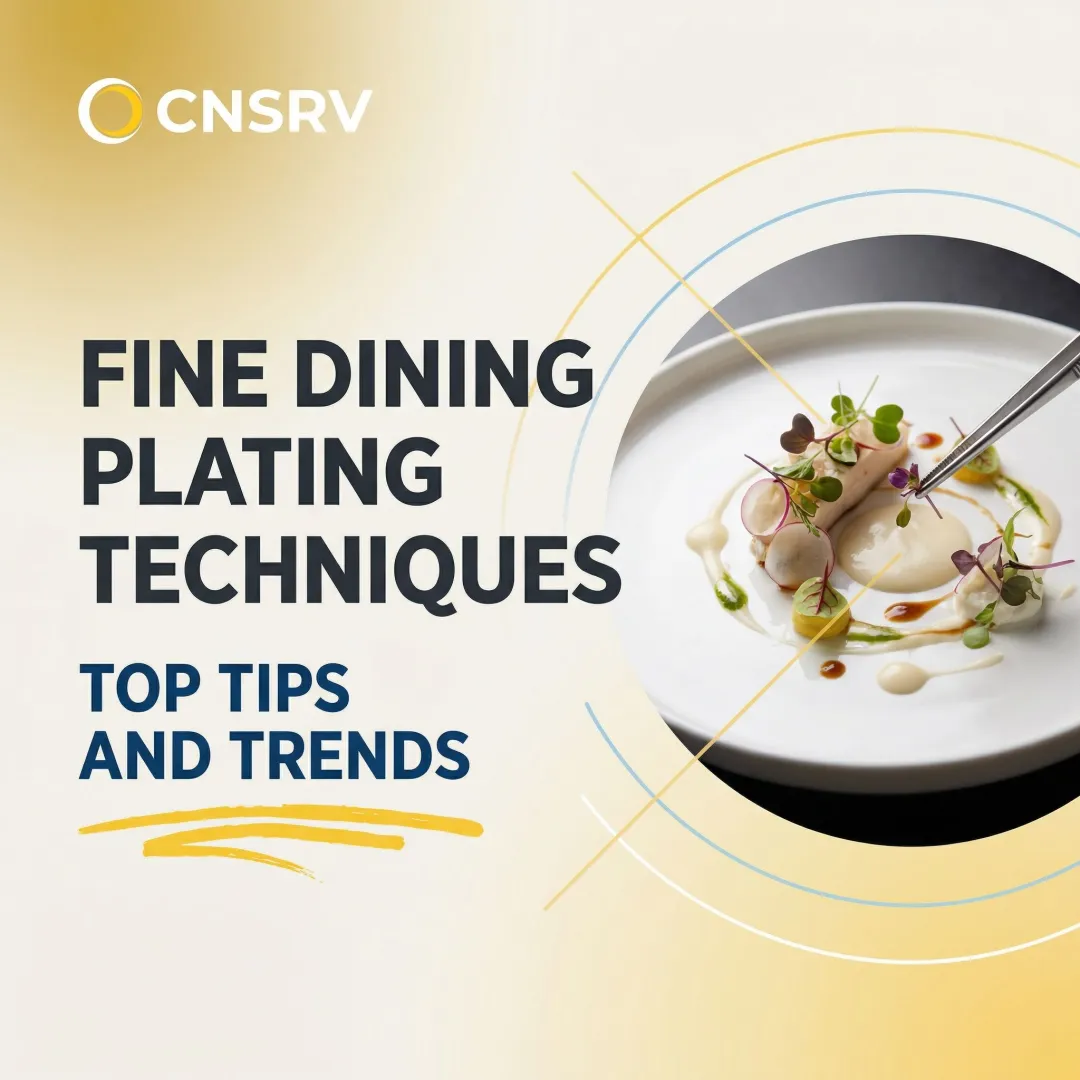
Leaving portions of the plate intentionally empty draws the eye to the food and creates a sense of elegance. Professional plating typically leaves 30-40% of the plate empty, which highlights the main components and prevents visual chaos.
Height and Layers
Adding vertical dimension—stacking components, using ring molds, building layers—gives dishes a three-dimensional quality that reads as sophisticated both in person and in photographs. In professional culinary competitions, elevated plating is a standard expectation — flat presentations rarely score well on visual criteria.
Rule of Thirds
Mentally divide your plate into a 3×3 grid and place the focal point off-center to create a more dynamic arrangement than centering everything. This photography principle applies across round, square, and rectangular plates, creating natural asymmetry that feels intentional and professional.

Innovative Food Plating Techniques to Try in Your Kitchen
Freeform / Abstract Technique
While it appears spontaneous, freeform plating is carefully deliberate. Each smear, scatter, and placement is chosen to create movement and visual energy, making it ideal for modern and avant-garde menus. For example, a chef might drag a bold stroke of beet purée across the plate, then position seared duck breast at an angle with scattered microgreens and edible flowers creating organic movement around the protein.
Deconstructed Plating
This approach presents a dish's individual components separately so diners can appreciate each ingredient before combining them. It works especially well for reimagined classics and tasting menus. A deconstructed tiramisu might feature a quenelle of mascarpone cream, cocoa-dusted ladyfinger crumbles, and a small pool of espresso reduction — each element plated separately so diners can taste them alone or combine them at will.
Landscape / Nordic Technique
This low, linear arrangement takes inspiration from natural scenery, using herbs, microgreens, edible flowers, and scattered elements to create an organic, garden-like plate that evokes freshness and seasonality. Closely associated with René Redzepi and Noma, the style grew from the New Nordic movement's emphasis on terroir and local sourcing. Arrangements often mimic forest floors or coastal landscapes — nature translated directly onto the plate.
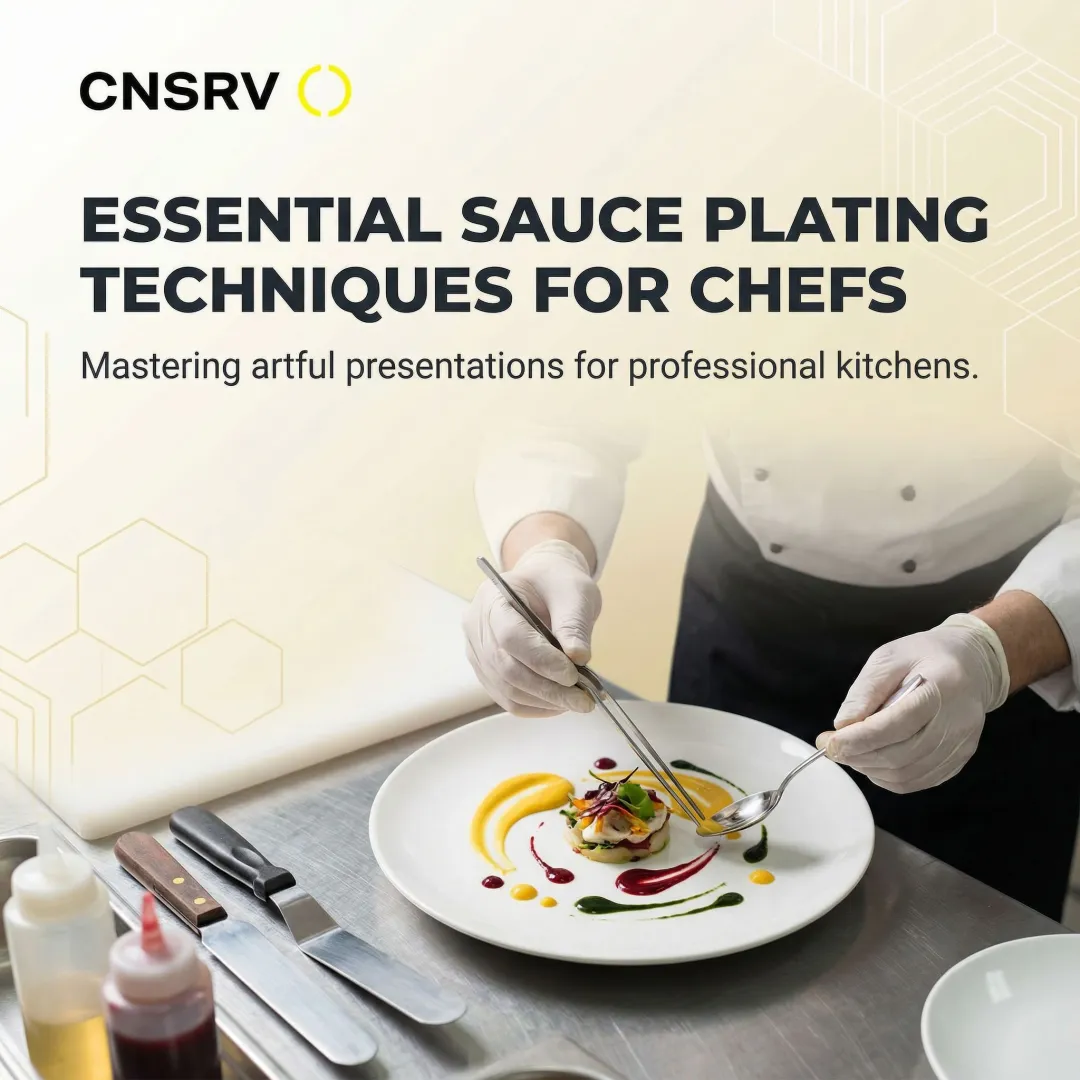
Sauce Artistry
Sauce placement functions as both flavor delivery and visual design. Key application methods:
- Brushstrokes — A pastry brush loaded with purée creates bold, painterly sweeps that anchor the composition
- Dotting — Squeeze bottles let you place precise drops in repeating patterns or arcs
- Drizzling — A slow, controlled pour produces delicate accent lines without overwhelming the plate
- Smearing — An offset spatula dragged through a spoonful of sauce gives the classic contemporary swoosh
Bathing / Sauce Pool Technique
Plating proteins or pasta in a shallow pool of broth, foam, or sauce adds drama and richness. For maximum theatrical effect in fine dining contexts, add sauce tableside — pouring hot consommé over tortellini or finishing fish with beurre blanc in front of guests creates a memorable sensory moment.
Nature-Inspired Materials
Serving food on slate, wood, or stone with rustic, asymmetric arrangements that mimic natural landscapes has become a go-to choice in farm-to-table and sustainability-focused restaurant concepts. This approach signals authenticity and connection to ingredients' origins, though commercial operations must use non-porous, sanitizable versions of these materials.
Essential Plating Tools Every Professional Kitchen Needs
The right tools make the difference between a dish that looks assembled and one that looks considered:
- Tweezers/Precision Tongs: Place micro-garnishes exactly where intended while keeping hands off delicate elements
- Squeeze Bottles: Control sauce application for clean dots, fine lines, and precise drizzles
- Ring Molds: Create uniform height and structural form in layered compositions
- Offset spatulas — for smooth transfers, spreading purées, and pulling sauce smears
- Pastry brushes — for sauce brushstrokes and wiping plate rims clean before service
Beyond individual tools, designated plating stations with consistent mise en place—garnishes, sauces, and components portioned and ready—are critical for speed and consistency during service. Professional kits often include heavy-duty rolls for tool storage to simplify access and organization.
Food Safety Note: Maintain strict hygiene protocols when handling plating tools and garnishes. All garnishes must be edible and stored at proper temperatures, and sanitize tools regularly throughout service.
How Ingredient Quality Shapes Your Presentation
Great food plating begins before the plate. Ingredient quality, freshness, and proper preparation directly determine whether a dish can be plated beautifully. A protein that's been mishandled loses its color, texture, and structural integrity, making professional presentation much harder.
Proteins that are thawed correctly retain their natural color, firm texture, and moisture— qualities that show clearly on the finished plate. Traditional running-faucet defrosting compromises texture through uncontrolled temperature exposure (municipal tap water often reaches 75–85°F during warmer months) and extended thaw times that increase cellular damage and moisture loss.
The CNSRV DC:02 defrosting system addresses these quality concerns through controlled water circulation and temperature regulation. Key system specs:
- Uses 98% less water than running-faucet methods
- Keeps water temperatures below 70°F throughout the thaw cycle
- Circulates water at approximately 130 gallons per minute — 10–30 times faster than typical commercial faucets
- Creates uniform temperature distribution, eliminating warm spots that degrade ingredient integrity
The result is consistent protein quality that translates directly to the plate. Executive chefs at Bluewater Grill and The Ritz-Carlton Maui Kapalua have noted measurable improvements in seafood and protein quality after switching from traditional defrosting methods.
Maintaining Plating Consistency During High-Volume Service
Plating consistency is one of the hardest challenges in busy commercial kitchens. Every plate leaving the pass should look identical regardless of who plated it or what point of service it is. Inconsistency undermines the restaurant's brand and guest expectations.
Practical systems for maintaining standards at scale:
- Create one-page visual guides showing the exact "gold standard" plate for each dish, with diagrams defining component placement
- Assign specific team members to plate specific elements, with an expeditor managing final quality checks
- Have the executive chef conduct spot checks throughout service — not just at the start of a shift

Post printed plating blueprints directly at stations. Staff learn through repetition — pair that with cross-training and regular team feedback, and standards hold even during the busiest services.
Expeditor protocols that work:
The expeditor is the final quality control point, inspecting plates for:
- Temperature: Hot food on hot plates, cold food on cold plates
- Rim cleanliness: No debris, drips, or sauce smears
- Uniformity: Meat or fish slices must be even and properly arranged
- Adherence to visual spec: Does the plate match the standard guide?
Expediters need real authority to reject plates — not just the responsibility. A rejected plate sent back to the line is far less costly than a substandard one sent to a guest.
Frequently Asked Questions
What are the most important elements of food plating and presentation?
The key principles are color contrast, texture variety, negative space, height, and focal point placement. Strong plates use 3-4 distinct colors, leave 30-40% of the plate empty, and position the main component off-center using the rule of thirds.
What tools do professional chefs use for food plating?
The core toolkit includes precision tweezers for garnish placement, squeeze bottles for sauce control, ring molds for structural height, offset spatulas for smooth transfers, and pastry brushes for sauce brushstrokes.
What is the difference between classic and modern food plating styles?
Classic plating emphasizes symmetry and structured arrangements—such as the clock method, where protein sits between 3 and 9 o'clock, starch from 9 to 12, and vegetables from 12 to 3. Modern styles like freeform, deconstructed, and landscape plating prioritize asymmetry and artistic expression, often drawing from art movements or natural scenery.
How does plate selection affect food presentation?
Plate shape, size, and color all influence how food is perceived. Round plates are the most versatile; square plates demand careful composition. White or neutral plates make ingredient colors pop, while black plates signal modernity and elevate perceived price.
How can restaurants maintain plating consistency across a busy kitchen?
Standardize plating with photo guides showing exact arrangements for each dish, run pass-check protocols where an expeditor inspects every plate, and post visual reference materials at stations. Ongoing repetition during training locks in consistency across shifts.
How does ingredient quality impact food plating?
Ingredients that are fresh, properly stored, and carefully prepped retain the color, texture, and structural integrity needed for professional plating. Mishandled proteins or vegetables lose their visual appeal and are harder to plate beautifully no matter the technique. Proper defrosting is particularly critical—proteins thawed with controlled temperature and circulation maintain their natural color, firm texture, and moisture, all of which are visible on the finished plate.