Introduction
In fine dining, guests eat with their eyes before the first bite. Presentation is a silent storyteller that shapes perceived value, influences guest satisfaction, and drives social media shareability. Research from Oxford University's Crossmodal Research Laboratory shows that artistically plated dishes command up to 45% higher prices than identical food arranged plainly—proving that visual excellence translates directly to revenue.
Beyond the dining room, plating has become a marketing channel. With 50% of Americans photographing their food and 74% of diners using social media to choose restaurants, a single beautifully composed plate can generate thousands of dollars in organic reach.
TLDR:
- Artistically plated dishes command up to 45% higher prices and drive social media engagement
- Follow the Rule of Thirds and clock method for balanced, dynamic compositions
- Use 3-5 colors, negative space, and strategic sauce techniques
- Choose plating styles (classic, minimalist, landscape, stacking) that match your culinary identity
- Standardize execution with plating guides, mise en place, and quality ingredients
Why Fine Dining Plating Is Worth the Investment
Visual presentation directly influences how much diners are willing to pay. In a controlled study, Oxford researchers found that artistic plating increased willingness to pay by 45%—from £4.10 to £5.94 for an appetizer and £11.65 to £15.35 (~$19–$20) for a main course. Beyond price perception, the same study found that diners rated artistically plated food as tastier after eating it — confirming that visual expectations shape the entire sensory experience.
That willingness to pay more is only part of the return. Consider who's watching: 50% of Americans photograph their meals, and 74% use social platforms to decide where to eat. A single beautifully plated dish can reach hundreds of potential guests at no ad spend. The numbers back this up:
- Instagram dining posts average 3.1% engagement — well above most content categories
- Carousel posts showing multiple plating angles reach 3.7%, making plating one of the most cost-effective marketing tools a restaurant has
Key Rules and Guidelines for Fine Dining Plating
The Plate as Canvas Mindset
Think of the plate as a canvas, the chef as the artist, and the food as the medium. Placement, color, height, and negative space all carry weight. This mindset separates fine dining plating from casual presentation — nothing appears on the plate by accident.
The Rule of Thirds
Borrowed from photography, the Rule of Thirds divides the plate into a 3×3 grid. Place the focal point (usually the protein) at one of the four intersecting points rather than dead center. This off-center arrangement creates visual energy and guides the diner's eye across the plate, giving each element room to register before the eye moves to the next.
The Clock Method for Classic Plating
The clock method provides a structured baseline:
- Protein: Center or 6 o'clock
- Starch: 10 o'clock
- Vegetables: 2 o'clock
This traditional framework ensures balance and is easily replicated across a brigade. Modern styles often depart from it, but the clock method remains the foundation taught at culinary institutions worldwide.

Color Contrast and Visual Variety
Deliberately combine 3-5 colors on each plate. Contrasting colors—vibrant greens against white plates, deep sauces beside pale proteins—stimulate appetite and create a more appetizing composition. Monochromatic plates feel flat; a single pop of color can shift a dish from forgettable to camera-worthy.
Color carries meaning beyond aesthetics:
- Bright greens signal freshness
- Deep reds and browns suggest richness
- White space provides visual rest
- A deliberate mix prevents the eye from losing interest
The Role of Negative Space
Leaving deliberate empty areas on the plate draws the eye to key components and signals refinement. Negative space is a hallmark of minimalist and modern fine dining aesthetics. Overcrowding the plate reads as casual or rushed; generous white space tells the diner that every component earned its place.
Popular Fine Dining Plating Styles
Fine dining kitchens rarely use a single plating style—most chefs develop a signature approach by drawing on several traditions. Understanding these six core styles helps clarify which works best for a given dish, concept, or service format.
Classic Plating
Classic plating is the foundation of formal fine dining—structured, symmetrical, and built on the clock method. It conveys professionalism and tradition, making it the standard in formal tasting menus and hotel dining rooms. Every element has a designated place, and repetition across plates is the goal.
Minimalist Plating
Minimalist plating follows a "less is more" philosophy: fewer ingredients, deliberate negative space, clean lines, and an emphasis on one or two focal ingredients. This is the dominant aesthetic in contemporary Michelin-starred restaurants, where restraint and precision communicate culinary confidence.
Freeform Plating
Freeform (abstract) plating is an artistic, asymmetrical style where placement appears organic but is carefully choreographed. It suits deconstructed dishes and modernist kitchens, creating visual energy and movement across the plate. Each element is placed to draw attention progressively across the plate, guiding diners toward the focal point.
Landscape / Linear Plating
Landscape plating is a low, elongated arrangement inspired by garden aesthetics. It works best on rectangular or oval plates, allows each component to be viewed individually, and gives a sense of deliberate narrative from one end of the plate to the other. This style is popular in farm-to-table and nature-inspired concepts.
Stacking / Height Technique
Vertical plating (stacking) builds height to add dimension, drama, and a sense of generosity. Stacked layers also retain heat better and encourage complete bites with multiple flavors in each forkful. Use ring molds or careful hand-stacking to create stable, architecturally precise towers.
Deconstructed Plating
Deconstruction separates a classic dish into individual components plated distinctly, allowing diners to explore each element before combining them. This style works well in concept-driven restaurants and pairs naturally with tableside presentation—sauces poured and ingredients assembled in front of the guest.
Choosing the right style comes down to three factors: the dish's ingredient structure, the restaurant's concept, and the skill level of the kitchen team executing it consistently at volume.

Modern Trends Shaping Fine Dining Presentation
Sustainability and Nature-Inspired Plating
Sustainability has moved beyond sourcing—it's now a design layer on the plate itself. Chefs are using organic serving vessels—slate, wood, stone—and incorporating edible flowers, microgreens, and foraged elements that reflect a genuine farm-to-table identity.
Two restaurants capture this well: Boragó in Santiago, where Chef Rodolfo Guzmán plates indigenous Chilean ingredients on rocks and branches to mirror the local ecosystem, and Tèrra in Copenhagen, which uses edible vessels like celeriac shells to serve mussels.
The "Bathing" Technique
Proteins or delicate elements are presented tableside in broth or sauce poured over the dish. This creates theater, releases aroma, and delivers an immersive sensory experience. Across tasting menus, it turns a simple plating step into a shareable moment guests photograph before they eat.
Sauce Artistry
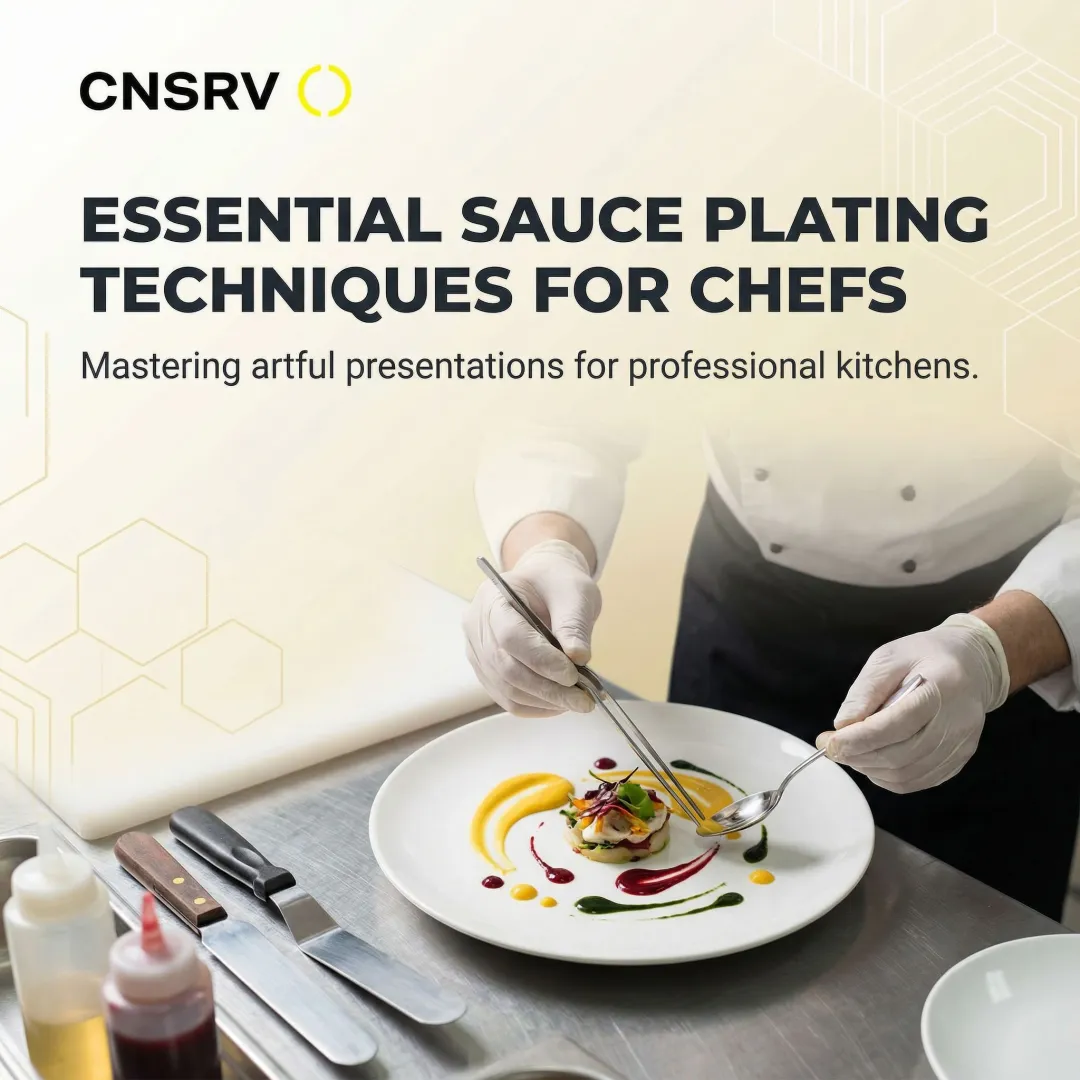
Sauce placement shapes composition as much as flavor. Core application techniques include:
- Wide pastry brush sweeps for bold, gestural brushstrokes
- Squeeze bottle dots for precise color blocking
- Back-of-spoon drags for organic, smeared texture
- Controlled flicking for playful energy without chaos

Sauce placement doubles as color blocking and flavor signaling—dark sauces suggest richness, bright purées signal freshness, and oil-based sauces add gloss and visual luxury.
Social Media and Food Photography Influence
The rise of diner-generated content has pushed chefs toward more photogenic, visually bold compositions. Restaurants like Francie in Brooklyn have mastered this, with their tableside duck carving becoming a viral signature. The owner notes that "almost everything online is from the guests themselves"—which says everything about the value of intentional plating.
Essential Plating Tools Every Professional Kitchen Needs
Core Precision Tools
- Squeeze bottles: For sauce dotting, drizzling, and controlled application
- Offset spatulas and palette knives: For lifting delicate items and creating wide sauce smears
- Tweezers/tongs: For precise garnish placement without disturbing the plate
- Ring molds and cookie cutters: For stacked or circular plating with uniform shape
- Pastry brush: For sauce painting and bold brushstrokes
Plate Choice
Plate shape, color, and size directly impact presentation:
- White round plates: Most versatile and classic; enhance perceived sweetness and flavor intensity
- Rectangular plates: Suit landscape/linear plating and elongated compositions
- Dark slate or matte plates: Create high contrast for vibrant, colorful dishes
- Sizing rule: Always size the plate so food doesn't crowd the edges; leave room to breathe
Garnish Selection Principles
Every garnish must serve a purpose — flavor, texture, or color. Inedible garnishes have no place in fine dining. Go-to options include:
- Microgreens and fresh herbs
- Edible flowers
- Herb oils and infused drizzles
- Citrus zest
The garnish completes the composition. It should never compete with the main component.
Tips for Consistent Plating Execution in a Busy Kitchen
Mise en Place for Plating
All garnishes, sauces, and finishing elements should be prepped and staged before service begins. Plating under pressure must be fast and precise, and consistency across every plate sent out is as important as the quality of the design itself. Position squeeze bottles, tweezers, and finishing oils within arm's reach of the pass.
Start with High-Quality Ingredients
Even the most skilled plating technique cannot compensate for poor-quality or improperly prepared proteins. Proteins entering service must be in optimal texture and moisture—fish or shellfish that have been defrosted properly hold their shape, color, and visual integrity on the plate.
Defrosting method matters more than most kitchens realize. Rapid or uncontrolled thawing degrades protein structure, leading to moisture loss, color changes, and weaker presentation on the plate. CNSRV's DC:02 defrosting system gives commercial kitchens a controlled alternative to traditional running-faucet thawing—defrosting proteins in half the time while using 98% less water, which adds up to savings of up to 1,000,000 gallons per year per kitchen.
Standardize with Plating Guides
Use plating guides—printed templates under glass or plate diagrams posted at the pass—to ensure every guest receives the same visual experience. Designate a plating chef during service and conduct pre-service plate-up rehearsals so the brigade knows exactly where each element belongs before the first ticket fires.
Frequently Asked Questions
What are the key rules and guidelines for fine dining plating techniques?
Treat the plate as a canvas with intentional placement of every element. Core principles include:
- Position focal points off-center using the Rule of Thirds
- Incorporate 3-5 colors for visual contrast
- Leave deliberate negative space around each element
- Ensure every component serves both a visual and flavor purpose
What are the popular plating styles in fine dining?
The main styles are classic (clock method), minimalist, freeform/abstract, landscape/linear, stacking, and deconstructed. Chefs typically choose a style that matches their restaurant's culinary identity, with minimalist plating dominating contemporary Michelin-starred menus.
What is the Rule of Thirds in food plating?
The Rule of Thirds divides the plate into a 3×3 grid. Position the focal element (usually the protein) at one of the four intersecting points rather than dead center. This creates a more dynamic composition that naturally guides the diner's eye across the plate.
How do you use sauces effectively in fine dining plating?
Four techniques cover most applications: brushstrokes, dotting, smearing, and drizzling. Each varies in tool and intensity — from a pastry brush's wide sweep to a squeeze bottle's precision dot. Placement should add color contrast and flavor signaling without overwhelming the other components.
What plate shapes and colors work best for fine dining presentations?
White round plates are the most versatile choice, enhancing perceived flavor intensity. Rectangular plates suit linear plating, while dark or matte surfaces create strong contrast for vibrant, colorful dishes — just ensure the plate size leaves generous negative space.