This guide covers six essential categories: cooking equipment, smallwares and utensils, storage systems, food safety tools, pantry staples, and daily operational checklists. Each section identifies what commercial kitchens actually need to operate safely and efficiently, with specific attention to health code requirements and practical implementation.
TLDR
- Commercial kitchens need equipment across six categories: cooking gear, smallwares, storage, food safety tools, pantry staples, and daily checklists
- Thermometers, defrosting systems, sanitizer test kits, and labeling supplies are required for health code compliance — not optional add-ons
- Budget strategically by distinguishing high-priority compliance items from operational conveniences
- Standardized opening checklists prevent costly prep gaps and keep every shift consistent
Commercial Kitchen Equipment Checklist
Your equipment lineup should reflect your menu type, service volume, and available space—a bakery needs different tools than a seafood restaurant. Every piece of equipment you purchase should carry NSF certification for food contact, as health inspectors and local permit offices commonly require this documentation.
Cooking Equipment
Core cooking equipment varies by cuisine and volume, but most commercial kitchens need:
- Commercial range (gas or electric) for stovetop cooking
- Convection oven for even baking and roasting
- Commercial griddle or flat-top grill for high-volume breakfast or burger operations
- Deep fryer for fried menu items
- Commercial microwave for rapid reheating
- Salamander broiler for finishing dishes and melting cheese
According to FDA Food Code § 4-205.10, equipment certified by an ANSI-accredited program (such as NSF, UL, or ETL) is deemed compliant with sanitation provisions. Specifying "NSF/ANSI-listed" equipment simplifies health inspections and ensures your investment meets regulatory standards.
Food Preparation Equipment
Essential prep equipment includes:
- Commercial food processor
- Commercial blender or immersion blender
- Commercial mixer (critical for bakery-focused operations)
- Meat slicer
- Commercial can opener
- Prep tables with stainless steel surfaces (NSF-listed for health code compliance)
Refrigeration and Freezing
Commercial reach-in refrigerators, walk-in coolers/freezers, and under-counter units must maintain Time/Temperature Control for Safety (TCS) foods at 41°F (5°C) or below.
Unlike residential units, commercial refrigeration meeting NSF/ANSI 7 standards is engineered to recover temperatures quickly after repeated door openings—essential in high-volume service.
Ventilation Systems
Commercial hood systems are required by fire codes and vary based on equipment configuration. NFPA 96 mandates cleaning schedules tied to operation type:
- Monthly: Solid fuel operations (wood-fired ovens, charcoal)
- Quarterly: High-volume or 24-hour operations
- Semi-annually: Standard restaurants
- Annually: Low-volume or seasonal operations

Compliance is documented via on-site service labels, not just invoices.
Smallwares, Utensils & Storage Essentials
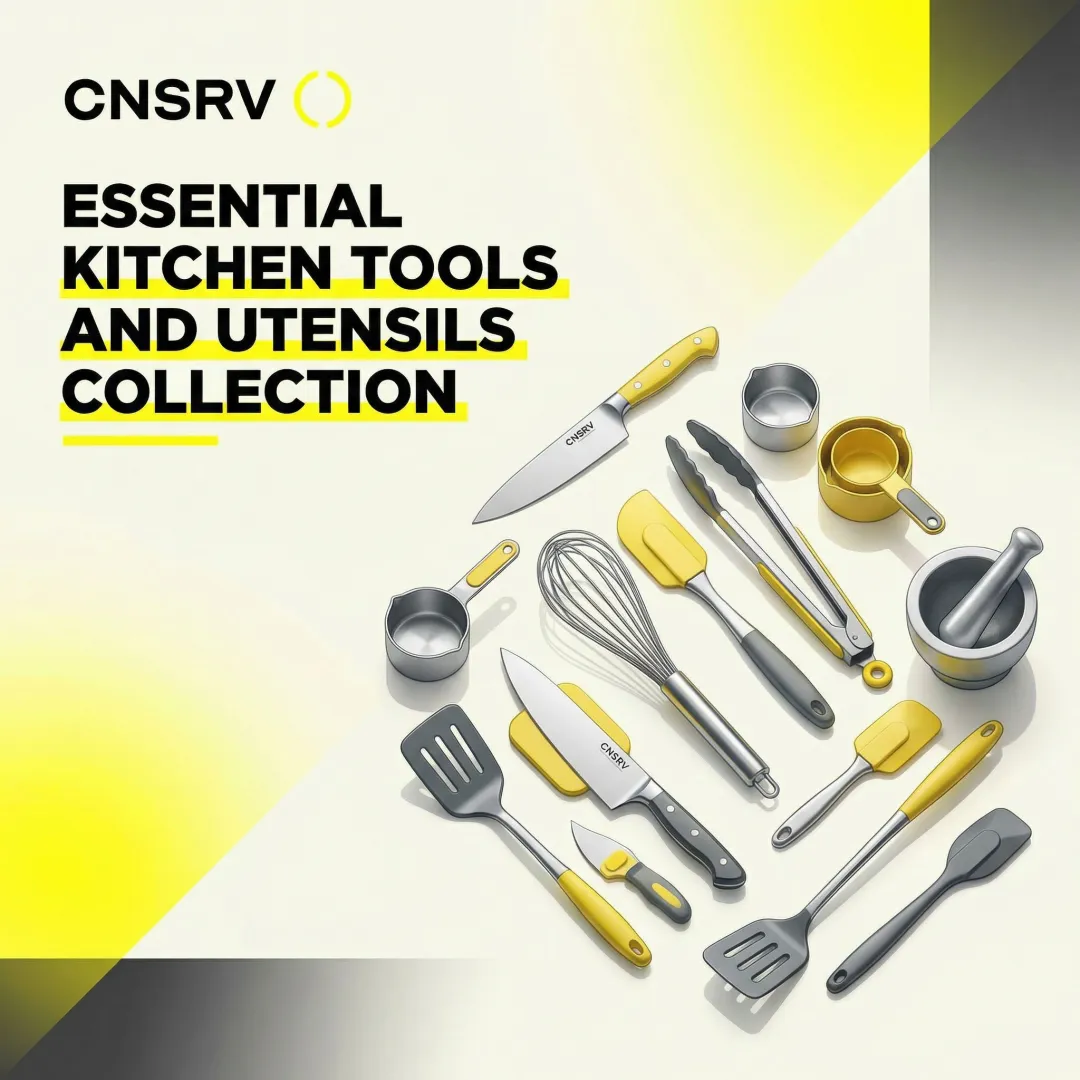
Smallwares support daily food prep and service operations. A well-equipped smallwares inventory reduces prep time, improves consistency, and supports health code compliance. These tools may seem minor compared to heavy equipment, but missing the right knife or cutting board can slow service and create cross-contamination risks.
Knives, Cutting & Prep Utensils
Essential knives and cutting tools include:
- Chef's knife
- Boning knife
- Bread knife
- Paring knife
- Knife sharpener
- Color-coded cutting boards by food type to prevent cross-contamination
- Mandoline slicer
Color-coded cutting boards are referenced in the FDA Food Code Annex as a validated process control. Industry standards follow this scheme:
- Red — raw red meat
- Yellow — raw poultry
- Blue — raw seafood
- Green — produce
- White — dairy and bread
- Brown — cooked meat
Boards must be resurfaced if scratched and discarded if they can no longer be effectively cleaned.
Critical prep utensils include:
- Ladles in various sizes
- Tongs
- Spatulas
- Whisks
- Peelers
- Measuring cups and spoons
- Mixing bowls
- Colanders
- Thermometers (instant-read and probe)
Cookware, Bakeware & Service Items
With prep tools covered, the next layer is cookware. Commercial-grade pans and pots built from stainless steel or aluminum hold up to heavy daily use and meet sanitation requirements:
- Sauté pans
- Saucepans (small and large)
- Stock pots
- Cast iron skillets
- Sheet pans
- Hotel pans (full and half sizes)
- Roasting pan
Proper storage ties it all together — keeping ingredients safe and organized for FIFO (first in, first out) rotation:
- Food storage containers (NSF-listed, with airtight lids)
- Deli containers with date labels
- Cambro pans with lids
- Shelving units (NSF-listed wire shelving)
- Label-making supplies (masking tape, markers, or printed labels)
Food and clean equipment must be stored at least 6 inches above the floor, and shelving should meet NSF/ANSI 2 requirements for durability and cleanability.
Food Safety & Compliance Essentials
Food safety compliance is not optional. Failing health inspections or suffering a food safety incident can shut down operations permanently. This section covers the tools, systems, and habits that protect both guests and your business.
Temperature Monitoring & Sanitation Tools
Temperature monitoring tools are mandatory:
- Calibrated probe thermometers accurate to ±2°F
- Refrigerator/freezer thermometers accurate to ±3°F
- Temperature logs (paper or digital)
Cold holding must be maintained at 41°F or less, and hot holding at 135°F or above. Monitoring cooking and holding temperatures is a core requirement under most local health codes and HACCP guidelines.
Sanitation station essentials include:
- Three-compartment sink setup with sanitizing solution
- Color-coded cleaning cloths
- Food-safe sanitizer spray
- Gloves in multiple sizes
- Handwashing station supplies
- Sanitizer testing kit to verify proper concentration levels (FDA Food Code § 4-302.14 designates this as a Priority Foundation item)
Defrosting & Thawing Equipment
Defrosting frozen food under running water is standard in many kitchens—but it wastes enormous amounts of water and may not comply with time-temperature safety requirements if not properly controlled. A 2025 study found that running-water thawing consumed 187–387 gallons per trial, making it operationally expensive and environmentally unsustainable.
The **CNSRV DC:02 defrosting system** is a purpose-built, NSF-listed solution that replaces the running faucet method with a closed-loop system using controlled water agitation and temperature regulation. It uses 98% less water and defrosts food in half the time compared to traditional methods.
The system circulates water at approximately 130 gallons per minute (10-30× faster than typical commercial faucets) while maintaining water below 70°F through digital sensors and software-limited heating.
Unlike traditional faucet thawing — where municipal tap water during warmer months regularly measures 75-85°F with no way to cool it — the DC:02 provides consistent temperature control that meets FDA Food Code § 3-501.13 and California Retail Food Code § 114020 requirements.

The device requires zero installation and ships directly to your door with a user guide. It also qualifies for rebates through programs like Metropolitan Water District ($800 per unit in Southern California), Tampa Bay Water (Florida), and Portland Water Bureau (Oregon).
Proper labeling rounds out your compliance toolkit. Food labeling supplies include:
- Date labels
- Prep labels
- Allergen labels
These help maintain FIFO rotation, track shelf life, and protect against cross-contamination issues during health inspections. The Food Code mandates date marking for ready-to-eat TCS foods held more than 24 hours, with a maximum of 7 days at 41°F or less.
Food Safety Documentation
Beyond physical tools, documentation demonstrates operational accountability:
- Daily temperature logs
- Cleaning and sanitation schedules
- Pest control records
- Employee food handler certifications
The FDA Retail Food Risk Factor Study confirms that establishments with well-developed Food Safety Management Systems (FSMS) have significantly fewer out-of-compliance behaviors. Organized documentation speeds up health inspections and protects your business.
Pantry & Ingredient Staples for Commercial Kitchens
While pantry essentials vary by cuisine and menu, commercial kitchens benefit from a standardized base stock of dry goods, refrigerated staples, and frozen proteins. Build a master ingredient list aligned to your menu to avoid over-purchasing and reduce waste. With 29% of U.S. food going unsold or uneaten, implementing PAR levels and FIFO rotation cuts waste costs directly off your bottom line.
Core dry pantry staples:
- Cooking oils (vegetable, olive)
- Kosher salt
- Black pepper
- Dried herbs and spices (cumin, paprika, oregano, thyme, garlic powder, cayenne)
- All-purpose flour
- Rice
- Pasta
- Breadcrumbs
- Canned goods (tomatoes, stocks, beans) as backup protein and base ingredients
Key refrigerator and freezer staples:
- Unsalted butter
- Eggs
- Dairy (milk, heavy cream)
- Fresh aromatics (garlic, onions, shallots)
- Proteins matched to your menu
- Frozen vegetables as backup or off-season substitutes
- Cheese and dairy proteins, portioned by service type
Once your stock list is set, PAR levels keep it under control. Use this formula to calculate your reorder point:
PAR level formula: PAR Level = (Average Weekly Usage + Safety Stock) / Deliveries per Week
Safety stock is typically 20–25% of weekly usage. For example: 30 lbs of flour weekly with a 20% buffer (6 lbs) = 36 lbs total. One delivery per week means your PAR is 36 lbs.

Daily Kitchen Opening Checklist
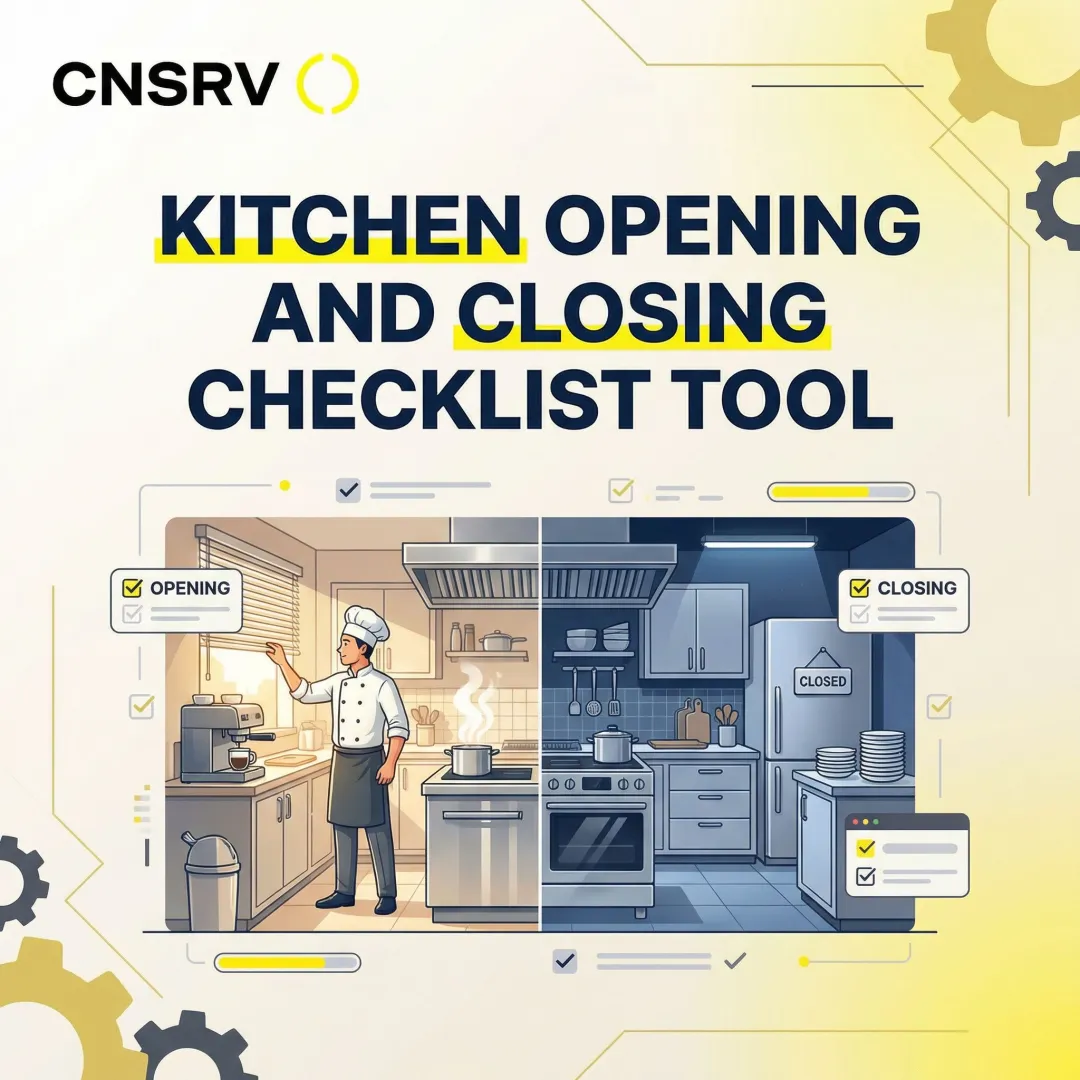
A standardized daily opening checklist ensures every shift starts from the same baseline, reduces the risk of missed prep, and holds staff accountable. In a commercial kitchen, that consistency is what separates a smooth service from a chaotic one.
Critical opening tasks:
- Verify refrigerator and freezer temperatures are within safe ranges (≤41°F for cold holding)
- Check and restock all line stations with necessary ingredients and tools
- Review prep lists from closing shift to identify carryover tasks
- Confirm sanitizer solution concentration at all stations using a test kit (chlorine should be 50-100 ppm)
- Date and label all new stock using FIFO rotation to prevent spoilage
Once critical safety checks are complete, work through these supporting tasks to get the full kitchen operational:
Operational opening tasks:
- Turn on and preheat equipment to proper temperatures (≥135°F for hot holding)
- Verify cleaning logs from the previous shift are complete
- Conduct a quick visual check of all storage areas for spills or spoilage
- Confirm all food safety tools (thermometers, gloves, labels) are stocked and accessible

Frequently Asked Questions
What do you need in a kitchen checklist?
A comprehensive commercial kitchen checklist covers six core categories:
- Cooking equipment: ranges, ovens, fryers
- Smallwares and utensils: knives, cutting boards, prep tools
- Food storage: containers, shelving, date labels
- Food safety items: thermometers, sanitizer test kits, defrosting systems
- Pantry staples aligned to your menu
- Opening checklist to ensure shift-to-shift consistency
What is the daily opening checklist for a kitchen?
Key opening tasks include verifying refrigeration temperatures (≤41°F), preheating equipment to proper holding temps (≥135°F), restocking line stations, reviewing prior shift prep lists, confirming sanitizer concentration with test strips, and signing off on overnight cleaning logs.
Is $10,000 enough for a new kitchen?
$10,000 may cover a basic home or small catering kitchen setup, but a full commercial kitchen typically requires $40,000–$200,000 depending on concept and volume. New restaurants spend approximately $115,655 on average for bar and foodservice equipment. Leasing equipment or buying used NSF-certified units can significantly reduce upfront costs.
What food safety tools are required in a commercial kitchen?
Core food safety tools include:
- Calibrated probe thermometers (±2°F accuracy)
- Sanitizer test kits to verify solution concentration
- Color-coded cutting boards to prevent cross-contamination
- Disposable gloves and dedicated handwashing stations
- Date and allergen labels for FIFO rotation
- Temperature logs documenting cold holding (≤41°F) and hot holding (≥135°F)
How often should a commercial kitchen essentials checklist be reviewed?
Review your checklist at minimum once per quarter, and any time your menu changes, equipment is added or retired, or local health code regulations are updated. Menu and equipment changes often trigger new compliance requirements that your checklist needs to reflect.