Introduction
Cooling large batches of broth in a commercial kitchen is a food safety protocol with serious regulatory teeth. Large volumes retain heat far longer than small pots, leaving broth in the bacterial danger zone (41°F–140°F) where pathogens like Clostridium perfringens can double in as little as 8 minutes.
A single misstep—cooling in a deep pot, skipping temperature checks, or placing hot broth directly into a walk-in cooler—can mean spoiled product, health code violations, or a foodborne illness outbreak.
The reality involves precise control over batch volume, container geometry, and active cooling technique. The FDA's two-stage cooling rule mandates that cooked broth drop from 135°F to 70°F within 2 hours, then from 70°F to 41°F within an additional 4 hours. Missing either checkpoint is grounds for disposal and potential regulatory action.
This guide covers the exact step-by-step process, equipment requirements, key variables, and the most common errors commercial kitchen operators make when cooling large batches of broth.
TL;DR
- FDA requires cooling broth from 135°F to 70°F within 2 hours, then to 41°F within 4 more hours
- Divide into shallow pans (2–4 inches deep) immediately — never cool in a deep pot
- Use an ice bath with active stirring — the most accessible rapid-cooling method
- Pre-cool broth before refrigerating to avoid raising your walk-in cooler temp
- Log temperatures at each stage for HACCP compliance
How to Cool Large Batches of Broth Fast
Step 1: Remove from Heat and Divide Immediately
As soon as cooking is complete, transfer broth into multiple shallow, wide containers — 2–4 inch deep hotel pans or half-pans rather than a single deep vessel. Container depth directly determines cooling speed. This is the single most impactful decision in the entire process.
Shallow containers expose more liquid to cool air and ice contact, accelerating heat transfer significantly. Research confirms that broth cooled in a 2-inch deep pan consistently meets FDA cooling standards. A 6-inch deep container of equal volume requires aggressive simultaneous interventions — ice wand, ice bath, and added ice — to achieve the same result.
Material choice also makes a measurable difference. Stainless steel transfers heat approximately 38 to 74 times faster than plastic (16.2 W/m·K vs. 0.22–0.43 W/m·K for common food-safe plastics). Use stainless steel hotel pans whenever possible.
Step 2: Set Up and Submerge in an Ice Bath
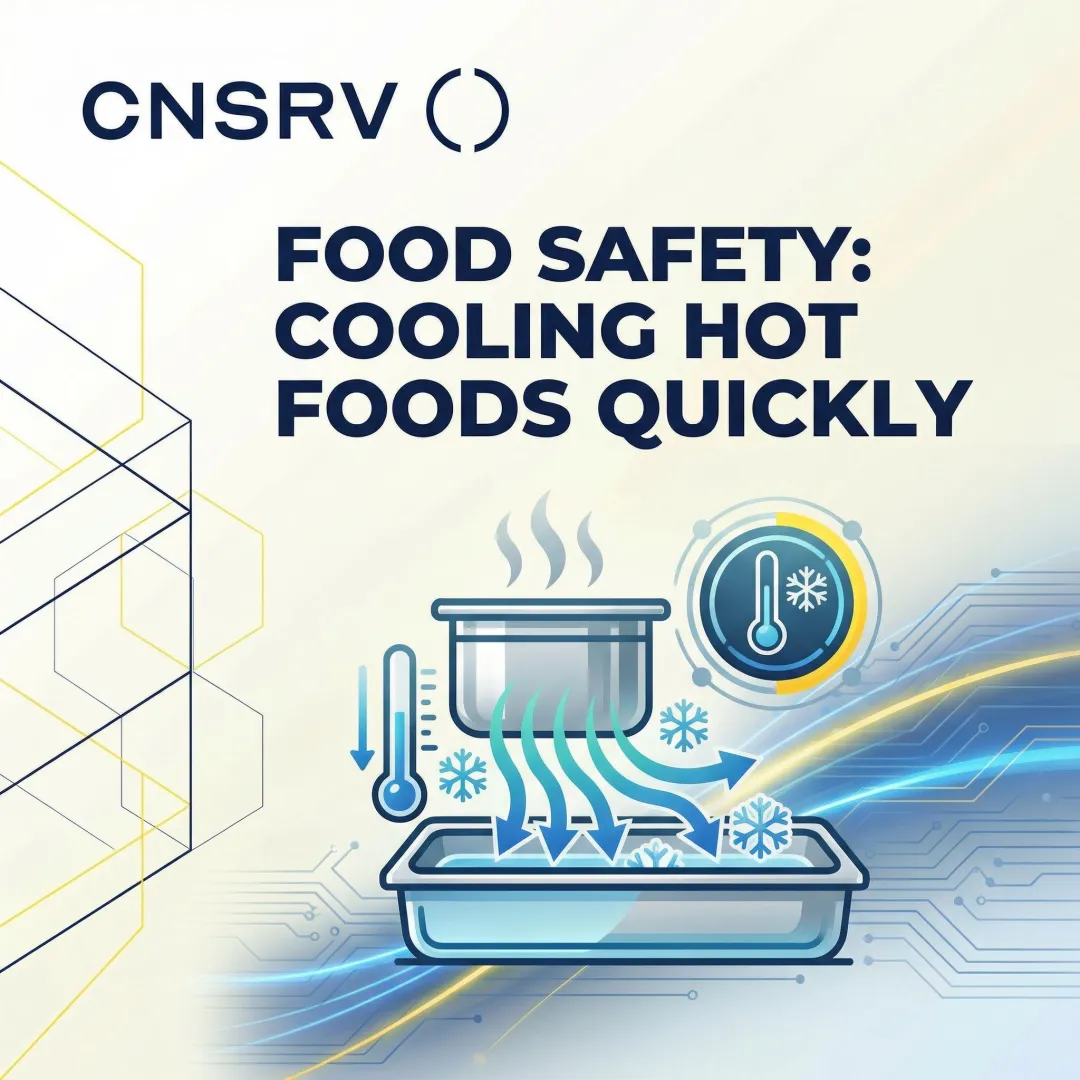
Fill a commercial prep sink or large container with ice and cold water. The goal is a dense ice-water slurry, not ice alone. Add ice until it reaches the broth level inside the pan, then add just enough cold water to fill the gaps between cubes.
A slurry outperforms dry ice because water fills the insulating air gaps between cubes, ensuring complete contact with the container. This enables convective heat transfer and leverages the latent heat of fusion: ice melting absorbs approximately 334 kilojoules per kilogram, continuously drawing heat from the broth at a constant 32°F.
When submerging pans, keep this checklist in mind:
- Ice water level should reach at least as high as the broth inside the pan
- For 20+ gallon batches, use a deep three-compartment sink to stage multiple pans
- Replenish ice as it melts to maintain slurry density throughout cooling
Step 3: Stir Continuously and Monitor Temperature
Actively stir the broth every 3–5 minutes using a long-handled spoon or dedicated cooling paddle. Stirring breaks up thermal stratification inside the liquid, pushing hot broth from the center to the cooler edges. Research shows that stirring can reduce cooling times by up to 7.4% compared to passive cooling.
Temperature monitoring protocol:
- Use a calibrated probe thermometer (calibrated daily using the ice-point method at 32°F)
- Check temperature at multiple points: center, edges, top, and bottom
- Never rely on a single reading — the geometric center is always the slowest to cool
- Insert the probe into the thickest part without touching the container sides
Critical checkpoint: Broth must drop from 135°F to 70°F within 2 hours. If it hasn't reached 70°F at the 2-hour mark, evaluate the batch for disposal per food safety protocols. This FDA requirement has no exceptions.
Step 4: Transfer to Refrigerated Storage
Once broth has reached 70°F or below, transfer containers to the walk-in cooler or reach-in refrigerator. Leave lids slightly loosened or vented to allow continued heat escape during the final cooling stage.
Placing warm food directly into refrigeration raises the ambient temperature of the entire unit, potentially pulling other stored products into the danger zone. Walk-in coolers are designed to maintain stable cold temperatures — not absorb large thermal loads quickly. Pre-cooling to 70°F first protects everything else in the unit.
Broth must reach 41°F within 4 additional hours of entering refrigeration. Once fully cooled to 41°F, seal containers tightly, label with date and time, and log final temperature. HACCP plans require commercial kitchens to document cooling logs that include start temperature, 2-hour checkpoint temperature, final temperature, timestamps, and staff initials.

What You Need Before Cooling Large Batches of Broth
Having the right setup in place before the broth finishes cooking is essential. Delays in transferring and starting the cooling process eat directly into the 2-hour window, leaving no margin for error.
Equipment and Supplies
Core equipment checklist:
- Multiple shallow stainless steel hotel pans (full or half size, 2-4 inches deep)
- Large commercial sink or container for ice bath
- Calibrated digital probe thermometer
- Cooling paddle or long stirring spoon
- Sufficient ice supply
A practical rule of thumb: plan for roughly 7 pounds of ice per gallon of broth. A 10-gallon batch needs approximately 70 pounds. Replenish ice as it melts — batches over 5 gallons typically require at least one reload during the process.
Compliance and Documentation Readiness
Commercial kitchens should have a temperature log sheet or digital logging system ready before cooling begins. A basic HACCP cooling log should capture:
- Start temperature and time
- 2-hour checkpoint temperature
- Final temperature and time
- Staff initials
Key Parameters That Affect How Fast Your Broth Cools
Speed and safety outcomes depend on controlling several variables simultaneously. Neglecting any one of them can cause a batch to stall in the danger zone.
Container Depth and Surface Area
The shallower and wider the container, the greater the surface area relative to volume — and that ratio directly determines how efficiently heat escapes.
A study in the Journal of Foodservice found that broth cooled in a 2-inch deep pan in a walk-in freezer consistently met both stages of the FDA cooling standard, reaching 70°F in an average of 102.5 minutes. Six-inch deep containers, by contrast, require aggressive active intervention to hit the same targets.
Ice Bath Temperature and Refresh Rate
Ice baths lose cooling power as the ice melts — a bath that starts at 32°F can warm significantly within 30–40 minutes without refresh. Thermodynamic calculations show roughly 0.4–0.5 kg of ice melts for every 1 kg of broth cooled from 135°F to 70°F.
Monitor the bath visually and add fresh ice when most has melted or when the broth stops dropping in temperature at a steady rate.
A quick note on salted ice baths: while salt lowers ice temperatures to -6.2°F, the practice isn't recommended commercially. Brine splashing into food creates contamination risk, and the salt accelerates corrosion on stainless steel equipment.
Stirring Frequency and Technique
Broth doesn't cool evenly without agitation. A temperature gradient forms where the center stays much hotter than the surface — which means your thermometer reading at the edge can be misleading.
Both FDA and ServSafe guidance calls for stirring "frequently." In practice:
- Stir every 5–15 minutes during the first two hours
- Agitate more often for larger or deeper containers
- Use a long-handled spoon or paddle to reach the bottom of the vessel
Starting Temperature of the Broth
Broth pulled directly from a rolling boil (~212°F) has a much larger temperature drop to manage than broth that has been off heat for 15–20 minutes. That gap affects how hard your cooling method has to work.
One critical point: the 6-hour cooling clock starts the moment the broth drops to 135°F — not when you remove it from the heat. Any time spent between 135°F and 41°F counts against the regulatory window. Letting broth "rest" uncounted directly contradicts FDA Food Code intent and creates real compliance risk.
Common Mistakes When Cooling Large Batches of Broth
Three errors show up repeatedly in commercial kitchen cooling failures. Avoiding them keeps your broth safe and your operation compliant.
Cooling in the Original Stock Pot
Leaving broth in a tall, narrow, deep pot is one of the most common and dangerous errors. The geometry traps heat in the center, making it nearly impossible to reach the 135°F–70°F checkpoint within 2 hours for large volumes. Always transfer to shallow containers immediately.
Placing Hot Broth Directly in the Walk-in Cooler
This is both a food safety violation and a mechanical risk. Hot containers raise the ambient temperature of the cooler, potentially pulling other stored products out of safe temperature range.
Walk-in coolers are designed to hold cold food, not remove large thermal loads quickly. The hot broth itself cools very slowly under those conditions. Pre-cool via ice bath before transferring anything to the walk-in.
Skipping Temperature Documentation
Failing to log cooling temperatures leaves no way to verify after the fact whether a batch cooled safely. That gap becomes a direct liability during health inspections or in the event of a foodborne illness claim. Documentation is required for HACCP compliance in most commercial operations.

Alternative Cooling Methods for Large Batches
Ice bath cooling is effective but not the only option. Batch size, equipment budget, and operational pace all influence which method works best.
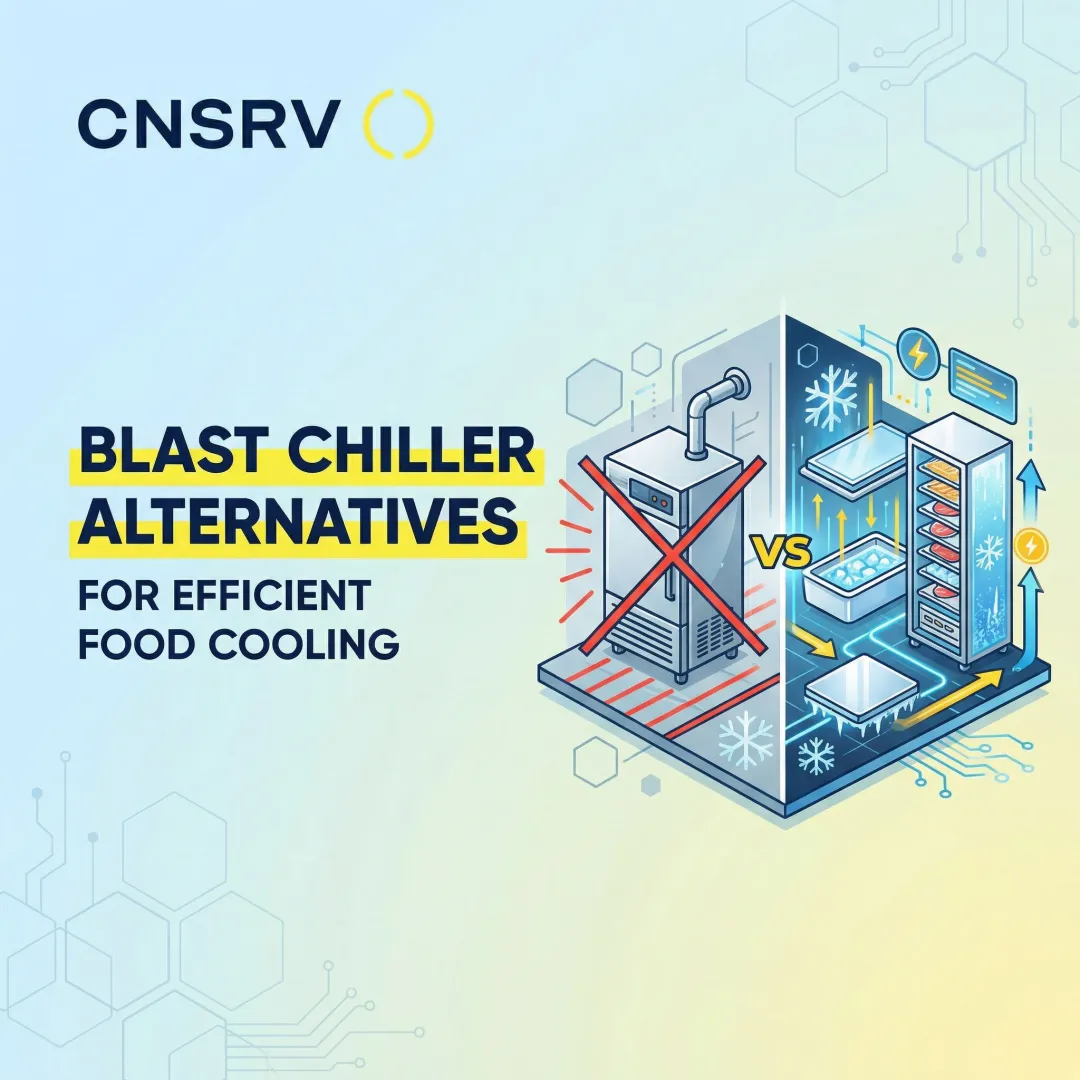
Blast Chiller
Best for high-volume operations producing 10+ gallons of broth per service, or kitchens with HACCP requirements that mandate rapid chilling. Manufacturer data shows blast chillers can cool food from 194°F to 37°F in roughly 90 minutes when portioned into shallow pans (2 inches deep maximum).
The trade-offs are primarily financial and spatial:
- Countertop units run $5,000–$12,000
- Large roll-in models range from $30,000 to over $95,000
- Requires dedicated floor or counter space
Best suited for kitchens where speed and compliance documentation justify the investment.
Commercial Ice Wand / Cooling Paddle
A practical option when a full ice bath setup is impractical, or when cooling a batch still in a large pot before transfer. The hollow paddle — filled with ice or frozen water — is inserted directly into the broth, cooling it from the inside out. Vollrath (Insta-Cool™) and San Jamar (Rapi-Kool®) are two well-known manufacturers.
Keep in mind: paddles require advance preparation (freezing ahead of service) and may not be sufficient alone for very large volumes without also dividing into shallow pans.
Adding Ice Directly to the Broth
Works for soups or stocks where dilution is acceptable. The recommended approach is the "ice substitution" method: prepare a more concentrated recipe using less water during cooking, then add the remaining liquid volume as ice after cooking. This simultaneously cools the product and brings it to its final intended volume.
Not appropriate for concentrated stocks, finished glazes, or any broth where flavor or consistency would be affected by added water. The volume of ice required can also be impractical for very large batches.

Conclusion
Cooling large batches of broth safely in a commercial kitchen requires speed and sequence: shallow containers, an active ice bath with regular stirring, and the FDA's 2-stage temperature checkpoints hit within their required time windows.
Most failures—spoiled broth, health code violations, contaminated walk-in coolers—trace back to the same avoidable mistakes. Stage your equipment before the broth is done, know the required temperature timeline cold, and those problems stay off your line.
Frequently Asked Questions
What is the FDA 2-stage cooling rule for commercial kitchens?
The FDA Food Code requires cooked hot foods like broth to cool from 135°F to 70°F within 2 hours, then from 70°F to 41°F within the next 4 hours—a total 6-hour window that limits time in the bacterial danger zone.
Can you put hot broth directly into a walk-in cooler?
No. Hot food raises the ambient cooler temperature, risking other stored products, and broth cools too slowly in a dense cooler environment to hit the 2-hour checkpoint. Pre-cool with an ice bath first.
How much ice do you need to cool a large batch of broth?
A practical guideline is approximately 7 pounds of ice per gallon of broth for effective ice bath cooling. For a 10-gallon batch, plan for 70 pounds of ice. Replenish ice at least once during the cooling process as it melts.
Does stirring actually make a meaningful difference in cooling speed?
Yes, stirring breaks up thermal stratification inside the liquid and can reduce cooling time noticeably. Research shows that active stirring can reduce cooling times by up to 7.4% compared to passive cooling, with the greatest impact in larger, deeper containers.
Can you add ice directly to broth to cool it faster?
Yes, adding ice is an FDA-approved method if dilution is acceptable and accounted for in the recipe. The best practice is the "ice substitution" method—use less water during cooking, then add the remaining volume as ice afterward. This is not appropriate for concentrated stocks or finished reductions.
Do commercial kitchens need to log broth cooling temperatures?
Yes. Most commercial kitchens under HACCP plans must document cooling logs to demonstrate compliance. Logs should capture start temperature, the 2-hour checkpoint reading, final temperature, timestamps, and staff initials.