Introduction
Food service operators and kitchen managers often face a tight window when thawing frozen ham. Refrigerator thawing takes 1–2 days, but dinner service or next-day catering prep can't always wait that long.
Cold water thawing is a USDA-approved method that submerges frozen meat in cold tap water, maintaining safe temperatures throughout the process. For an 8 lb ham, it cuts thaw time from nearly two days down to approximately 4 hours.
That speed comes with conditions, though. Improper technique can push the outer surface into the bacterial danger zone while the center stays frozen solid — making precise safety protocols essential for both food safety and final ham quality.
TLDR
- Cold water thawing an 8 lb ham takes approximately 4 hours (30 minutes per pound), with water changed every 30 minutes
- Keep the ham in a sealed, leak-proof bag throughout — this prevents contamination and moisture absorption
- Use cold tap water only (at or below 40°F) — warm or hot water is not safe for thawing
- Cook the ham immediately after thawing — storing it raw in the refrigerator afterward is not safe
What Is Cold Water Thawing and Why Use It for Ham?
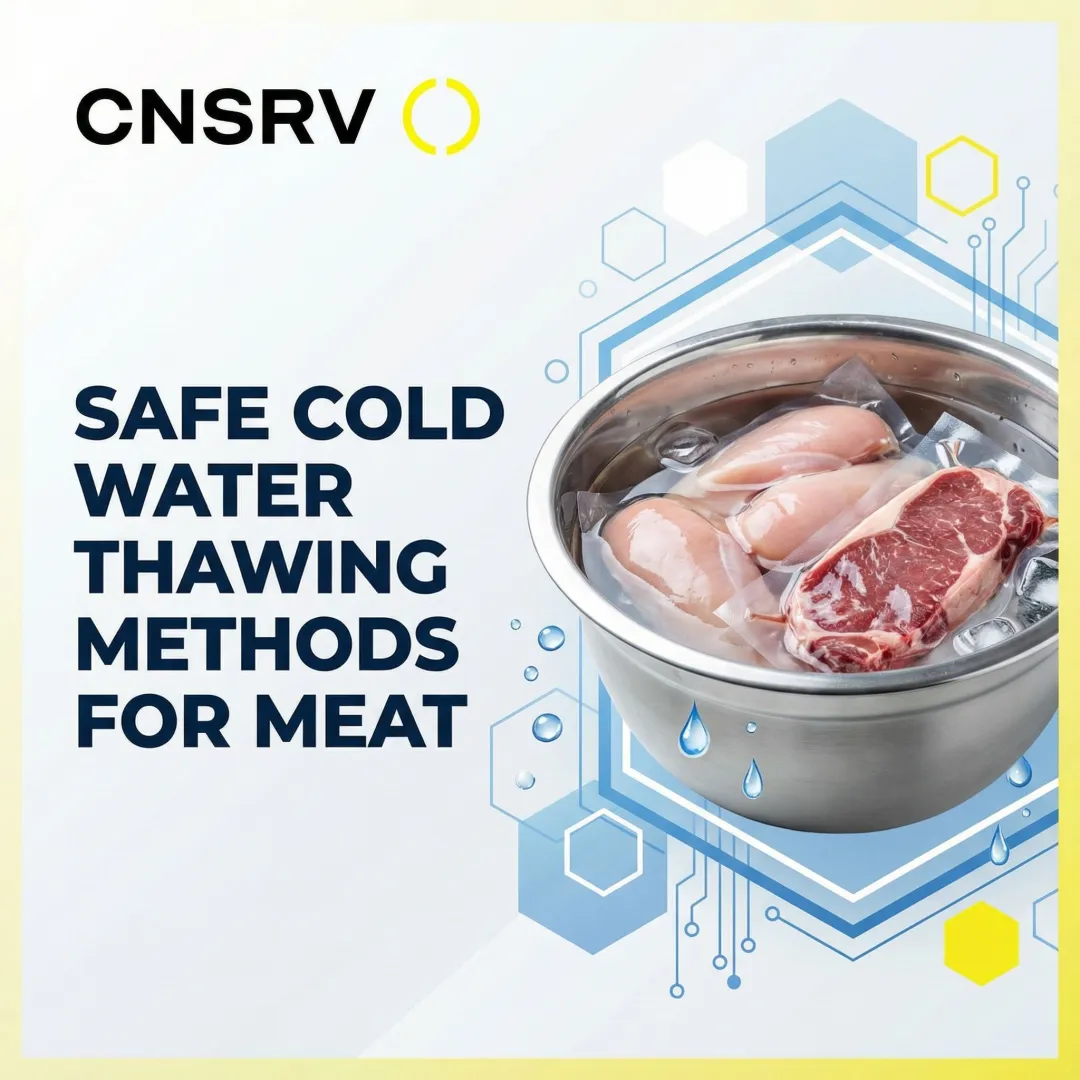
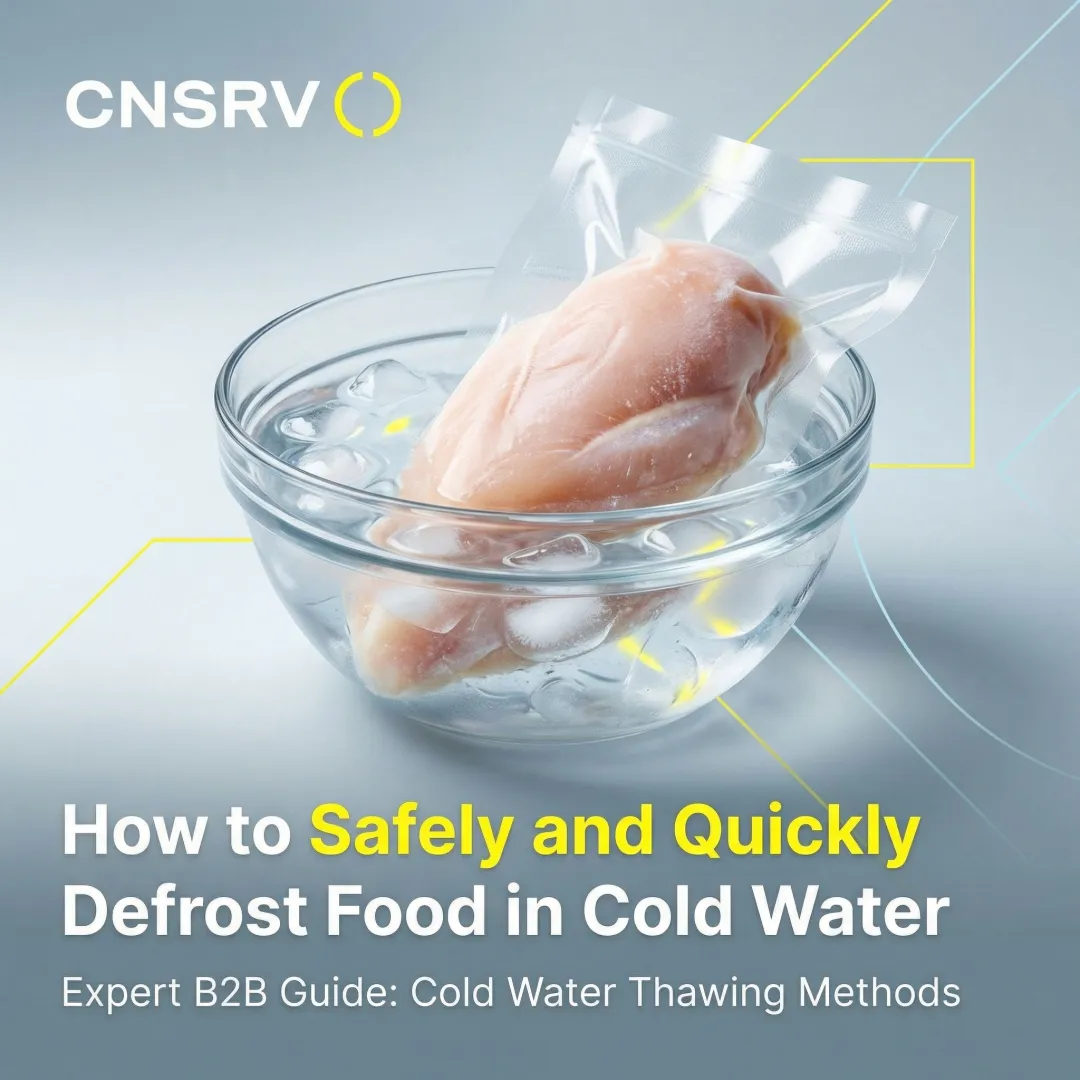
Cold water thawing is the controlled submersion of frozen meat in cold tap water to accelerate the thawing process compared to refrigerator thawing. For an 8 lb ham, it reduces thaw time from 1–2 days in the fridge to approximately 4 hours.
Speed comes with conditions, though. These methods do NOT qualify as safe cold water thawing:
- Thawing in warm water
- Running faucet water
- Leaving the ham at room temperature
All three create dangerous temperature zones where bacteria multiply rapidly—the "danger zone" between 40°F and 140°F allows bacteria to double in number in as little as 20 minutes.
Cold Water vs. Microwave Thawing
Cold water thawing produces more even, consistent results without risking partial cooking of the outer meat. With a dense, bone-in cut like an 8 lb ham, that consistency matters: microwave thawing creates hot spots that begin cooking the exterior while the center stays frozen.
Why water works faster than air:Water conducts heat approximately 23 times more efficiently than air — thermal conductivity of 0.60 W/m·K versus air's 0.026 W/m·K. That difference is why cold water cuts thaw time from days to hours.
How to Cold Water Thaw an 8 lb Ham: Step-by-Step
The process works because cold water conducts heat away from the ham's frozen interior far more efficiently than air, while the controlled temperature (below 40°F) keeps the outer surface out of the bacterial danger zone during the thaw.
Step 1: Prepare and Package the Ham
The ham must be fully enclosed in a sealed, leak-proof plastic bag before it touches water.
Packaging requirements:
- If the original packaging is intact and undamaged, you may use it
- If not, transfer the ham to a heavy-duty zip-lock bag, pressing out excess air
- Check for any tears, punctures, or weak seals
An unsealed package allows bacteria from the water to enter the meat. Research on pork shows that unsealed meat can absorb water during immersion thawing, resulting in a diluted, watery product with higher cooking loss and increased toughness.
Step 2: Submerge in Cold Water
Place the bagged ham in a container or sink filled with cold tap water.
Setup requirements:
- Container must be large enough to keep the ham fully covered
- Water should be cold from the tap (around 40°F or below)—never warm
- Use a plate or weight to keep the ham from floating
- Ensure complete submersion for even thawing
Skipping full submersion creates uneven thawing—one side may enter the danger zone while the other remains frozen.
Step 3: Change the Water Every 30 Minutes
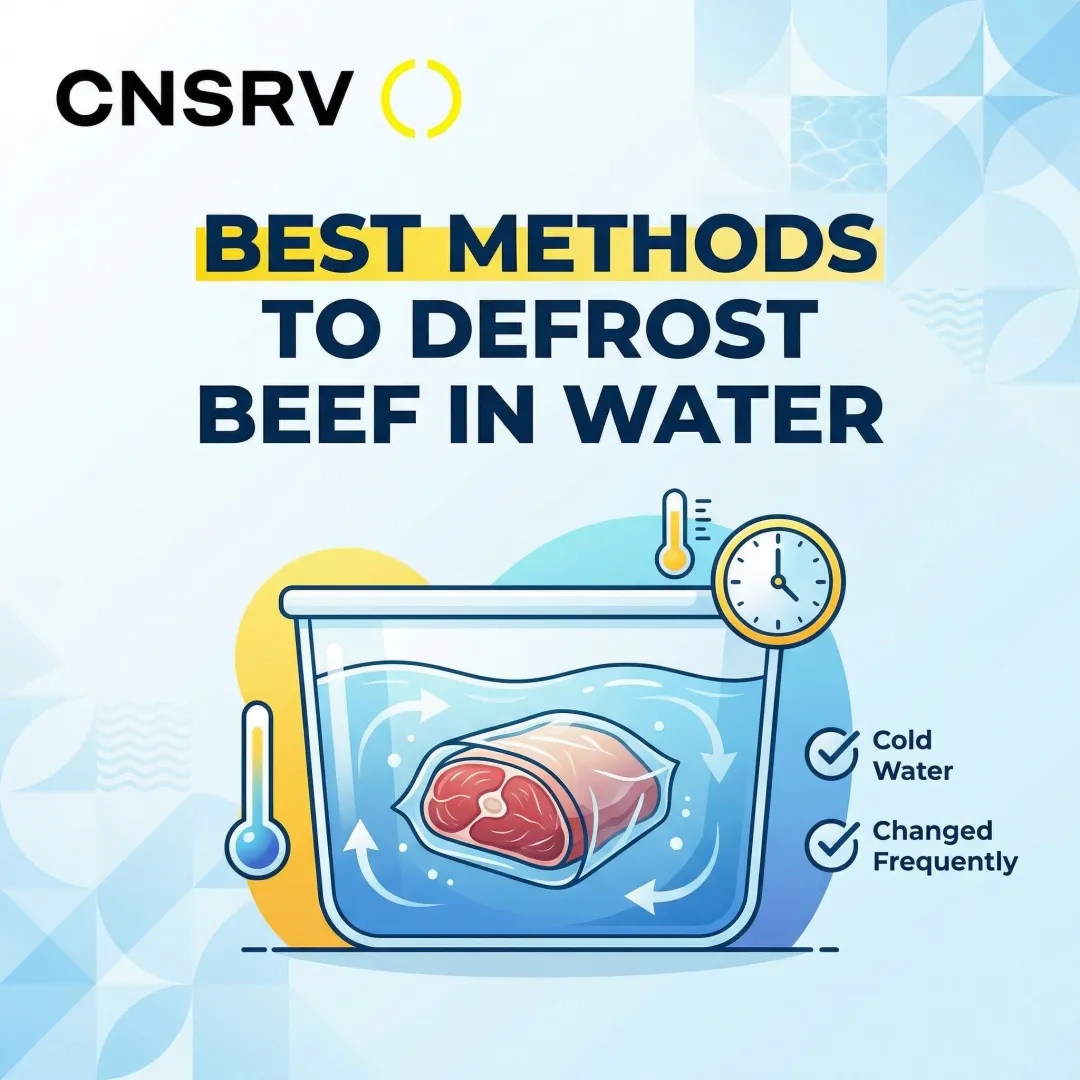
Water must be changed every 30 minutes throughout the entire 4-hour process to maintain a safely cold temperature.
As the ham absorbs heat, the water warms and can push the outer surface toward the danger zone. According to USDA guidance, changing water every 30 minutes ensures it continues to thaw safely.
Time calculation:
- 30 minutes per pound is the standard estimate
- An 8 lb ham requires roughly 4 hours
- This means 8 water changes total

For commercial kitchens: This water cycling adds up fast. At typical commercial flow rates of 2.2 gallons per minute, a 4-hour thaw uses approximately 528 gallons of water per ham.
Operations running multiple thaw cycles daily can eliminate that waste with a closed-loop system. The CNSRV DC:02 is NSF-listed, requires no installation, and maintains food-safe temperatures without continuous water changes.
Step 4: Verify Thawing and Cook Immediately
Check that the ham is fully thawed before cooking.
How to verify:
- No frozen patches at the center
- No ice crystals around the bone
- Meat feels uniformly pliable throughout
Once thawed, the ham must be cooked immediately. Unlike refrigerator-thawed ham, cold water-thawed ham cannot be held raw in the fridge and re-thawed — it goes directly to cooking.
Key Factors That Affect Cold Water Thawing for Ham
Ham Type and Starting State
The cut and cook state of your ham directly shapes how long the cold water thaw will take.
- Bone-in hams take longer because the bone insulates the center, slowing heat transfer
- Boneless hams thaw more evenly and slightly faster with no insulated core
Pre-cooked or vacuum-sealed smoked ham may thaw slightly faster than raw ham, but USDA thawing guidance applies to all perishable foods, cooked or uncooked.
Water Temperature Maintenance
Whether the water stays cold throughout is what separates a safe thaw from a hazardous one.
Key temperature benchmarks to know:
- USDA requires cold tap water for safe thawing
- FDA Food Code sets a 70°F maximum for commercial thawing water
- The bacterial danger zone runs 40°F–140°F

Water that isn't changed regularly climbs into unsafe territory fast. Once the ham's outer surface exceeds 40°F for an extended period, bacteria can double every 20 minutes.
Container and Submersion Quality
The ham must be fully submerged for even, safe thawing.
Partial submersion causes uneven thawing — one side can enter the danger zone while the other stays frozen. Container size and using a weight to hold the ham down both affect whether full submersion is maintained throughout.
Packaging Integrity
Any breach in the bag—even a pinhole—allows cold water to contact the meat directly.
Compromised packaging introduces two problems: bacterial contamination from the water, and meat that absorbs excess moisture and turns watery during cooking. Check the seal before submerging and inspect it periodically throughout the thaw.
Starting Temperature of the Ham
A ham stored at -10°F in a deep freezer will take longer to thaw than one stored at 0°F.
Factor in an extra 30–60 minutes for hams pulled from ultra-low deep freezers when building out prep schedules.
Common Mistakes and Misconceptions About Cold Water Thawing Ham
Misconception: "Any cold water works, including leaving the tap running"
Many people assume that running cold faucet water is equivalent to the submersion method. The USDA method specifies submersion with 30-minute water changes, not continuous running water. While the FDA Food Code allows running water in commercial settings under specific conditions (70°F or below, sufficient velocity), this approach creates significant water waste.
The numbers add up fast:
- A running faucet at 2.2 gallons per minute uses approximately 528 gallons over 4 hours
- That's enough to fill multiple bathtubs — for a single thaw cycle
- The submersion-with-changes method uses a fraction of that volume
Mistake: Leaving the ham unattended for the full 4 hours without water changes
Skipping even one 30-minute water change can allow the outer layer of the ham to warm significantly. As the ham absorbs heat, the surrounding water warms. Without a refresh every 30 minutes, the outer surface can enter the danger zone (40–140°F) while the center is still frozen — a temperature mismatch that creates real risk. This is the most common error with large cuts.
Misconception: "A pre-cooked ham doesn't need to follow the same food safety rules during thawing"
Pre-cooked hams still carry potential for bacterial growth on their surfaces during thawing if temperature is mismanaged. USDA guidelines apply to all ham types — cooked or uncooked. Even fully cooked spiral-cut hams must be thawed safely, since surface bacteria can multiply during thawing well before the ham ever reaches the oven.
When Cold Water Thawing Isn't the Right Approach
When time allows, refrigerator thawing is always the preferred method
Refrigerator thawing at 40°F or below is the safest option overall.
Advantages of refrigerator thawing:
- Requires no active monitoring
- Allows flexibility in cooking time
- Ham can be held for an additional 3–5 days after thawing before cooking
- No risk of temperature abuse

For an 8 lb ham, refrigerator thawing takes approximately 24 hours per 5 pounds — roughly 38–40 hours total. Use cold water thawing only when time constraints leave no other option.
When you can't commit to cooking right after thawing
Cold water thawing is inappropriate if you cannot commit to cooking the ham right after thawing is complete.
Foods thawed by the cold water method must be cooked immediately — this is a USDA requirement, not a suggestion. If a kitchen needs flexibility in timing, refrigerator thawing is the correct process.
Cold water thawing brings portions of the meat closer to the danger zone temperature range. Immediate cooking eliminates any potential bacterial growth before it becomes a safety concern.
When the original packaging is compromised
If the vacuum seal or packaging on the ham is damaged and no suitable leak-proof alternative is available, cold water thawing should not be attempted.
Without intact packaging, the meat absorbs water — resulting in contamination risk, poor texture, and diluted flavor. No leak-proof substitute available means refrigerator thawing is the only safe path.
Frequently Asked Questions
How long does it take to thaw an 8 lb ham in cold water?
At approximately 30 minutes per pound, an 8 lb ham takes about 4 hours using the cold water method, with water changed every 30 minutes throughout. This applies when the ham starts at standard freezer temperature (0°F) and water stays at or below 40°F.
Can you thaw a ham in cold water without a bag?
No. The USDA requires the ham to be in a leak-proof bag during cold water thawing to prevent contamination and stop the meat from absorbing excess water. Thawing without a bag allows bacteria from the water to enter the meat and causes the tissue to become waterlogged.
What temperature should the cold water be when thawing ham?
The water should be cold tap water kept at or below 40°F throughout the process, which is why changing the water every 30 minutes is required. Water that warms above this threshold can push the ham's surface into the bacterial danger zone (40–140°F).
Can you refreeze a ham after cold water thawing?
Ham thawed using the cold water method must be cooked before it can be safely refrozen. Cold water-thawed ham cannot be returned to the freezer in its raw state.
Is it safe to thaw a ham in cold water overnight?
No. The water cannot be actively monitored and changed every 30 minutes overnight, which allows it to warm and push the ham's surface into the bacterial danger zone — creating ideal conditions for bacterial growth.
Does a pre-cooked ham still need to follow cold water thawing rules?
Yes. Pre-cooked and smoked hams still require proper cold water thawing protocols because their surfaces can support bacterial growth during temperature mismanagement, even if the interior is already cooked.