Introduction
When heavy-duty commercial kitchen equipment fails or underperforms, the entire operation grinds to a halt. In high-volume foodservice environments—restaurants, hotels, institutional kitchens, and catering operations—downtime doesn't just disrupt workflow. It cuts into revenue and puts food safety compliance at risk.
Heavy-duty commercial equipment differs from standard alternatives in its engineering: thicker steel gauges, higher BTU and wattage outputs, longer duty cycles, and compliance with certifications like NSF and ETL. Restaurants use 5 to 7 times more energy per square foot than other commercial buildings, according to ENERGY STAR data—which makes equipment efficiency as important as durability when evaluating total cost of ownership.
This guide covers essential equipment categories, quality indicators, buying criteria, and how smarter choices—including water conservation technology—reduce long-term operational costs.
TLDR:
- Heavy-duty equipment is defined by material quality, duty ratings, and certifications like NSF and ETL
- Restaurants consume 5-7× more energy per square foot than other commercial buildings
- ENERGY STAR certified equipment saves approximately $4,500-$5,100 annually
- Water-efficient systems like modern defrosting technology can reduce utility costs by over $21,000 yearly
- Proper maintenance extends equipment lifespan by 10-15+ years
What Is Heavy-Duty Commercial Kitchen Equipment?
Heavy-duty commercial kitchen equipment consists of appliances and tools engineered for continuous, high-volume use in professional food service environments. These systems are built to withstand the demands of restaurants, hotels, catering operations, institutional kitchens, and other commercial facilities that operate multiple shifts daily.
Engineering Standards That Define Heavy Duty
Under ASHRAE Standard 154 and the International Mechanical Code, appliances are classified by duty cycles based on thermal plume temperatures and grease effluent production:
- Light Duty (200°F plume): Ovens, steamers
- Medium Duty (400°F plume): Electric ranges, griddles, fryers
- Heavy Duty (600°F plume): Gas ranges, wok ranges, charbroilers
- Extra-Heavy Duty (700°F plume): Solid fuel equipment

These classifications directly impact ventilation requirements, with heavy-duty gas ranges requiring 200-400 CFM per linear foot of exhaust capacity—more than double that of medium-duty electric equipment.
Material Construction Differences
Heavy-duty equipment is built to different physical specs than standard commercial models:
- Thicker steel: 16-gauge construction versus 18-20 gauge in standard units
- Higher output: Greater BTU ratings for gas appliances; higher wattage for electric
- Continuous-run design: Components rated for uninterrupted operation across full service shifts
That last point matters in practice. A heavy-duty fryer maintains consistent oil temperature across multiple batches during peak service hours, while a light-duty model may struggle after the first.
Certifications Validate Performance Claims
Certification determines whether equipment passes health inspections—not the label on the spec sheet. Look for:
- NSF/ANSI standards (2, 4, 7, 8) for food equipment sanitation
- ETL or UL listings for electrical and gas safety
- ENERGY STAR certification for efficiency benchmarks
- ANSI accreditation validating the standards development process
Equipment lacking these certifications may fail health inspections regardless of marketing claims. The FDA Food Code specifically recognizes ANSI-accredited certifications as meeting sanitary design criteria.
Essential Equipment Categories Every Professional Kitchen Needs
Every professional kitchen depends on a core set of equipment categories — each with heavy-duty variants built for continuous use. Choosing the right specifications for your volume determines whether your kitchen runs at capacity or stalls under pressure.
Cooking Equipment
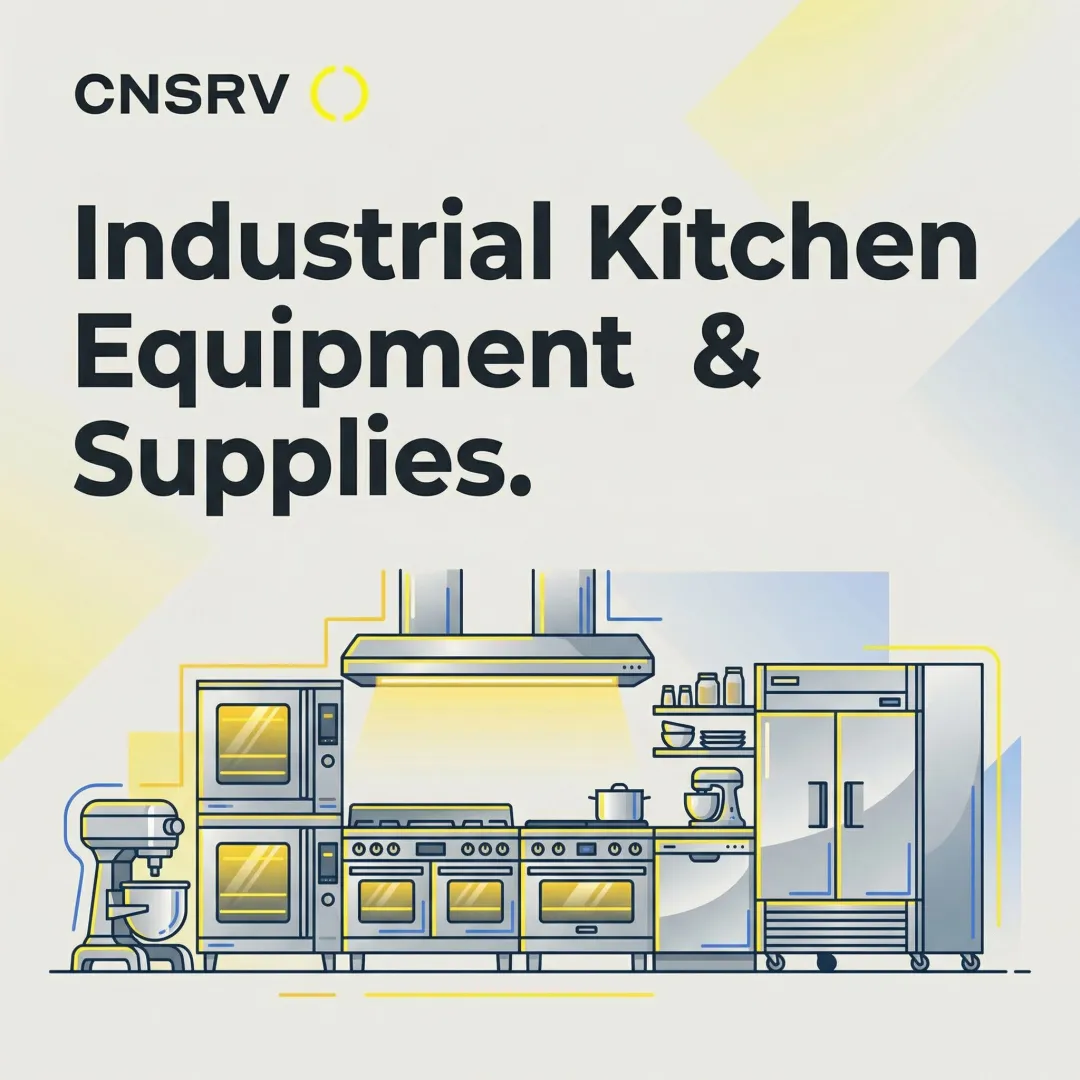
Core cooking equipment includes commercial ranges, convection ovens, combi ovens, fryers, griddles, and broilers. Heavy-duty variants in this category are rated for all-day, multi-shift operation with significantly higher performance specifications.
ENERGY STAR models deliver measurable savings over standard equipment:
- Commercial fryers save approximately $4,400 over their lifetime (gas: ≥50% efficiency; electric: ≥80%)
- Steam cookers with connectionless designs cut roughly $1,200 annually for electric models
- Convection ovens must hit ≥46% efficiency (gas) or ≥71% (electric) to qualify
Heavy-duty cooking equipment delivers higher BTU outputs (often 30,000–50,000 BTU per burner for ranges) and thicker cooking surfaces that retain heat during high-volume service. This prevents temperature drops when loading multiple pans or batches, maintaining consistent cooking results throughout service.
Refrigeration and Cold Storage
Refrigeration runs 24/7 — making it the category with the greatest impact on both food safety compliance and energy costs. Heavy-duty refrigeration includes walk-in coolers, reach-in refrigerators, undercounter units, and blast chillers.
The FDA Food Code requires TCS (Time/Temperature Control for Safety) foods to be held at 41°F or below. NSF/ANSI 7 certification confirms a unit can maintain those temperatures under commercial test conditions.
What to look for in heavy-duty refrigeration:
- Commercial-grade compressors designed for continuous operation
- High-density insulation (minimum 2-inch thickness for walk-ins)
- Heavy-duty door seals and gaskets
- NSF certification for food contact surfaces
- ENERGY STAR rating for efficiency (Version 5.0 sets Maximum Daily Energy Consumption limits)
Food Prep Equipment
Heavy-duty food prep tools include commercial slicers, food processors, mixers, and prep tables. Motor power and material construction determine suitability for high-volume operations.
A heavy-duty commercial mixer runs a 1+ HP motor capable of handling 20+ quart batches of dense dough continuously. A light-duty model at 1/3 HP overheats after 15–20 minutes — a real problem during peak service.
The same logic applies to prep surfaces. Tables built from 16-gauge stainless steel handle heavy cutting and chopping without issue; 20-gauge tables dent and warp within months of regular use.
Warewashing and Sanitation
High-throughput kitchens require heavy-duty dishwashers designed for continuous operation. Options include conveyor-style, door-type, and undercounter models, each rated for specific rack-per-hour capacities.
ENERGY STAR certified dishwashers save approximately $1,300 annually for standard models and up to $5,500 annually for flight-type conveyor systems through reduced water heating and consumption.
Specialty and Utility Equipment
Food holding units, heated serving equipment, and defrosting systems rarely get top billing — but gaps here create real workflow problems during service.
Defrosting is one area where equipment choice has an outsized impact on both water costs and compliance. Traditional running-water methods can use over 300 gallons per cycle. The CNSRV DC:02 is a purpose-built alternative: an NSF-listed, closed-loop defrosting system that requires zero installation and replaces running-faucet thawing entirely.
Key specs at a glance:
- Uses 98% less water than traditional faucet thawing
- Cuts defrost time in half
- Maintains FDA-compliant temperatures below 70°F
- No installation required — ships directly to your door
What Makes Commercial Kitchen Equipment Truly "Heavy-Duty"?
The term "heavy-duty" is defined by a combination of material quality, engineering standards, and operational ratings—not branding or sticker price alone.
Material and Build Quality
Stainless steel grade is the first thing to check. 304-grade stainless steel is the industry standard for food contact surfaces, containing approximately 18% chromium and 8% nickel. That alloy mix delivers superior corrosion resistance, easy cleaning, and compliance with food safety standards.
430-grade stainless contains chromium but no nickel, making it less corrosion-resistant and magnetic. It's commonly used for equipment housing and panels not in direct food contact to keep costs down.
Gauge thickness is equally important — thinner numbers mean thicker, stronger steel:
- 16-gauge: Standard for heavy-duty prep tables and sinks; withstands heavy impact without denting
- 18-20 gauge: Lighter duty, used for equipment panels and backsplashes
- 22-gauge: Common for steam table pans where maintaining seal integrity is critical
NSF/ANSI 51 establishes public health requirements for these materials, ensuring they're smooth, easily cleanable, and corrosion-resistant.
Duty Ratings and Operational Capacity
Duty cycle ratings translate to real-world use scenarios. A heavy-duty fryer is rated for continuous operation across multiple shifts without performance degradation, maintaining consistent oil temperature even during peak service. Medium-duty models may require rest periods between batches or show temperature drops during high-volume use.
When comparing equipment specs, look for these three duty-rating indicators:
- Continuous operation rating: Can it run back-to-back shifts without a cool-down period?
- Temperature recovery speed: How quickly does it return to set temp after a load is added?
- Throughput capacity: Does the rated output match your actual peak service volume?
Certifications That Matter
Key certifications to verify:
| Certification | Scope | Why It Matters |
|---|---|---|
| NSF/ANSI 2, 4, 7, 8 | Food equipment sanitation, materials, design | Validates hygienic design and food contact safety |
| ETL Sanitation Mark | Sanitation compliance | Demonstrates NSF standards compliance |
| UL/ETL Safety | Electrical and gas safety | Prevents fire hazards and electrical failures |
| ENERGY STAR | Energy efficiency performance | Verifies utility savings claims |
| UL 710 | Exhaust hood safety | Required for ventilation systems |

NSF certification is non-negotiable for any equipment that contacts food or water in the prep process. Health inspectors can (and will) red-tag non-certified equipment during inspections. Taken together, these certifications — alongside steel grade and duty ratings — are what separate genuinely heavy-duty equipment from gear that's simply marketed that way.
How to Choose the Right Heavy-Duty Equipment for Your Kitchen
Matching equipment to your kitchen's specific demands—volume, menu complexity, available space, and budget—prevents two costly mistakes: under-buying (risking equipment failure) and over-buying (wasting capital).
Assess Your Volume and Menu Requirements
Daily cover count, menu diversity, and peak service hours should drive equipment specifications. A kitchen running 300+ covers daily during a 2-hour dinner rush has fundamentally different needs than a 50-cover operation with staggered seating.
Volume-based equipment sizing:
- 50–100 covers/day: Medium-duty equipment often sufficient
- 100–200 covers/day: Heavy-duty core equipment (ranges, fryers, ovens)
- 200+ covers/day: Heavy-duty across all categories, with redundancy for critical items
Menu complexity matters just as much as raw volume. A steakhouse with a focused menu may need fewer heavy-duty pieces than a full-service restaurant requiring multiple cooking methods. Both factors together determine your true equipment footprint—and your real budget needs.
Total Cost of Ownership vs. Purchase Price
Total Cost of Ownership (TCO) factors in energy consumption, water use, maintenance frequency, repair costs, and expected lifespan. Heavy-duty equipment often carries a higher upfront cost but lower TCO over time.
The utility cost reality:
Restaurants use 5 to 7 times more energy per square foot than other commercial buildings, with utility costs rivaling the average 3–6% profit margin. Saving 20% on energy costs can increase profit by one-third.
Equipment lifespan baselines:
- Commercial ranges and refrigeration: 10–15+ years with proper maintenance
- Fryers and griddles: 8–12 years
- Dishwashers: 8–10 years
- High-wear components (gaskets, filters): annual replacement
Outfitting a kitchen with ENERGY STAR certified equipment saves approximately $4,500–$5,100 annually, totaling $45,000–$51,000 over a 10-year lifespan.
Space Planning and Workflow Integration
Equipment selection must account for kitchen layout and workflow. The ideal flow moves from receiving → storage → prep → cooking → plating → service, without creating bottlenecks or cross-contamination risks.
Heavy-duty equipment often has larger footprints and stricter clearance requirements. A heavy-duty range may need 6 inches of clearance on all sides for ventilation. Undercounter refrigeration requires front clearance for door swing and maintenance access.
Warranties, Service, and Parts Availability
Evaluate manufacturer warranties, local service availability, and parts lead times before purchasing. A heavy-duty fryer with a 3-year parts warranty but no local service technicians creates costly downtime when repairs are needed.
Questions to ask before purchasing:
- What's the warranty coverage period and what's excluded?
- Are there authorized service providers within 50 miles?
- What's the typical lead time for replacement parts?
- Does the manufacturer maintain parts inventory for discontinued models?
Reducing Operational Costs with Smarter Equipment Choices
Heavy-duty equipment that's chosen well pays for itself through measurable efficiency gains in energy, water, and labor costs.
Water Conservation: The Overlooked Cost Center
Water-intensive kitchen tasks represent a major cost center that most operators underestimate. Defrosting alone is particularly wasteful under traditional methods.
Traditional running-water defrosting can consume up to 315 gallons in a single thawing cycle. For a kitchen operating 6 days per week, that adds up to roughly 717,600 gallons annually — just for defrosting.
The CNSRV DC:02 eliminates this waste through a closed-loop system that uses 98% less water than the running-faucet method. It circulates water at 130 gallons per minute — 10-30 times faster than typical commercial faucets — while reusing the same water throughout the cycle.
Documented results for typical operations:
- Water reduction: From 717,600 gallons to 3,120 gallons annually
- Annual cost savings: Over $21,000 in water and sewage bills
- Time savings: Defrosts in half the time of traditional methods
- Compliance: Maintains FDA-compliant temperatures below 70°F
- Rebates: Qualifies for $800 from Metropolitan Water District in Southern California
- Setup: Zero installation — ships directly to your door
Nobu Malibu reported saving over $2,000 in their first month while cutting defrost time by more than half.
Energy Efficiency Across Equipment Categories
Water savings from defrosting are just the starting point. Other equipment swaps deliver comparable returns across the kitchen:
- Pre-rinse spray valves: High-efficiency models (≤1.28 gpm) save over 7,000 gallons per year plus the energy cost of heating that water
- Connectionless steamers: Cut water consumption by 90%, saving roughly 160,000 gallons annually
- ENERGY STAR fryers: Save $4,400 over their lifetime versus standard models
Stack these upgrades across a single location and the utility savings become a meaningful line item — not just a footnote.
Maintenance Tips to Extend the Life of Heavy-Duty Equipment
Even the most durable heavy-duty equipment requires consistent preventive maintenance. Neglect is the primary cause of premature equipment failure in commercial kitchens.
Daily Cleaning Protocols
- Cooking surfaces: Clean griddles, ranges, and fryers after each shift to prevent carbon buildup
- Refrigeration gaskets: Inspect door seals using the "dollar bill test" (close the door on a bill; if it slides out easily, replace the gasket)
- Dishwasher spray arms: Check for clogs and debris that reduce cleaning effectiveness
Weekly Inspections
- Fryer oil quality: Test and filter or replace oil based on usage and quality tests
- Refrigeration temperatures: Verify units maintain proper temperatures; adjust if needed
- Drain line flow: Ensure floor drains and equipment drains flow freely
Scheduled Professional Servicing
- Refrigeration coils: Clean condenser coils quarterly; dirty coils increase energy consumption by 17% and are the primary cause of service calls
- Gas connections: Annual inspection by certified technicians
- Ventilation systems: Quarterly hood and duct cleaning to prevent grease fires

Keeping detailed maintenance logs helps operators catch recurring issues early, supports warranty claims, and demonstrates due diligence during health inspections. Most failures that seem sudden result from months of gradual degradation — the kind a consistent log would have flagged weeks earlier.
Frequently Asked Questions
What is heavy equipment in a kitchen?
Heavy kitchen equipment refers to large-scale, high-capacity appliances built for continuous professional use — think commercial ranges, walk-in refrigerators, industrial dishwashers, and heavy-duty food prep machines. These units use thicker materials and carry higher output ratings than standard models to handle multi-shift operation.
What does every professional kitchen need?
Every professional kitchen needs five core categories: cooking equipment (ranges, ovens, fryers), cold storage (refrigerators, freezers), food prep tools (mixers, slicers, prep tables), warewashing systems (dishwashers, sinks), and utility equipment (holding cabinets, defrosting systems). Exact needs vary by menu and volume, but these categories are non-negotiable.
What restaurant equipment is most durable?
Equipment built from 304-grade stainless steel with NSF certification tends to outlast the competition. Look for 16-gauge steel construction, commercial-grade motors and compressors, and manufacturer warranties of 3+ years.
What certifications should I look for in commercial kitchen equipment?
NSF/ANSI certifications (2, 4, 7, 8) validate sanitation and food contact safety, ETL or UL listings confirm electrical and gas safety, ENERGY STAR certification verifies efficiency claims, and ANSI accreditation ensures certifying bodies developed standards through proper consensus processes. NSF certification is especially critical for any equipment contacting food or water.
How often should heavy-duty commercial kitchen equipment be replaced?
Lifespan varies by equipment type and maintenance quality. Commercial ranges and refrigeration units typically last 10-15+ years with proper preventive maintenance, while fryers and griddles average 8-12 years. High-wear components like gaskets, filters, and door seals need more frequent replacement (annually or as needed). Consistent preventive maintenance routinely pushes equipment past these averages.
How can commercial kitchens reduce utility costs through better equipment?
Upgrade to ENERGY STAR-rated appliances (saving $4,500-$5,100 annually), invest in water-efficient equipment like modern defrosting systems (saving over $21,000 annually), replace pre-rinse spray valves with high-efficiency models (saving 7,000+ gallons yearly), and follow preventive maintenance schedules to maintain peak efficiency. These changes typically pay for themselves within 1-3 years through reduced utility bills.