Introduction
Every day, commercial kitchens face a persistent challenge: how to safely prepare hundreds or thousands of meals while managing fluctuating demand, tight labor schedules, and strict food safety requirements. Most operations run into the same cluster of problems:
- Inconsistent food temperatures during cooling
- Unexpected spoilage from improper holding
- Over-production that drives up waste
- Staff stretched thin across overlapping prep and service shifts
According to industry data, commercial foodservice kitchens typically waste between 4% and 15% of the food they purchase, costing the average restaurant outlet approximately $25,000 annually in discarded product.
The cook-chill method offers a structured solution to these operational pressures. Food is fully cooked, rapidly chilled to a safe storage temperature, and held for later reheating and service. It's built for kitchen operators, restaurant managers, catering companies, and food service directors who need to separate production from service time — without sacrificing food safety or quality.
Despite widespread use, cook-chill is frequently misunderstood at the workflow level. Many operators are unclear on the critical control points, required equipment, and the exact conditions that make the method work. Get those details wrong, and the system that's supposed to reduce waste can introduce serious food safety risk instead.
TLDR
- Cook-chill means cooking to safe temps, rapidly chilling through the danger zone, storing at 40°F or below, then reheating to order
- Key benefits: food safety compliance, waste reduction (shrink drops from 20% to 3%), shelf life up to 28 days, and flexible labor scheduling
- The chilling phase is critical—food must pass through 41°F–135°F quickly to prevent bacterial growth
- Success depends on correct sequencing, a blast chiller, and trained staff—equipment alone doesn't build a working system
What Is the Cook-Chill Method?
Cook-chill is a controlled production method in which food is cooked to full doneness, then rapidly chilled to below 40°F, stored refrigerated, and reheated at the point of service. It is a formal process recognized by the FDA Food Code and HACCP frameworks — not a storage shortcut or workaround for undercooking.
The outcome this process achieves is the separation of production from service. Kitchens can decouple when food is made from when it is served, allowing bulk production during off-peak hours and precise portioned service during peak demand, all without sacrificing safety or quality.
How Cook-Chill Differs from Related Methods:
- Cook-freeze: Food is frozen rather than chilled, extending shelf life further but requiring different equipment (blast freezer instead of blast chiller) and a longer thaw process before service
- Sous vide: Vacuum-sealed cooking at lower temperatures that can be incorporated into a cook-chill system, but is not the same process. Sous vide governs how food is cooked; cook-chill governs how production connects to service.
Why Commercial Kitchens Use Cook-Chill
Commercial kitchens face three persistent operational pressures: fluctuating demand, high labor costs, and food waste. Cook-chill addresses all three simultaneously by enabling bulk production during off-peak hours and precise portioned service during peak hours.
The Food Safety Mandate
When executed correctly, rapid chilling minimizes the time food spends in the bacterial danger zone (41°F–135°F), reducing the risk of pathogen growth. The FDA Food Code and HACCP frameworks recognize cook-chill as an acceptable production method when critical limits are met, making it a compliant strategy for regulated foodservice environments.
What Goes Wrong Without a Structured System
Without proper cook-chill protocols, kitchens commonly experience:
- Inconsistent food temperatures during cooling
- Spoilage from improper storage
- Over-production and waste
- Staff stretched across prep and service simultaneously
- Difficulty meeting time-temperature requirements during health inspections
Documented Operational Benefits
The efficiency gains are well-documented across different foodservice settings:
- Labor productivity: A 2021 assessment of Central Food Processing Facilities found cook-chill facilities produce ~40 meals per labor hour vs. ~18 in traditional kitchens — more than double the output
- Payroll savings: The Boulder Valley School District projected a 30% payroll decrease after implementing a cook-chill facility
- Waste reduction: A 2023 comparative study in an Italian hospital reported an 85% reduction in food waste after switching from cook-hold to cook-chill
- Food shrink: Industry practitioners report shrink dropping from as high as 20% down to just 3% for items produced via cook-chill

Where Cook-Chill Is Standard Practice
The method is most widely adopted in:
- Hospital and healthcare foodservice
- Hotel banquet kitchens
- Commissary operations
- Large-scale catering
- High-volume restaurant groups with central production facilities
How the Cook-Chill Process Works
The cook-chill process follows a strict sequence: cook to safe internal temperature, fill or transfer immediately while hot, chill rapidly through the danger zone, store at controlled refrigeration temperatures, then reheat to a minimum internal temperature at the point of service. Each step has defined temperature and time parameters.
Critical Rule: The sequence cannot be safely reversed or paused mid-process. Food that cools slowly before chilling, or that is stored in bulk containers too thick to chill quickly, creates conditions for bacterial multiplication.
Step 1: Cook and Fill
Food must be cooked to the required minimum internal temperature before entering the cook-chill cycle:
- Poultry: 165°F for less than 1 second (instantaneously)
- Ground meat: 155°F for at least 17 seconds
- Other proteins: Per FDA Food Code requirements for specific items
Immediately after cooking, food is portioned or filled into appropriate containers—bags, pans, or pouches—while still above 135°F. This ensures the transition from cooking to chilling is uninterrupted.
Step 2: Rapid Chill
This is the most critical step. Food must be cooled from 135°F to 41°F within a defined window:
- Stage 1: 135°F to 70°F within 2 hours
- Stage 2: 70°F to 41°F within an additional 4 hours (6 hours total)

A blast chiller is the standard commercial method for meeting these targets reliably. Container size and food density directly affect how quickly food chills through to its core—this is a common failure point in kitchen-level cook-chill setups.
Why Standard Refrigerators Don't Work:
Commercial refrigerators are designed to hold cold food temperatures, not cool large masses of hot food. The FDA Food Code Annex explicitly states this limitation. A 2005 study demonstrated that a stockpot of chili in a standard walk-in refrigerator took over 24 hours to cool to a safe temperature—a clear violation of the 6-hour critical limit.
Step 3: Store and Reheat
Properly chilled food is stored at or below 40°F, typically for up to 28 days depending on the food type and facility protocols. When needed, food must be safely thawed before reheating—and how that thawing happens matters for both safety and compliance.
Thawing Requirements:
- Never thaw at room temperature or under uncontrolled conditions
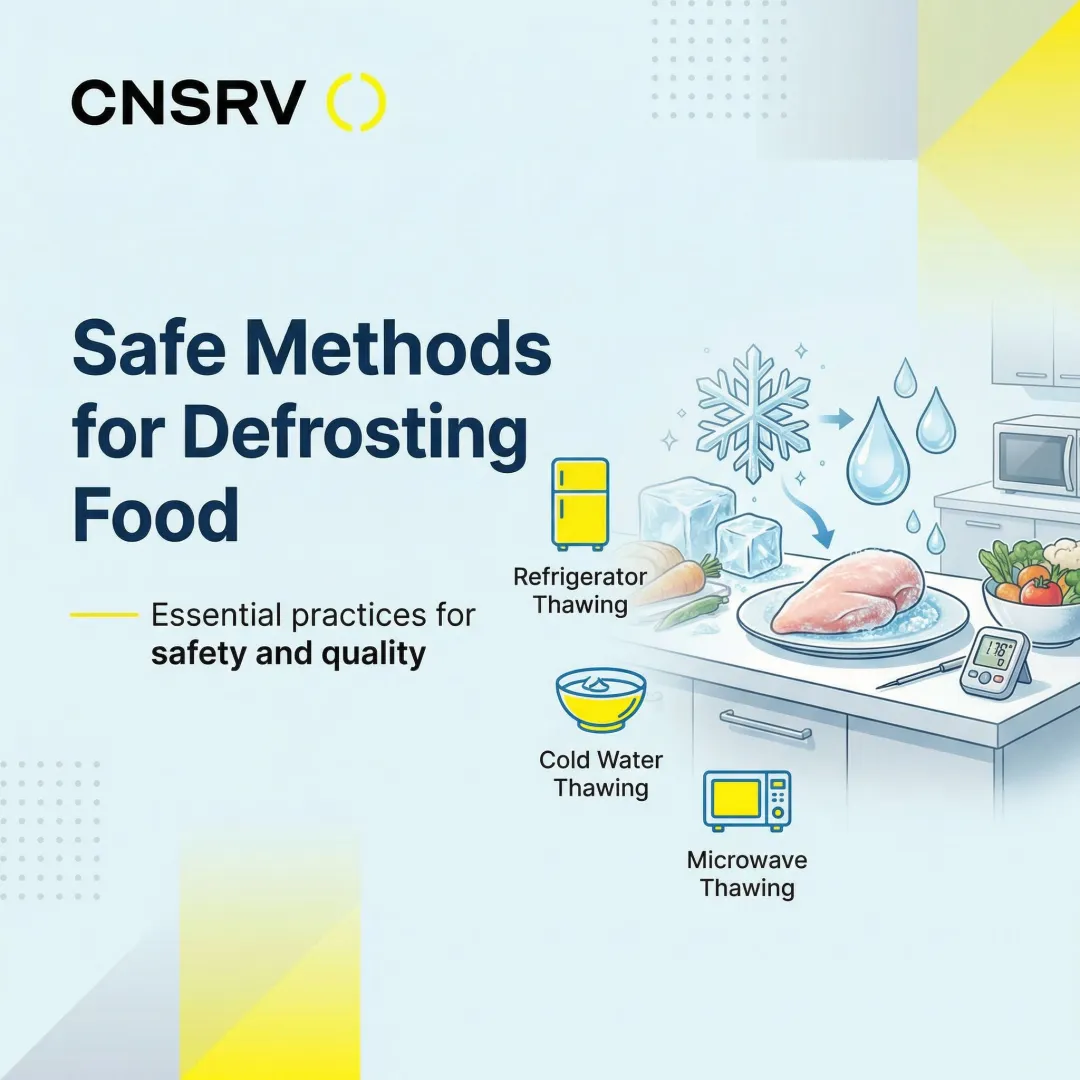
- FDA-approved methods include refrigeration thawing or running water below 70°F
Once food is fully thawed, it moves directly into the reheating stage.
Reheating Standards:
Food must be reheated to a minimum internal temperature of 165°F for 15 seconds before service.
Key Factors That Affect Cook-Chill Outcomes
Container Type and Portion Size
Thicker or denser packs take longer to chill to the core. If a blast chiller cannot penetrate the mass quickly enough, the center of the product may remain in the danger zone long after the exterior has chilled. This is one of the most common failure points in kitchen-level cook-chill setups.
Best Practices:
- Limit food depth to 2 inches in pans
- Use shallow containers to maximize surface-area-to-volume ratio
- Separate dense foods into smaller portions
- Never stack hot containers during chilling
Equipment Dependencies
A blast chiller is essential for compliance—standard reach-in refrigerators cannot chill food fast enough from cooking temperatures. The combi oven is commonly paired with a blast chiller as a complete cook-chill system for this reason.
NSF/ANSI 7-2019 formally defines a separate category for "rapid pull-down refrigerators" with specific performance benchmarks. Local regulatory bodies like the New York City Health Department explicitly mandate their use in cook-chill operations.
Staff Training as a Controlling Variable
Staff errors cause most food safety failures in cook-chill operations:
- Delayed filling after cooking
- Improper sealing
- Inaccurate temperature logging
- Skipping reheat temperature checks
The process requires consistent procedural discipline, not just the right equipment. All staff involved in cook-chill production should be trained on HACCP principles and critical control points.
The Thawing and Defrosting Step
Once cook-chill stored food needs to be brought back into service, safe thawing matters as much as safe chilling. Traditional running-water thaw methods waste significant water in commercial settings—typical commercial faucets flow at approximately 2.2 gallons per minute, with some field studies measuring average usage of 315 gallons per thaw cycle.
The **CNSRV DC:02 defrosting system** addresses this directly, cutting water use by 98% while meeting FDA Food Code requirements for safe thawing. Key performance specs:
- Maintains water below 70°F (typically under 66°F) throughout the cycle
- Circulates water at ~130 gallons per minute—10 to 30 times faster than a standard faucet
- Completes defrost cycles in half the time of running-faucet methods
- Requires zero installation; works with standard 18-inch prep sinks and larger
The system has been independently verified by Dr. Eric Schulze, PhD (a former FDA food-safety regulator) to be consistent with FDA requirements for thawing food safely in commercial kitchens. For high-volume operations cycling through frozen proteins, seafood, or prepared items daily, that water reduction translates directly to lower utility costs—without any trade-off on food safety or throughput.
Common Misconceptions and When Cook-Chill Falls Short
Misconception 1: Cook-Chill Is Just "Cooking in Advance and Refrigerating"
Many kitchens cool food in standard refrigerators, store it in large containers, and call it cook-chill. In practice, this bypasses the rapid chilling requirement and may not meet food code standards. The key distinction is the controlled, rapid chilling phase and documented temperature monitoring.
Without a blast chiller and proper container selection, you're simply making leftovers—not operating a compliant cook-chill system.
Misconception 2: Cook-Chill Improves Quality in All Food Types
Some proteins, battered or fried foods, delicate starches, and dishes dependent on texture-on-the-plate do not hold up well through the chill-and-reheat cycle.
Food Types That Perform Poorly in Cook-Chill:
- Battered and fried products lose crispness and absorb moisture, resulting in a soggy texture
- Delicate starches (pasta, rice, potatoes) undergo retrogradation—expelling water, firming up, and clumping
- Egg-based dishes turn watery and rubbery; scrambled eggs can develop a greenish tint
- Delicate proteins and seafood suffer texture softening, water loss, and oxidative off-flavors
- Emulsified and cream-based sauces are prone to breaking, oil separation, and viscosity loss
Beyond food type, there are operational scenarios where cook-chill simply isn't the right fit.
When Cook-Chill May Not Be the Right Fit
Small-volume operations with stable, predictable demand may not justify the equipment investment or process overhead. If you're producing 50 meals per service with minimal fluctuation, the capital expense of a blast chiller and HACCP documentation may not pay off.
Kitchens without trained staff or documented HACCP procedures may struggle to implement cook-chill safely. The method requires consistent procedural discipline and temperature monitoring—without that infrastructure, you're creating food safety risks rather than managing them.
Operations where menu flexibility is paramount can also find the advance-production model limiting. Cook-chill works best with standardized recipes and predictable demand. If your menu shifts daily based on market availability, the advance-production model may not align with how your kitchen actually runs.
Frequently Asked Questions
What is the Cook-Chill process in the food service industry?
Cook-chill is a controlled production method where food is fully cooked, rapidly chilled through the bacterial danger zone to below 40°F, stored refrigerated, and reheated to order. This allows kitchens to separate production from service while maintaining food safety compliance.
What is the 2-2-2 rule for food?
The 2-2-2 rule is a simplified food safety guideline: cool and refrigerate food within 2 hours of cooking, consume within 2 days, or freeze for up to 2 months. This is a practical shorthand for home leftovers and is not a substitute for formal HACCP-based cook-chill protocols required in commercial operations.
What is the difference between cook-chill and cook-freeze?
Cook-chill rapidly chills food to refrigeration temperatures (below 40°F) for a shelf life of up to 28 days. Cook-freeze rapidly freezes food to 0°F or below for longer-term storage (months). The key differences are storage temperature, equipment required (blast chiller vs. blast freezer), and the thawing process before service.
How long can food be stored using the cook-chill method?
Cook-chill food can be stored for up to 28 days when held at or below 40°F. The FDA Food Code sets outer limits of 30 days at 34°F (1°C) or 7 days at 41°F (5°C), depending on storage temperature. Actual shelf life varies by food type, so verify limits against your HACCP plan and local health code.
What equipment is needed for a cook-chill system in a commercial kitchen?
A complete cook-chill setup requires:
- A commercial cooking appliance (combi oven or steam kettle)
- A blast chiller to move food through the danger zone rapidly
- Cook-chill bags or appropriate storage containers
- A commercial refrigerator for holding and temperature monitoring tools
Standard refrigerators cannot chill hot food quickly enough to meet food safety requirements.
What temperature must food reach during the chilling phase?
Cooked food must be chilled from 135°F to 70°F within 2 hours, and from 70°F to 41°F within an additional 4 hours (6 hours total), per FDA Food Code requirements. A properly sized blast chiller is the standard commercial method for reliably meeting these time-temperature targets.